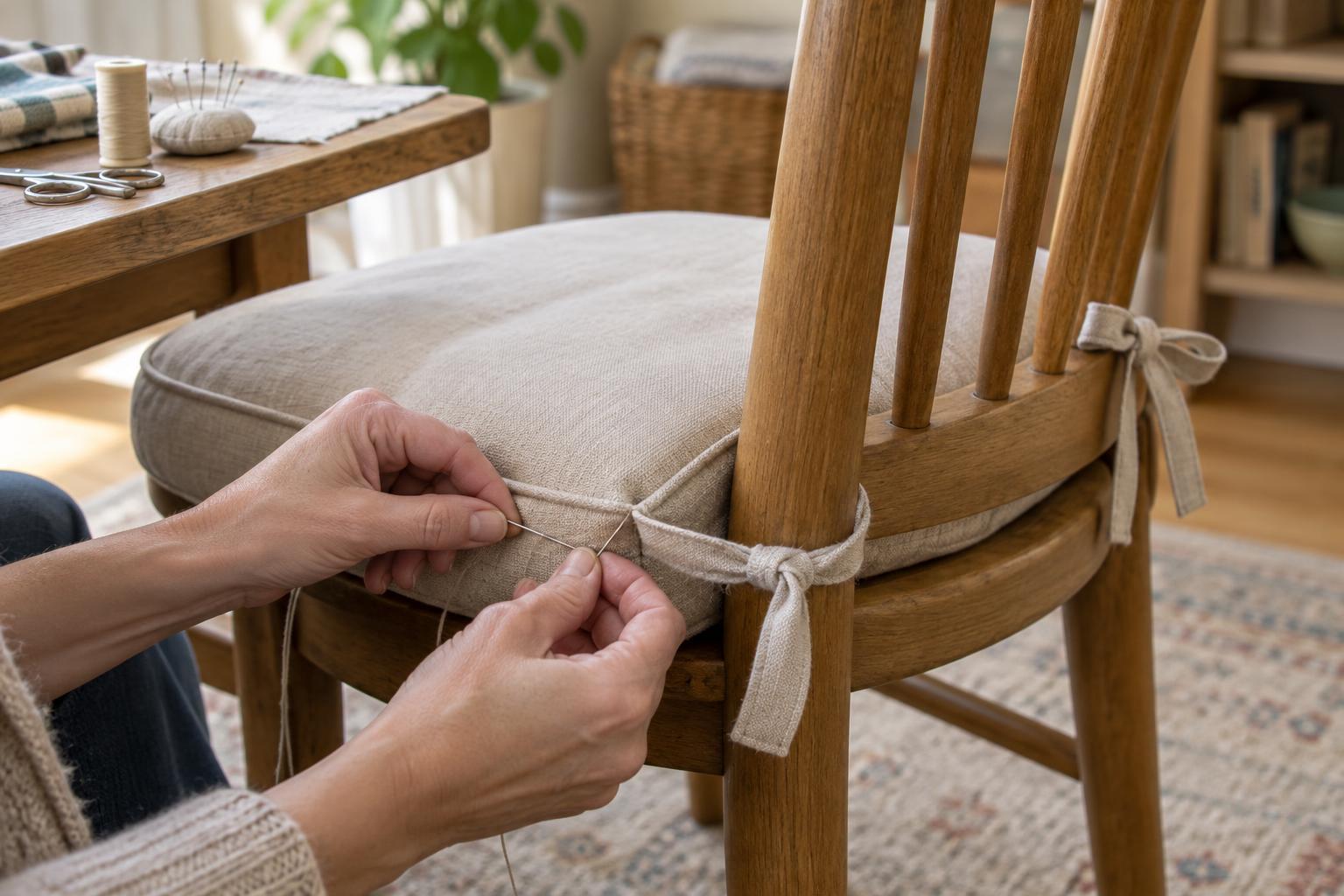
Repair and RefreshLoose chair cushion ties can leave a cushion sliding out of place. Learn how to check the attachment, reinforce a weak corner, sew a tie back on and reduce strain on the repair.
Read article · 4 min↗
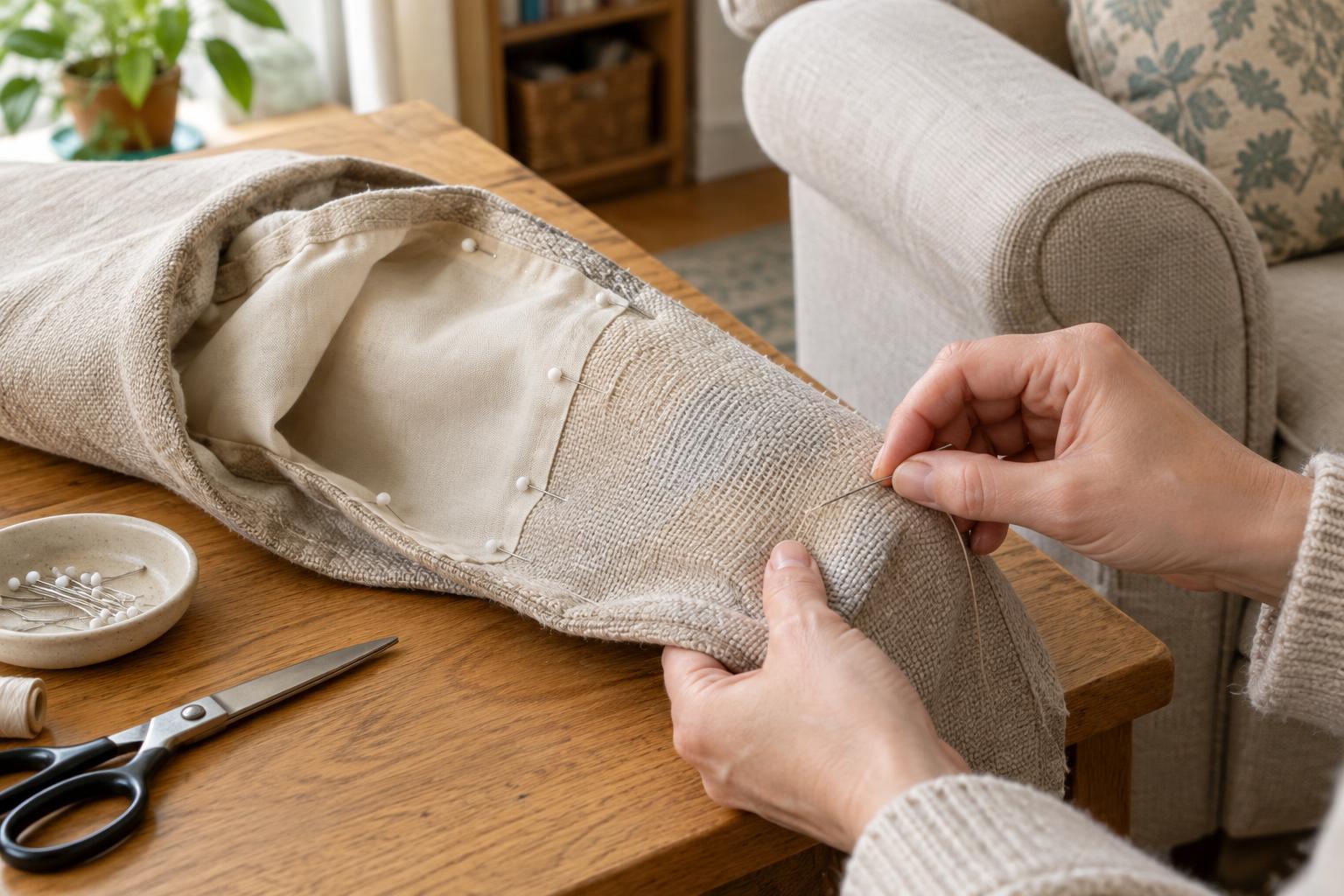
Repair and RefreshA thinning armrest cover can often be reinforced before it tears. Learn how to assess the worn area, choose a suitable backing fabric, stitch it to sound cloth, and reduce further wear.
Read article · 4 min↗
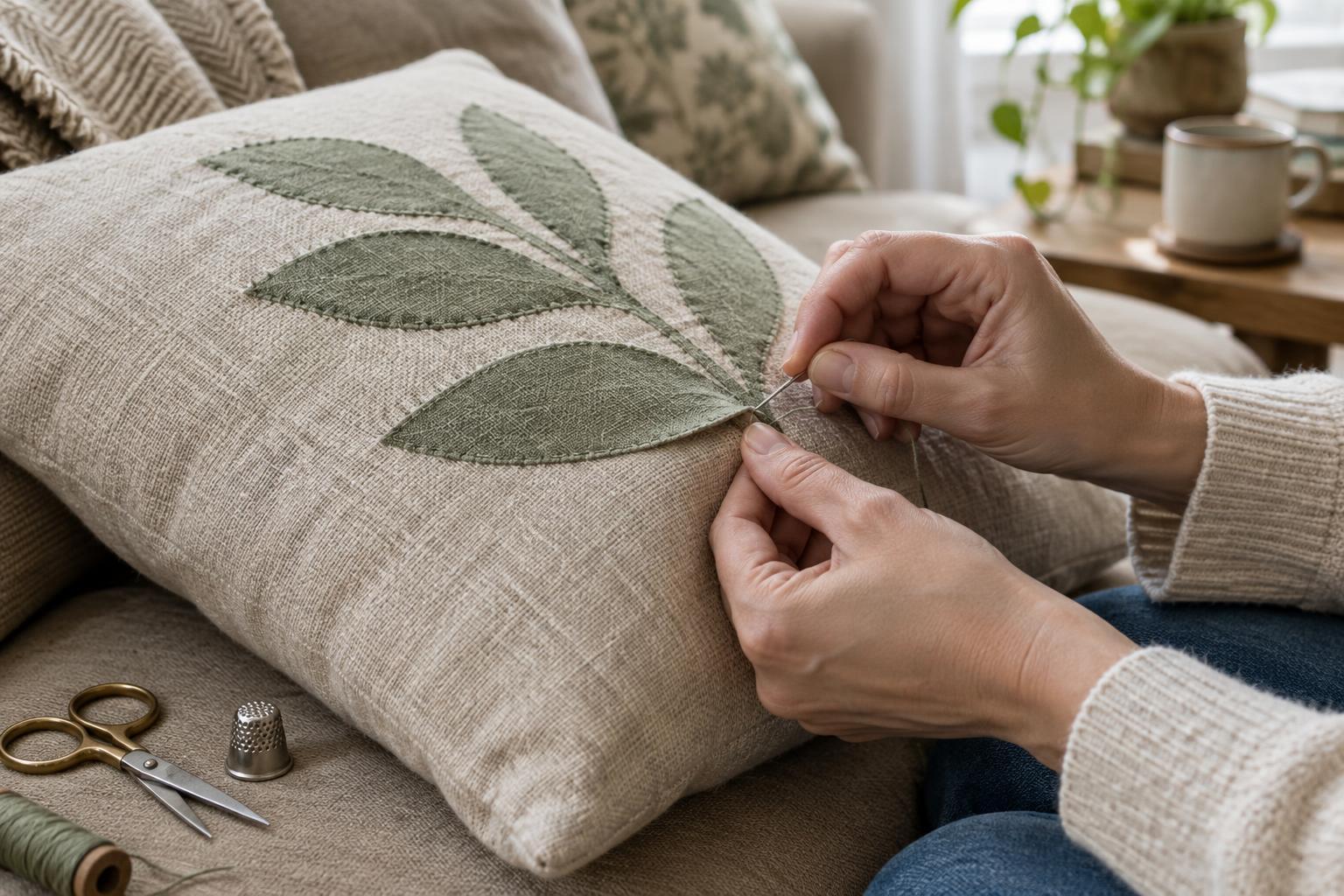
Repair and RefreshA lifting appliqué can make a cushion look worn even when the rest of the cover is in good condition. Learn how to assess the fabric, secure the loose edge with simple stitches, and care for the repair afterward.
Read article · 4 min↗
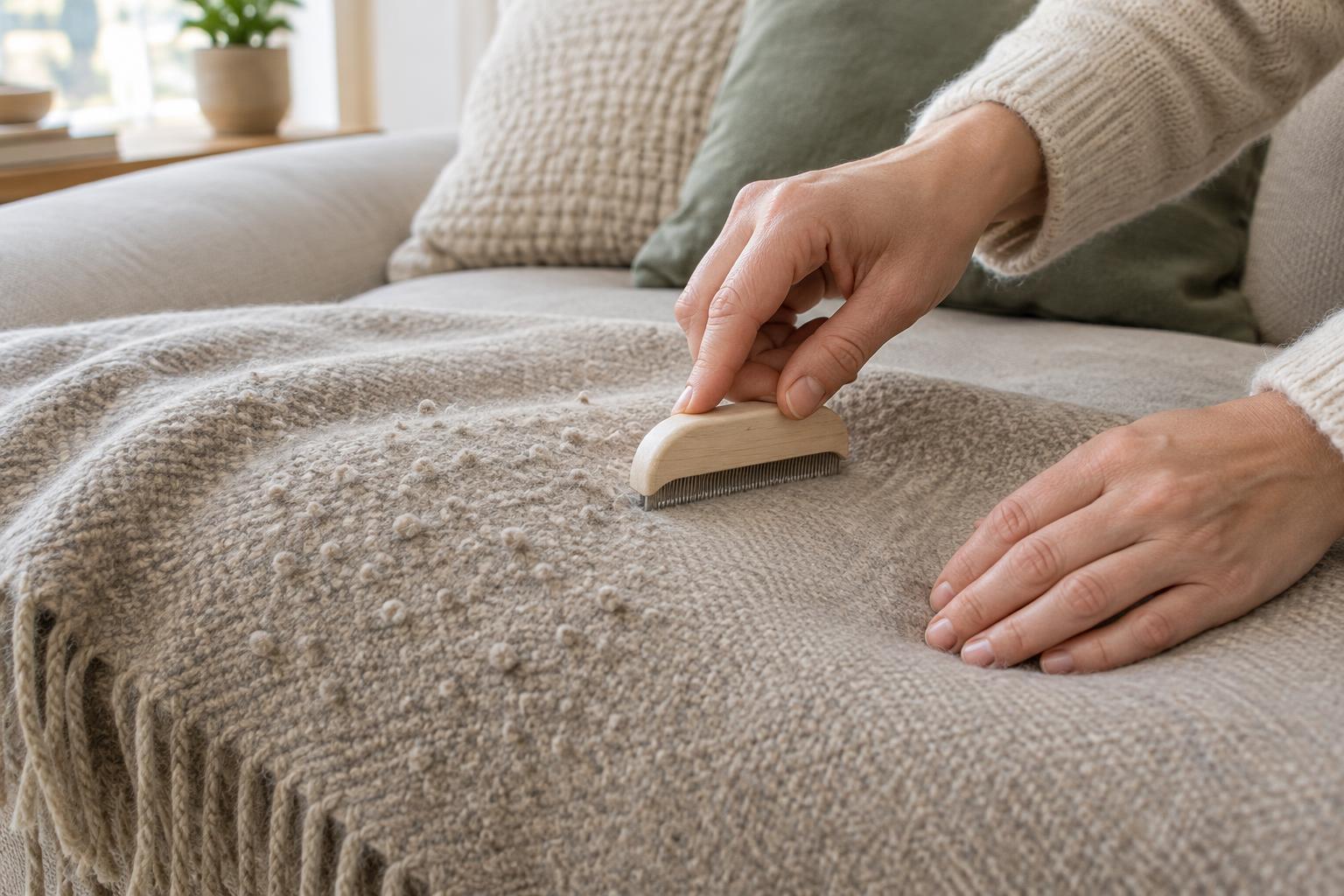
Repair and RefreshFabric pills can make a favorite throw, cushion or upholstered chair look worn before its time. Learn how to identify loose pills, choose a gentle removal method and protect the fabric underneath.
Read article · 4 min↗
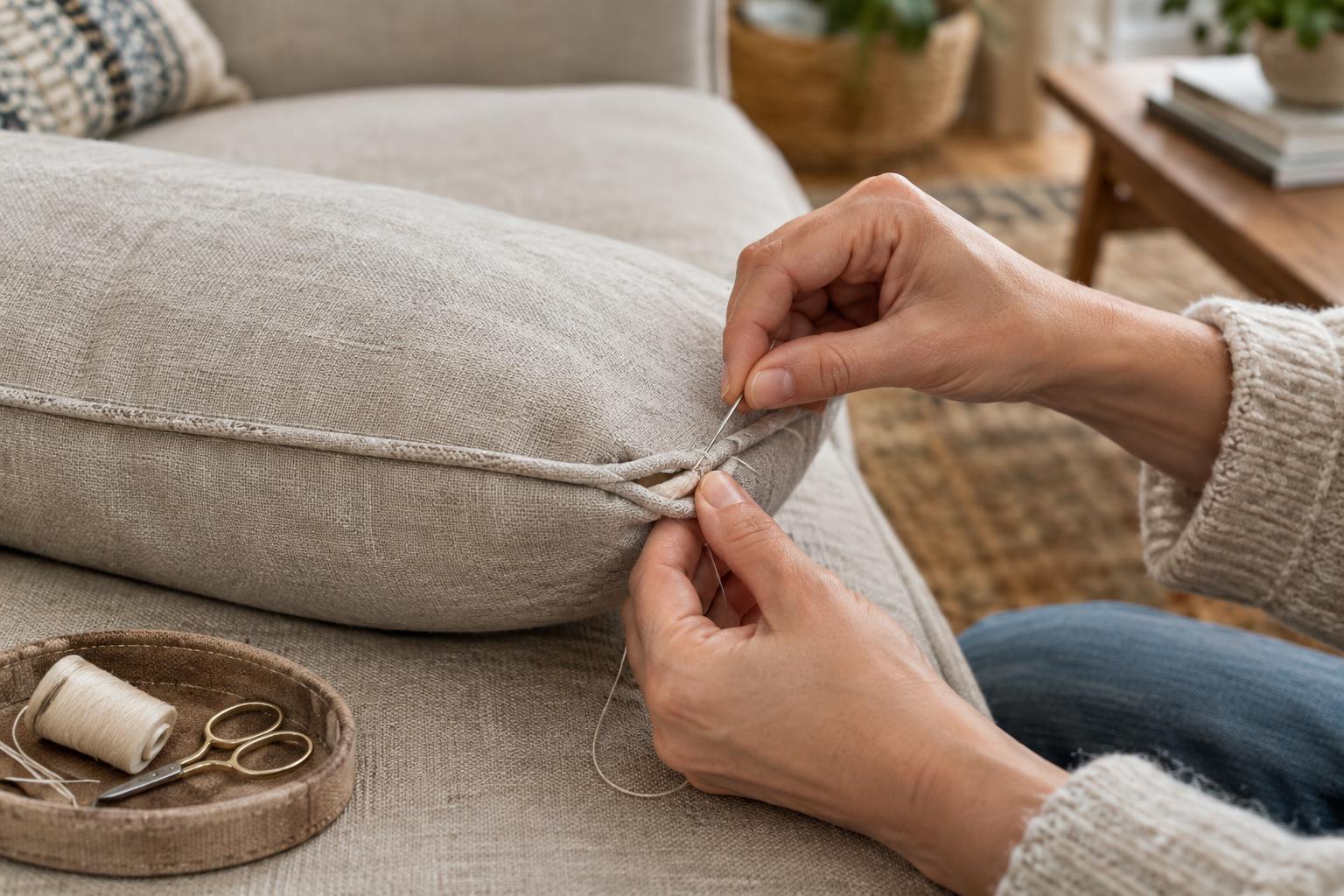
Repair and RefreshLoose piping can make an otherwise sound sofa cushion look worn. Learn how to assess the damage, secure a short loose section by hand, and decide when the seam needs a fuller repair.
Read article · 4 min↗
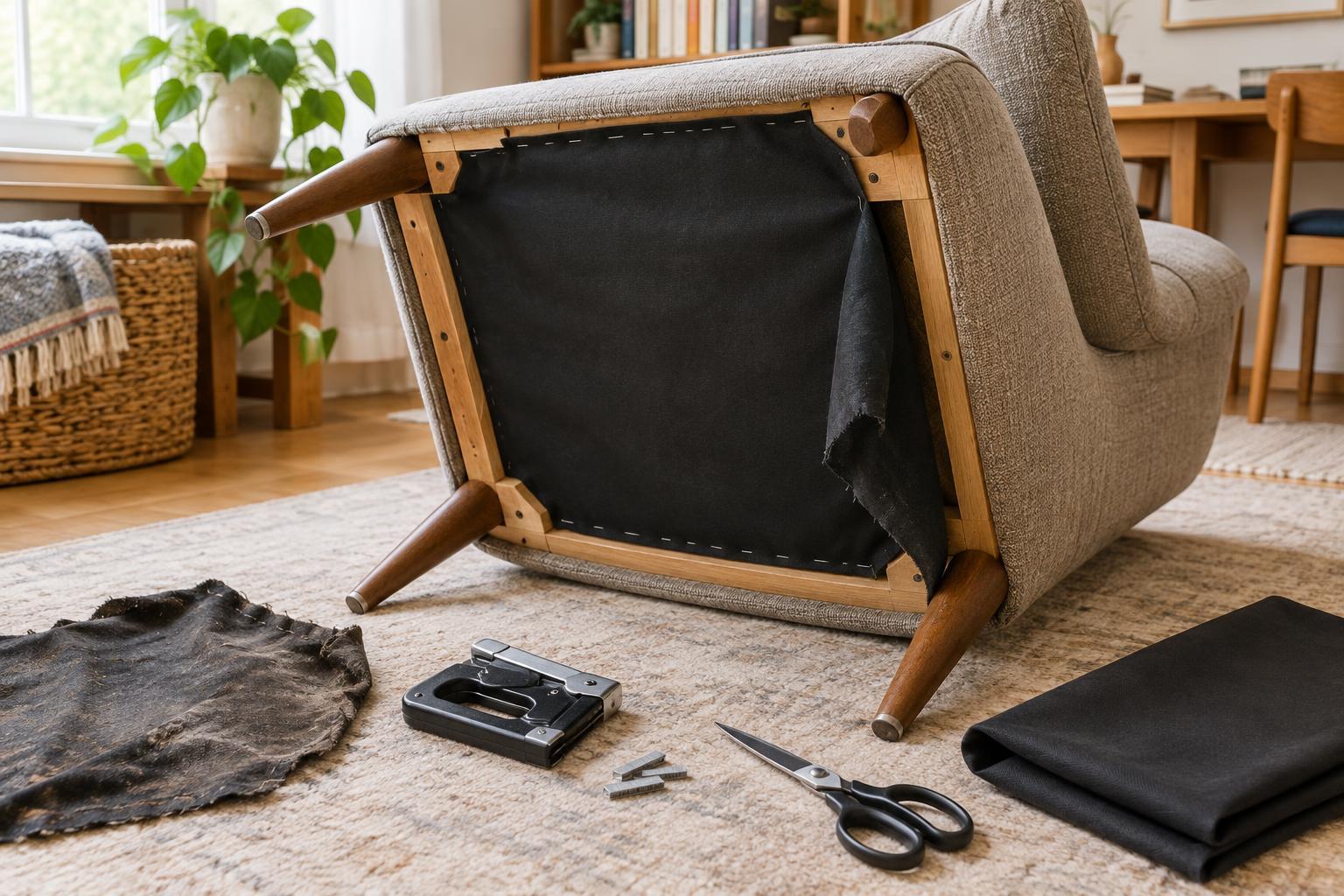
Repair and RefreshA loose dust cover can make an otherwise sound chair look untidy. Learn how to remove the old fabric, cut a replacement and fasten it neatly to the underside of the frame.
Read article · 4 min↗
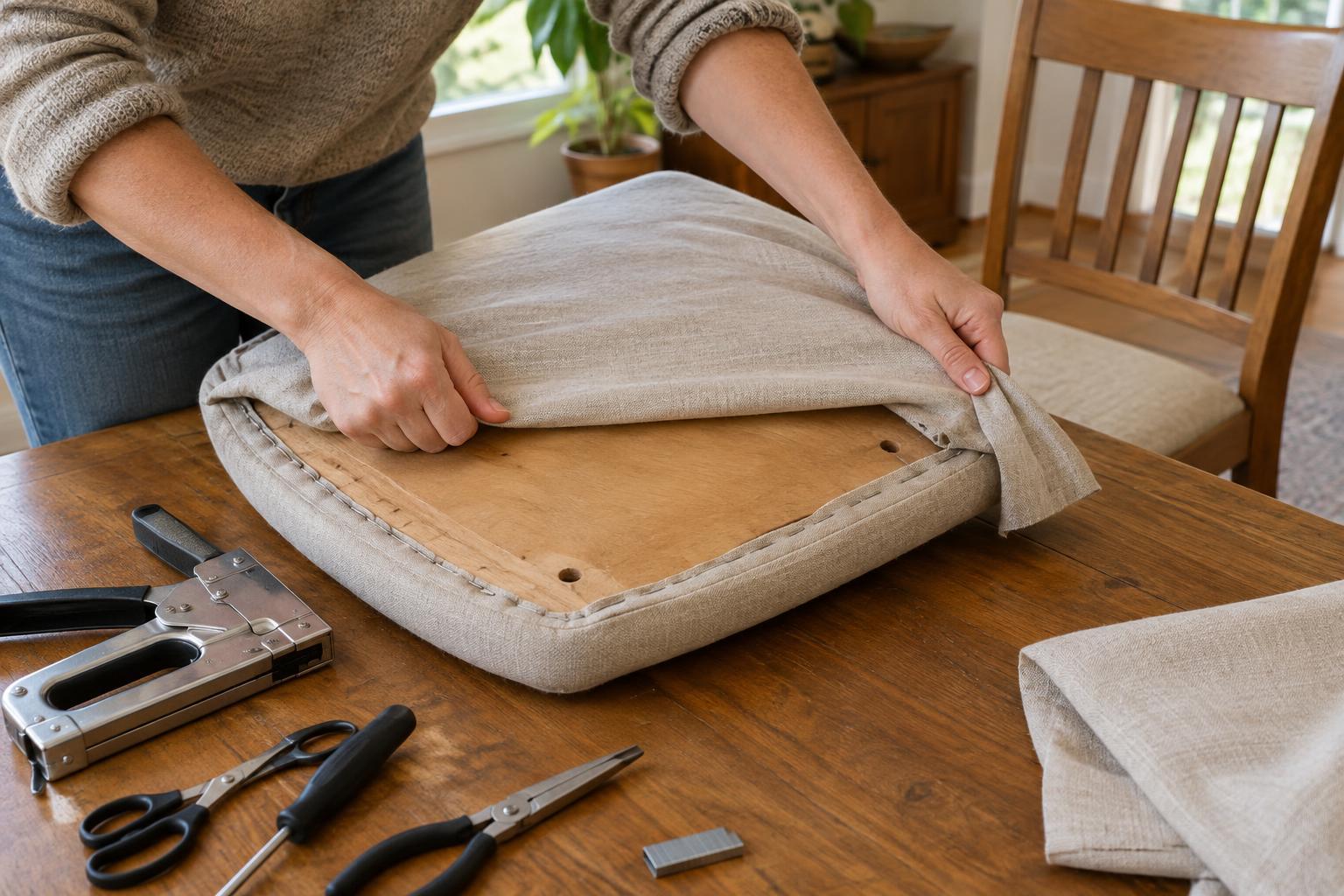
Repair and RefreshA removable dining chair seat is a manageable upholstery project. Learn how to check the seat base, choose fabric, staple an even cover, handle the corners and put the seat back securely.
Read article · 4 min↗
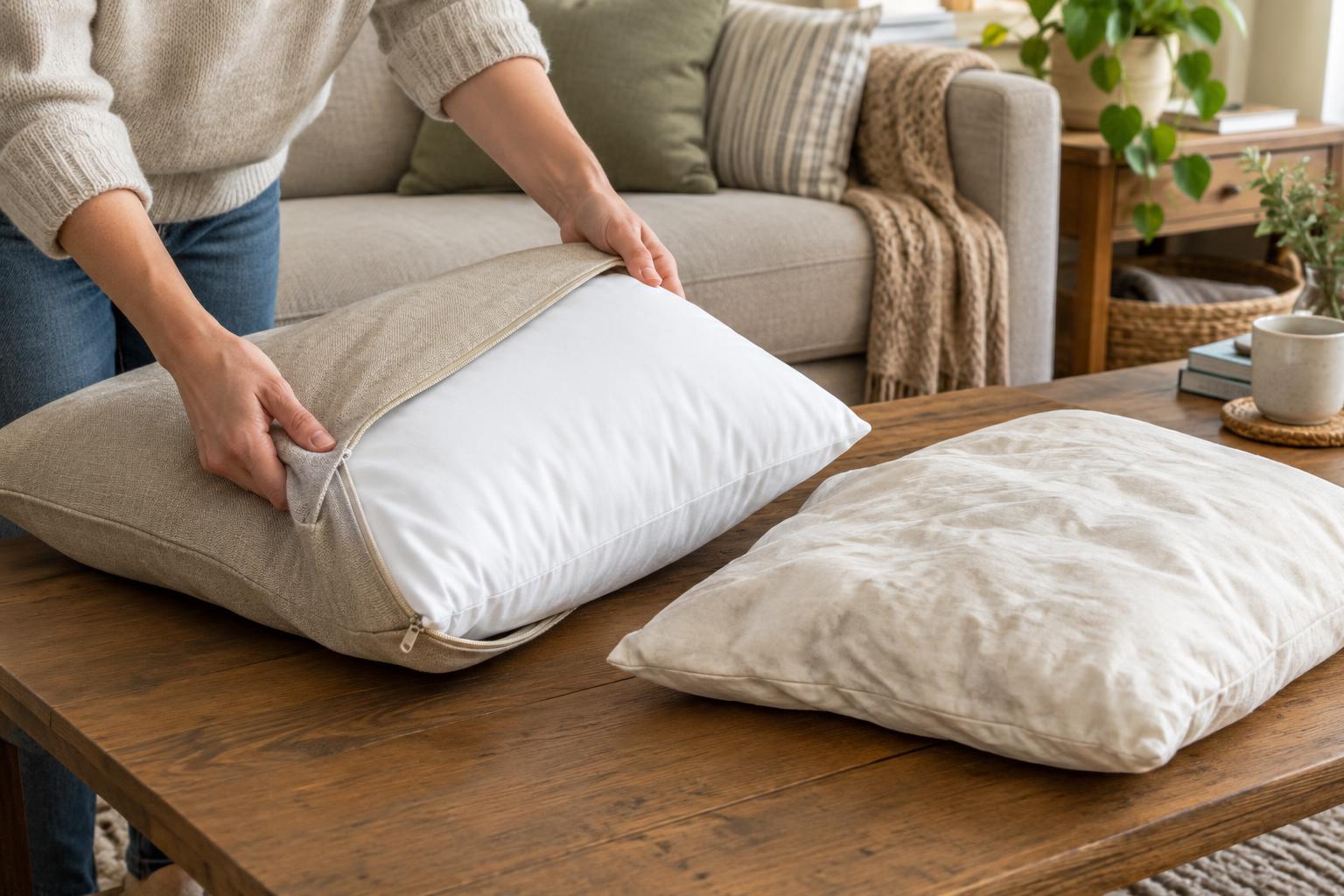
Repair and RefreshA flattened cushion does not always need a new cover. Learn how to assess the old insert, choose suitable replacement filling, measure for a comfortable fit and put everything back together without straining the fabric.
Read article · 4 min↗
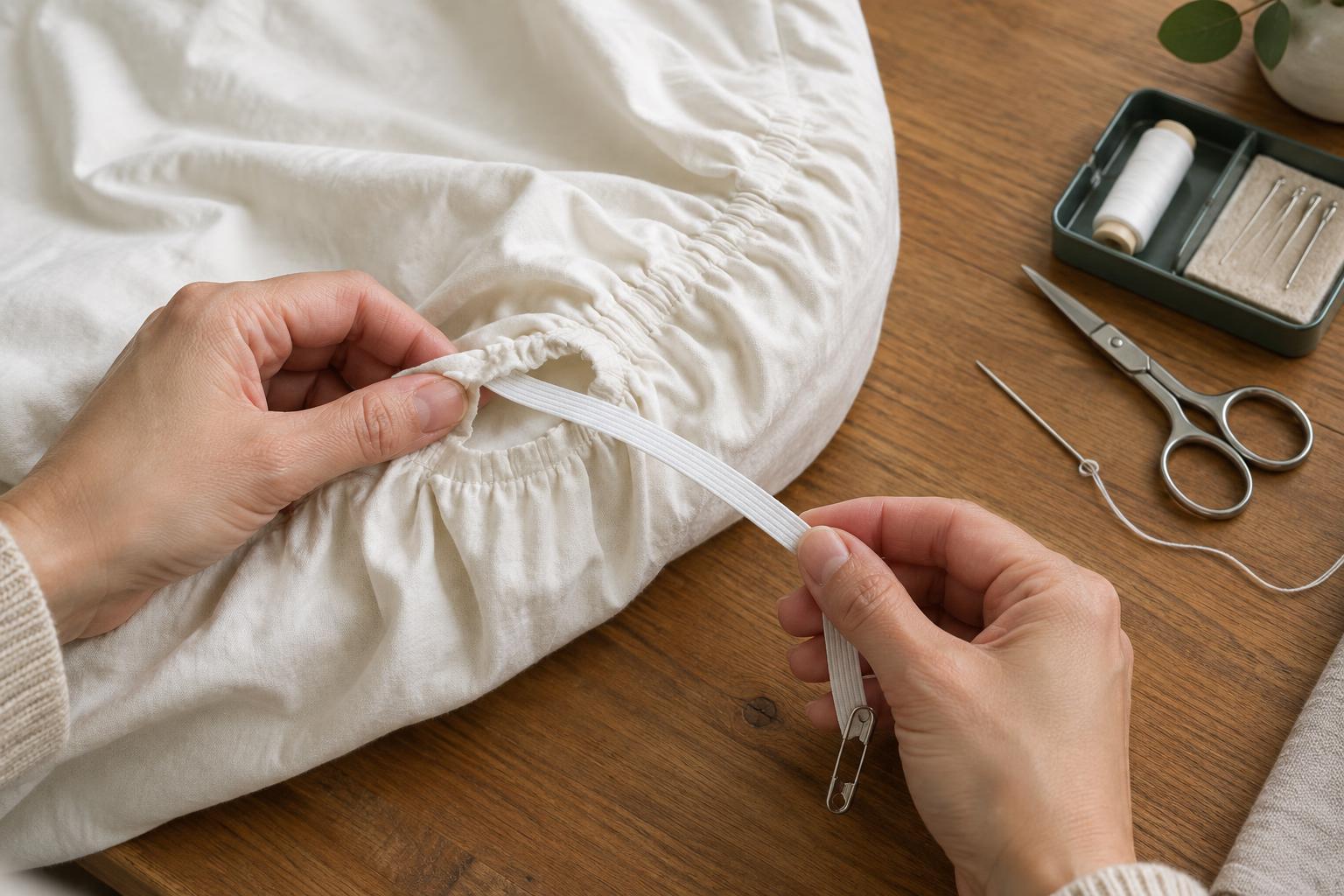
Repair and RefreshA loose corner does not always mean a fitted sheet is finished. Learn how to inspect the elastic, choose a small repair when appropriate, and sew in a replacement without puckering or damaging the fabric.
Read article · 4 min↗
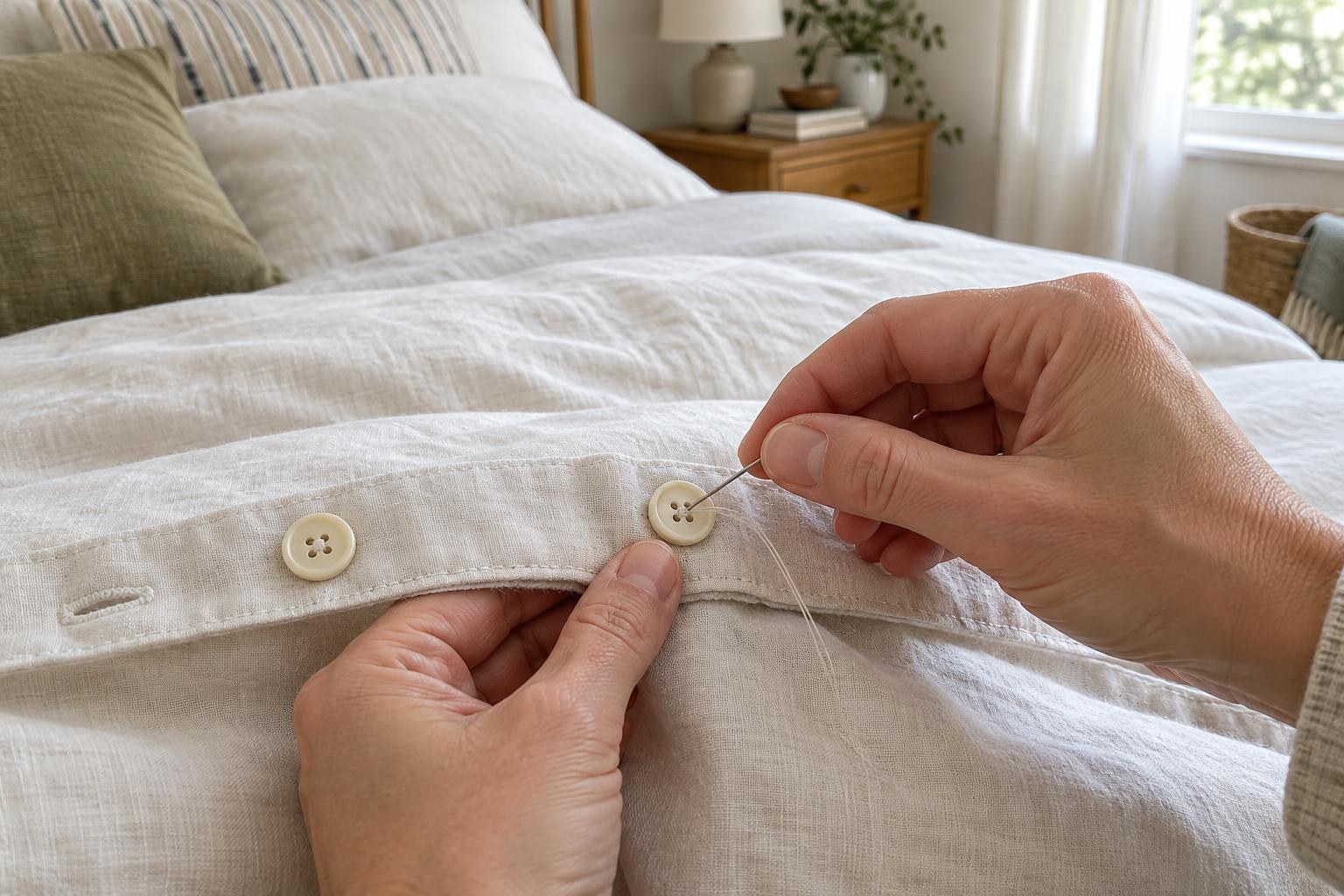
Repair and RefreshA missing duvet cover button is a small repair that can make the cover easier to use. Learn how to choose a replacement, position it correctly and sew it on securely by hand.
Read article · 4 min↗
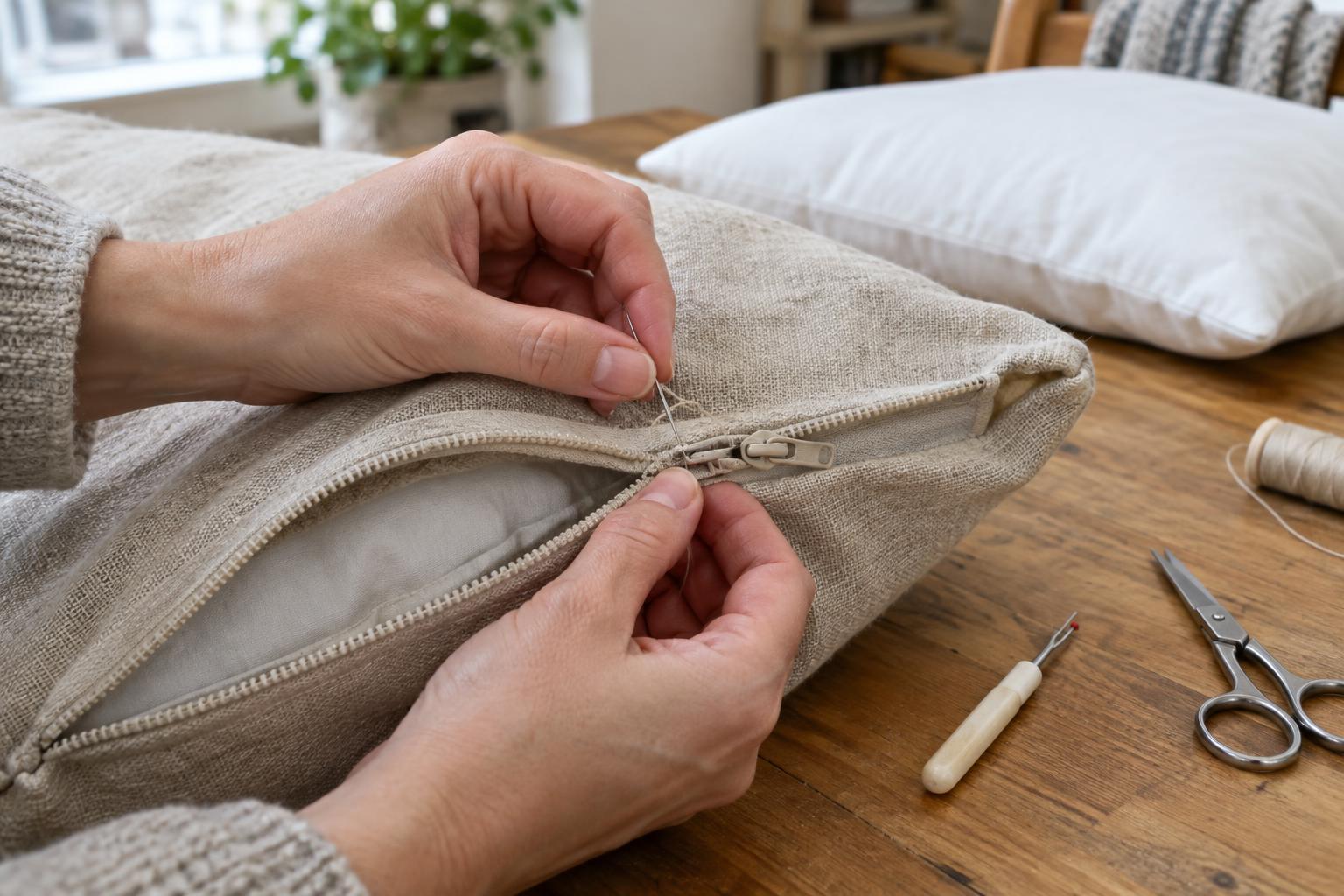
Repair and RefreshA broken zipper does not have to mean replacing a cushion cover. Learn how to choose a suitable replacement, remove the old zipper, sew in the new one and check that the cover closes smoothly.
Read article · 4 min↗
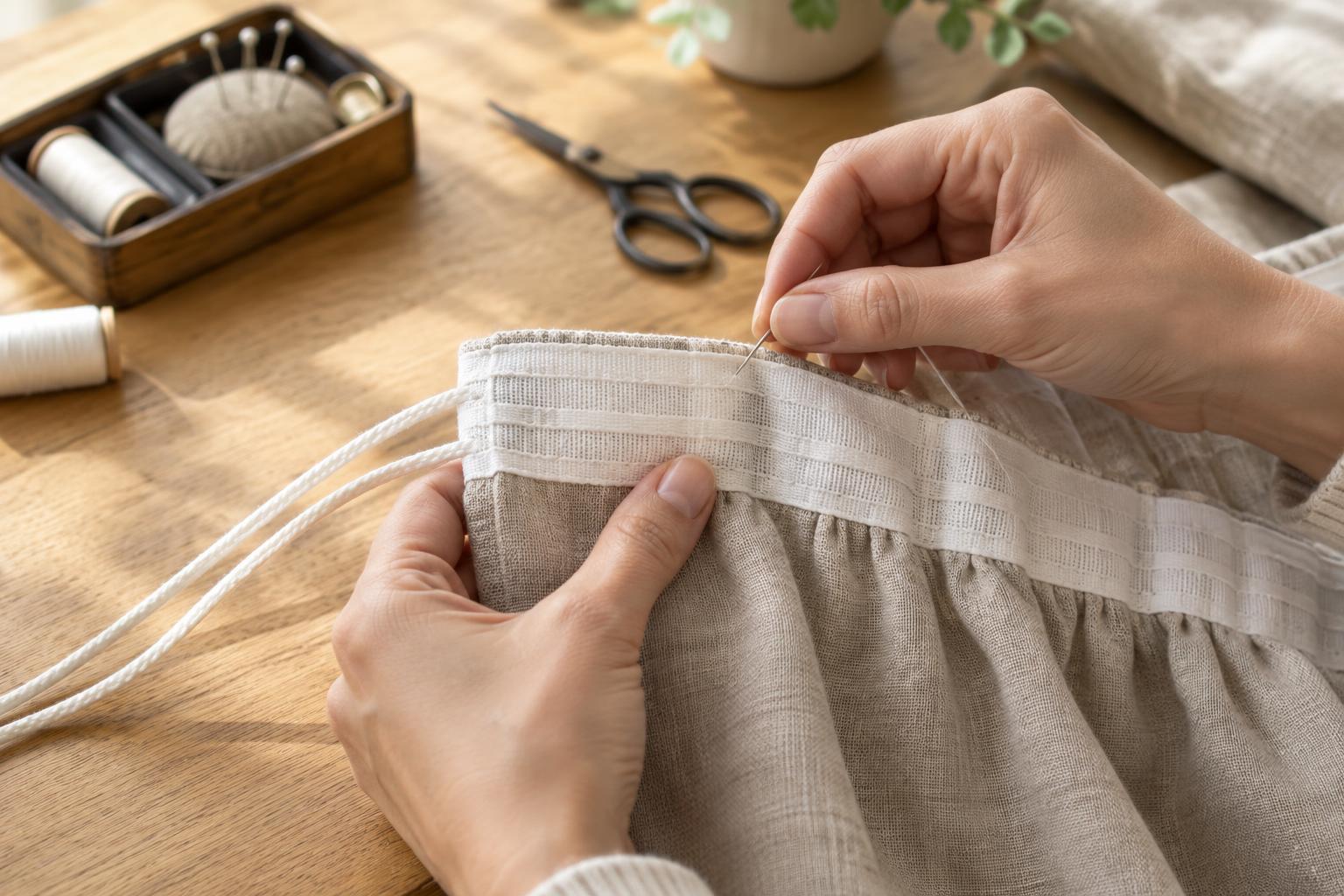
Repair and RefreshA loose strip of curtain header tape can make a panel sag or hang unevenly. Learn how to inspect the stitching, secure the tape by hand or machine, and restore the gathers without trapping the draw cords.
Read article · 4 min↗
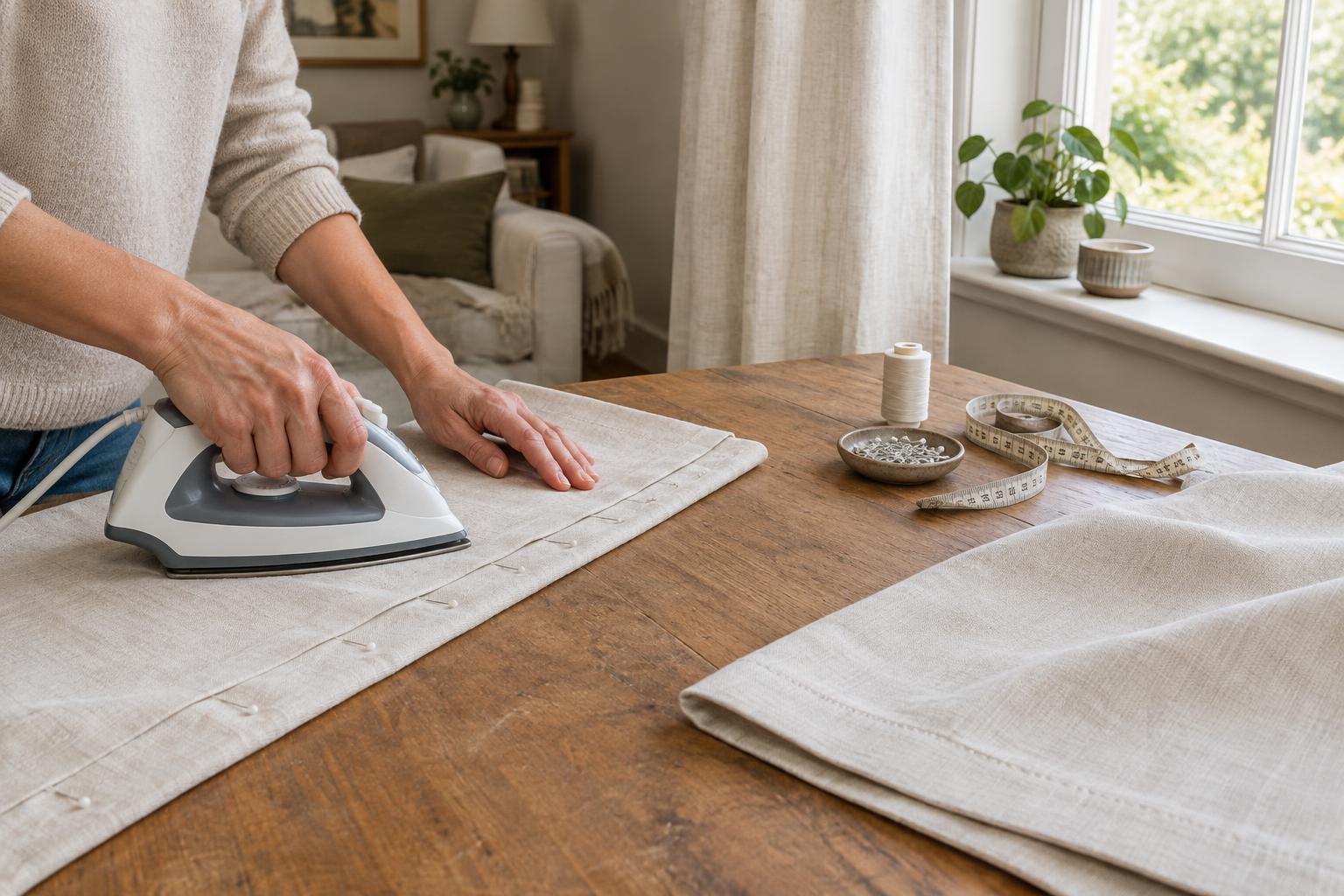
Repair and RefreshA sewn hem can give curtains a cleaner fit without changing how they hang. Learn how to measure panels in place, allow for a double-fold hem, sew evenly, and handle linings and patterned fabric.
Read article · 4 min↗
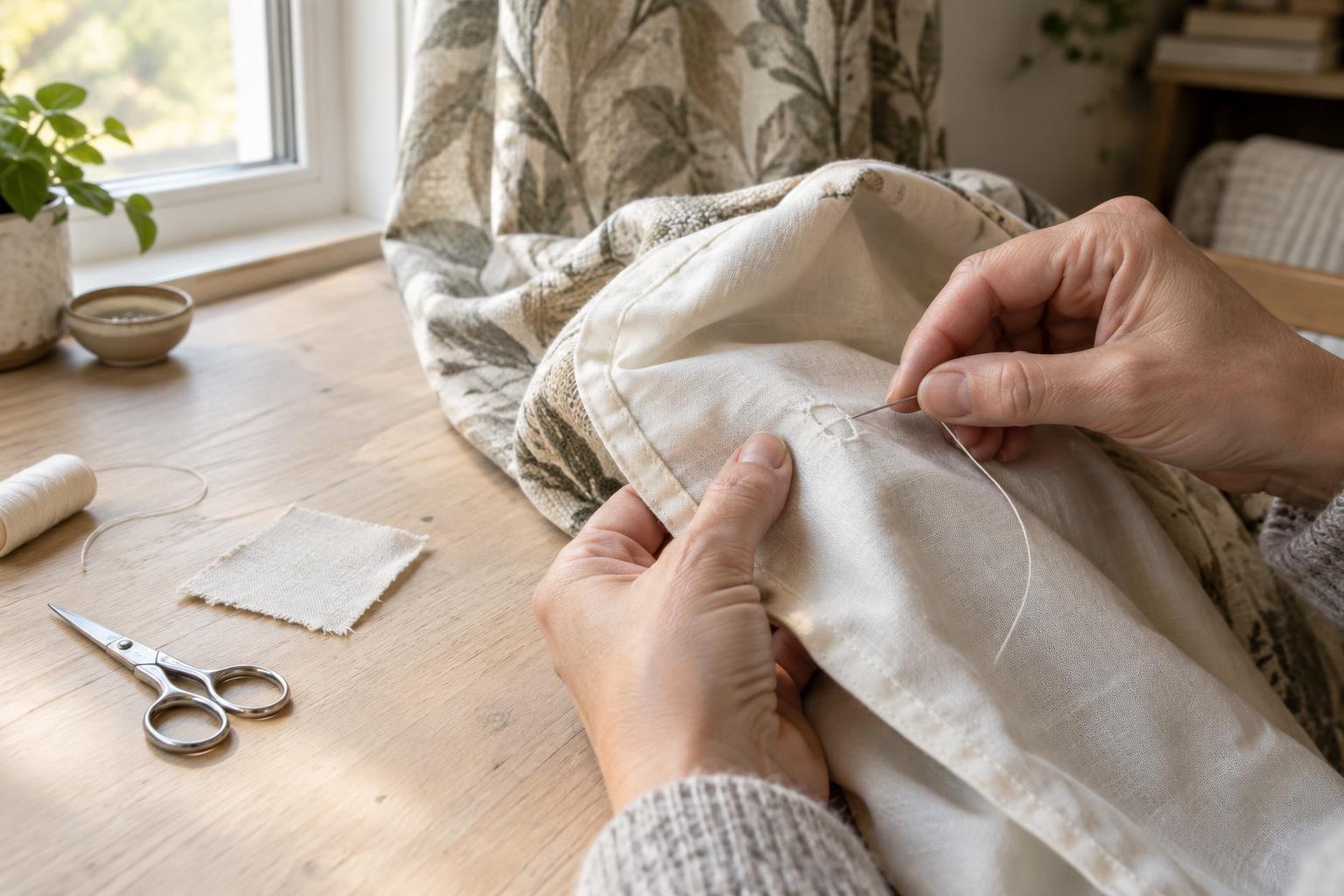
Repair and RefreshA torn curtain lining does not always mean replacing the curtain. Learn how to assess the damage, close a small tear, add a patch where the fabric is weak, and care for the repair afterward.
Read article · 4 min↗
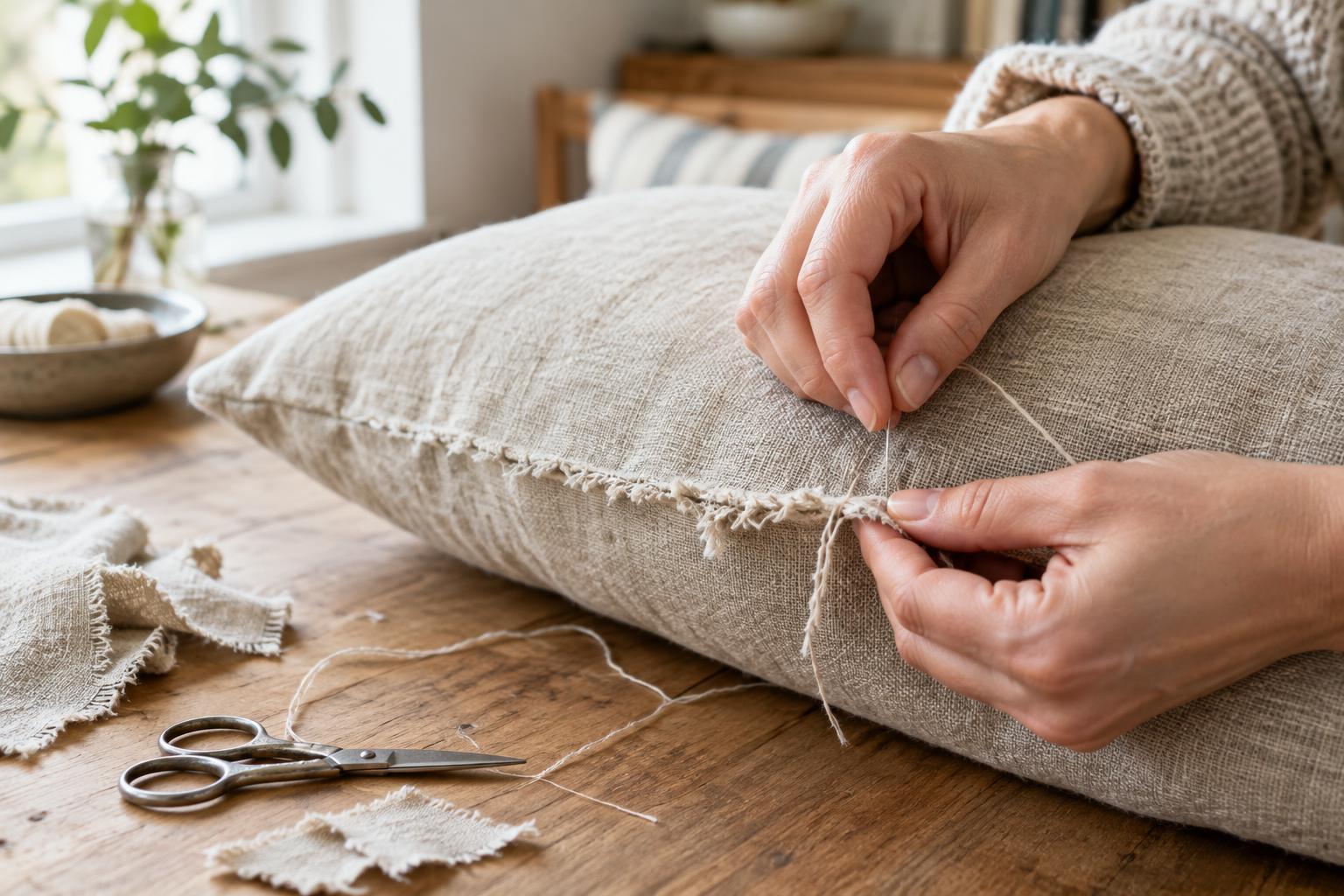
Repair and RefreshA fraying edge does not always mean a textile is beyond repair. Learn how to assess the fabric, contain loose threads, and choose a stitched or no-sew finish that suits the item.
Read article · 4 min↗
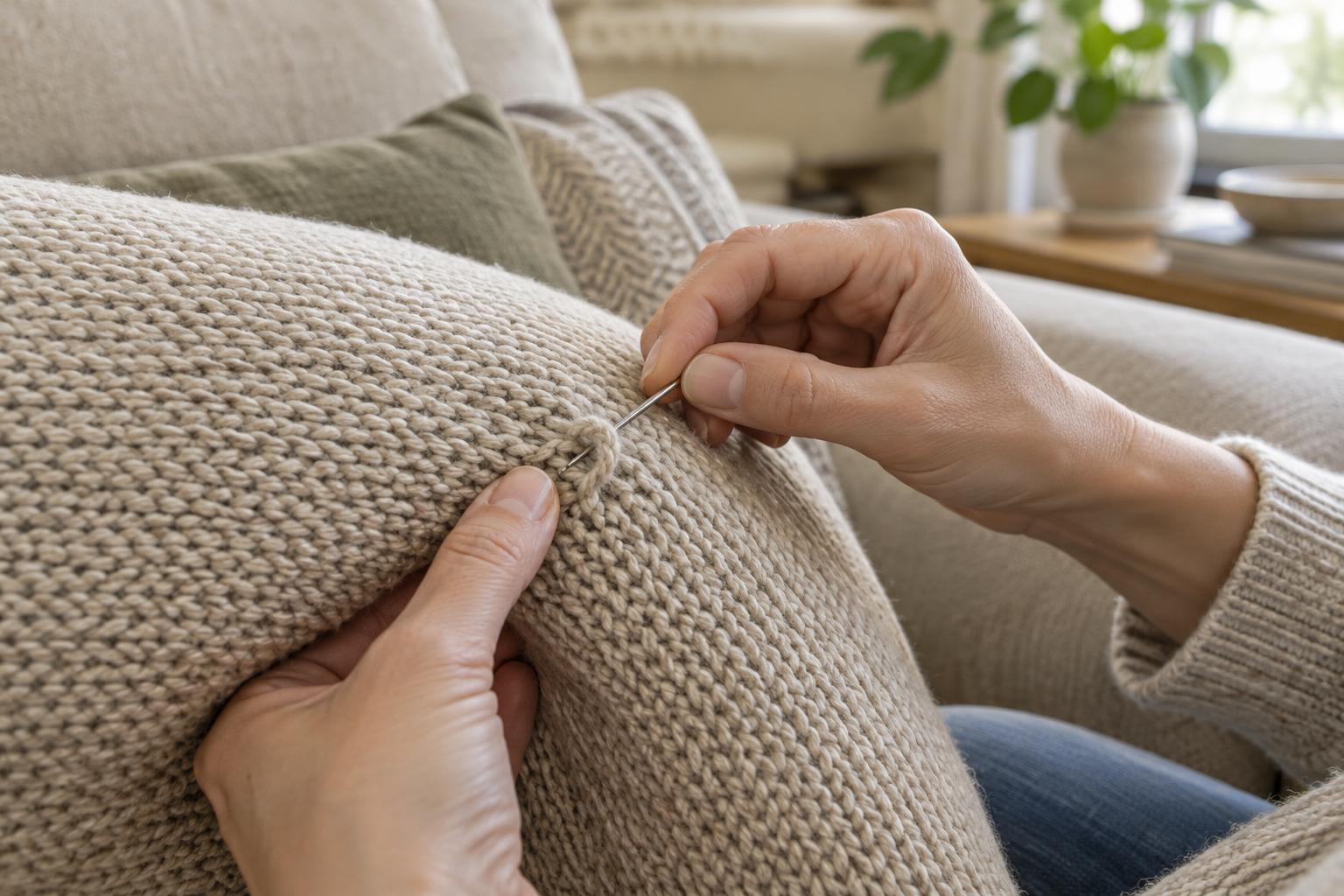
Repair and RefreshA pulled loop does not always mean a fabric is ruined. Learn how to assess a snag, ease a thread back into place, and protect delicate textiles without reaching for scissors.
Read article · 4 min↗
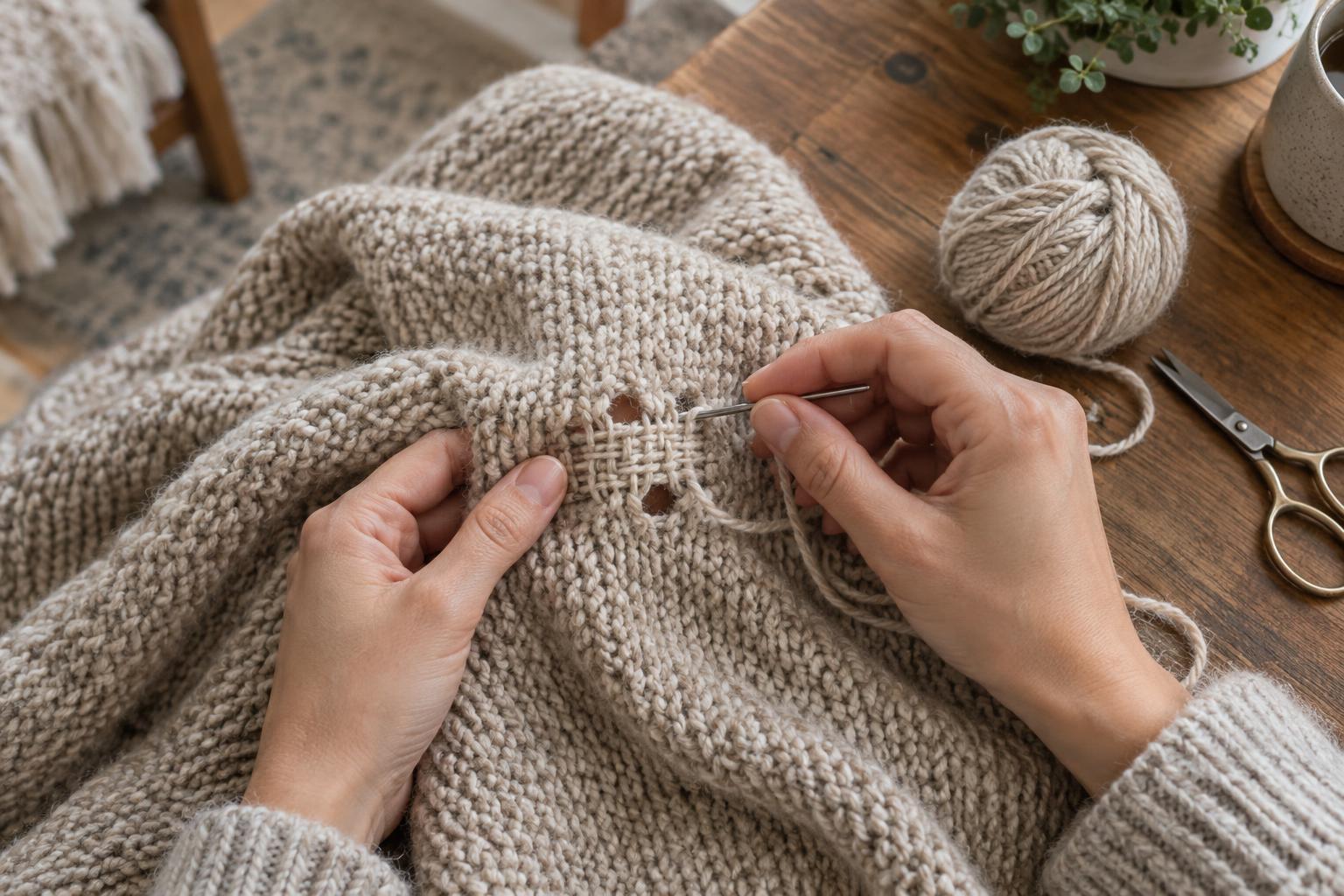
Repair and RefreshA small hole does not have to end the life of a favorite knitted throw. Learn how to secure loose stitches, build a simple woven darn, and finish the repair so the blanket stays comfortable to use.
Read article · 4 min↗
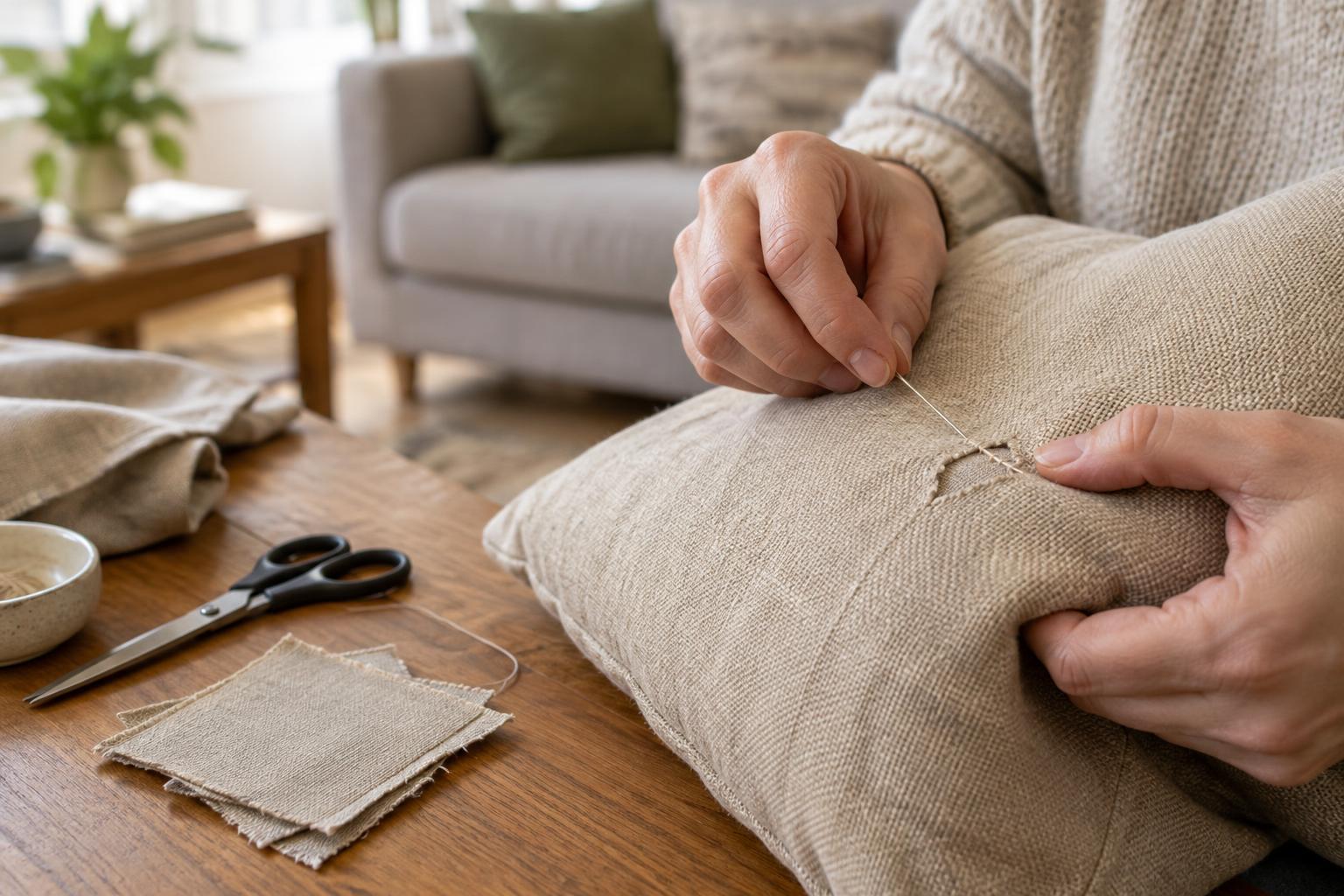
Repair and RefreshA small tear in a cushion cover, curtain or other woven home textile does not always mean replacing the whole piece. Learn how to assess the damage, choose a patch and sew a repair that supports the fabric without drawing unnecessary attention.
Read article · 4 min↗
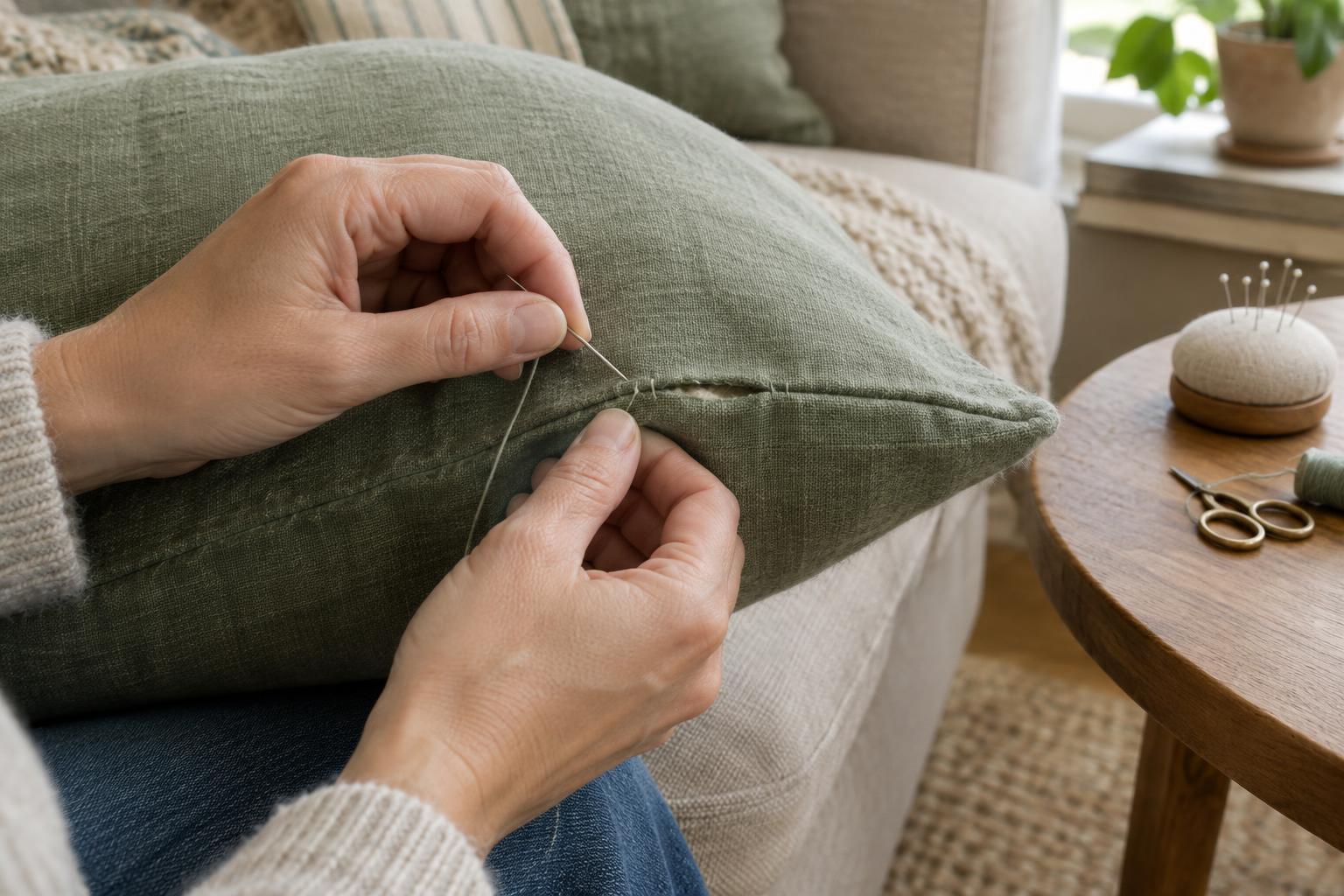
Repair and RefreshA split cushion seam is often a manageable repair if the surrounding fabric is still sound. Learn how to assess the opening, prepare the cover, sew a neat hand repair and reduce strain on the seam afterward.
Read article · 4 min↗
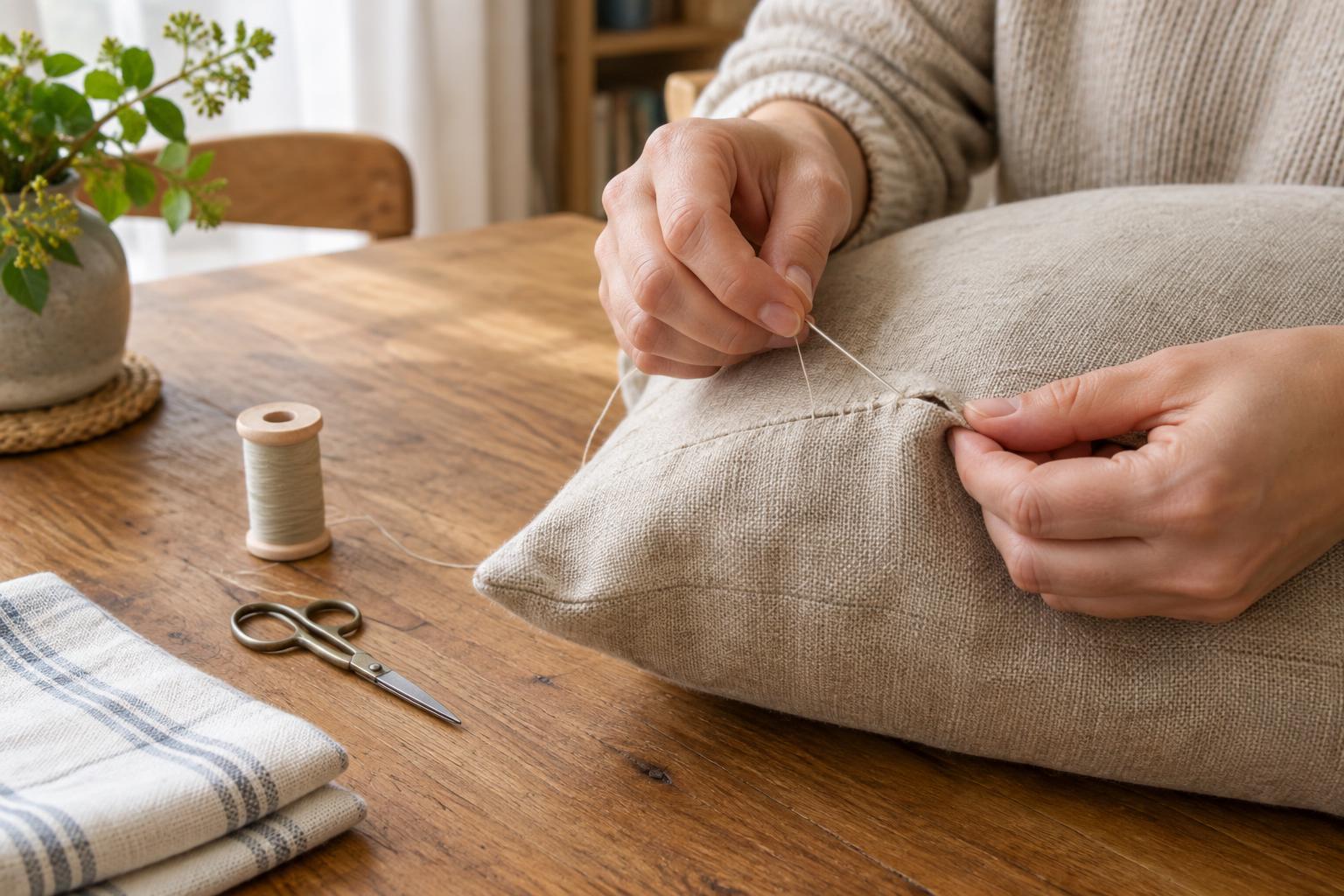
Repair and RefreshA small tear or loose seam does not always call for a sewing machine. Learn when to use a running stitch, backstitch or ladder stitch for common household fabric repairs, and how to make each repair neat and durable.
Read article · 4 min↗

Repair and RefreshA worn cushion, curtain or upholstered chair does not always need the same solution. Learn how to assess damage, choose between a small repair and a new cover, and recognize when replacement makes more sense.
Read article · 4 min↗