Check the edge before you cut
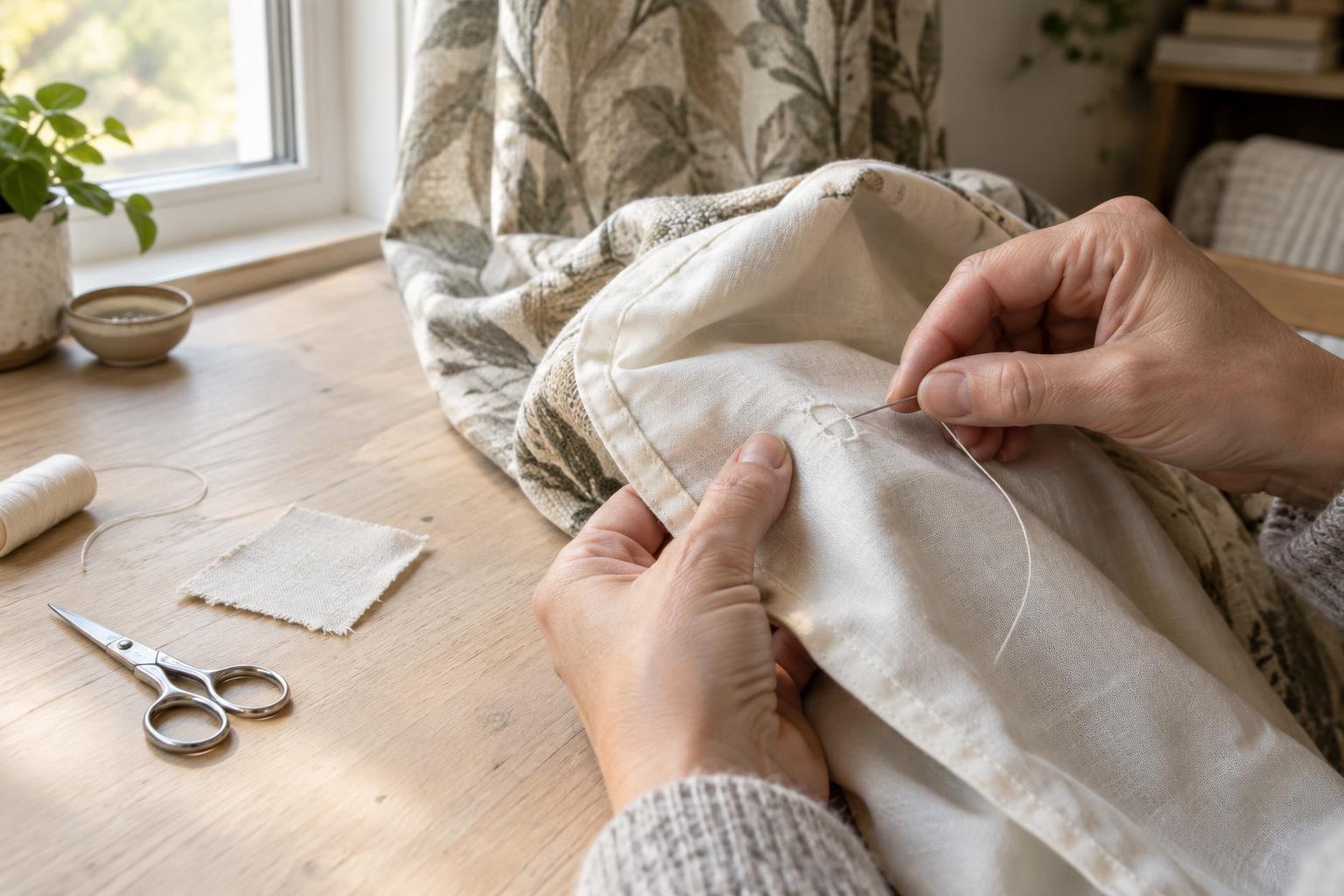
Fraying happens when threads at the edge of a woven fabric work loose. It often appears along a curtain hem, cushion seam allowance, table linen, or a freshly cut piece of cloth. Start by finding out whether the damage is limited to loose threads or whether the fabric itself has become thin or torn. An intact edge is usually straightforward to stabilize; a weak area may need a patch or a wider new hem.
Lay the item flat and handle the edge gently. Do not pull long threads, even if they look ready to come away: they may still be woven into sound fabric. With sharp scissors, trim only threads that are completely loose. Leave enough fabric beyond any seam or fold to make a secure finish. If the item is lined or has a decorative border, check how the layers are joined before cutting anything.
These methods are mainly for woven cloth. Knits may curl or develop runs rather than fray in the same way, and their stretch calls for a flexible repair. On a valuable, fragile, or unfamiliar textile, test your approach in an inconspicuous place and avoid irreversible trimming.
Contain the fraying while you plan the repair
If you cannot finish the edge immediately, keep it from being rubbed or washed. Fold the loose edge inward and secure the fold with a few widely spaced hand stitches, or wrap the area in clean, smooth cloth for storage. Pins can hold a fold briefly while you work, but they are not a lasting fix and may leave marks in delicate fabrics.
A liquid fray-stopping product can be useful on some small, hidden edges, but it may darken, stiffen, or mark the fabric. Test it on a scrap or concealed area and follow its label directions. Let it dry fully before judging the result. Adhesive is less suitable for a visible, soft edge where drape matters, and it will not restore fabric that has already worn thin.
Choose a finish that fits the fabric
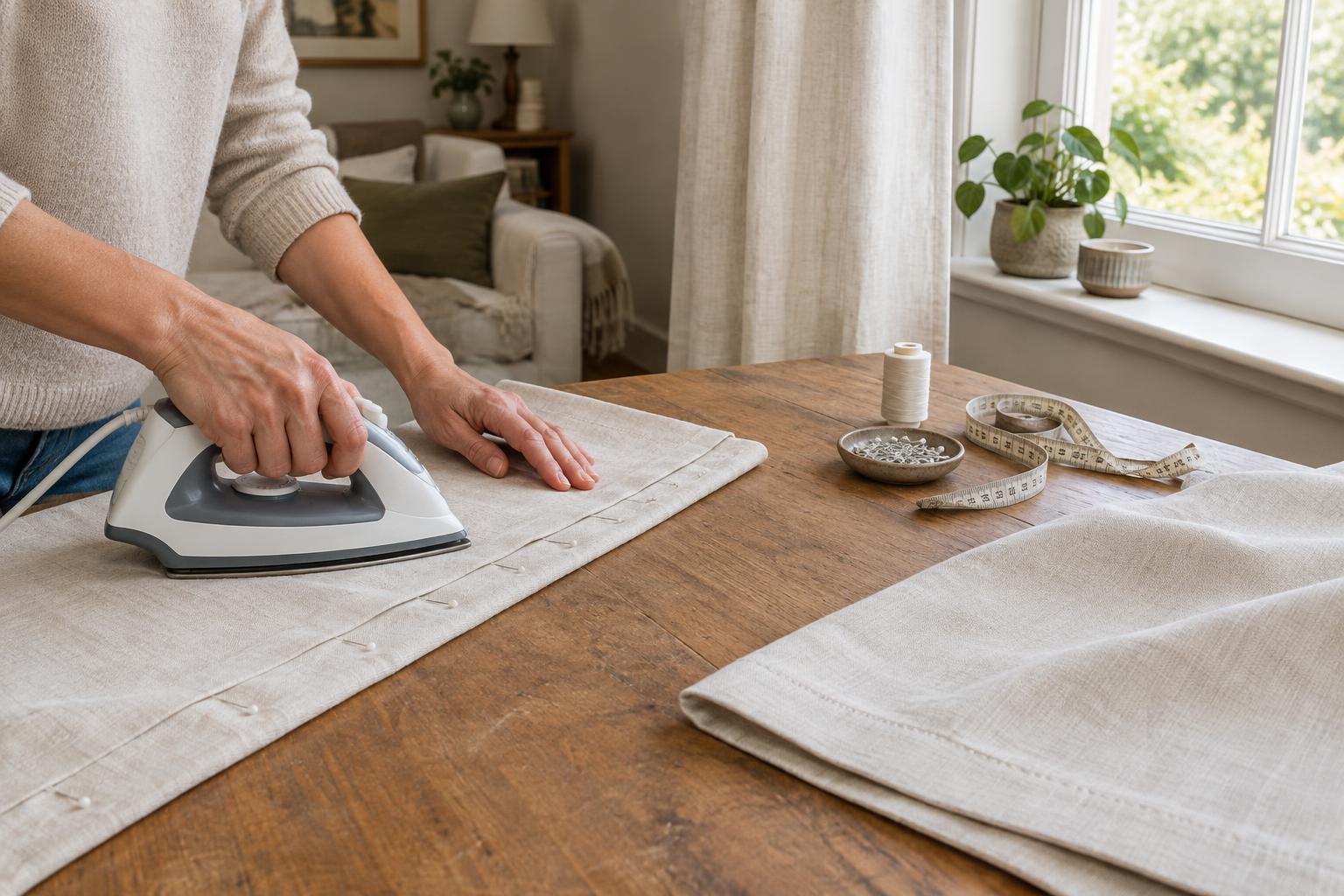
For a straight edge with enough spare cloth, a double-fold hem is a tidy choice. Fold the raw edge under once to hide the loose threads, then fold it again and stitch through the layers. Press each fold if the fabric tolerates ironing; use a suitable heat setting and test first. On bulky upholstery cloth, two folds may create a ridge, so a single fold with a separately finished raw edge may sit better.
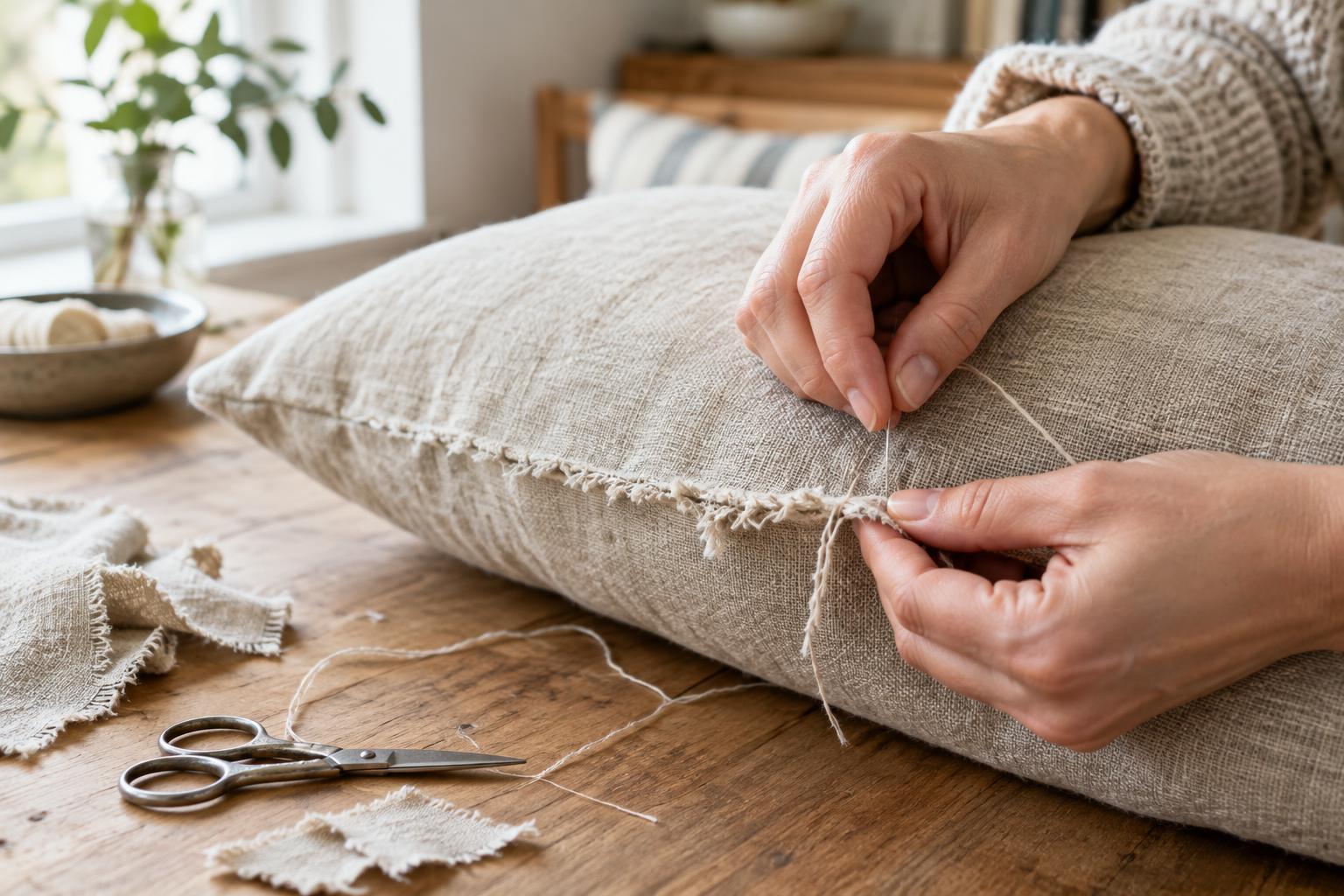
When an edge will be hidden inside a seam, a zigzag stitch close to the cut edge can help keep the weave together. A serger can make a similar contained finish if you have one. For hand sewing, small, evenly spaced overcast stitches wrap around the edge and catch the threads most likely to loosen. Aim to secure the weave without pulling so tightly that the fabric puckers.
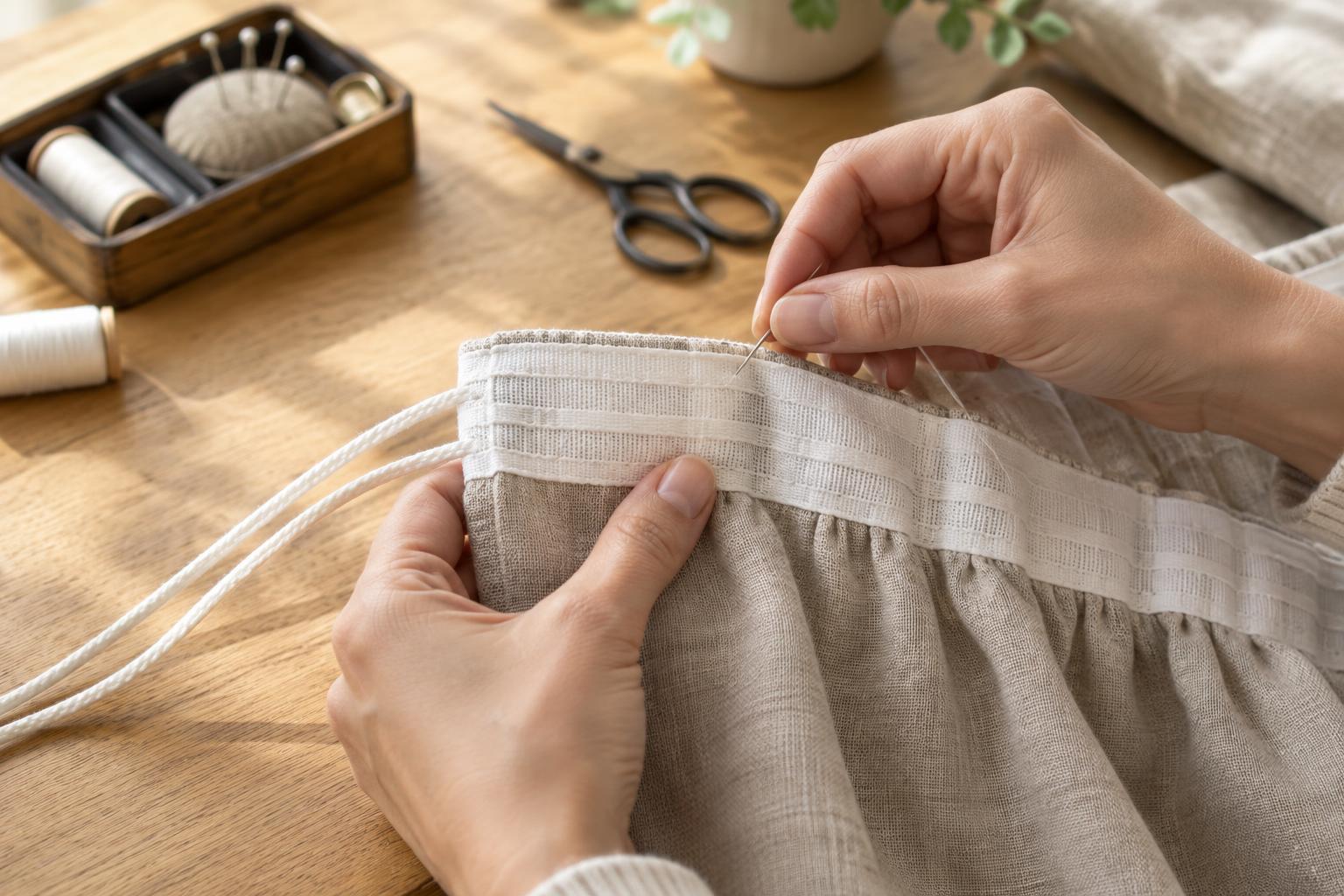
Bias binding or a narrow fabric tape offers another option when there is too little allowance for a hem. Wrap the binding over the raw edge and stitch through both sides, keeping the layers flat. Choose a binding that feels compatible with the main fabric: a heavy tape can make a lightweight curtain hang awkwardly, while a flimsy one may not stand up to regular handling.
Make the repair without creating new stress
Match the thread to the fabric’s weight and choose a needle that passes through without leaving obvious holes. Before stitching the item, try a few stitches on a scrap if one is available. Support long panels or bulky cushions on a table rather than letting their weight pull against the needle. Stitch on sound fabric, not only through the loose fringe, and backstitch or knot the thread securely at each end.
If fraying starts at a stressed corner or seam, finishing the raw edge alone may not solve it. Check whether the seam has opened or the item is being pulled tight in use. Reinforce the seam within sturdy fabric and avoid making a repair so rigid that the strain simply moves to the next weak spot.
Check the result and care for it gently
After stitching, smooth the area and look for threads that escaped the finish. Trim only fully loose ends, then check that the hem or seam lies flat and still allows the textile to hang or flex as intended. If the item is washable, follow its existing care instructions rather than assuming the repair makes it safe for a different cleaning method.
Inspect the edge after its next use or wash. A few new loose threads may call for another line of stitching; continuing loss of fabric suggests that a wider section needs replacing or covering. The best repair is not necessarily invisible. It is one that holds the edge securely while preserving the textile’s shape, feel, and everyday usefulness.