Start with the part that is failing
Before deciding what to do with a worn textile, look past its overall appearance. Is the problem a loose seam, a faded surface, flattened filling or a weak underlying structure? Check the whole item in good light, including its back, underside, fastenings and edges. A curtain may have one torn heading but plenty of sound fabric. A cushion may look tired only because its insert has lost its shape.
Try a gentle inspection rather than pulling hard on damaged areas. If nearby fabric tears easily or feels thin and papery, a neat patch may have little material to hold onto. Notice any persistent dampness or musty smell, too. Cleaning should not be used to hide an unresolved moisture problem; the source of dampness needs attention before the textile returns to use.
Mend when the fabric around the damage is sound
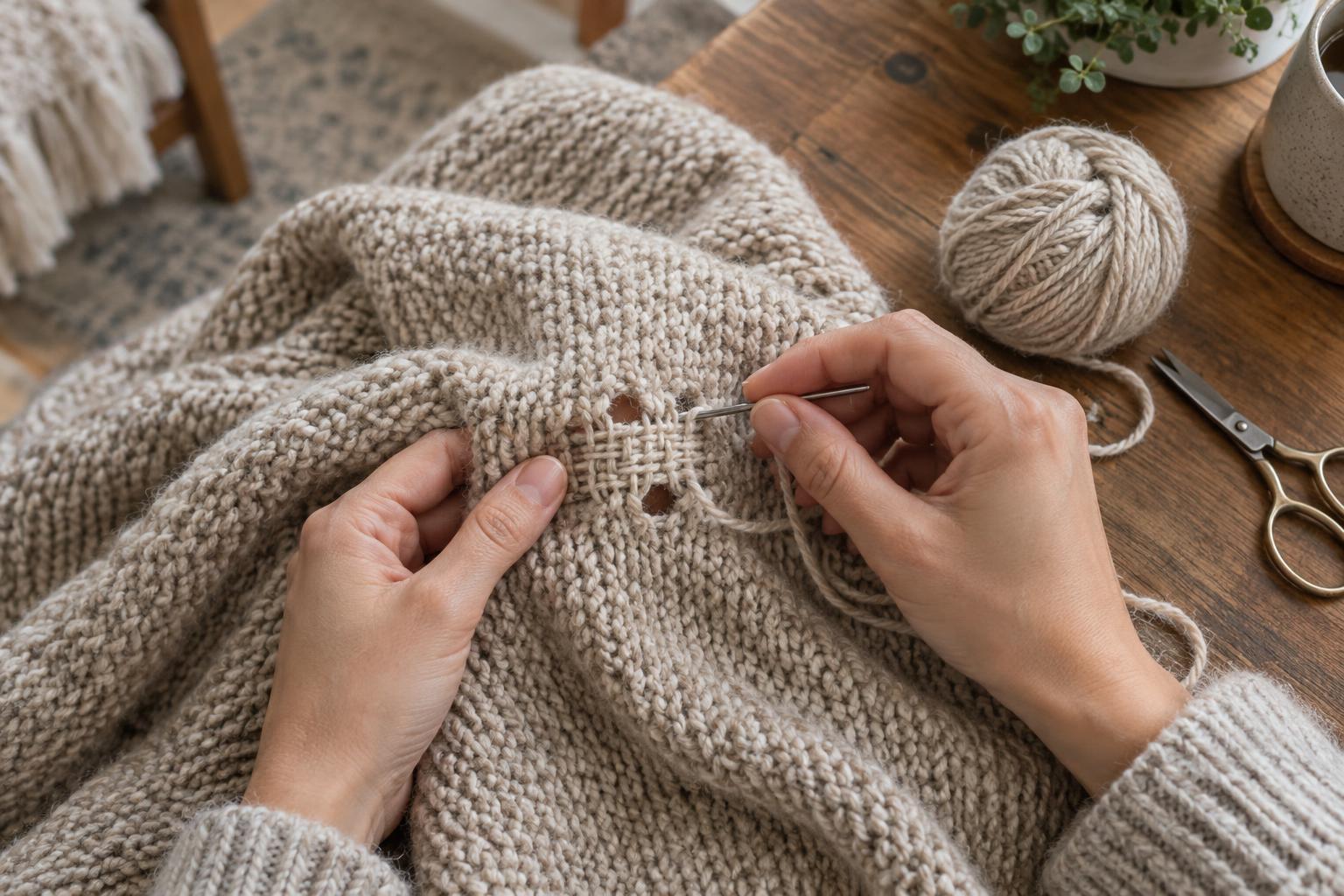
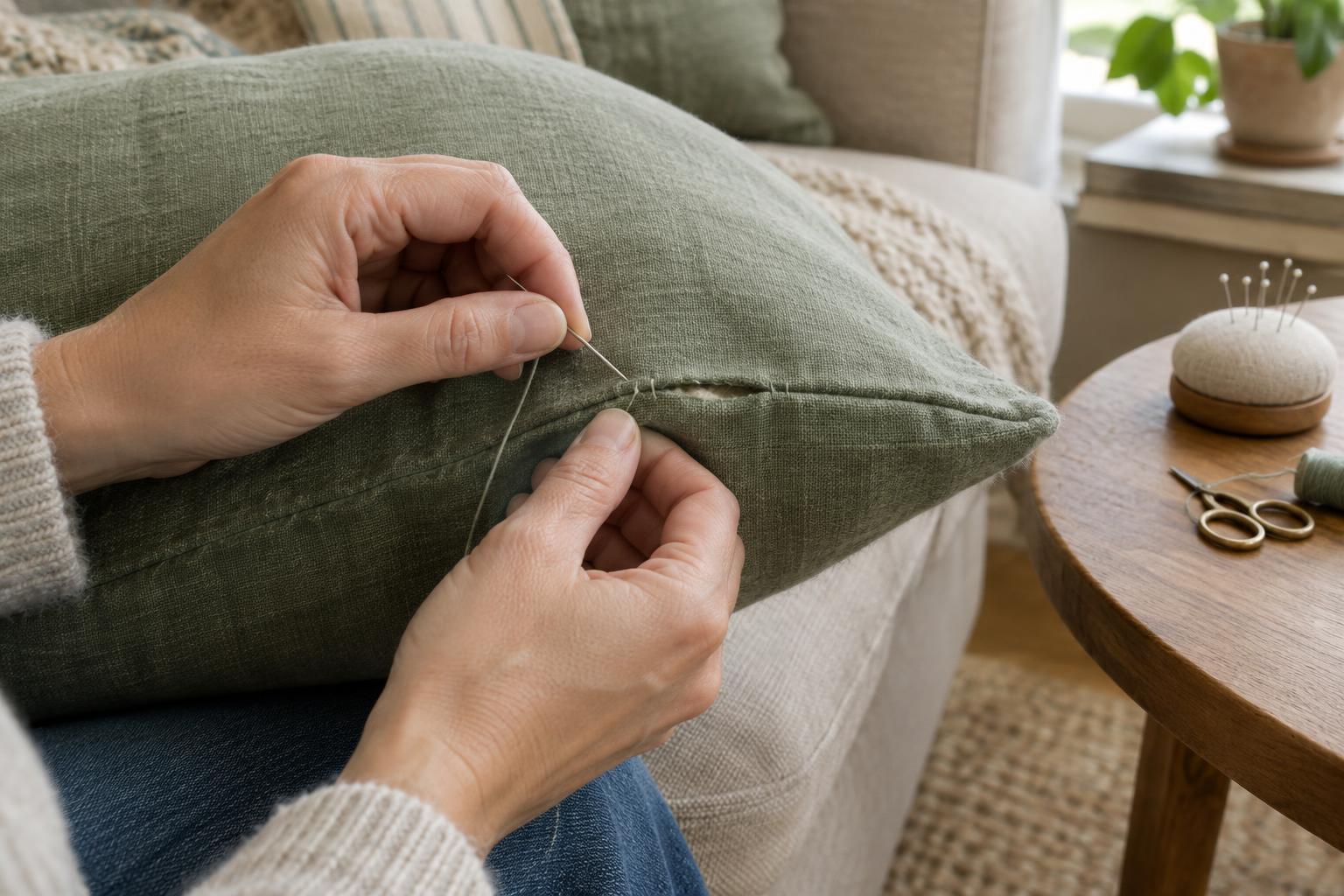
Mending is often the simplest choice for a local problem. A split seam, loose button, small snag or short tear in otherwise sturdy cloth may be repairable without changing how the item looks or works. Stitching a seam back along its original line can be less conspicuous than patching the face of a fabric. On a frequently handled item, the repair also needs to withstand repeated movement.
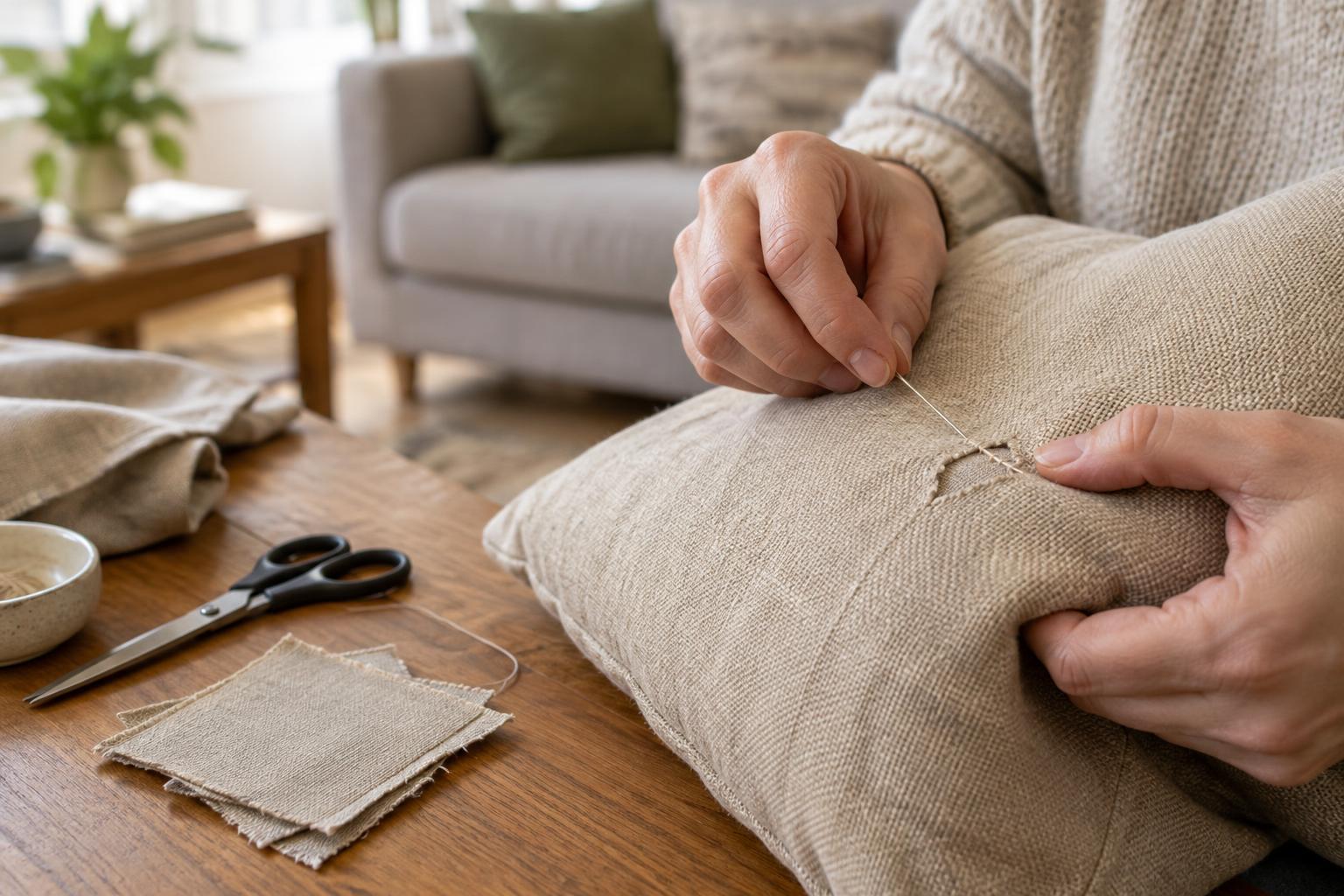
Choose a method that suits both the textile and its use. A discreet hand stitch may suit a decorative cushion, while a curtain heading carrying the weight of a panel needs a secure repair. Reinforcement behind a tear can spread strain, but it may show through thin cloth or alter its drape. Test any adhesive, patch or stitching approach in an inconspicuous place first. If damage keeps appearing beside earlier repairs, the surrounding fabric may be too weak for mending to last.
Re-cover when the surface has worn but the core still works
A new cover can be a practical middle ground when the visible fabric is worn, stained beyond what ordinary care can improve, or no longer suits the room. Removable cushion covers are relatively straightforward to replace if the inserts still provide the support and shape you want. Measure the existing cover and insert separately, and note details such as seams, closures and piping before choosing new fabric.
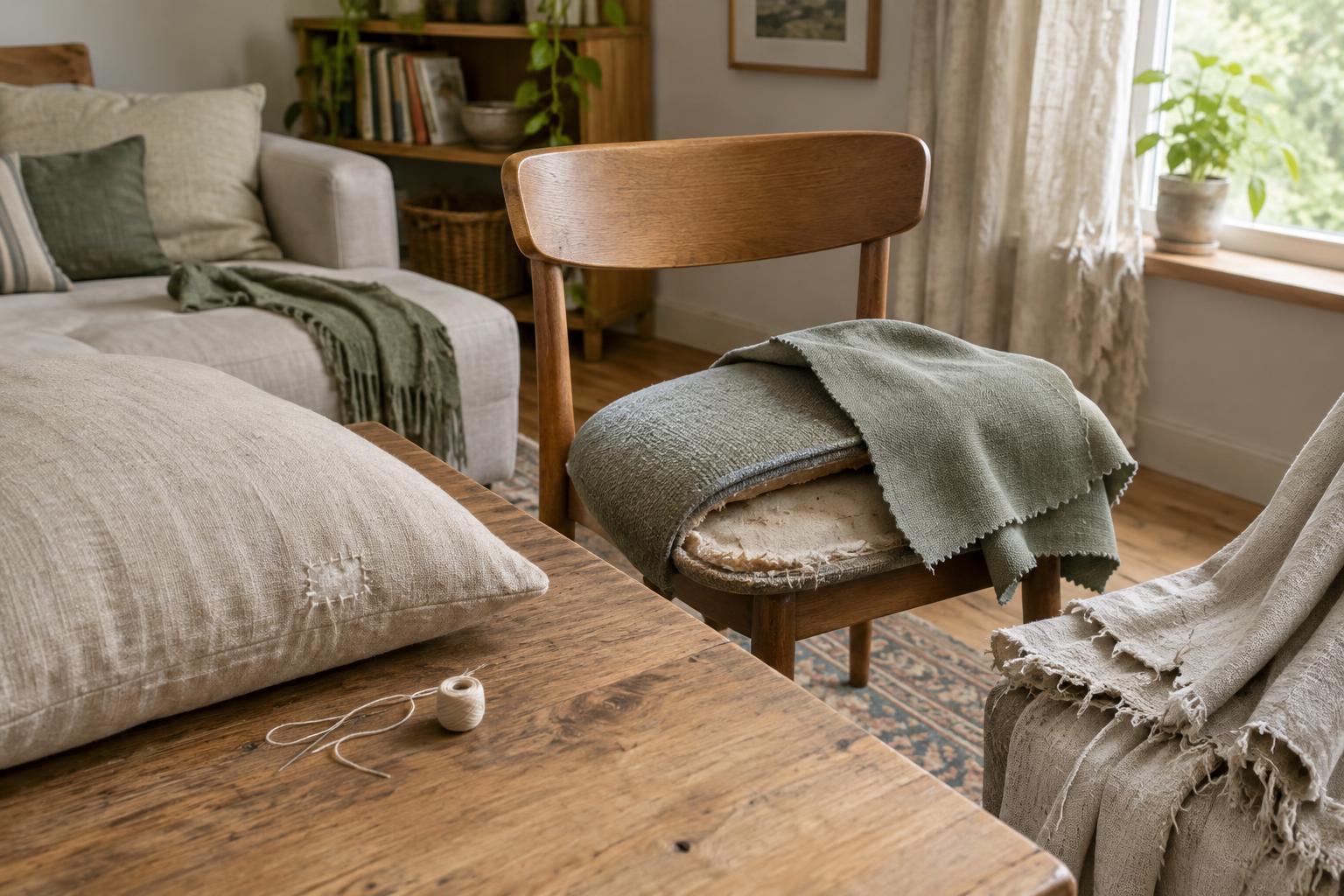
For upholstered furniture, the question is broader than color. Sit on the piece and check whether the frame feels stable, the padding is comfortable and the springs or supports behave as expected. New outer fabric will not fix a sagging seat or a loose frame. Re-covering a chair or sofa can involve removing old fabric, assessing padding and fitting a new covering under tension. If you cannot inspect or carry out those steps confidently, ask an experienced upholsterer what the work would involve before buying fabric.
Replace when wear is widespread or function is lost
Replacement is worth considering when damage extends across the textile rather than staying in one repairable spot. Sun-weakened curtain panels may split again after stitching; a rug with a failing backing may not lie securely; an insert that remains lumpy after reshaping may no longer do its job. Compare the condition of the whole item with the effort of repairing it, not just the size of its most obvious flaw.
Function and safety matter more than preserving an item at any cost. Do not keep using a textile that cannot be cleaned appropriately for its intended use, sheds deteriorating material, or conceals a furniture problem that needs attention. If the item has sentimental value, replacement does not have to mean discarding every part. You might keep a sound section of fabric for a smaller project while choosing a more durable textile for everyday use.
Make the choice fit your room and routine
After checking condition, consider how the item is used. A decorative throw can tolerate a visible mend that might catch or strain on a seat cushion. Curtains need fabric that hangs well and works with their heading and hardware. A cover used around children or pets may benefit from a washable construction, provided the fabric and care label support laundering. Choosing for the next few years of use is usually more helpful than trying to reproduce the original material exactly.
A useful final test is to describe the proposed fix in one sentence: what will change, and what problem will remain? If stitching closes a tear but leaves weak cloth all around it, plan for a short-lived repair. If a new cover improves appearance but leaves uncomfortable padding, assess the filling as well. Mend for a sound item with limited damage, re-cover for a sound core with a failing surface, and replace when the textile can no longer perform its job reliably.