Check the tape before you start
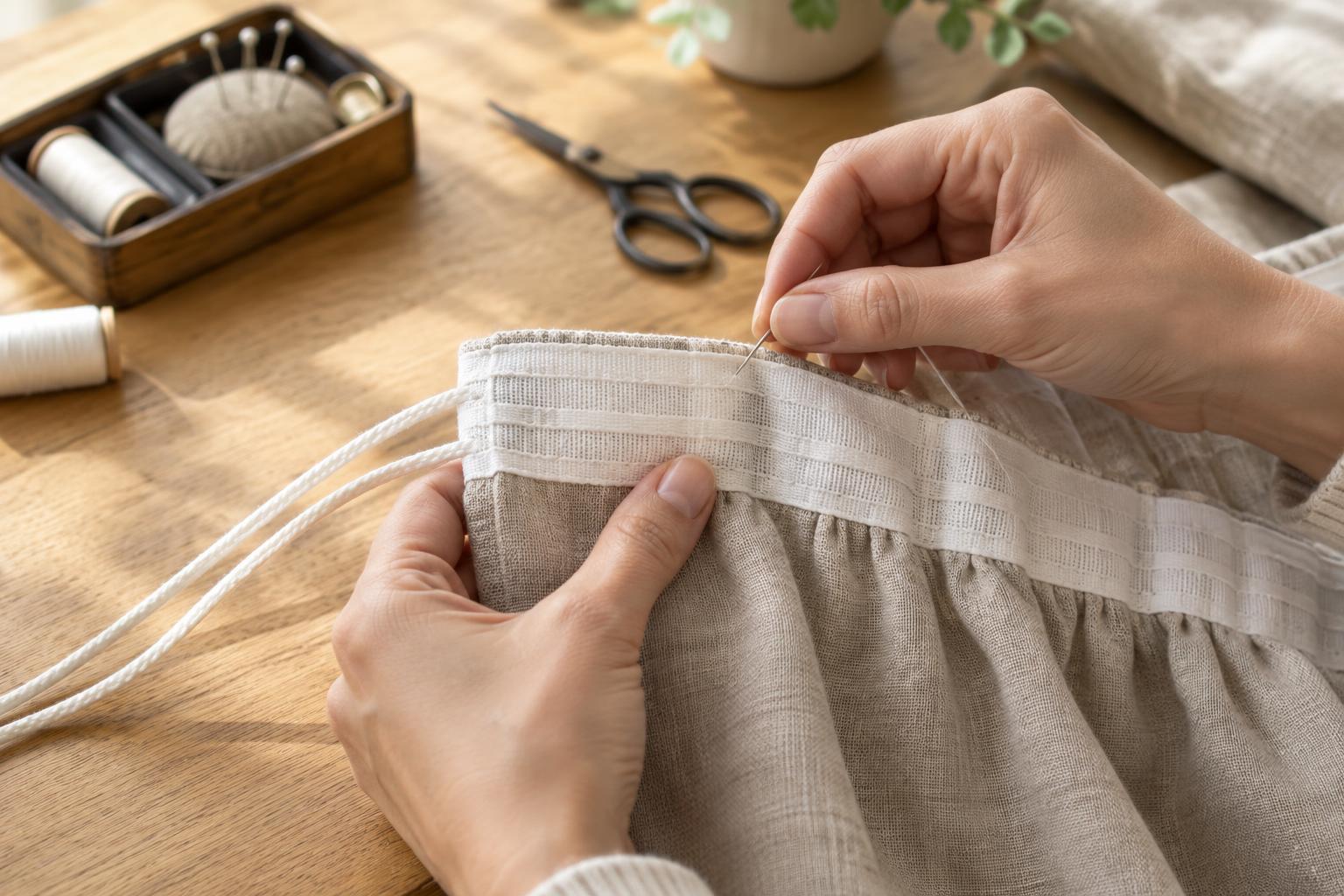
Curtain header tape is the band sewn across the top of a curtain that holds hooks and, on many styles, contains cords for gathering the fabric. When its stitching comes loose, the top edge may droop or the gathers may spread unevenly. The repair is usually straightforward if the tape and curtain fabric are still sound. If the tape is torn, brittle or badly distorted, replacing it may be more reliable than sewing the old strip back down.
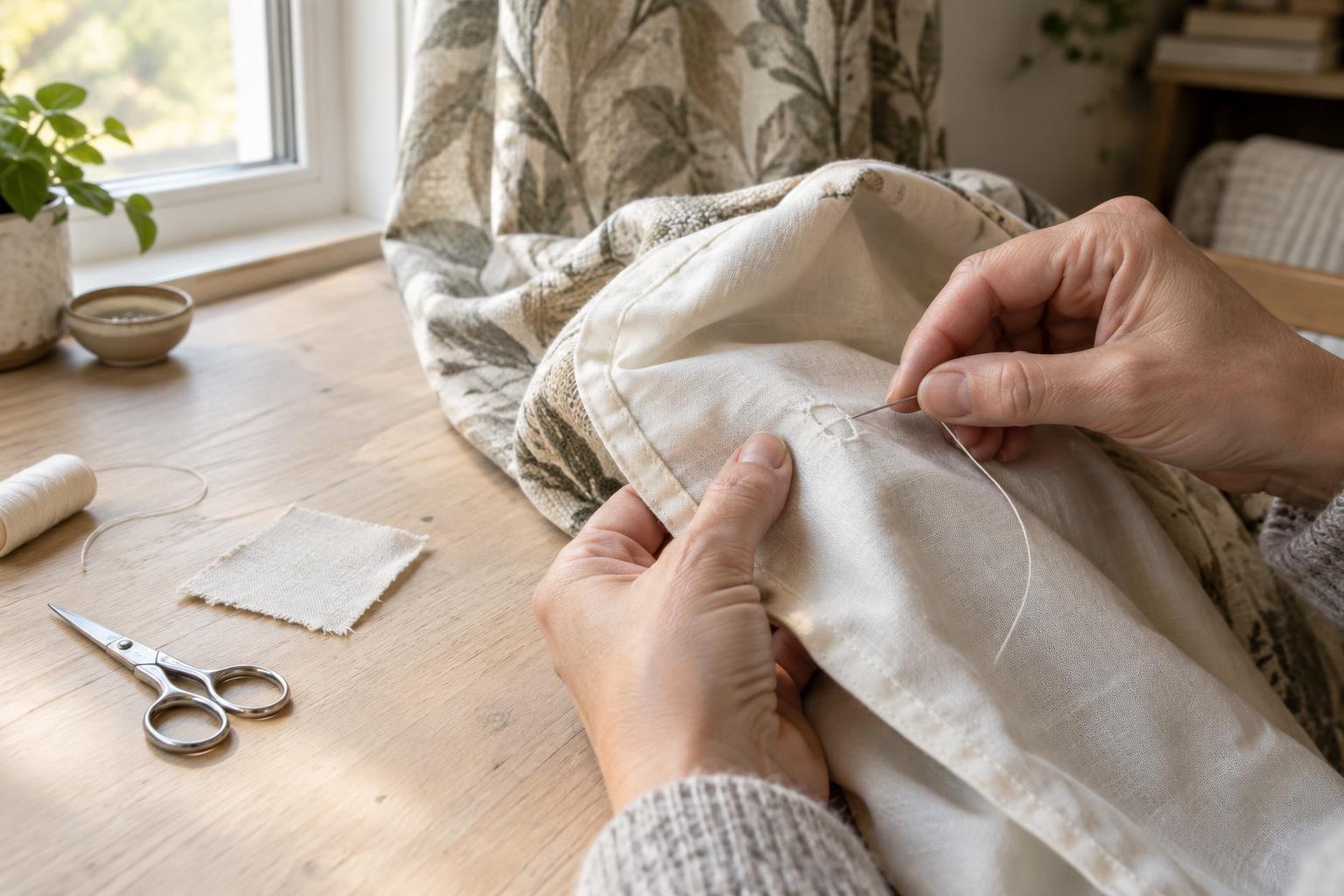
Take the curtain down and remove its hooks, noting which row of pockets they occupied. Lay the panel flat with the back facing up. Look for loose stitching along the upper or lower edge of the tape and check whether either short end has pulled free. Gently lift the tape to see whether the fabric beneath it is damaged. Also identify the draw cords: they need to move through the tape after the repair, so they must not be stitched to the curtain.
Prepare a clean edge to sew
You will need matching thread, a needle or sewing machine, pins or clips, small scissors and a measuring tape. Choose a needle suited to the curtain fabric; a fine needle is less likely to leave visible holes in a lightweight panel, while a heavier fabric may need a stronger one. Test your stitch on an inconspicuous area if the material is delicate or tightly woven.
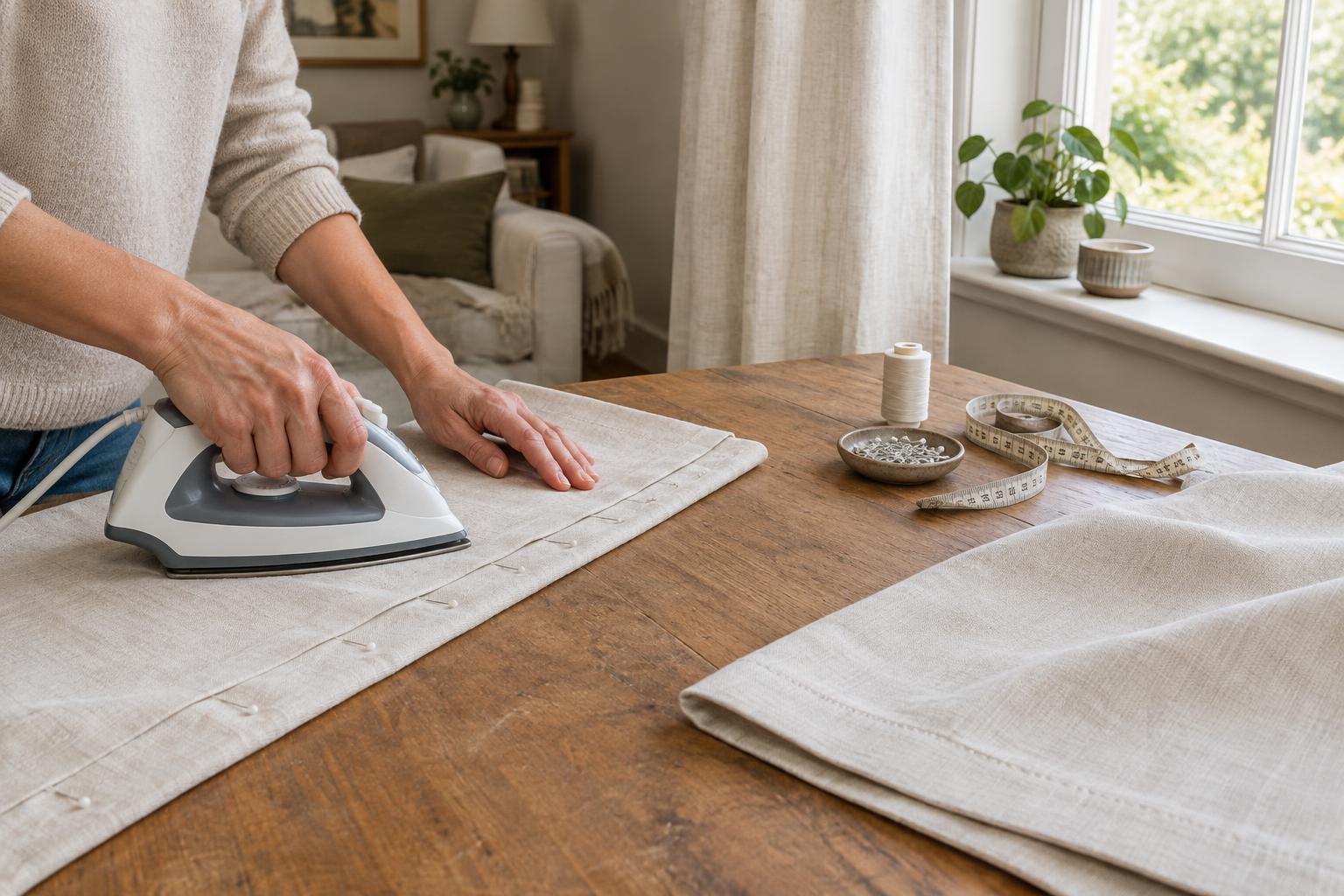
Trim only the broken, dangling threads. Avoid pulling an old seam apart unless it is puckered or prevents the tape from lying flat. Smooth the curtain top, align the tape with its original position and pin or clip it in place. Check the front of the panel as you go: the top edge should remain straight, with no fold caught underneath. If the curtain is lined, make sure you understand which layers the original stitching held together before copying it.
Secure the loose stitching
For a short loose area, hand sewing offers control. Work along the tape edge where the original seam ran, taking small, even stitches through the tape and the appropriate curtain layer. A backstitch gives a firm repair, especially near an end that will be handled when the curtain is hung. Begin and finish a little beyond the damaged section so the new stitches overlap sound stitching. Keep the thread snug, but not so tight that the fabric puckers.
For a longer section, a sewing machine can make a neat, consistent seam. Use a straight stitch and guide the layers without pulling them through the machine. Sew along the tape’s woven edge rather than across its hook pockets or draw cords. Pause regularly to check that the curtain fabric stays smooth and that no lining has slipped out of place. If both long edges of the tape are loose, secure one edge first, smooth the panel again, then sew the other.
At a loose short end, turn the tape under only if that matches its original finish. Keep the cord ends accessible so the gathers can be adjusted. Secure the tape end to the curtain without sewing across the cords or closing off a pocket you intend to use.
Restore the gathers and rehang the curtain
Before replacing the hooks, gently test the draw cords. They should slide without dragging the newly sewn fabric into a tight ridge. If a cord is caught, remove the few stitches trapping it and resew around it. Pull the cords gradually to return the curtain to its intended width, then distribute the gathers by hand. Tie the cord ends securely and tuck them away rather than cutting them off; the extra length allows future adjustments and makes laundering easier.
Put the hooks back into the same pocket row used before the repair, spacing them evenly. Hang the curtain and step back to inspect its top edge. A small uneven area may settle when you redistribute the gathers, but a pronounced dip can indicate missed stitching or fabric that was folded into the seam. Taking a moment to correct it now will help keep tension off the repaired section.
Help the repair last
Curtains place repeated weight on their header tape, particularly when they are drawn from one side. Open and close them by the leading edge rather than tugging on the tape or individual hooks. If one section repeatedly works loose, check for a missing hook, a hook placed in the wrong pocket row or a point where the curtain catches on its track or pole.
When cleaning the curtain, follow its care label and support the weight of the fabric as you take it down and rehang it. Inspecting the header while the panel is off the rail can reveal a few loose stitches before they become a larger repair. If the curtain fabric itself is fraying along the top, reinforce or remake that edge before reattaching the tape; stitches placed into weakened cloth are unlikely to hold for long.