Check the lining before you sew
Take the curtain down and spread it on a clean, flat surface with the lining facing up. Good light will help you see whether the damage is a split along an existing seam, a tear in the middle of a panel, or fabric that has become thin over a wider area. Look at the face fabric, heading, and hem too: a lining repair is easiest when the rest of the curtain is sound.
Gently pinch the fabric beside the tear. If it feels firm, a small hand-sewn repair may last well. If it crumbles, frays readily, or tears again with light handling, stitches alone may pull through it. In that case, a patch can spread the strain over a larger area, though a lining that is weak throughout may be better replaced.
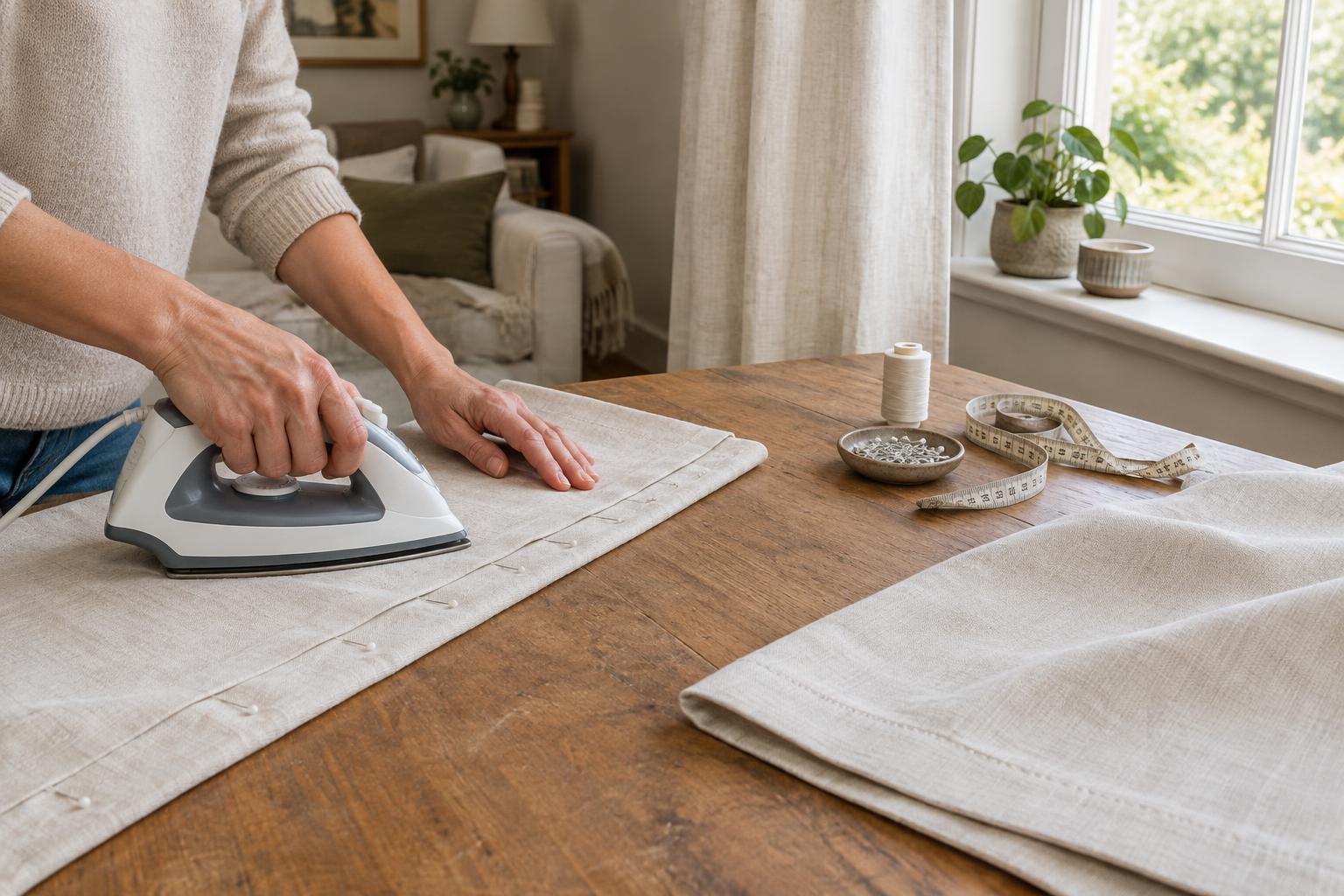
Before starting, check whether the lining is ordinary woven fabric or a coated material, such as some blackout linings. Coatings can be damaged by heat or repeated needle holes. If you are unsure, avoid ironing the damaged area and test any proposed method on an inconspicuous part first.
Gather supplies and prepare the tear
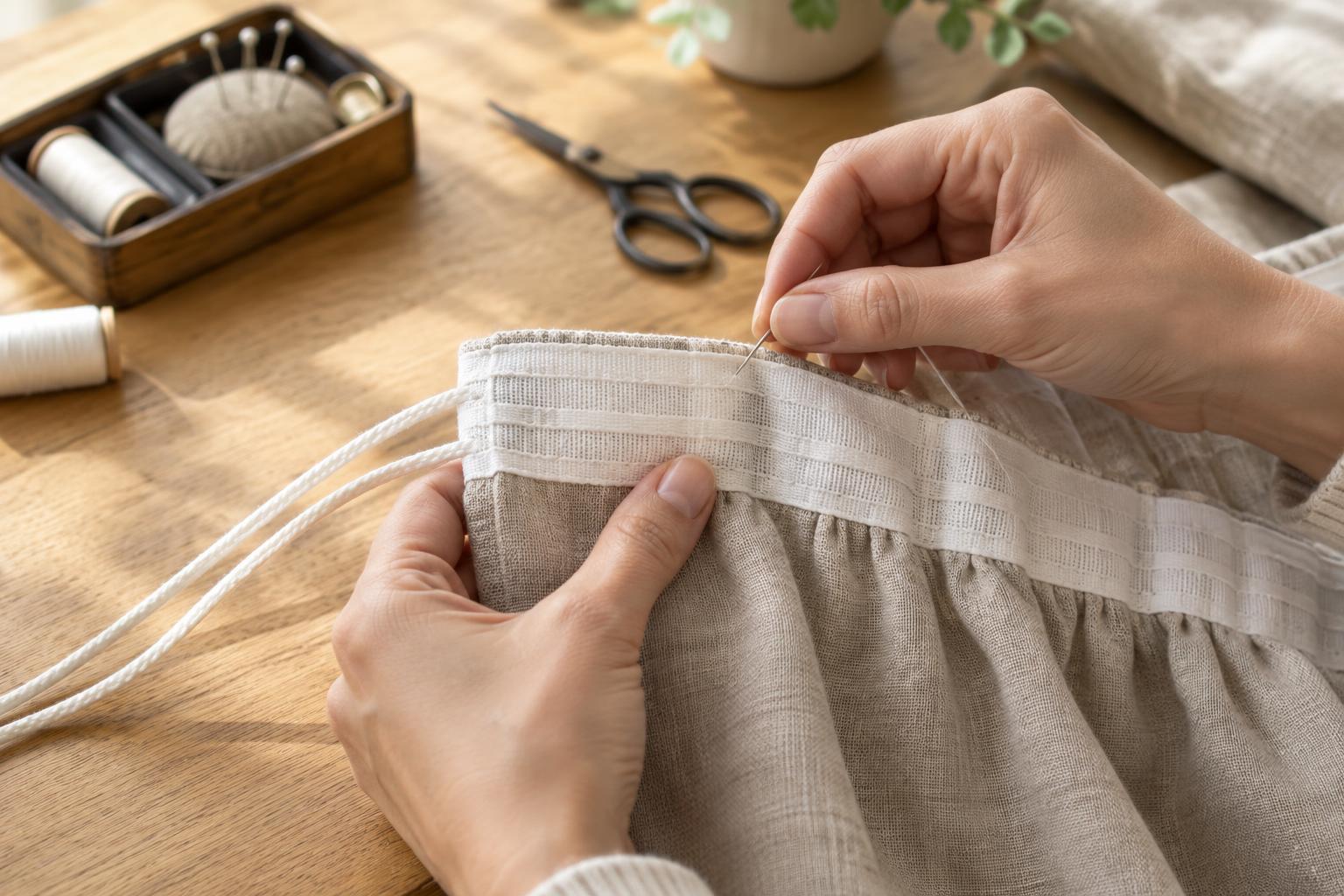
For a basic hand repair, you will need a fine needle, thread close in colour to the lining, small scissors, and pins or sewing clips. A patch also calls for a piece of compatible lining fabric. Choose a similar weight so the repaired area hangs naturally; a heavy patch on a lightweight lining can create a visible pull.
Trim only loose threads that prevent the edges from lying flat. Do not cut away sound fabric to make the tear look neater. If the curtain needs cleaning, follow its care label and let it dry fully before sewing. Washing after a repair can place extra stress on fresh stitches, particularly when the surrounding lining is fragile.
Lay the lining flat without stretching it. If the lining and face fabric are separate at the hem, slip a piece of card between them while you work. This helps prevent accidentally stitching the two layers together, which could change how the curtain hangs.
Close a small tear or open seam
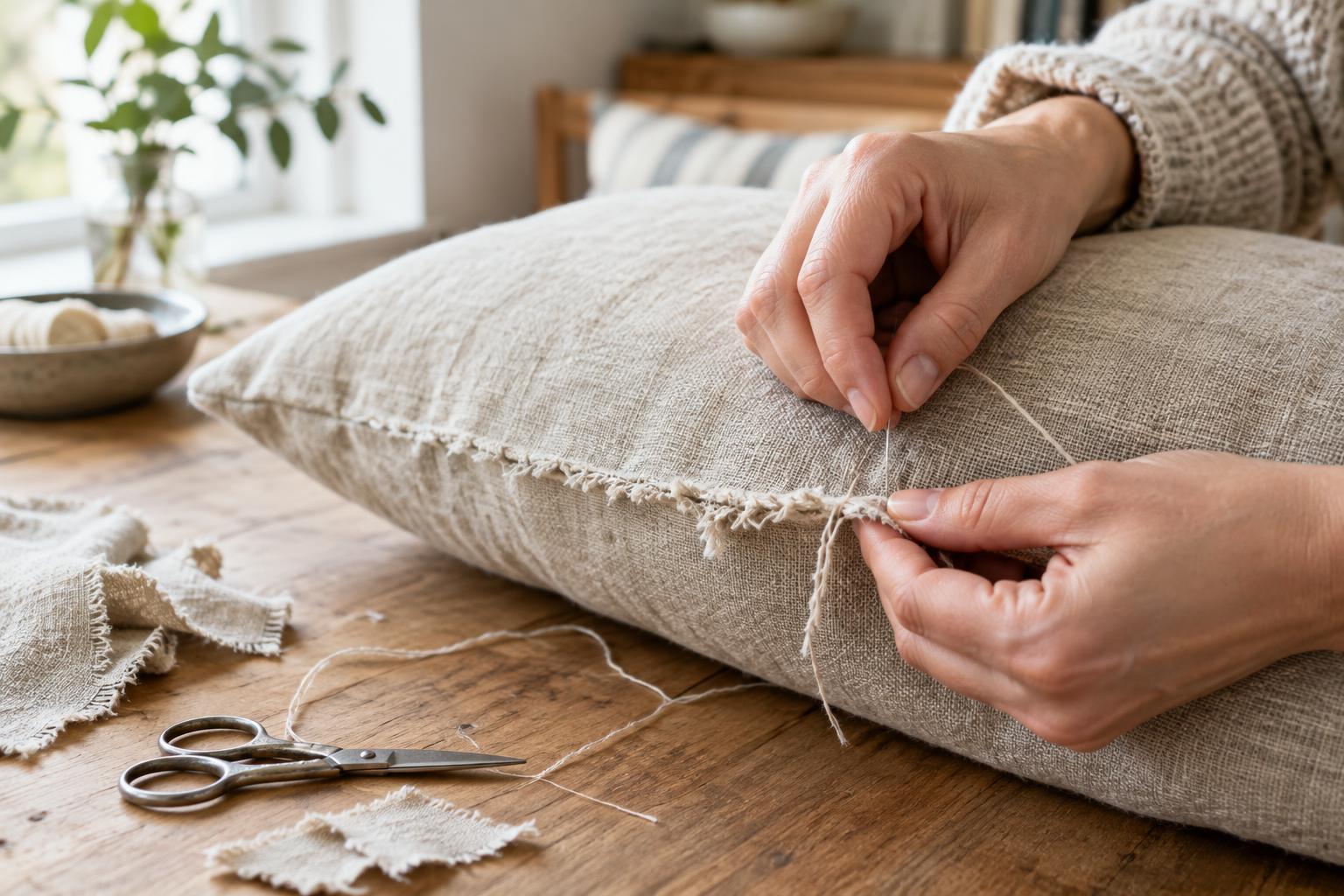
For a split seam, bring the original folded edges back together and pin or clip them in place. Sew along the former stitch line with small, even backstitches, starting and finishing a little beyond the gap. Backstitching helps secure a seam that will move each time the curtain is opened or closed. Keep the thread snug rather than tight, so the fabric does not pucker.
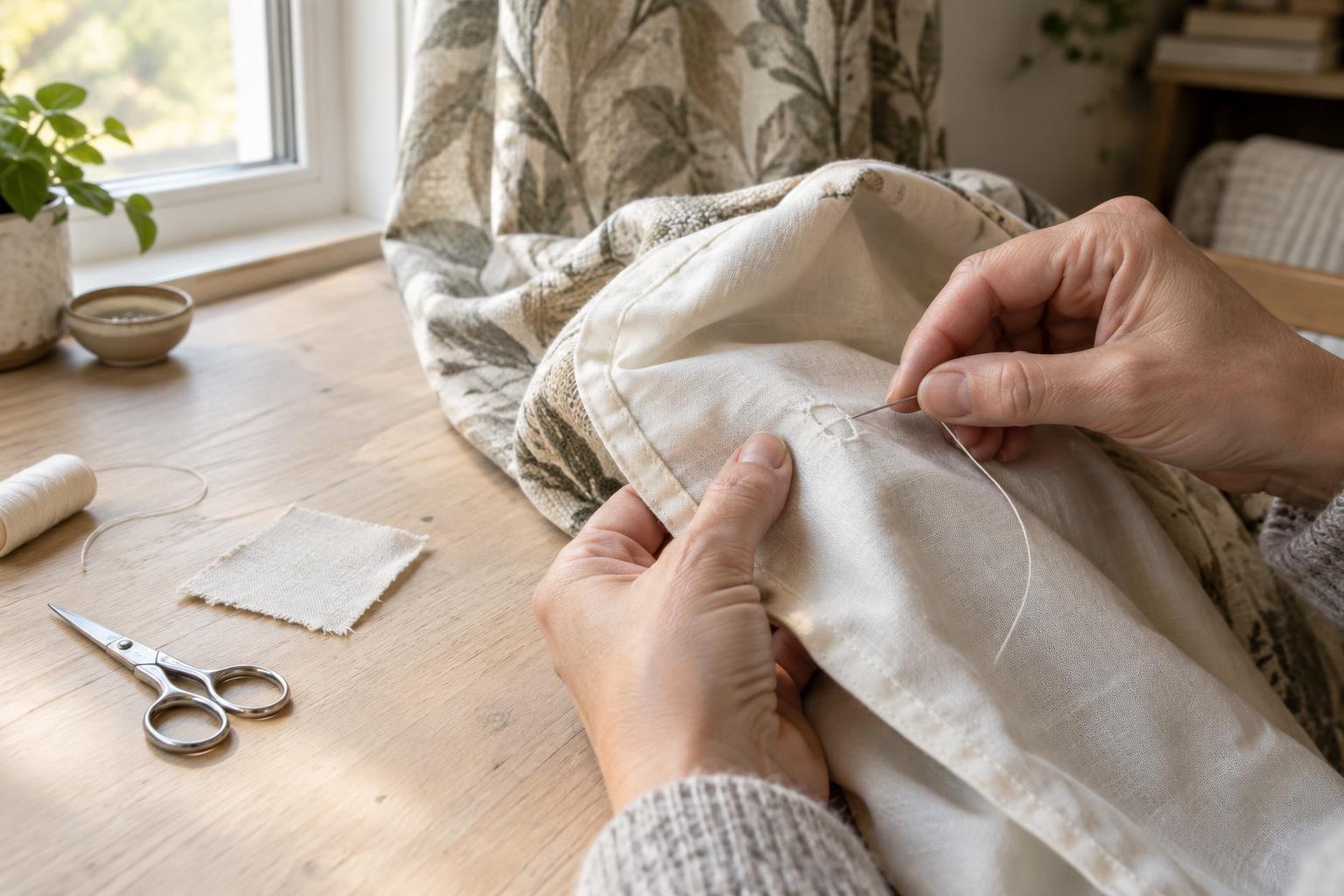
For a short tear in otherwise sound fabric, turn the raw edges under slightly if there is enough material to do so without distorting the panel. Use small slip stitches to join the folded edges. Work through the lining only, catching a little fabric on each side. This method is discreet, but it is less suitable for a long tear or one with missing fabric: forcing those edges together may make the lining bunch.
Patch a larger or weakened area
Cut a patch that extends beyond the tear onto firm fabric on every side. Round its corners if practical; sharp corners can lift or catch. Place the patch on the side of the lining that faces the window, where it will usually be less noticeable from the room. Fold under the patch edges if the fabric allows, then pin it in place without stretching either layer.
Sew around the patch with small stitches, keeping the curtain face fabric free. Add a line of stitches near the tear if its edges remain loose beneath the patch, but do not pull them together so tightly that the panel puckers. If the lining is coated, skip heat-set tapes and fusible patches unless you know they are compatible with that particular material; a sewn patch avoids relying on heat.
Finish the repair and help it last
Remove the pins, check both sides for accidental stitches through the face fabric, and hang the curtain to see how the repair falls. A slight mark on the window-facing side is usually less noticeable than a puckered panel. If the lining pulls at the mend, take out any overly tight stitches and resew them with the fabric lying flat.
Open and close the curtain gently, especially if the tear formed near a point that catches on a hook or window fitting. Check that nothing is snagging the lining before treating the damage as finished. A local mend can extend the life of a sound curtain, but it cannot restore strength to a lining that has become brittle across the whole panel. Recognising that difference saves time and helps you choose between another repair and replacement.