Check the cushion before buying filling
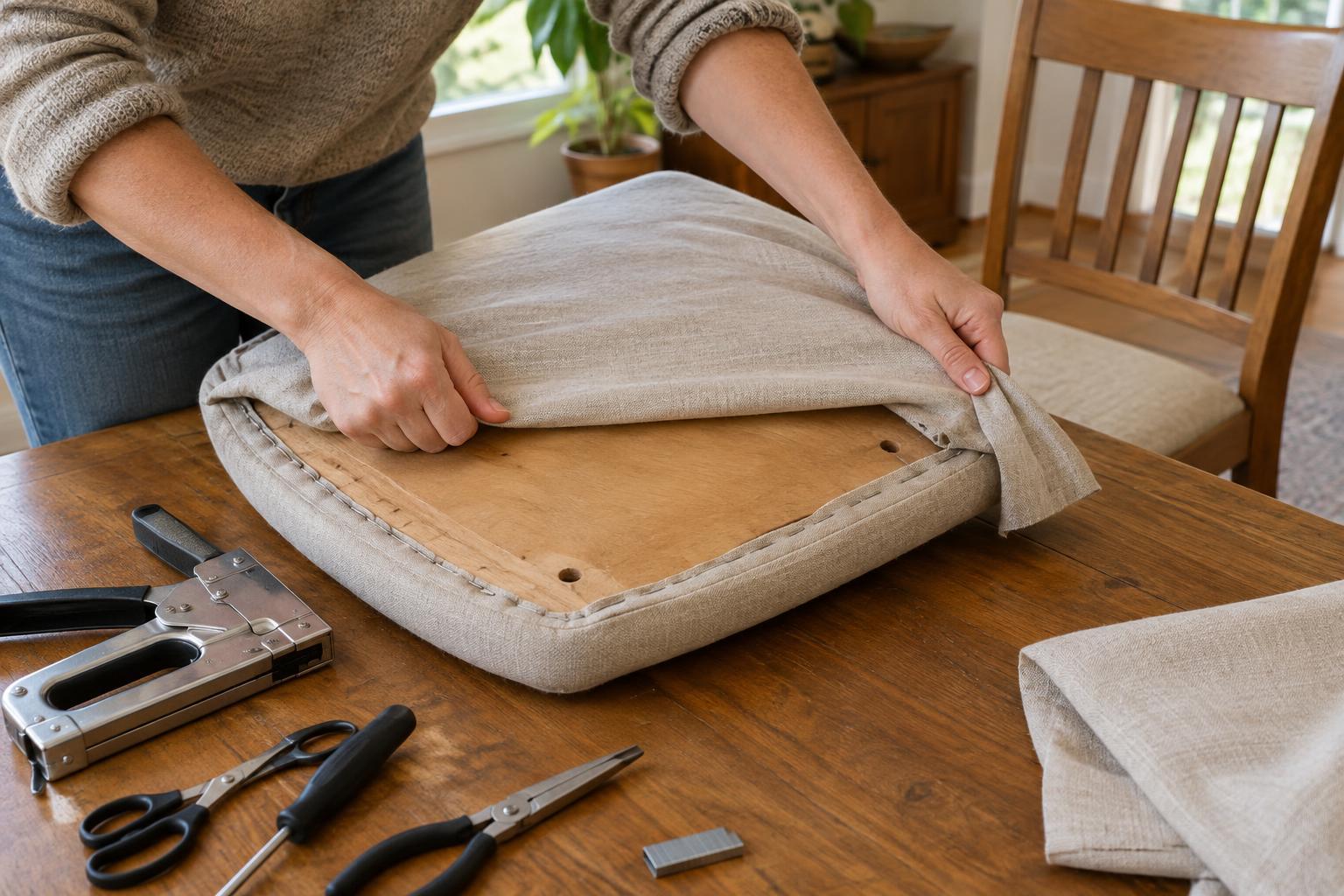
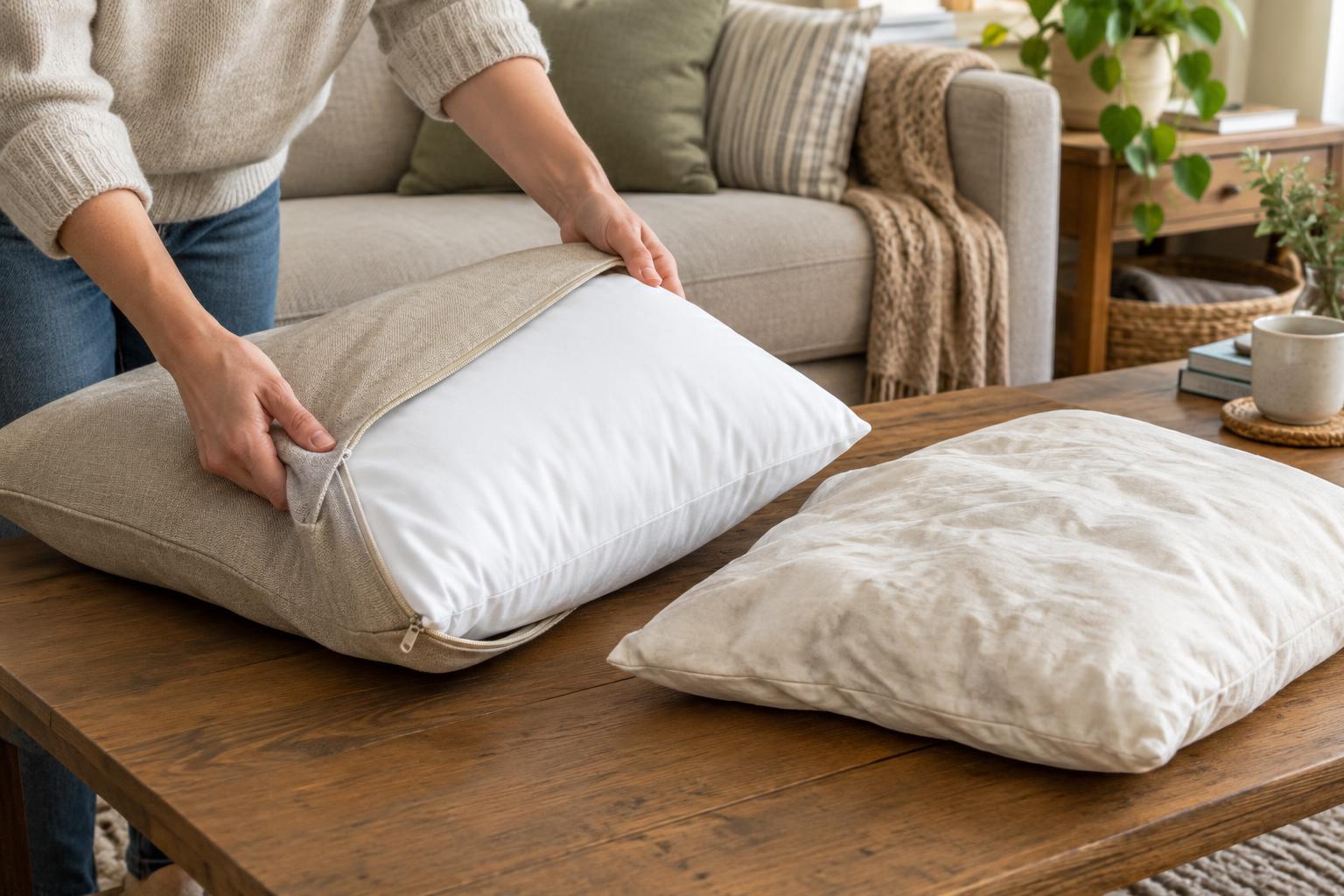
Start by removing the insert, if the cover has a zipper or other opening. Look at the cover in good light and check its seams, corners and closure. A new insert can make worn fabric look better, but it will not repair a split seam or stop fabric from fraying. Make those repairs first, or handle a fragile cover gently until you can.
Inspect what came out of the cover, too. Loose fiber may simply have shifted into lumps and could improve with redistribution. A foam pad that stays thin where people sit, even after a rest, is a stronger candidate for replacement. If the cushion has an inner lining or protective layer, note how it is arranged so you can put it back the same way. Do not discard a layer you do not understand just to make the new filling fit.
Match the filling to the cushion’s job
For a sofa seat, a single foam insert usually gives a more defined shape and firmer support than loose stuffing. Foam varies in feel, so compare samples when possible rather than choosing by thickness alone. A wrap of polyester batting can soften the edges of a foam insert and help the cover look smooth. If the original cushion used a separate wrap, replacing that wrap may be enough to improve its appearance.
Back cushions and decorative cushions often need a softer, more flexible fill. Polyester fiberfill is easy to add in small amounts and spread into corners, though it can bunch up if packed unevenly. A ready-made cushion insert is convenient when its shape suits the cover. Whatever you choose, aim for a cushion that fills the cover without pulling hard at the seams or making the zipper difficult to close.
Measure the cover and use the old insert as a guide
Lay the empty cover flat without stretching it. Measure across its width and depth or height, and note whether it has boxed sides that create a distinct cushion thickness. Measure the old insert as well, but do not assume its flattened thickness is the size to replace. Look at the side panels of the cover for a better sense of the space the new filling needs to occupy.
Record the cushion’s shape, including rounded corners or a tapered edge. For foam, a paper template traced from the old insert can help preserve those details, provided you check it against the cover. If buying a finished insert, compare its dimensions with the cover and allow for the fact that soft filling compresses. When in doubt, test the fit before trimming foam or removing any tags or packaging that would prevent a return.
Refill the cover without stressing it
Vacuum or gently shake out the empty cover, following its care label if it needs cleaning. Make sure it is fully dry before adding fresh filling. For foam, place any batting wrap smoothly around the pad; bunches underneath will show through the cover. Fold or compress the insert just enough to ease it through the opening, then guide it into each corner. Avoid tugging on the zipper tape as you work.
For loose fiberfill, add small handfuls at a time. Reach into the far corners first, then build up the center evenly. Pause to close the cover and look at it from several angles. A cushion that appears rounded but feels hard or strains at the seams is likely overfilled. Open it and remove a little filling rather than forcing the closure shut.
If the cover has no opening, check whether a seam can be opened and sewn closed again without damaging the fabric. A short section along a straight edge is generally easier to work with than a corner. If the fabric is delicate or the construction is unclear, seek help from someone experienced with upholstery instead of cutting into it.
Fine-tune the shape and keep it comfortable
Once filled, set the cushion where it belongs and use it briefly before making a final adjustment. A seat cushion may need its corners eased into place; a loose-filled back cushion may need a little more fill at the top. Check that the cover lies smoothly when the cushion is in use, not only when it is sitting untouched.
Regularly turn a reversible cushion, if its construction allows, and fluff loose-filled cushions to move the filling back into place. Deal with small seam openings promptly so they do not grow under tension. Keeping the original cover is a practical refresh when the fabric is sound: the goal is not to make it as tight as possible, but to restore a shape that looks right and feels comfortable.