Start by looking at the damage
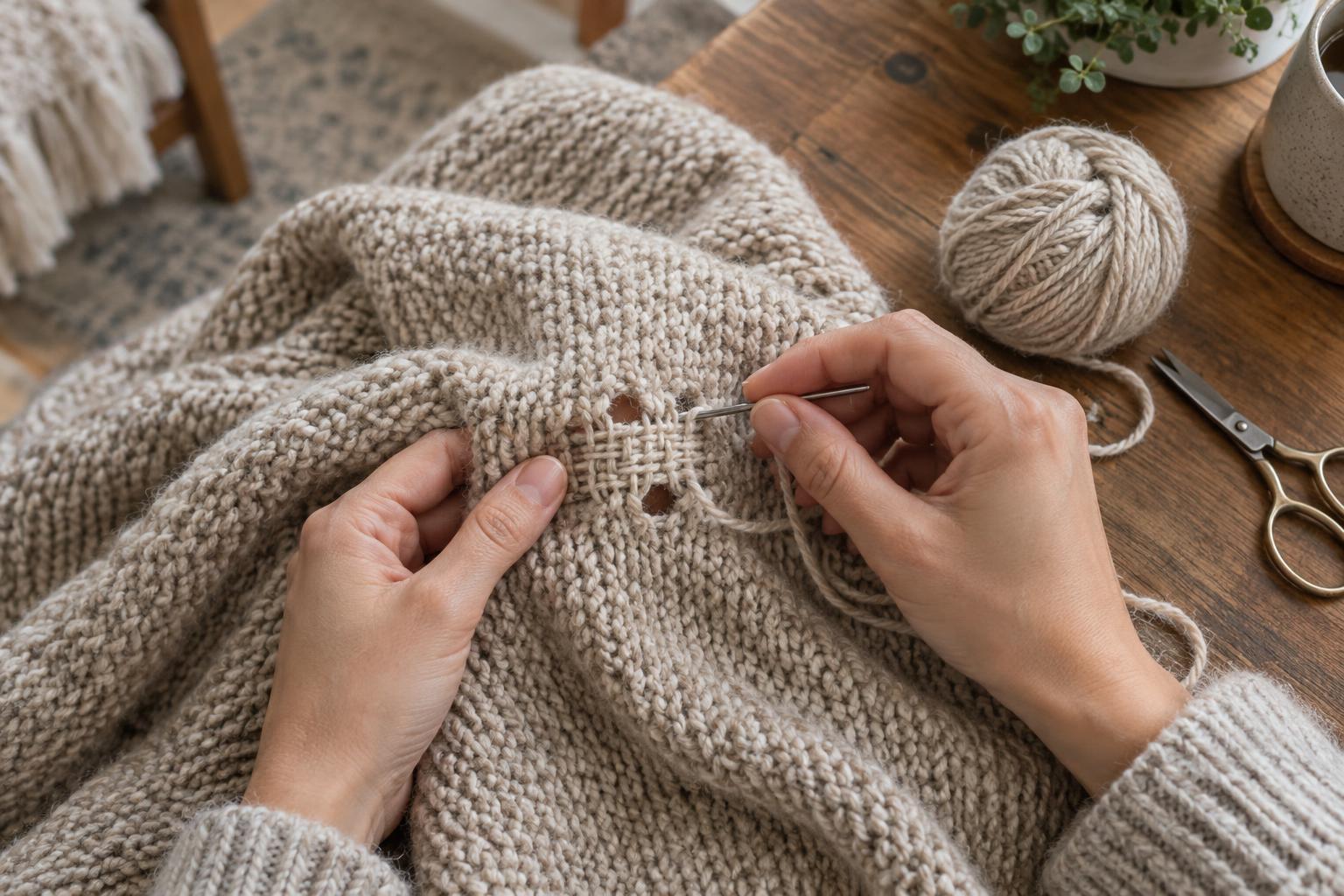
A loose hem, an opened cushion seam and a small tear put different demands on a repair. Before threading a needle, check whether the fabric is still strong enough to hold stitches. If the edges crumble when handled, sewing them directly together may make the opening larger. A patch or a piece of reinforcing fabric behind the damage can give the stitches something sound to grip.
Choose a needle that passes through the fabric without forcing a large hole, and use thread suited to its weight. An exact color match makes stitches less noticeable, but sound construction matters more than a perfect shade. Trim only loose, dangling threads; leave as much usable fabric as possible. For a washable item, follow its care label and make sure the area is clean and dry before you begin. Knot the thread or secure it with a few small stitches on the hidden side, then work with a comfortable length of thread so it does not tangle.
Running stitch: a quick way to secure a low-stress area
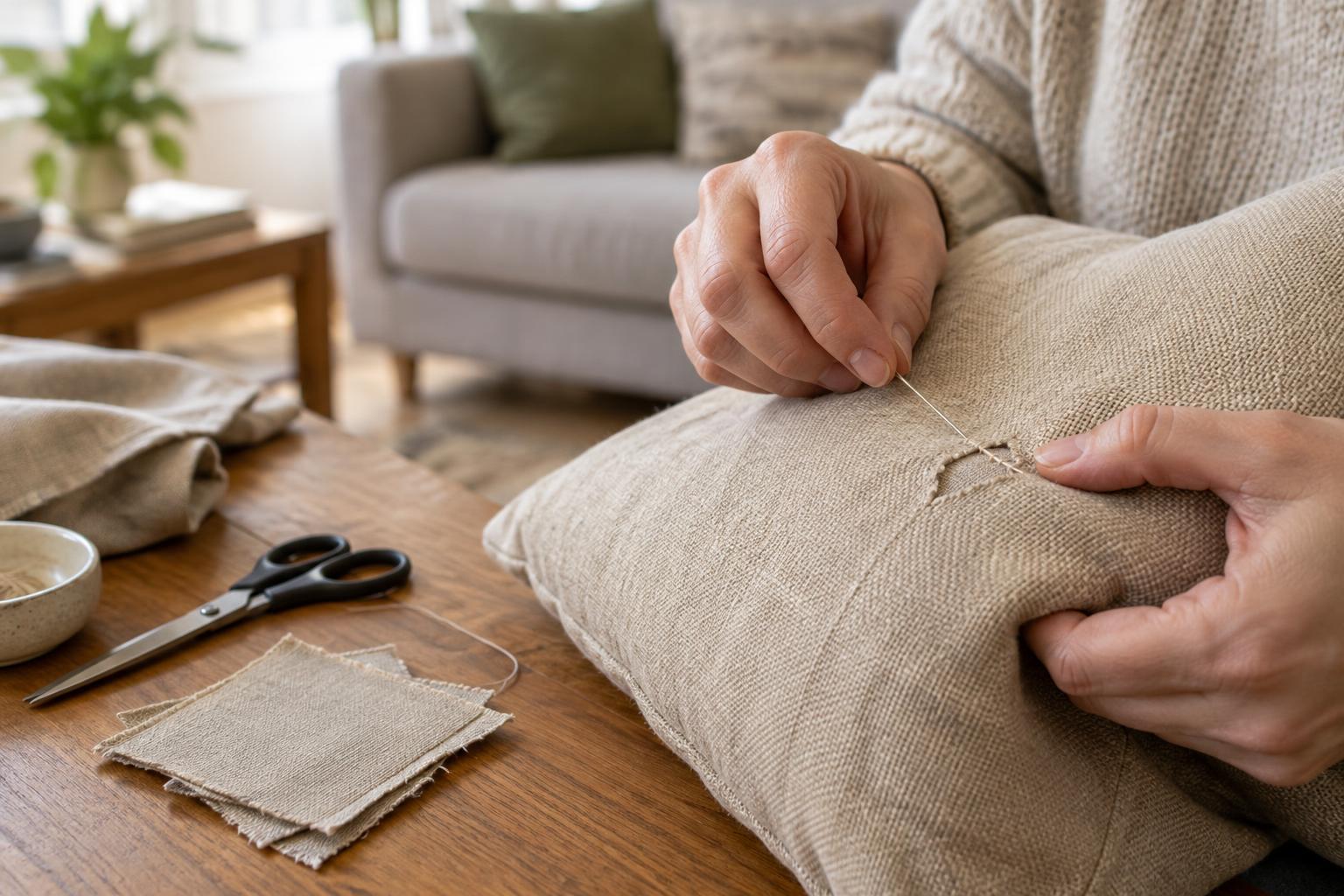
A running stitch is a series of simple in-and-out stitches. It works well for a lightly used hem, a temporary hold while positioning fabric, or a small patch whose edges are also supported by other stitching. Pass the needle up through the fabric, move a short distance forward, and pass it down again. Continue at an even pace, keeping the stitches small enough to hold the layers together without pulling them into gathers.
For a folded hem, keep the fold aligned as you work and take only a small bite of the outer fabric if you want the stitches to show less on the front. Check your progress every few inches by laying the fabric flat. If the seam puckers, the thread may be too tight. Running stitch is easy to undo and adjust, but its gaps make it a weaker choice for a seam that will be tugged or sat on repeatedly.
Backstitch: a stronger choice for a split seam
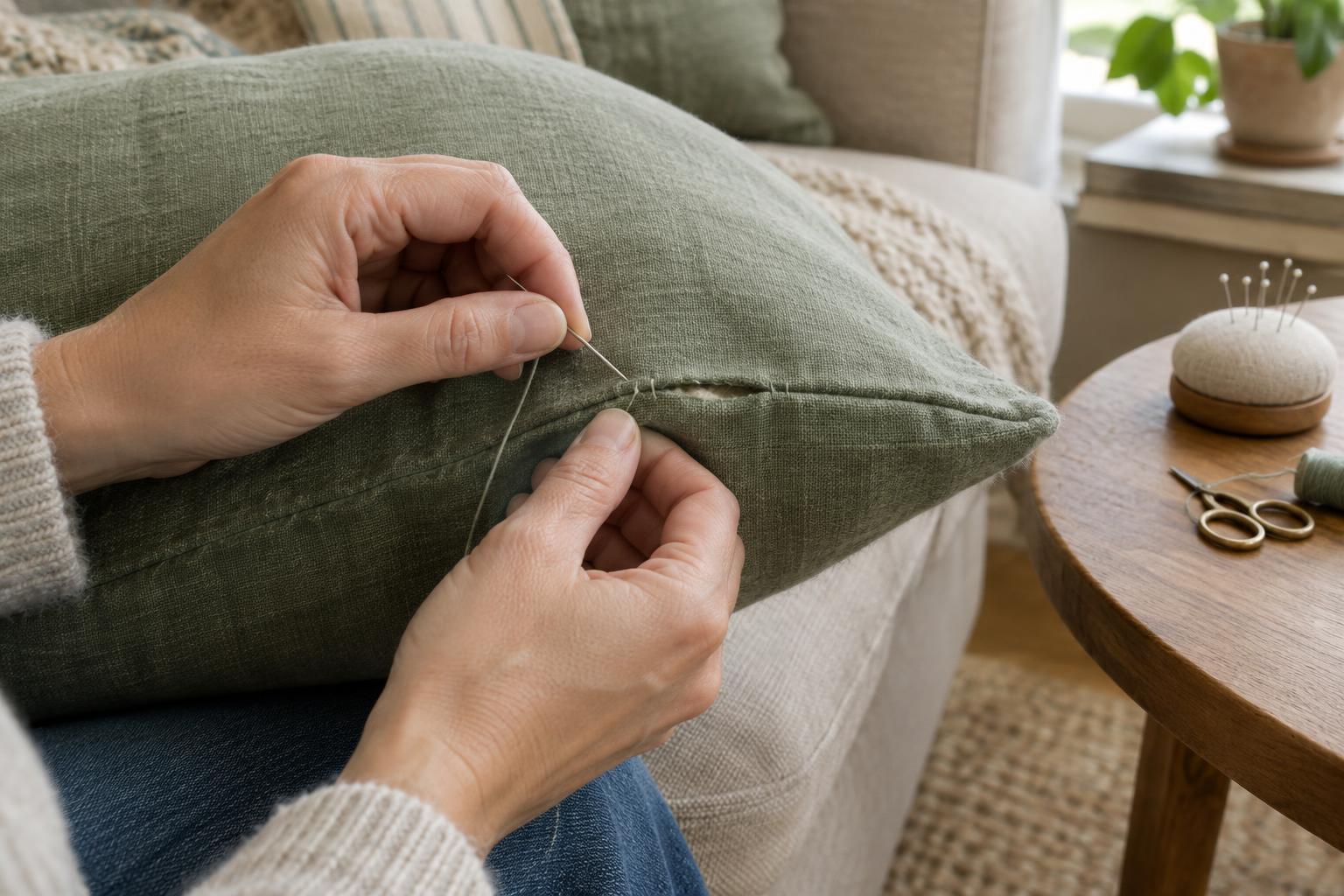
Backstitch makes a nearly continuous line of thread and is useful when a sewn seam has opened but its fabric edges remain intact. Align the original seam line and secure the thread just before the opening. Bring the needle up one stitch length ahead, insert it back at the end of the previous stitch, then bring it up another stitch length farther along. Repeat this forward-and-back motion until you have sewn slightly beyond both ends of the split.
Keep the stitches fairly short and the tension steady. Pulling hard will not make the seam stronger; it can distort the fabric or strain the holes. If you can reach the wrong side of a cushion cover or curtain, sew there to keep the repair discreet. On thick upholstery, several layers may resist an ordinary needle. Avoid pushing so hard that the needle bends or your fingers slip; a sturdier suitable needle and a thimble can make the work easier.
Ladder stitch: close an opening from the outside
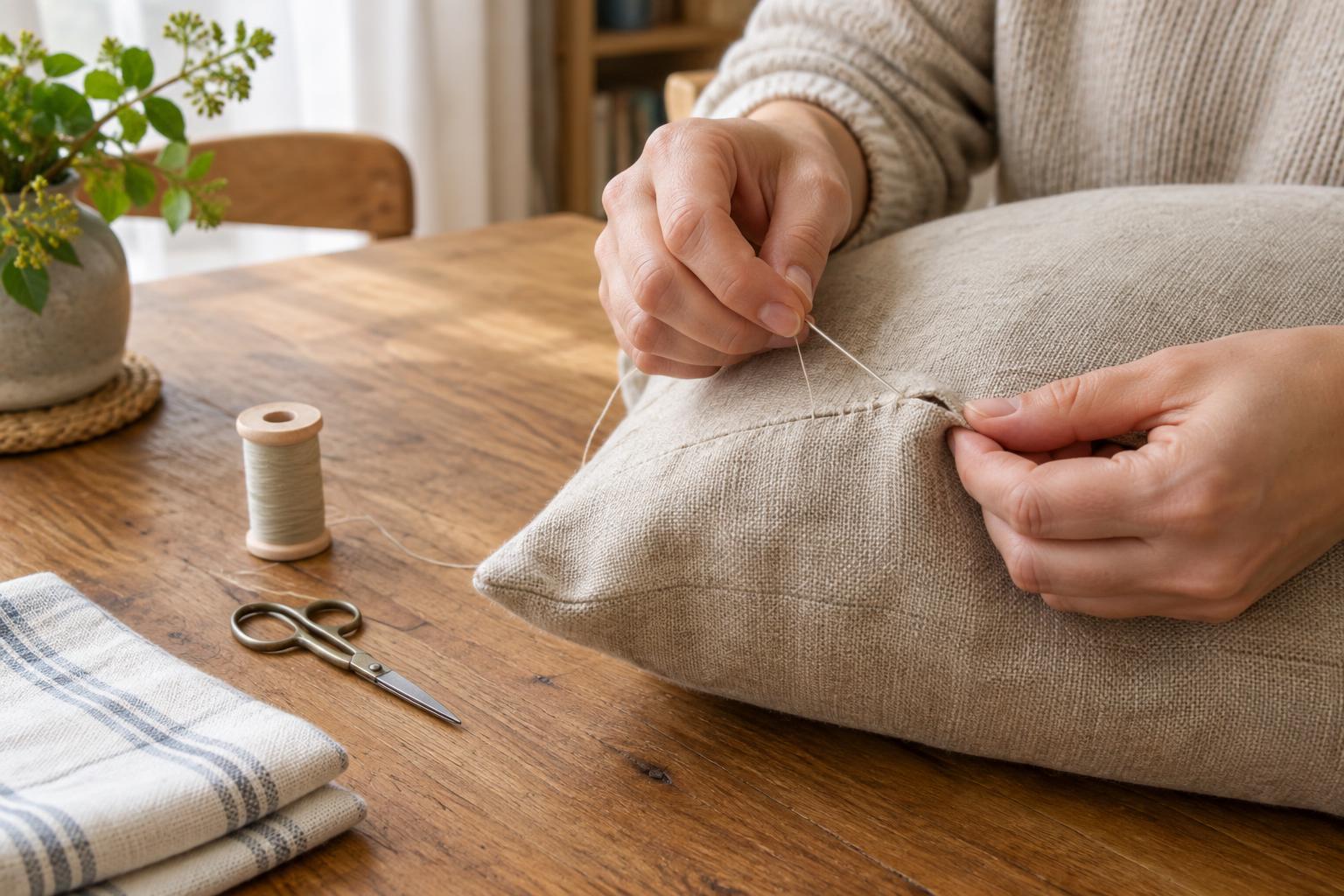
Ladder stitch is helpful when you cannot turn an item inside out, such as a stuffed cushion with an opening along a folded seam. Fold the raw edges inward to match the surrounding seam and anchor the thread inside one fold. Take a short stitch within that fold, cross straight over the opening, and take a matching stitch within the opposite fold. Alternate sides, placing each new stitch a little farther along. Before tightening, the thread forms a pattern like ladder rungs across the gap.
Gently draw the thread until the edges meet, then repeat in short sections. If you pull too much at once, the seam may bunch. Finish with a small knot tucked into the fold and hide the thread tail inside the item. Ladder stitch can make a tidy closure, but it cannot replace missing fabric. If a tear runs across the middle of a panel rather than along a seam, reinforcing or patching it is usually more reliable than simply drawing its raw edges together.
Finish with a gentle check
Whichever stitch you use, inspect both sides before cutting the thread. The fabric should lie comfortably without puckering, and the stitches should extend into sound material beyond the damaged area. Give the repair a gentle tug in the direction it will normally be used. If an edge pulls free, add reinforcement rather than tightening the same stitches harder.
A repair does not have to disappear to be worthwhile. Matching thread can help a mended seam blend in, while a visible patch can turn worn fabric into a deliberate detail. Choosing a stitch for the job—and stopping when the surrounding fabric needs support—will do more for the result than trying to sew every problem closed in the same way.