Check the tear before you begin
A patch works best when the surrounding fabric is still sound. Look closely at the tear in good light. If it is a short split with firm fabric on both sides, a backing patch can support the damaged area and help keep it from opening further. If the cloth is thin, brittle or fraying across a wide area, stitching a small patch to it may simply move the strain to the next weak spot.
Consider where the textile is used, too. A decorative curtain panel takes less rubbing than a seat cushion. A repair on a heavily used seat may need a larger patch or more extensive work. For a valuable, antique or especially delicate piece, pause before cutting or stitching; a visible trial repair is difficult to undo.
Gather materials that suit the fabric
You will need small sharp scissors, a hand-sewing needle, thread, pins or clips, and a piece of patch fabric. Choose a patch with a similar weight and flexibility to the item you are repairing. A stiff patch under soft cloth can create a noticeable ridge, while a very light patch may not give a sturdy weave much support. Matching the color matters most if any part of the patch might show through the tear.
If the item can be washed, use a patch that can tolerate the same care. Washing and drying a new patch fabric according to its care needs before cutting it may help prevent it from shrinking differently later. Match your thread to the face fabric for discreet stitches. You can also use a contrasting patch and thread deliberately if you prefer a visible repair.
Work on a flat, well-lit surface. If the fabric is part of a removable cover, take it off its cushion insert. Do not stitch through an insert or padding by accident. For a lined curtain or cover, check whether you can reach the back of the torn layer without catching the lining.
Prepare the area and cut the patch
Smooth the fabric without pulling the tear closed so tightly that it puckers. Trim only loose, projecting threads that would get in the way; do not cut away intact woven strands. If the item is dirty, clean it in a way its care label permits and let it dry fully before sewing. Dirt trapped beneath a patch is harder to remove later.
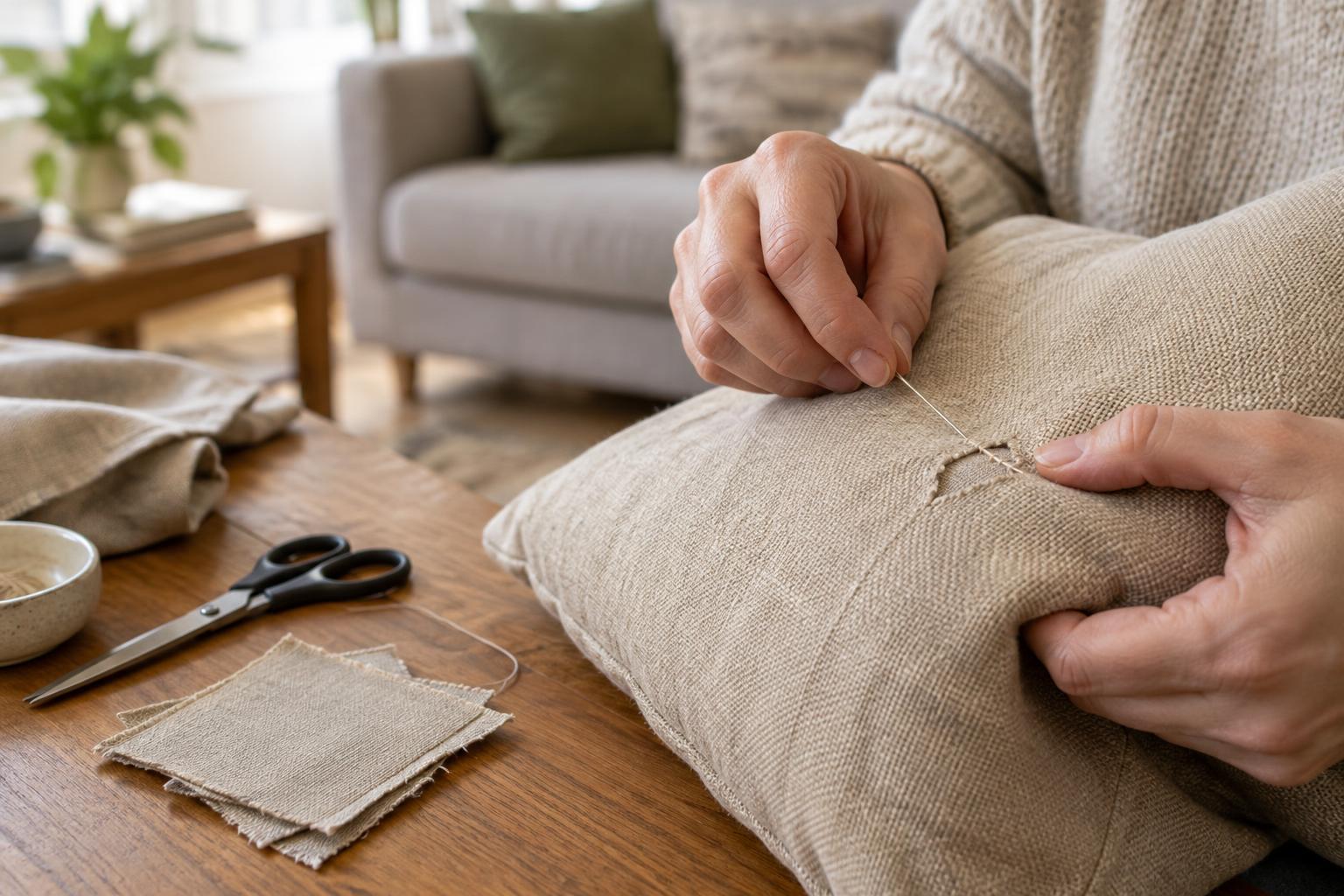
Cut a patch that extends beyond the tear on every side, leaving enough sound fabric for your stitches to hold. Rounded corners are less likely to catch or fold than sharp ones. For a woven patch, try to align its lengthwise and crosswise threads with those of the original fabric. Place it behind the tear, then pin or clip it so it lies flat. Keep pins away from an area where they could snag fine yarns.
Sew the patch in place
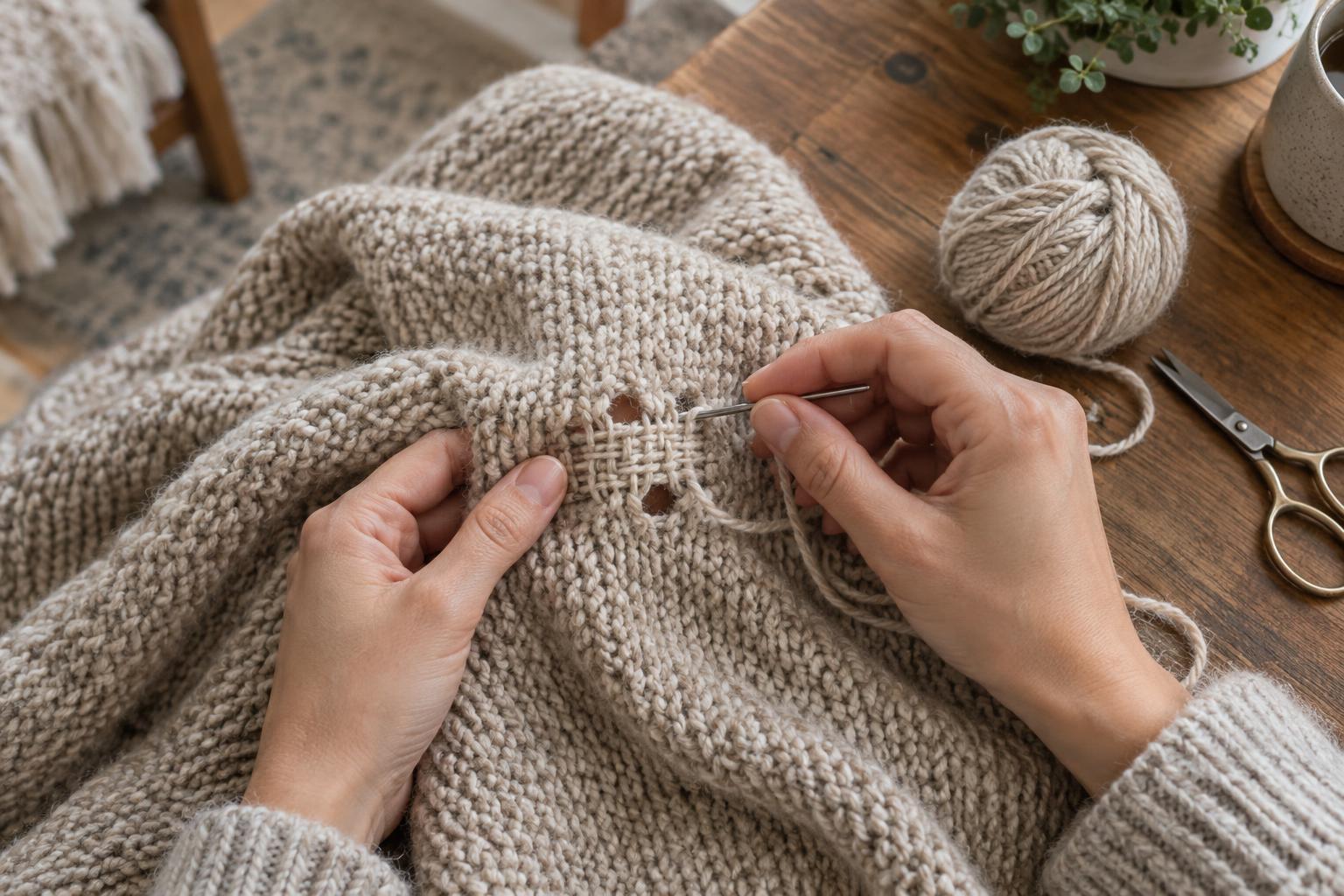
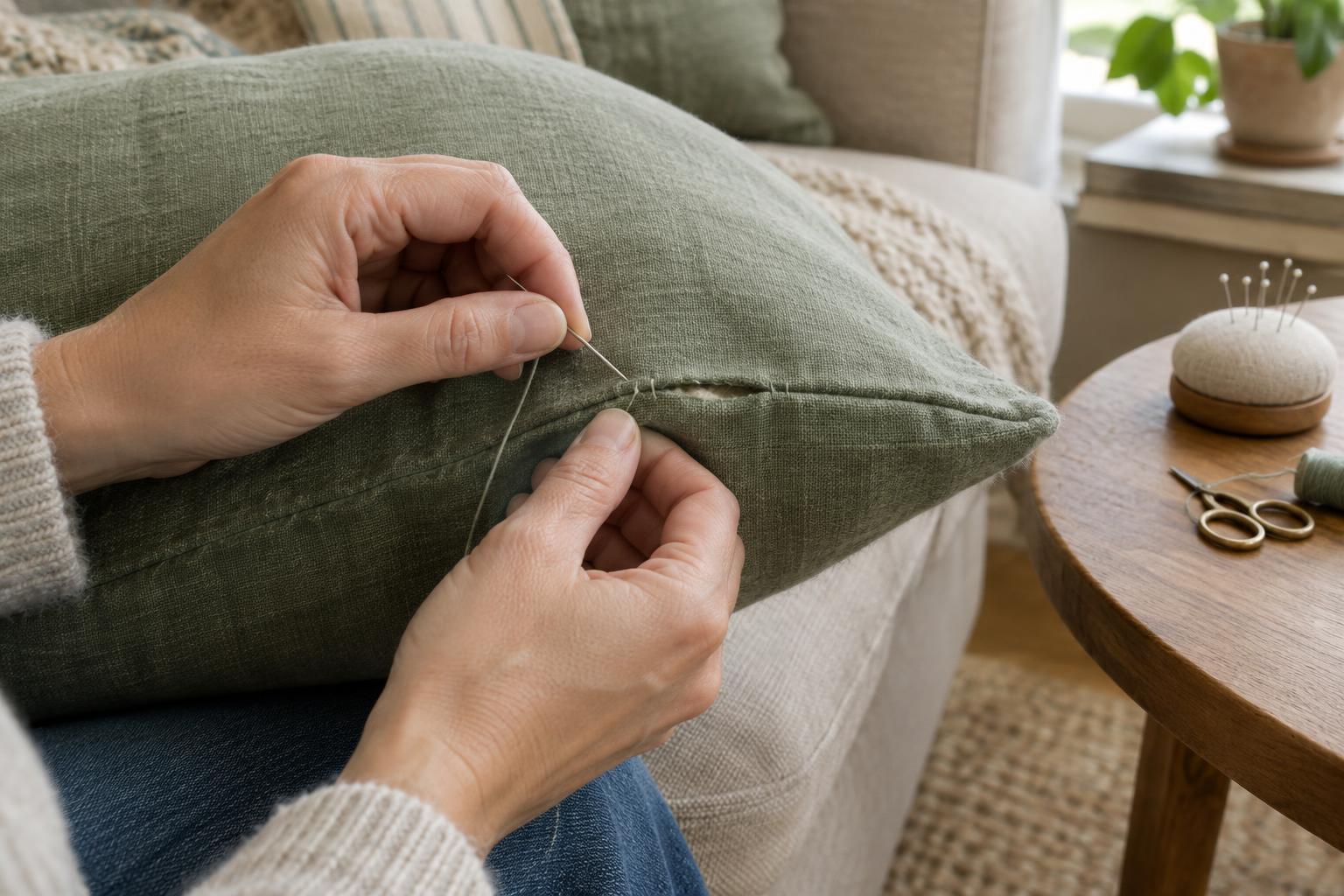
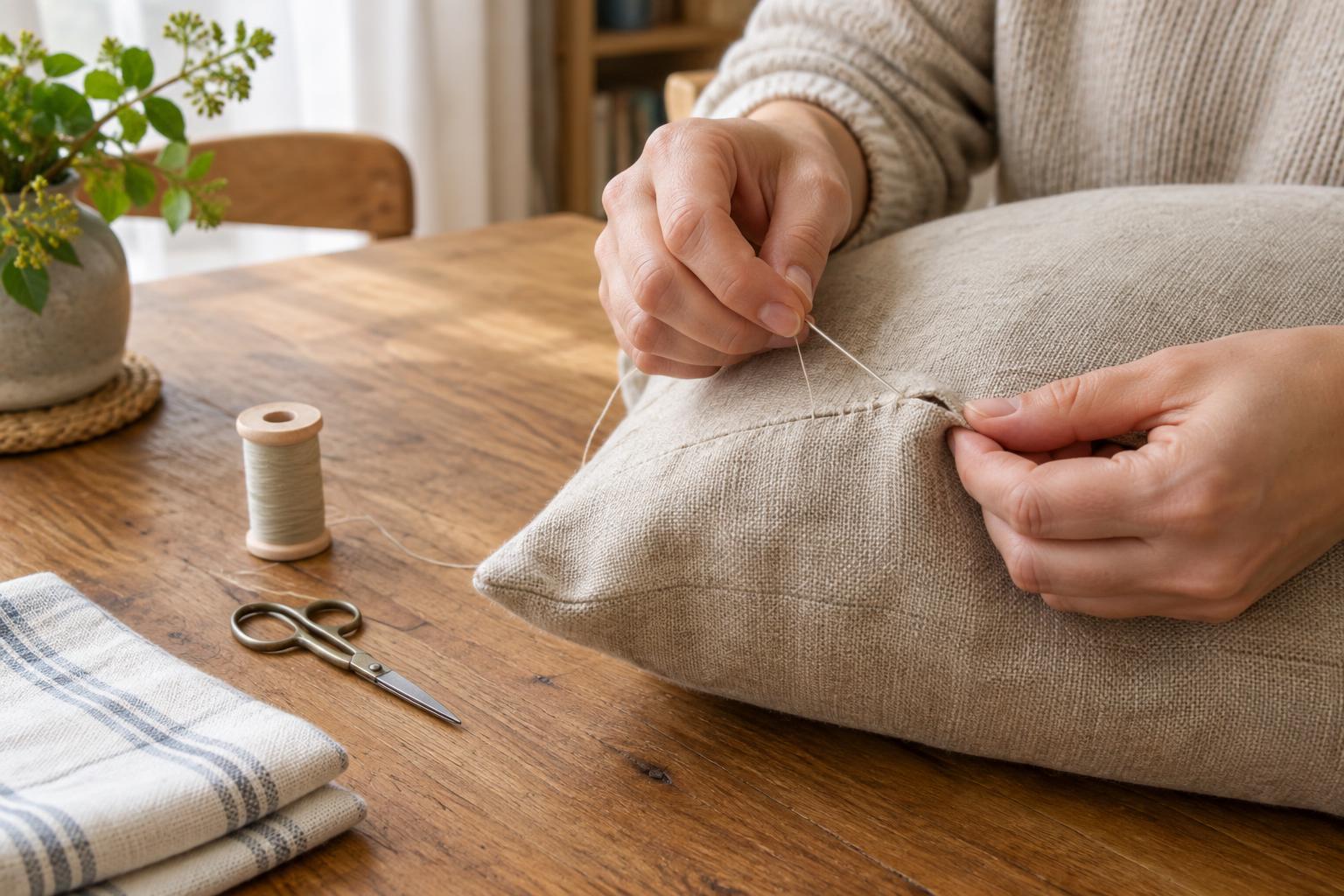
Thread the needle with a manageable length of thread and secure the end on the back of the fabric. Using small running stitches, sew around the patch near its edge, passing through both the patch and the sound fabric. Keep the stitches even but not so tight that the surface gathers. As you work, check the front occasionally to make sure the patch has not shifted.
Next, bring the torn edges into their natural position over the patch. With small stitches, catch the edges to the patch beneath. The aim is to hold down loose edges, not to pull the gap shut under tension. Where yarns have frayed, take each stitch through stable fabric rather than through wispy ends alone. Knot or secure the thread on the back, then trim it without cutting nearby weave threads.
If you cannot reach the back of an upholstered piece, do not force a backing patch through a narrow tear. A neatly shaped patch placed on the surface may be a more practical hand-sewn option, provided you can stitch it to sound fabric without catching hidden parts. Test needle placement carefully and avoid a repair method that could damage padding or a fitted cover.
Check the finish and care for the repair
Lay the textile flat and inspect both sides. The area should feel supported, with no tight puckers or loose patch corners. Gently flex the fabric as it would move in normal use. If an edge lifts, add a few small stitches rather than pulling the existing thread tighter.
Return the item to use with its limits in mind. A patch reinforces a local tear but cannot restore worn fabric around it. Follow the textile’s usual care instructions, and check the repair after cleaning or periods of heavy use. Catching a loose stitch early is easier than repairing a larger tear.