Check how the appliqué was attached
Before reaching for a needle, look closely at the loose area. An appliqué is a piece of fabric attached to a larger fabric surface, often with stitching around its edge. On a cushion, that edge may lift because a few stitches have broken, the thread has worn through, or an adhesive backing has stopped holding. The cause helps you choose a repair that will sit neatly and withstand use.
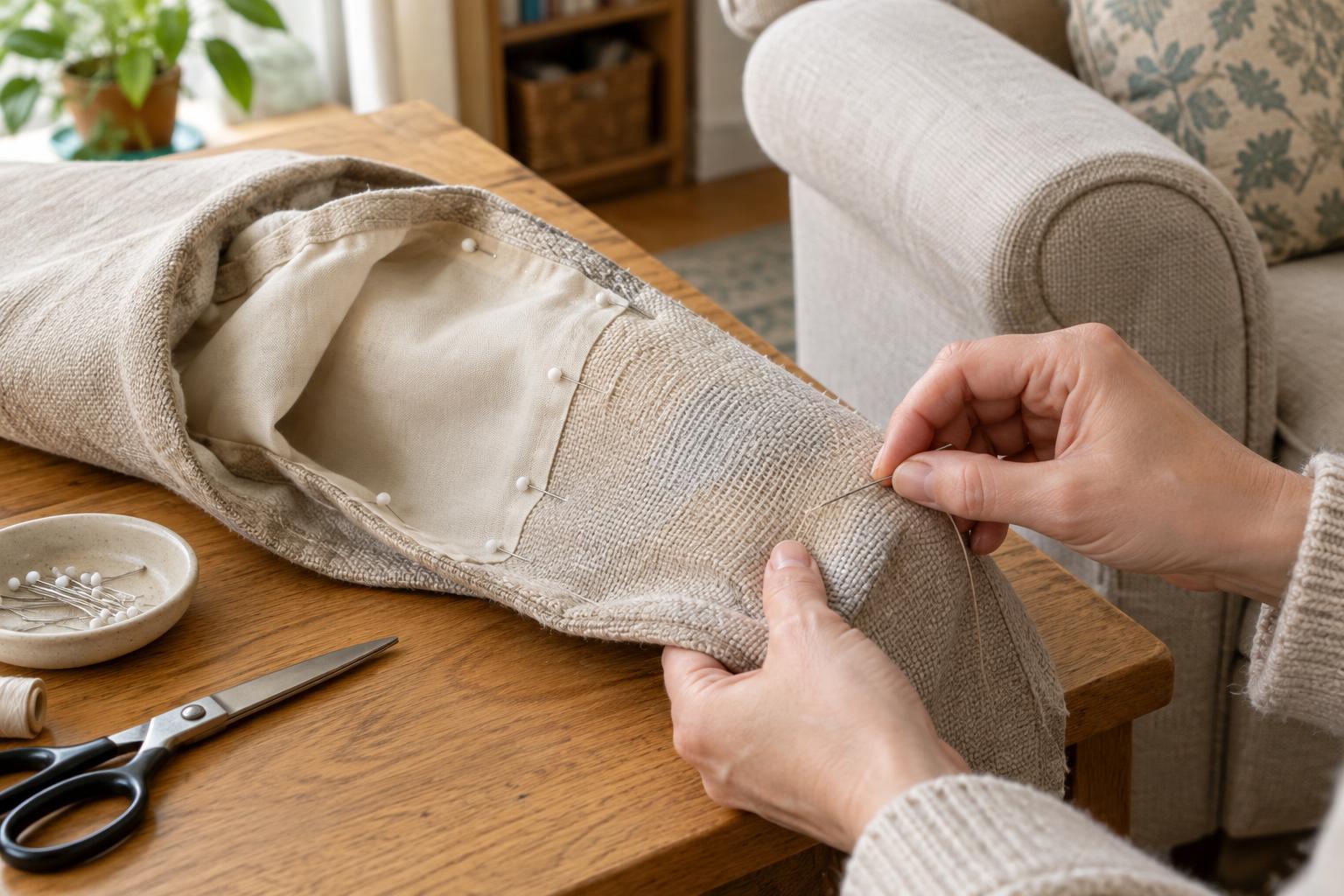
Gently lift only the part that is already loose. Check whether the appliqué fabric is sound or fraying, and look for old needle holes or a remaining stitch line. If the cushion has a removable cover, take out the insert so you can work on one layer of fabric. If it does not, plan to use shallow stitches that catch the front fabric without sewing the front and back of the cushion together.
Prepare the fabric and your tools
Brush away loose threads and surface dust. If the area needs cleaning, follow the cushion’s care label and let the fabric dry completely before repairing it. Avoid pulling out intact stitches merely to make the edge look even; they may be keeping the rest of the appliqué in place. Trim only dangling thread ends, taking care not to cut the appliqué or cushion fabric.
For a hand-sewn repair, gather a fine hand-sewing needle, thread close in color to the existing stitches, small scissors, and pins or sewing clips. Choose a thread that feels appropriate for the fabric rather than one so thick that it makes visible holes. If the cushion or appliqué is delicate, test a stitch in a concealed spot first. A thimble can help if the fabric layers are firm, but do not force a needle through a resistant backing.
Stitch the loose edge back down
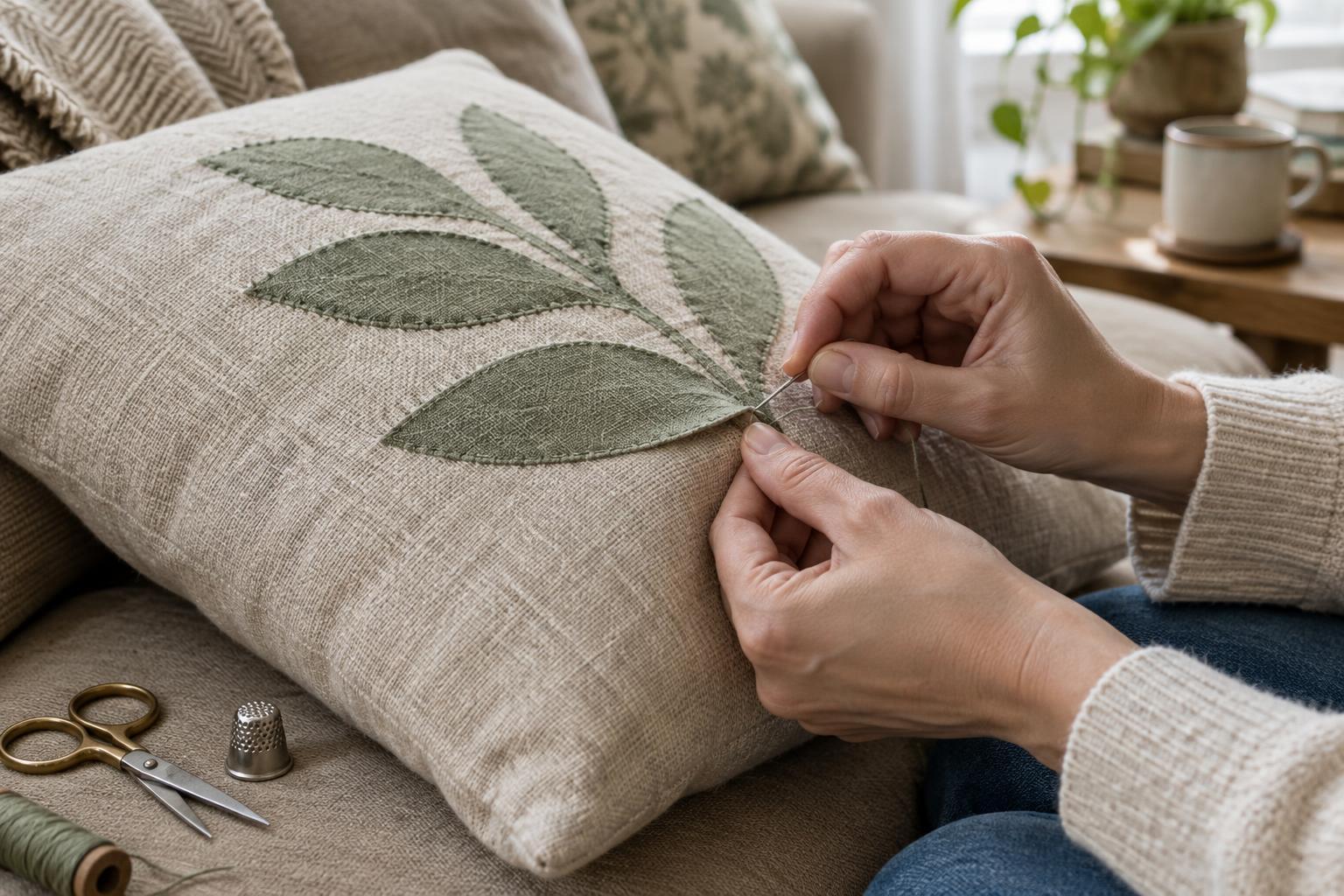
Lay the appliqué in its original position, aligning any pattern or old stitch marks. Hold it with a pin placed away from the edge, or use a clip if pinholes might show. Thread the needle and tie a small knot. Starting just inside the secure portion of the appliqué, bring the needle up through the cushion fabric close to the edge. This lets the new stitches overlap the old ones instead of beginning at a point that could lift again.
Use small, even stitches along the loose edge. For a discreet repair, pass the needle through the cushion fabric and catch a tiny amount of the appliqué edge with each stitch. If the original stitching is decorative and visible, follow its spacing and direction as closely as you can. Keep the thread snug, not tight: pulling hard can pucker the cushion face or curl the appliqué.
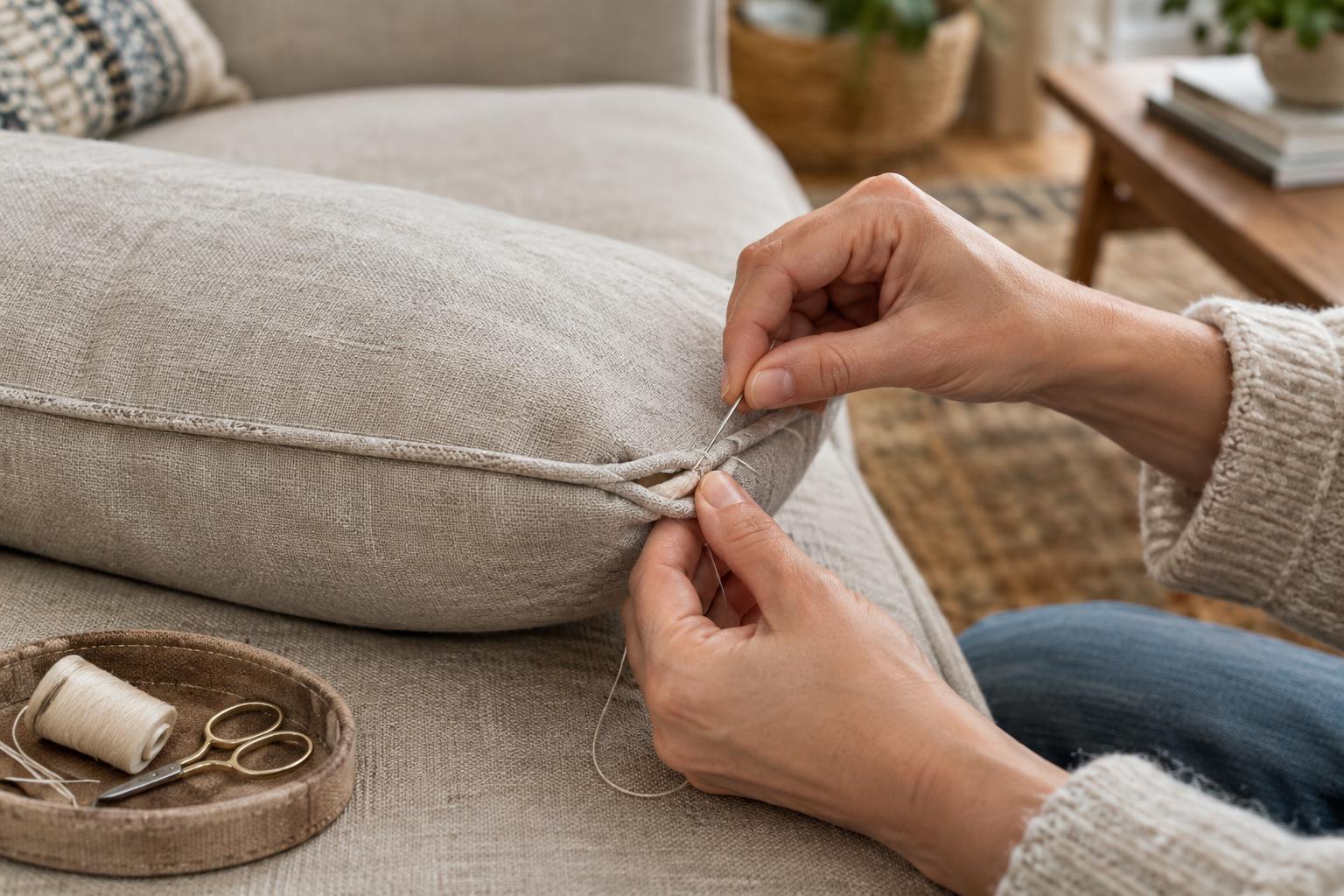
Continue a short distance past the loose section into the secure stitching. Fasten the thread on the underside of a removable cover, or hide the finishing stitches beneath the appliqué edge if the insert cannot be removed. Check that the edge lies flat, then gently smooth the surrounding fabric with your hand.
Handle fraying edges or adhesive backing
If the appliqué edge is fraying, avoid tugging at the fibers. You may be able to turn a narrow edge under before stitching, provided that doing so does not noticeably change the shape. Where there is too little fabric to turn, close stitching around the edge can help contain the loose fibers. A badly damaged appliqué may need a patch or replacement rather than more stitches through weakened fabric.
Some appliqués have a fusible adhesive backing. Heat can affect the cushion fabric, dyes, filling, or decorative finishes, so check the care label before considering an iron. If the materials can tolerate heat, test an inconspicuous area and follow the adhesive product’s directions. Stitching the edge afterward may provide a more dependable hold on a cushion that is handled often. Avoid applying ordinary household glue: it can dry stiff, stain the fabric, or make a later repair difficult.
Check the repair during regular use
Once the appliqué is secure, put the insert back if you removed it and check the cushion from the front. The repaired area should lie flat without pulling the surrounding fabric. If a stitch looks too tight, correct it before the cushion goes back into use; a small adjustment is easier now than after the fabric has creased.
For future care, handle the cushion by its body rather than by the appliqué. Follow its care label when cleaning, and inspect raised edges before washing or brushing the surface. Catching a loose stitch early usually makes for a simpler, less noticeable repair.