Check the wear before choosing a repair
An armrest often wears in one spot because hands, sleeves, and repeated pressure rub against the same area. If the fabric looks pale, feels unusually soft, or shows its backing, treat it gently: pulling it taut to inspect it may turn a thin patch into a hole. Remove a loose cover if you can, lay it flat, and look at both sides in good light. Note any splits, weakened seams, or worn areas beyond the obvious spot.
A backing patch can support fabric that is thin but still mostly intact. If the cloth breaks apart when lightly handled, or the wear reaches a seam that is pulling open, a larger replacement panel may be more reliable. On a fixed upholstered armrest, check whether you can reach the underside or an existing opening without forcing the cover off. If not, a removable armrest protector may be a better low-risk option than stitching through the upholstery while it is on the chair.
Gather materials that suit the cover
Choose a backing fabric that is sturdy but flexible, such as a piece of tightly woven cotton of similar weight to the cover. It should support the worn area without creating a stiff ridge. A very heavy patch can pull on delicate cloth at its edges, while a stretchy patch may fail to stabilize a woven cover. Wash and dry the patch first if you expect the finished cover to be washable; this helps reduce the chance of later shrinkage.
You will also need matching thread, a hand-sewing needle, sharp scissors, and pins or clips. For a removable cover, a sewing machine may be useful if the affected panel lies flat and is easy to handle. Test any proposed stitches on an inconspicuous area first, especially if the fabric snags or shows needle holes. Fusible backing is convenient for some washable fabrics, but heat and adhesive can damage or stiffen others. Check the cover’s care information and test in a hidden spot rather than assuming an iron is safe.
Support the thin area from behind
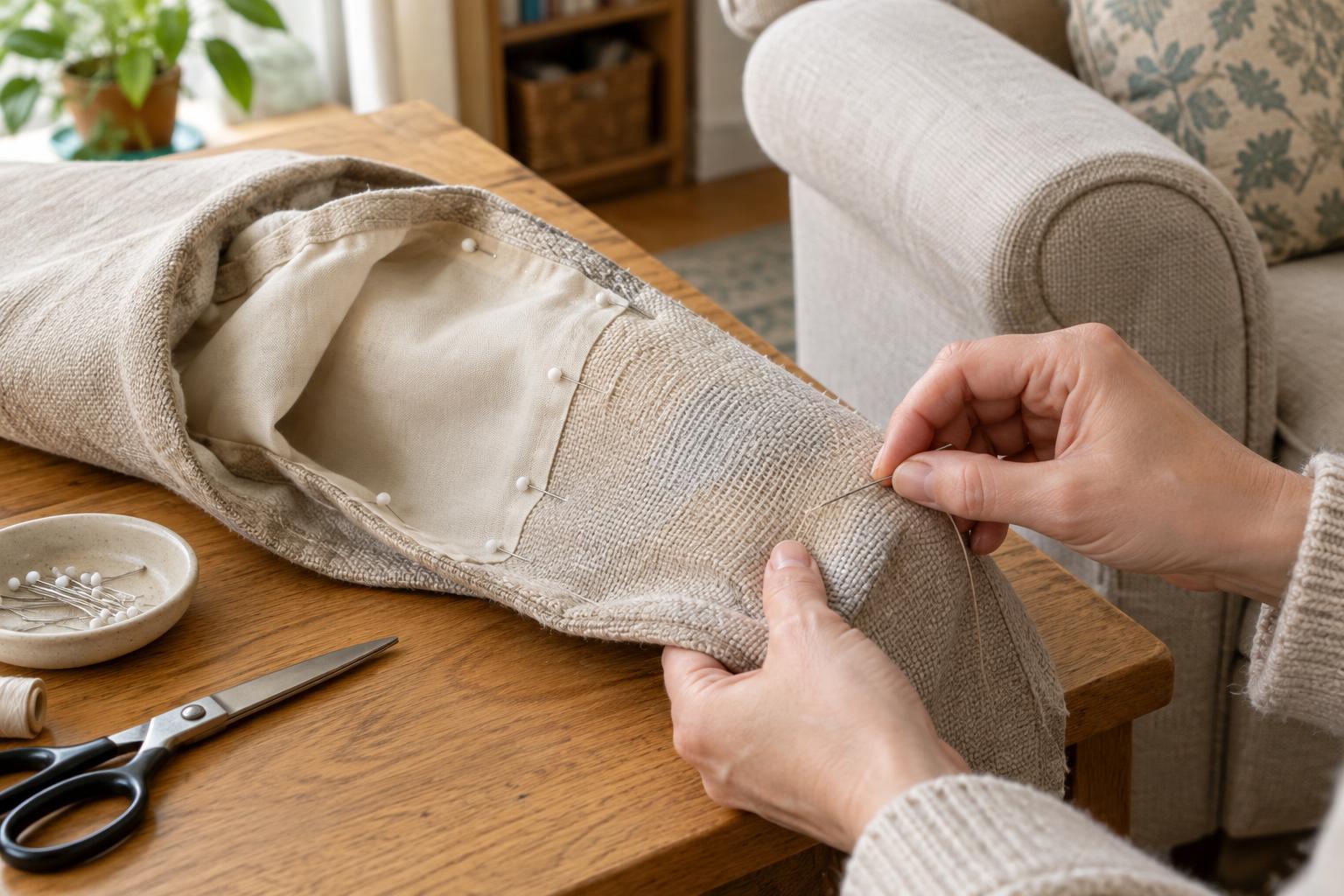
Cut the patch with rounded corners, extending well beyond the visibly thin area on every side. The aim is to anchor it to sound fabric, not just to the fragile spot. If the cover is removable, turn it inside out and place the patch against the back of the worn section. Smooth both layers without stretching either one, then pin or clip the patch in place. Keep the cover’s original shape in mind; the fabric still needs to curve comfortably over the armrest.
Sew around the patch edge with small, even stitches, catching sound cover fabric as you go. Do not pull the thread so tight that the surface puckers. Add a few spaced rows of stitching across the worn area if the fabric can tolerate them, distributing stress instead of concentrating it along the patch perimeter. Work slowly and keep the rows loose enough for the armrest’s curve. If a needle causes the cloth to split, stop: more stitches are unlikely to strengthen fabric that no longer holds them.
Finish and test the fit
Turn the cover right side out and check it in daylight. The repair should lie smooth, without a hard edge that you can feel prominently through the surface. Trim loose threads, but avoid cutting close to the worn cloth. Put the cover back on the armrest without tugging on the repaired section. If it is difficult to fit, remove it and check for puckering or excess bulk before trying again.
Sit down and use the armrest normally for a moment. Watch for a patch edge that rolls, a seam that strains, or new tension beside the repair. A comfortable repair spreads wear across a wider area; it should not simply move the strain to one narrow line. If the cover is fixed in place or difficult to access, avoid piercing deep into padding or unseen upholstery layers. A surface protector or help from an upholstery repairer may be more suitable.
Help the repair last
Keep abrasive objects such as rough fasteners away from the armrest, and clean the cover according to its care instructions. When cleaning a repaired area, blot rather than scrub. If the armrest cover can be shifted or reversed, doing so occasionally may spread everyday wear more evenly. A washable throw or fitted protector can also take the brunt of frequent contact.
Check the repair now and then for loose stitches and thinning just beyond the patch. Reattaching a loose edge early is easier than repairing a fresh tear. Reinforcement can extend the usefulness of a cover, but it cannot restore fibers that have worn away. When large areas become fragile, replacing the affected panel or the cover is usually a more durable refresh.