Pause before you touch the snag
A snag is a thread or loop that has been pulled out of its usual position. It can happen when a ring catches a cushion cover, a pet’s claw brushes a throw, or a rough edge catches a curtain. The first instinct may be to snip off the protruding thread, but that can turn a displaced loop into two loose ends. On a knitted fabric, it may also create a hole that can unravel.
Lay the item flat and look at both sides in good light. Check whether the thread is intact, whether nearby stitches have tightened, and whether the snag sits close to a seam. Avoid tugging the loop to test it: pulling can make the surrounding distortion worse. If the fabric is valuable, very fine, or already fraying, set it aside for a textile repair specialist rather than experimenting.
Gather simple, gentle tools
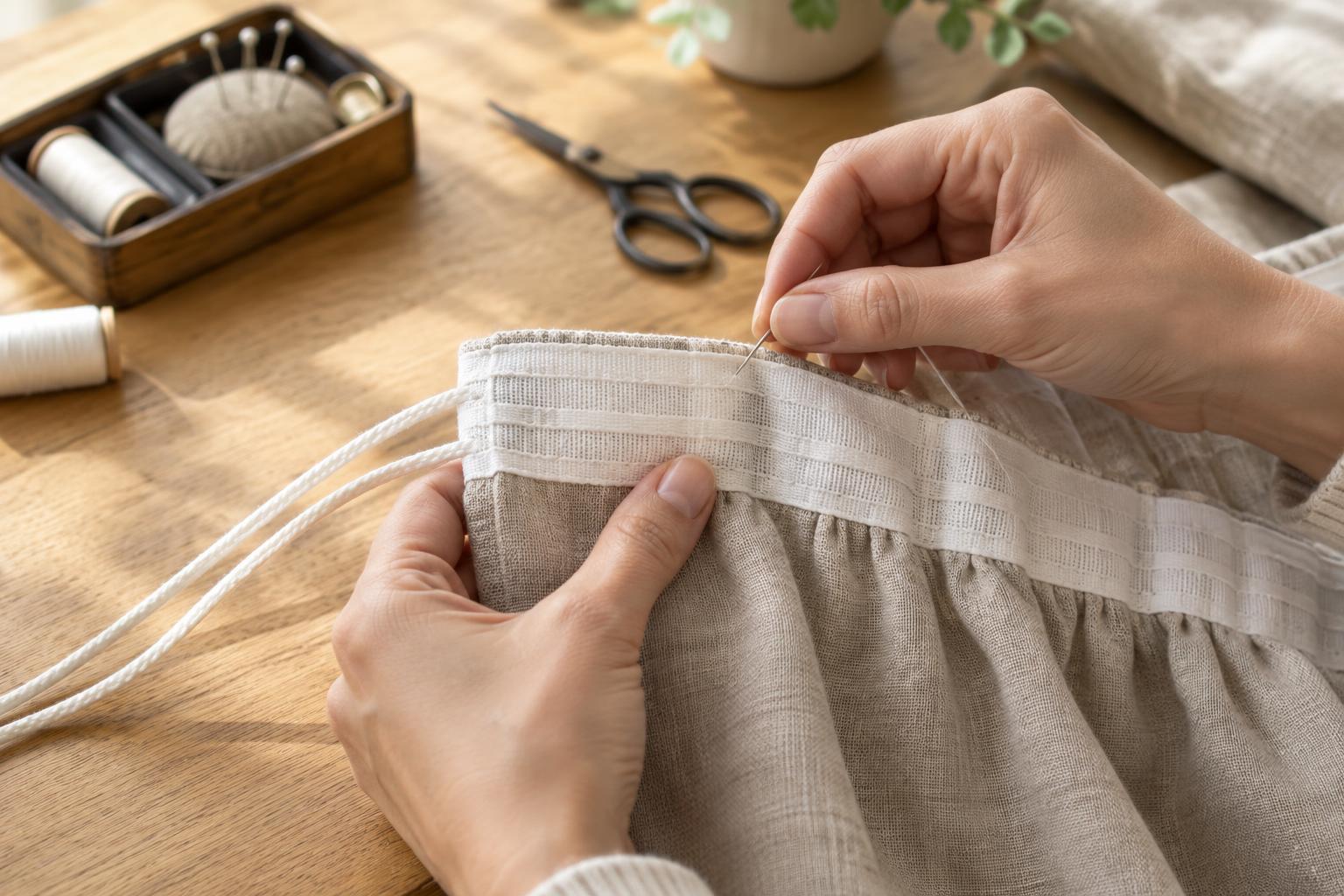
Clean hands and a smooth work surface matter more than a large repair kit. A blunt tapestry needle or small crochet hook can help guide a loop through a fabric. A fine sewing needle can be useful for an especially small snag, but keep its point away from neighbouring threads. For some closely woven fabrics, a snag-repair needle with a textured shaft can draw a loose thread toward the reverse side.
Choose a tool that fits the fabric rather than forcing a thick needle through a tight weave. If you are unsure how the material will respond, try the tool on a hidden area first. Work slowly, with the fabric supported on the table; stretching it across your fingers makes it harder to judge how the surrounding threads should lie.
Ease a knitted loop back into place
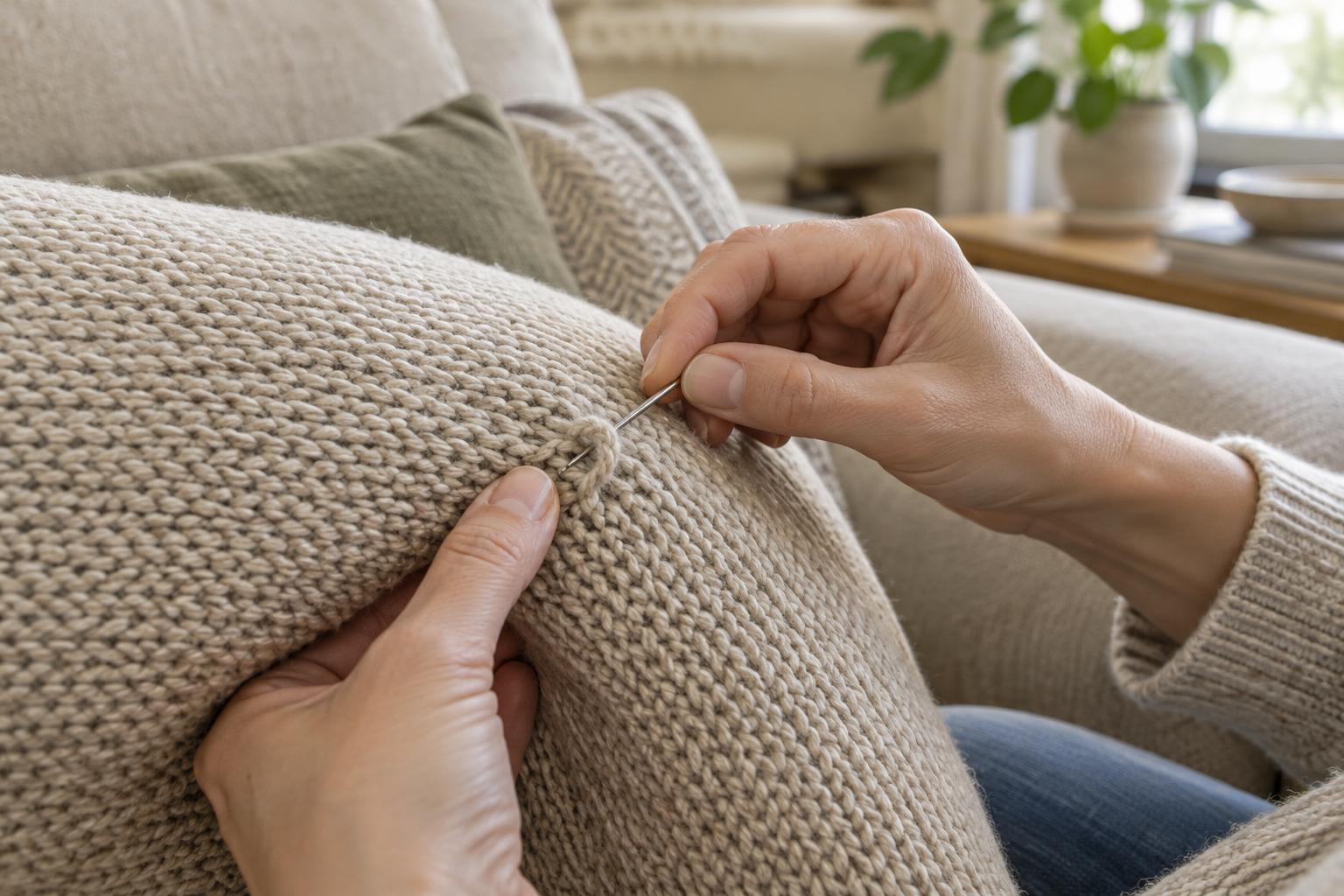
Knitted throws, jersey cushion covers and similar fabrics are made from interlocking loops. When one loop is pulled outward, nearby stitches may look small or gathered. Starting a few stitches away from the snag, gently ease the tight loops toward the protruding one with your fingertips or a blunt needle. Work from both directions, moving a little at a time. The aim is to redistribute the thread along its original path, not to drag the entire snag through one stitch.
If a small loop still stands proud, turn the fabric over. Insert a suitably small crochet hook from the reverse side near the snag, catch the loop and draw it through gently. Do not pull it tight against the back; that can create a puckered spot on the front. Smooth the area with your fingers and check that the surrounding stitches sit evenly.
Handle woven and upholstery fabrics with care
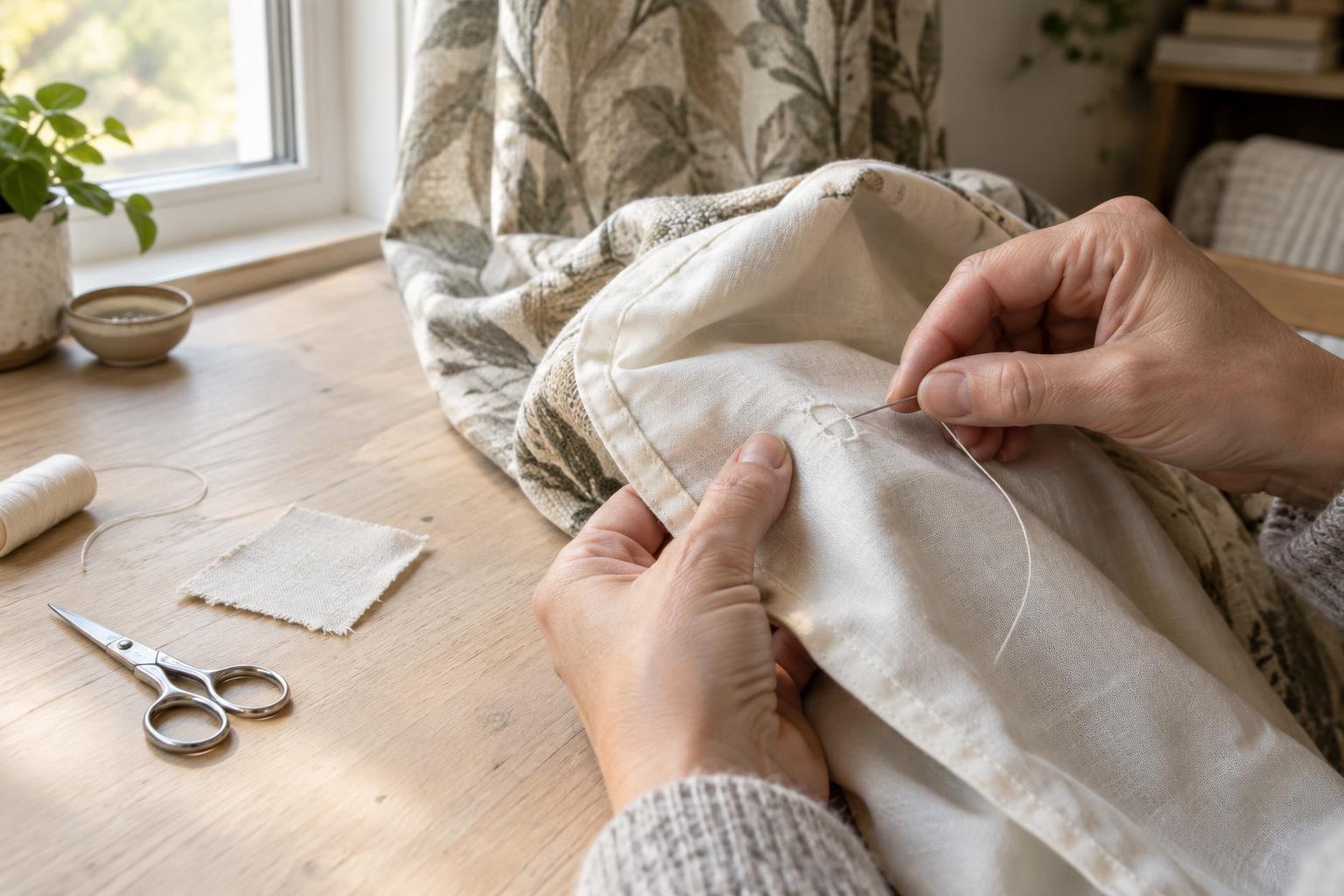
Woven fabric has threads crossing in two directions, so a snag may appear as a long raised thread with a narrow, gathered line beside it. Try smoothing along that line with your fingertips to ease the displaced thread back into the weave. If part of it remains raised, a fine tool may help move a small loop to the reverse side. Keep the pull slight: tightly woven upholstery can resist a needle, and forcing one through may leave a visible opening.
A sofa or padded chair may not give you access to the reverse side. In that case, focus on reducing the distortion from the front rather than pushing a tool blindly into the upholstery. Textured, pile and loosely woven fabrics can conceal a loop, but their surface can also be easy to disturb. Stop if threads begin to split, the weave opens, or the snag grows longer.
Finish gently and prevent another catch
Once the thread is settled, inspect the area from several angles. A faint mark may remain where the fabric was pulled, even after the loop has been eased back. Light finger-smoothing is often enough; pressing or washing is not a necessary final step. If you do clean the item later, follow its care label and avoid vigorous rubbing over the repaired area.
Look for the rough edge that caused the snag, such as a chipped furniture corner, exposed fastening or sharp jewellery setting. Removing that source is more useful than repeatedly repairing the same spot. Keep pet claws, hook-and-loop fasteners and abrasive items away from easily caught textiles where practical. Most importantly, treat a new snag early and gently: an intact thread is usually easier to reposition than one that has been pulled, cut or worn through.