Check what has come loose
Piping is the covered cord that runs along a cushion edge. Its fabric flange is usually caught inside the cushion seam, leaving the rounded cord visible. Before sewing, look closely at the loose area. Has the stitching opened while the piping and cushion fabric remain intact? Has the fabric covering the cord torn? Or is the cord itself working its way out? These problems look similar from a distance but need different repairs.
A short opening with sound fabric on both sides is often suitable for a hand repair. If the flange has frayed away, the cushion fabric is tearing, or a long stretch of seam has failed, simply pulling the edge closed may not hold. You may need to replace a section of piping or open and resew more of the seam. Photograph the edge before working so you have a reference for its original shape.
Gather supplies and prepare the cushion
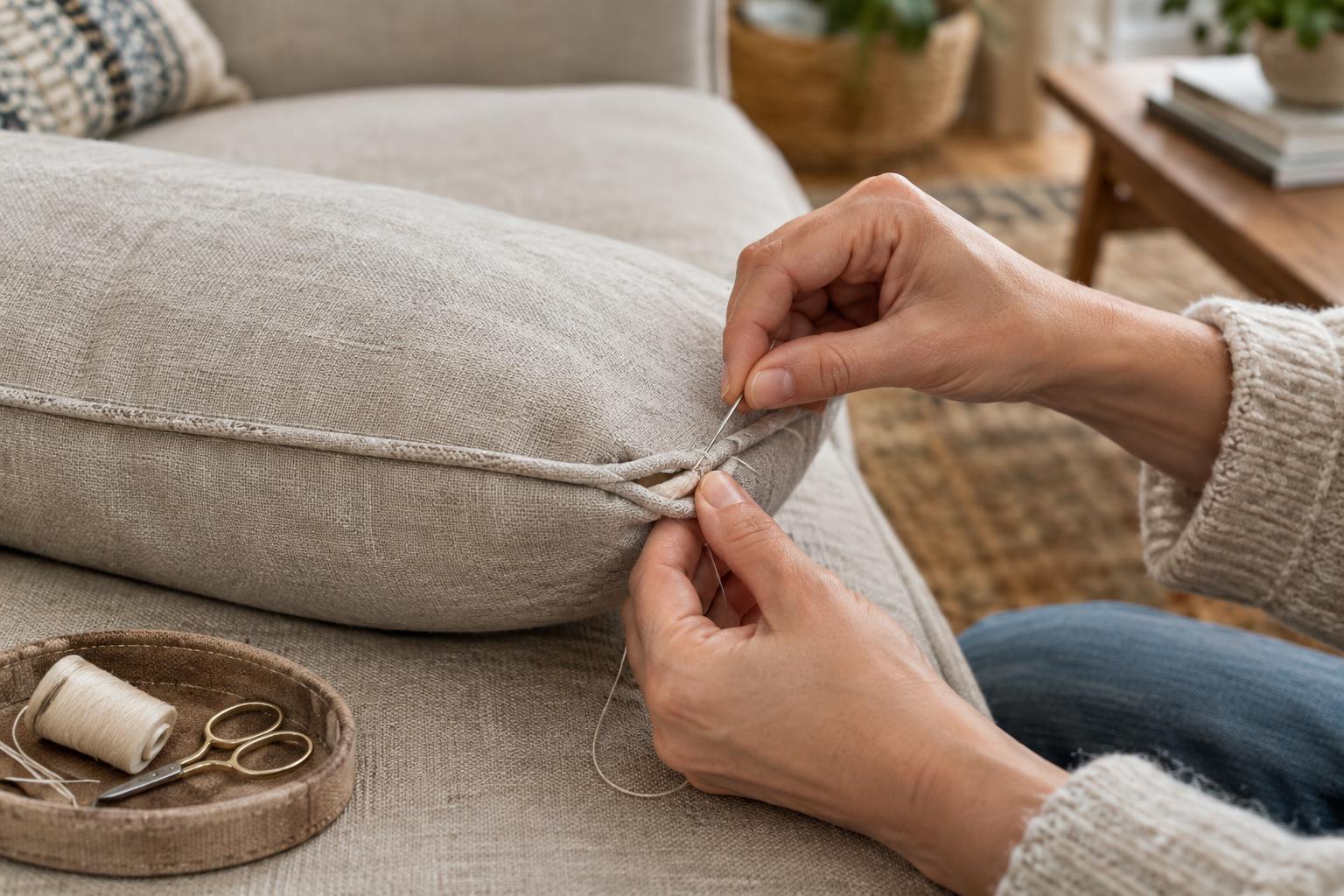
For a small repair, gather a hand-sewing needle, strong thread close to the fabric color, small scissors, pins or clips, and a thimble if the fabric is dense. An upholstery needle can help with heavy material; a curved needle can be useful where access is limited. Choose thread that passes through the fabric without forcing an unusually large hole. Avoid relying on glue for a seam that flexes whenever someone sits down.
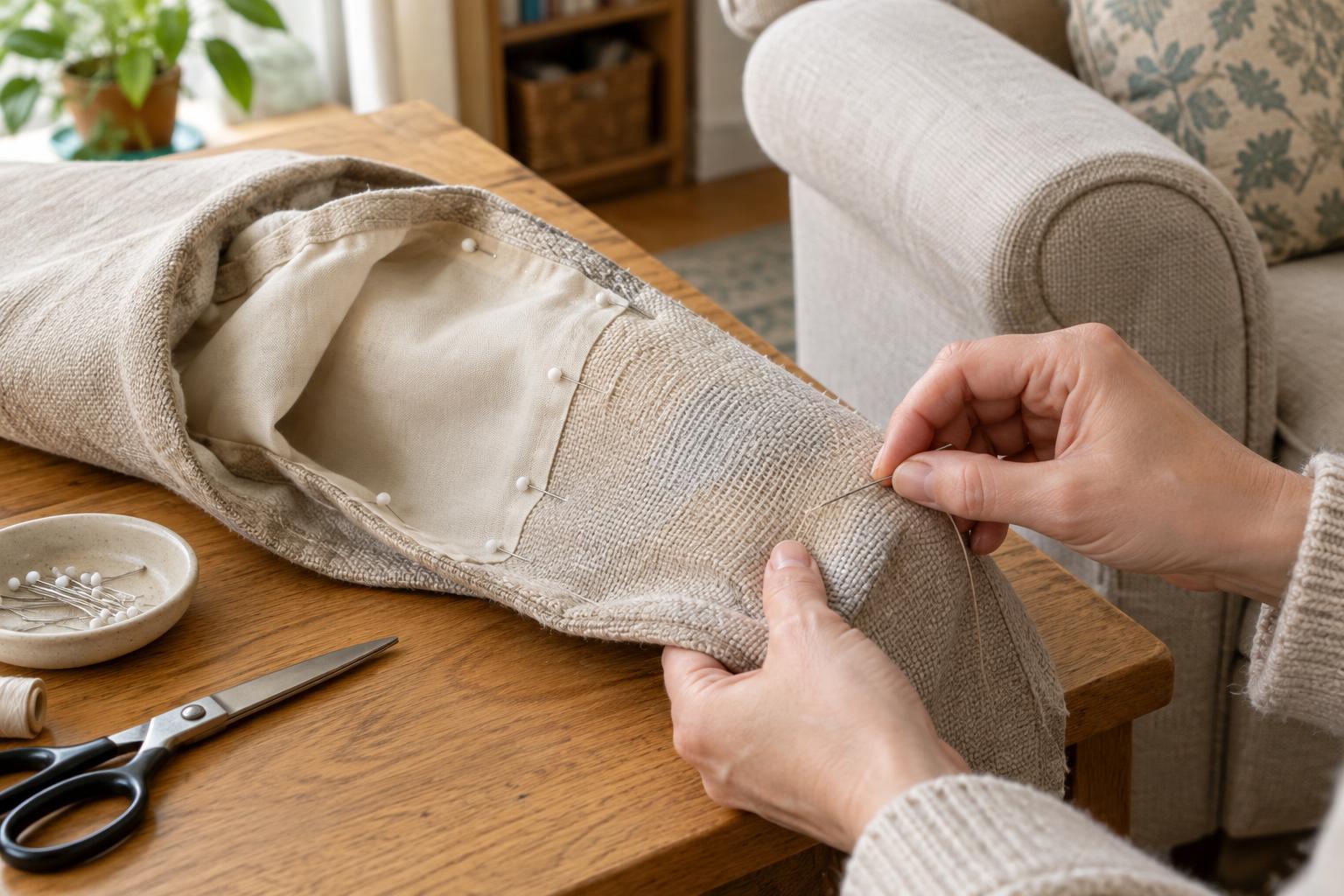
Remove the cushion cover if it has a zipper and comes off easily. Check the care label and do not pull at a cover that seems attached to the filling. If the cover stays on, set the cushion on a stable surface with the damaged edge facing up. Brush away crumbs and loose fibers. Gently guide the piping back into its usual line, matching the curve of the cord to the intact edge on either side. Keep the cushion fabric smooth rather than stretching it to reach the piping.
Stitch a short opening closed
If you can turn the cover inside out, the most secure approach is generally to place the piping flange between the cushion fabric layers and sew along the original seam line. First, align the layers and hold them with clips or pins. Use small, even backstitches, starting a little before the opening and continuing a little beyond it so the new stitches overlap the sound seam. Keep each stitch close to the piping cord without sewing through the cord itself. Check the outside occasionally to make sure the rounded edge sits evenly.
If the inside of the seam is inaccessible, you can work from the outside with a small slip stitch. Tuck the piping flange back into the opening, then take alternating small bites of cushion fabric and piping fabric near the original seam. Hide as much thread as possible in the fold. Pull each stitch snug enough to close the gap, but not so tight that the edge puckers. Start and finish in firm fabric beyond the loose section, and secure the thread with a few small stitches hidden in the seam. Take care not to catch the cushion filling.
Handle exposed cord and weakened fabric
If the piping cover has opened but its fabric is still strong, turn the raw edges under where possible and stitch them closed around the cord with small, closely spaced stitches. This is a visible repair on some fabrics, so test your stitch placement in an inconspicuous part of the opening first. Do not trim the cord merely to make it fit; a shortened cord can leave a flat spot along the cushion edge.
When the covering or flange is badly worn, new stitches may tear out beside the old ones. Replacing that piping section usually means opening enough of the cushion seam to join a new piece neatly to the existing trim. Matching the cord size and fabric matters as much as matching the color: a thicker replacement can distort the edge. If the cushion is valuable, difficult to open, or made from fragile fabric, an upholstery repair specialist may be a better choice than repeated stitching.
Check the finish and reduce future strain
Run your fingers along the repaired edge to feel for gaps, hard knots, or places where the piping has twisted. Put the cover back on, if removed, and check the seam with the cushion in its usual position. If the edge puckers, remove a few stitches and realign the fabric rather than pulling harder on the thread.
Loose piping often starts where a cushion is gripped, bent, or compressed repeatedly. When moving a cushion, lift it by its body rather than the trim. Rotate reversible cushions if their construction allows it, and address small seam openings before they lengthen. A tidy hand repair may not be invisible, but it should hold the piping in line without putting new strain on the surrounding fabric.