What is upholstery fabric backing?
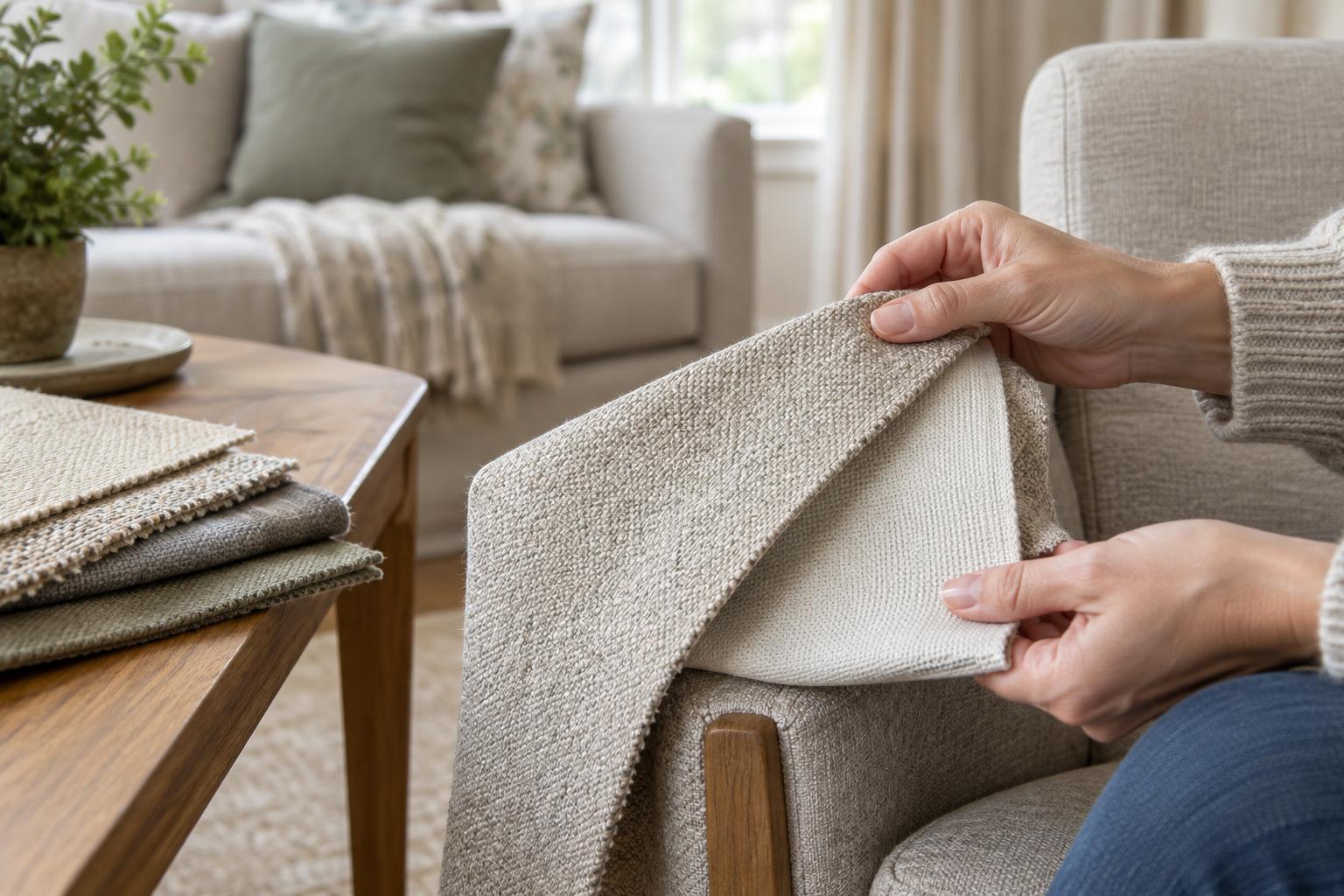
Turn over an upholstery fabric sample and you may find a layer that looks quite different from the decorative face. This is its backing: material added to the reverse of the fabric to change how it behaves. Some fabrics have a thin, flexible coating, while others have a bonded textile layer. Many upholstery fabrics have no added backing at all. Backing is not the same as the padding, lining or support materials inside a chair.
It is easy to choose fabric by colour and texture alone, but upholstery must also cope with being pulled into shape, attached to a frame and used repeatedly. The reverse of the fabric can influence all of those steps. Knowing whether a fabric is backed helps you ask better questions before committing to a large project.
How backing can help a fabric hold its shape
One common purpose of backing is to make a fabric more stable. A loosely woven material may shift when it is cut or pulled around a cushion. A suitable backing can help hold its threads in place and reduce distortion during upholstery work. It may also give a lightweight fabric more body, making it easier to handle.
That extra structure has limits. Backing cannot turn every decorative fabric into a good choice for a frequently used seat. The face fibres, weave, seam construction and overall quality still matter. A backed fabric may also be less flexible, which can make it harder to shape neatly around tight curves or small details. For a rounded chair arm, a stiff sample may be less suitable than one that bends smoothly without puckering.
When comparing samples, move them rather than just looking at them. Fold each one loosely, feel how it springs back and notice whether the face and reverse move together. These simple checks will not predict its lifespan, but they can reveal differences in handling that a photograph cannot show.
Backing and everyday wear
Backing can help keep a weave or knit from stretching out of shape under normal use. It may also support fabric around seams, where repeated movement puts strain on the material. For a sofa or dining chair, that stability can be valuable. Still, the backing is only one part of the fabric; it does not guarantee that the visible surface will resist pilling, snagging or fading.
Pay attention to how the backing is attached. If a bonded layer begins to separate, the fabric may bubble or feel uneven. A coating can also become brittle over time, particularly if the fabric is exposed to conditions it was not designed to tolerate. You cannot reliably judge long-term performance from a quick inspection, but a sample that already shows peeling, cracking or loose patches deserves caution.
Think about where the fabric will go. A decorative panel that sees little contact has different demands from a seat cushion used every day. Choosing for the intended use is more useful than treating backing as a universal sign of quality.
Why the reverse matters when cleaning
Cleaning affects more than the fabric face. Water or cleaning solution can travel through a textile and reach its backing. Depending on the materials used, excess moisture or unsuitable products may leave the fabric stiff, affect a bonded layer or cause marks to show on the surface. A backing should not be assumed to make fabric waterproof or stainproof.
For an upholstered item, start with its care information rather than choosing a method based on appearance. Vacuuming gently with an appropriate upholstery attachment can remove loose dust from many fabrics, but wet cleaning, steam or spot treatments may not suit every construction. If care information is missing or unclear, test any proposed product on an inconspicuous area and avoid saturating the fabric. For a valued or delicate piece, seeking help from a qualified upholstery cleaner may be the safer choice.
What to check before you buy
Ask for a sample large enough to examine from both sides. Check whether the backing feels even, whether it cracks when gently folded and whether the fabric has enough flexibility for the shape you plan to cover. If you are buying fabric for a specific chair or sofa, ask the seller whether it is intended for that kind of upholstery and request its care guidance.
Finally, consider the whole project. A stable backed fabric can be a sensible choice, but it still needs to work with the furniture’s shape, the way the piece is used and the care you can realistically give it. The best choice is not necessarily the thickest backing. It is a fabric whose face, reverse and handling all make sense for the job.