What a pattern repeat tells you
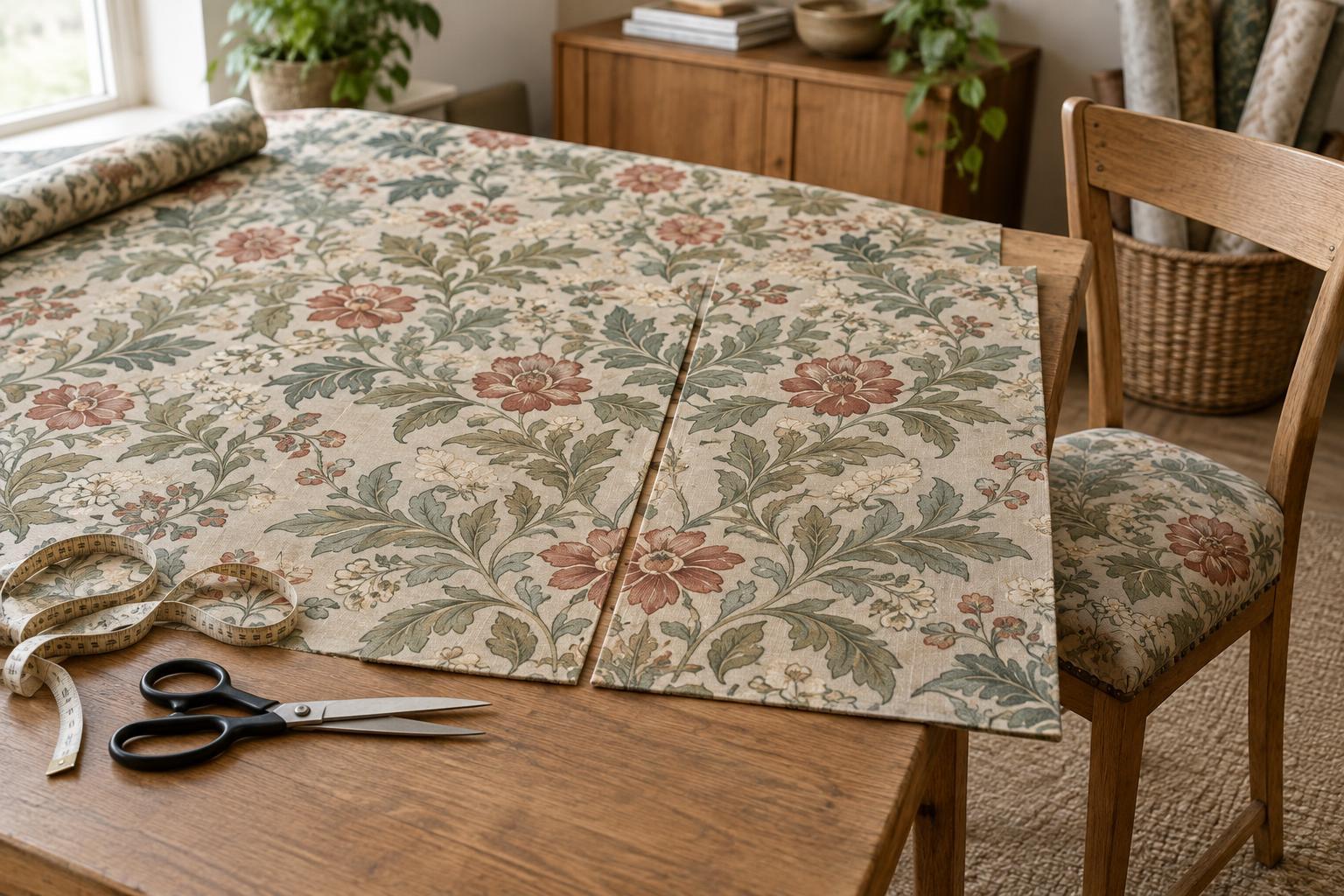
A pattern repeat is the distance between one point in a design and the next identical point. Upholstery fabrics may list a vertical repeat, measured along the length of the roll, and a horizontal repeat, measured across its width. A plain weave or small, irregular texture may have no obvious repeat to match. A large floral, stripe or geometric design usually makes placement more noticeable.
Repeat measurements do not tell you, by themselves, how much fabric to buy. They tell you how often the design returns, which helps you work out where each upholstery piece can be cut. If a seat cushion needs a panel of a certain length, you may need to move its cutting position farther along the roll to put a flower or other motif in the intended place. That unused space can add up across several pieces.
Decide what needs to line up
Before estimating fabric, decide how carefully the pattern should be placed. On a chair, you might center a motif on the seat and back, align stripes across the front edge of the seat, or keep matching arms visually balanced. On a sofa, separate cushions often look more deliberate when their patterns begin at similar points. These are design choices rather than rigid rules: an informal print may allow more flexibility than a crisp check.
Look at the furniture from the angles you use most often. A mismatch across an obvious seam may draw attention, while a change beneath a cushion or at the back of a piece may be less noticeable. Make a short list of priority areas before cutting or requesting a fabric estimate. Trying to match every hidden edge can increase fabric use without improving the finished appearance.
Direction matters too. A directional print has an intended top and bottom, so pieces cannot simply be turned around to fill gaps on the roll. Fabrics with a visible nap or shifting sheen may need the same consistent orientation, even when they have no printed pattern. Check these features in natural and room lighting before settling on a cutting plan.
Translate the repeat into a cutting plan
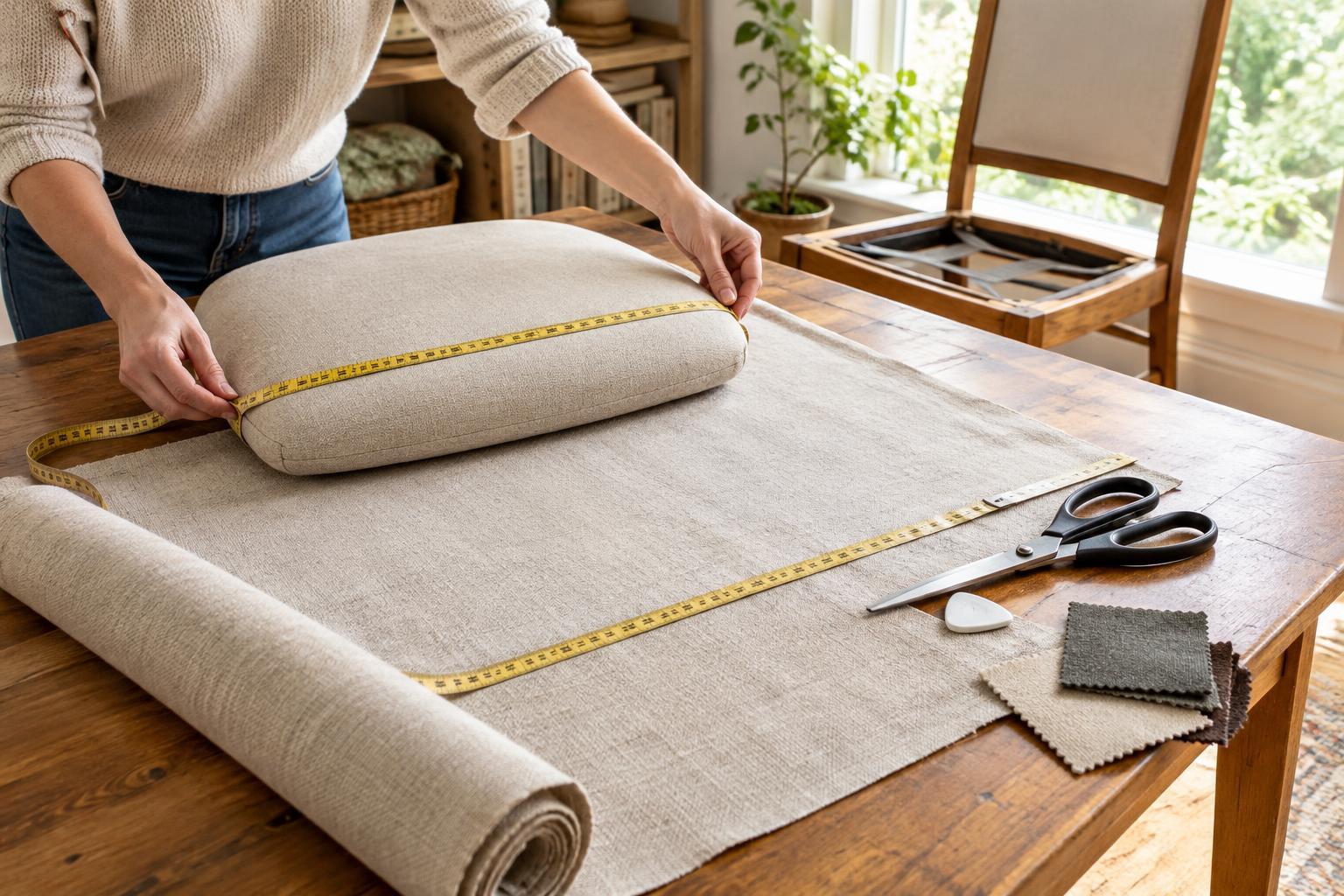
Start with the dimensions of every fabric-covered part: seat, back, arms, cushion faces, cushion sides and any other panels. Include seam allowances and the extra material needed to pull fabric around edges; a panel cut exactly to the visible surface will usually be too small. Record each piece’s intended orientation and note where its pattern should begin. A simple sketch can make these decisions easier to see.
Next, compare the size of those pieces with the fabric’s usable width and its vertical and horizontal repeats. A wide fabric may fit two smaller pieces side by side, but only if their motifs can both sit where you want them. For example, two cushion faces might physically fit across the width yet fail to show matching motifs because of the horizontal repeat. Likewise, a seat and back may fit one after the other along the roll only when their starting points fall in suitable places.
A paper layout can help. Draw the usable fabric width as a long strip, mark the repeating design at its listed intervals, and place scaled versions of the upholstery pieces on it. This does not replace checking the actual fabric, particularly if the design varies, but it exposes likely gaps. For a prominent pattern or costly fabric, working with a sample or a full-width view can help you confirm scale and placement before ordering.
Allow for the real fabric and the work ahead
Printed width and usable width are not always the same. Selvages, borders or an uneven pattern near the edges may limit where panels can be placed. Pattern information may also need checking against the fabric itself: a listed repeat describes the design, but a cutting plan depends on the visible motifs and the particular pieces you need. Keep measurements in the same units throughout your plan to avoid simple ordering errors.
Leave a reasonable margin for adjustments, especially when the fabric has a large repeat, several matching seams or many separate cushions. The margin is not a universal percentage; it depends on the layout and how precise the matching must be. If someone else will upholster the piece, share your priority matches and ask them to confirm the required quantity before you purchase.
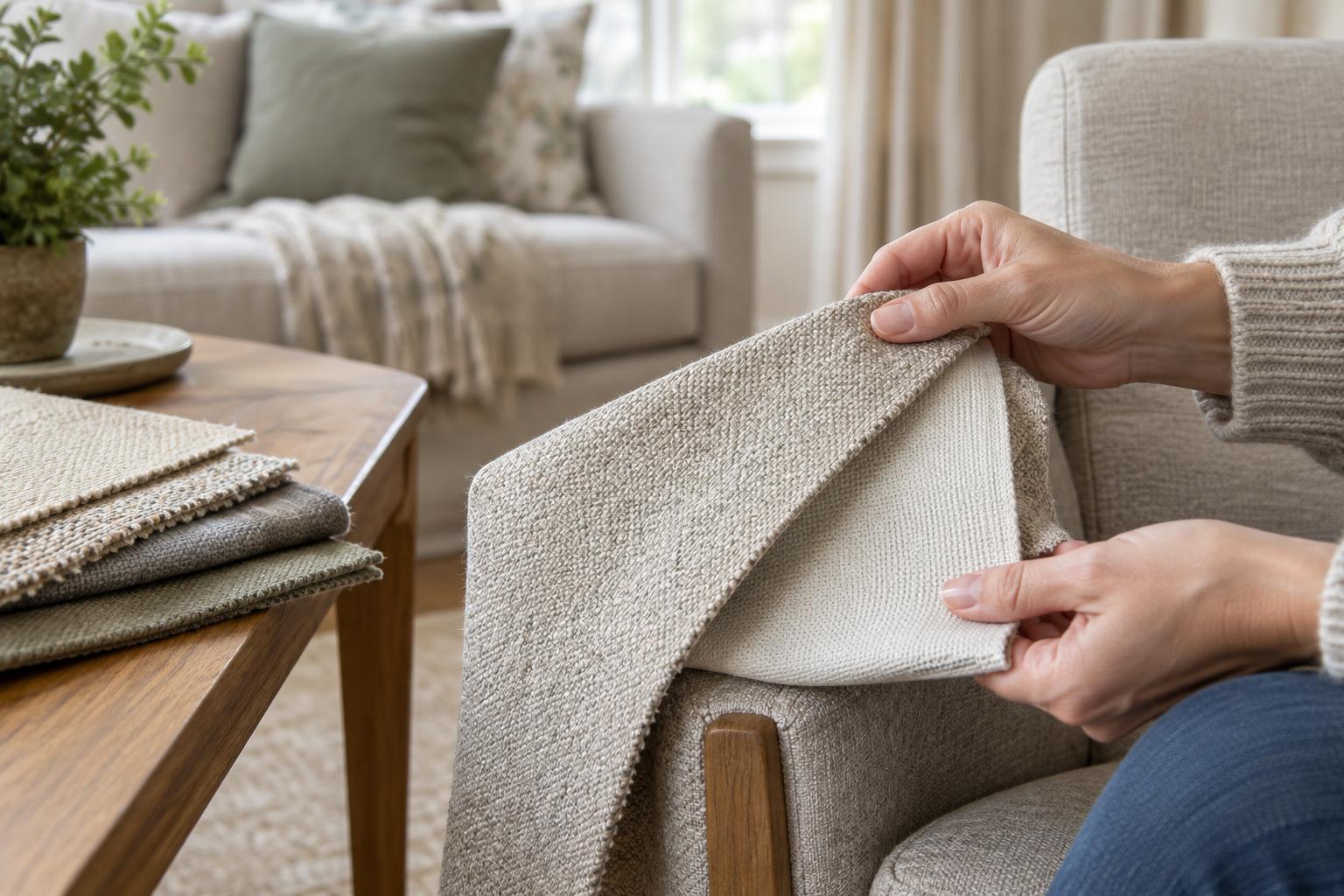
Finally, keep upholstery suitability in view. Pattern placement cannot make a fabric appropriate for a frequently used seat if its construction or care requirements do not suit the job. Choose a fabric that fits the furniture’s use, then plan its pattern around the most visible surfaces. A little time spent mapping those surfaces can prevent both an awkward mismatch and an avoidable shortage.