What it means when a stain sets
A stain has “set” when it becomes harder to remove with ordinary cleaning. That does not always mean it is permanent. Some spills sink deeper into a fabric as liquid spreads through its fibers or into upholstery padding. Others leave behind color, oil or residue that remains after the moisture evaporates. Time matters, but the way you treat a fresh mark can matter just as much.
Before reaching for a cleaner, check what you know about both the spill and the textile. A washable cotton cushion cover offers different options from a fixed sofa, a lined curtain or a fabric with a delicate finish. Read any care label, and look for signs that the color might transfer. When the material is unfamiliar, a small, hidden test is safer than treating the most visible part first.
Mistake 1: Scrubbing a fresh spill
A hard rub can spread a spill beyond its original edge, push it farther into the weave and roughen the fabric surface. On upholstery, pressing down may drive liquid into the padding, where it is difficult to rinse out. Vigorous scrubbing can leave a changed texture even if the stain itself fades.
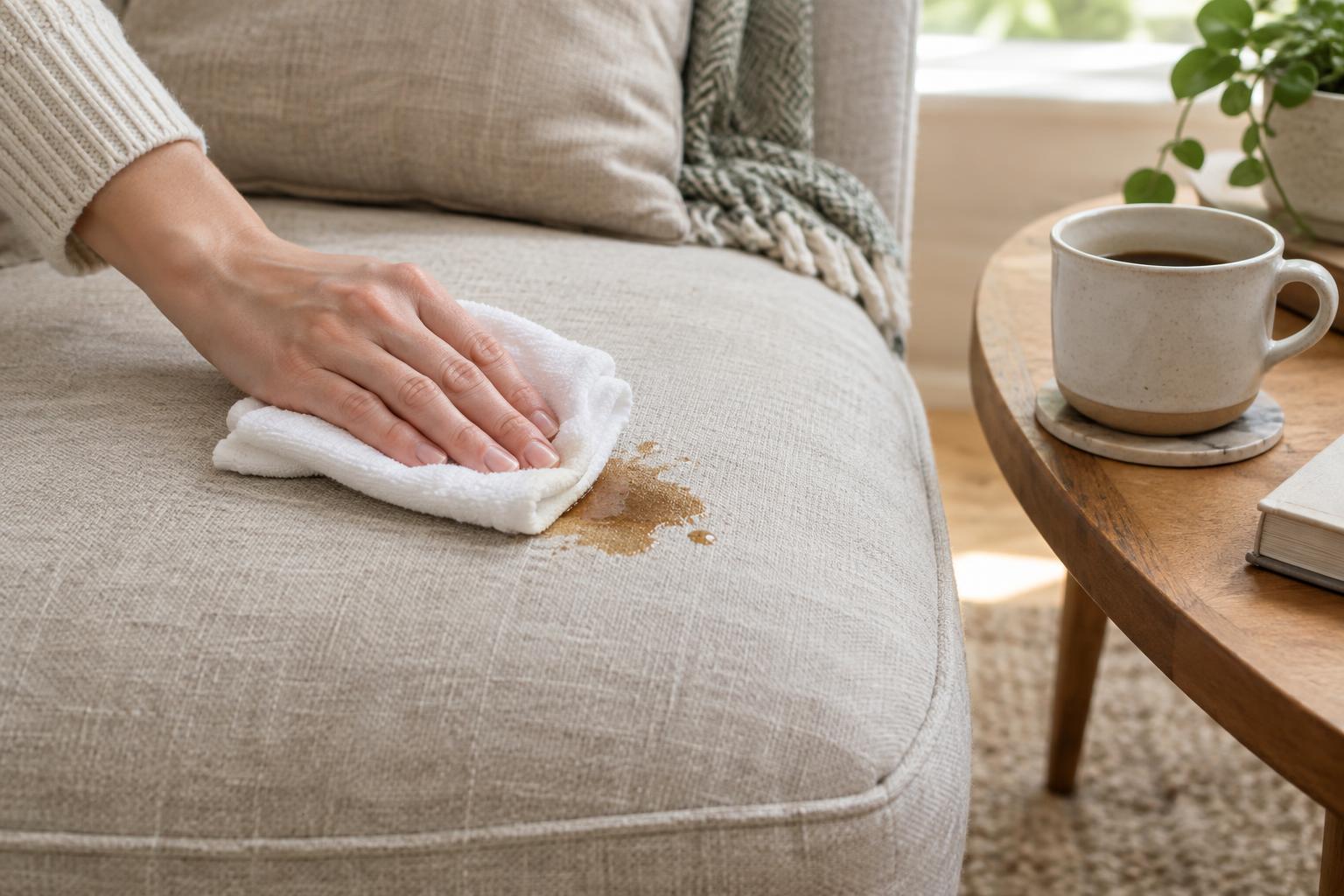
Start by lifting any solids gently with a spoon or dull edge. For a liquid spill, blot with a clean, absorbent cloth, working from the outside toward the center. Change to a clean part of the cloth as it picks up moisture or color. Blotting may not remove the entire mark, but it can take away excess material without enlarging the problem.
Mistake 2: Adding heat too soon
Heat is tempting because it dries a damp patch quickly. Yet a hot dryer or iron can make some remaining marks more difficult to remove. If a washable item still shows a stain after laundering, setting it aside to air-dry gives you a chance to inspect it before applying heat. Direct heat on upholstery or curtains can also affect finishes, backing or shape.
Be cautious with water temperature during treatment, too. Hot water is not a universal stain remover; its effect depends on the spill and the fabric. Unless the care instructions and cleaning method call for it, begin with a gentler approach. If you have already used heat, the stain may still respond to further care, but avoid repeating the same cycle without checking whether it helped.
Mistake 3: Using more cleaner or water than the fabric can handle
A stronger dose of detergent does not necessarily clean better. Cleaner left behind can make an area feel stiff or attract soil. Combining products without clear instructions can create other risks and may damage dyes or finishes. Use one suitable product at a time, follow its label and test it on an inconspicuous area before treating the stain.
Excess water brings its own problems, particularly on non-removable covers and lined soft furnishings. It can spread the stain, create a visible ring as it dries or soak layers that are difficult to dry thoroughly. Apply a small amount of the recommended solution to a cloth rather than pouring it onto the fabric. Blot carefully, remove residue as the product directs, and allow good airflow while the area dries. Do not assume that a fabric-safe cleaner is suitable for every filling, lining or backing.
Mistake 4: Treating every mark the same way
Not all stains call for the same response. Grease, colored drinks, mud and ink behave differently, while dyes and finishes vary from textile to textile. A method that works on a sturdy, washable napkin may discolor a silk-blend curtain or leave a ring on a sofa. Mud, for example, is often easier to lift gently once dry than to smear while wet; a fresh drink spill is usually worth blotting promptly.
If a first attempt does not improve the mark, pause rather than escalating to harder rubbing or a collection of household products. Check the care guidance again and note what you have already applied. For a valuable, delicate or non-washable item, or a large spill that has reached upholstery padding, professional cleaning may be the lower-risk choice. The most useful habit is simple: remove what you can gently, match the treatment to the fabric, and inspect the result before adding heat or trying another method.