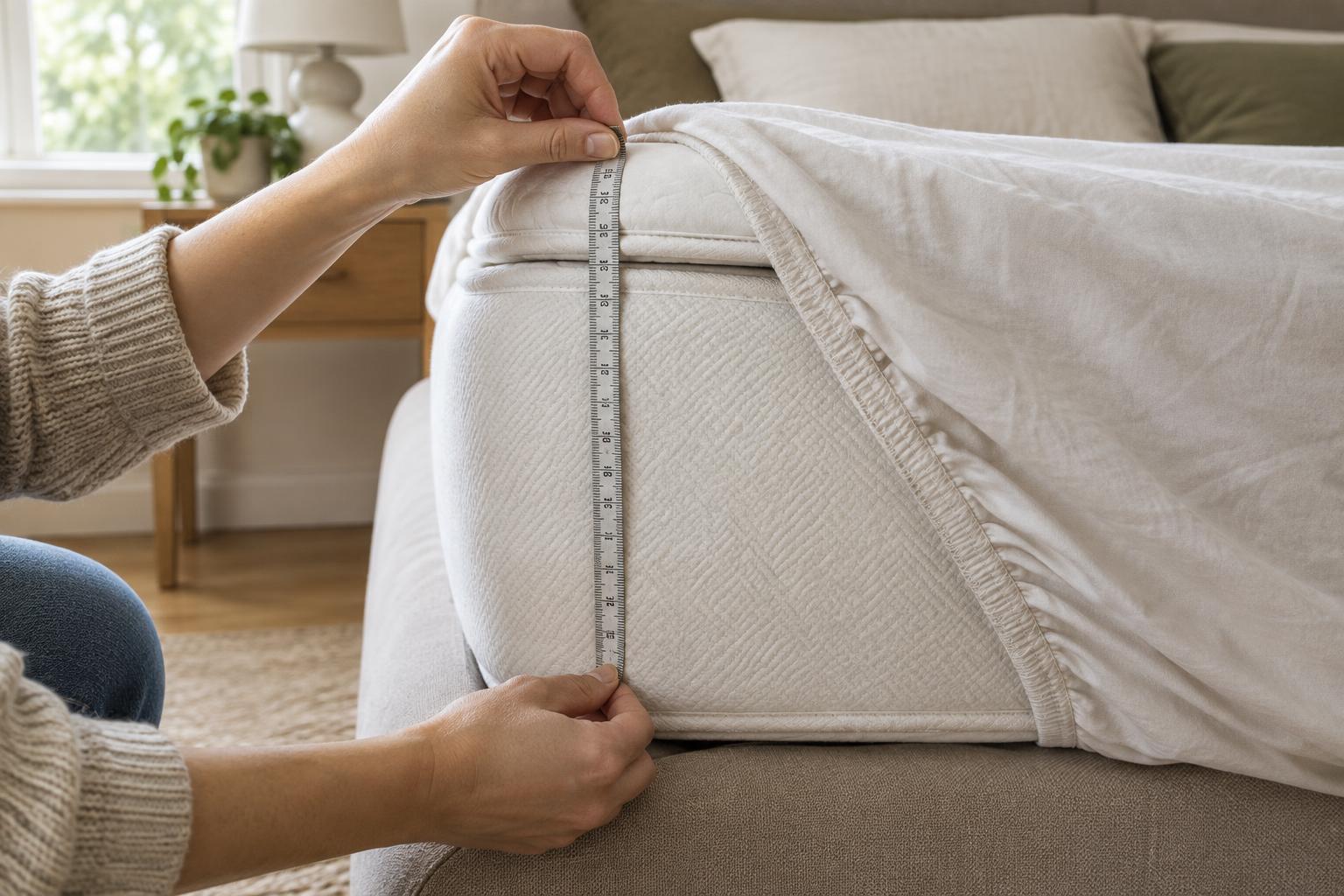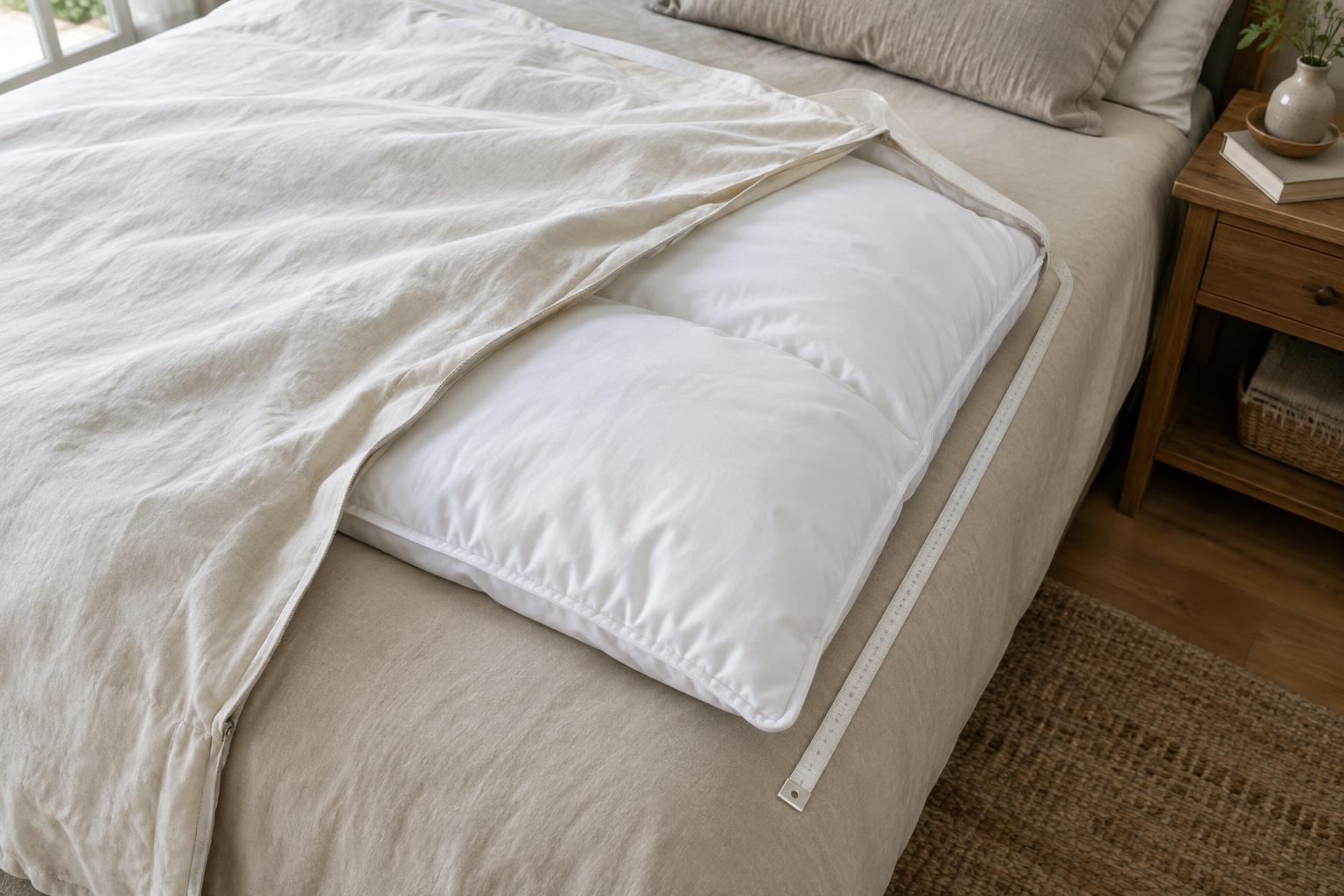
Start with measurements, not the size name
A duvet cover and insert may share a size label yet have different dimensions. Labels such as queen or king are useful starting points, but dimensions can vary by maker and product style. Before choosing a cover, check the width and length printed on the insert’s tag and compare them with the cover’s listed dimensions. If either measurement is missing, lay the insert flat, smooth it gently without compressing the filling, and measure from edge to edge.
Notice which side is meant to run from the head to the foot of the bed. Some inserts are nearly square, while others have a clear lengthwise direction. A cover that is wide enough but too short can push filling toward one end; one that is long enough but too narrow may bunch along the sides. Compare both dimensions separately rather than relying on an overall impression that the pieces look similar.
Consider how thick the insert feels
The same cover can fit two inserts of identical width and length quite differently. A slim, lightly filled insert sits relatively flat inside its cover. A lofty insert occupies more space and may pull a close-fitting cover taut, making the filling look compressed or uneven. Thickness matters most when the cover and insert are already close in size and the fabric has little give.
For a plump insert, a cover with dimensions close to the insert’s stated size is often a sensible place to start; avoid assuming that a smaller cover will always create a pleasingly full look. A very roomy cover, on the other hand, may leave empty fabric around a thin insert and allow it to shift. If you can inspect the pieces together, place the insert inside the cover before making a decision. The goal is an evenly filled shape that can be shaken out easily, not a tight or sagging fit.
Allow for the cover’s fabric and care needs
Fabric affects both the feel and the lasting fit of a duvet cover. Crisp cotton or linen may have a more structured appearance, so excess fabric can be easier to see. Softer fabrics may drape around small differences in size, though drape will not correct a substantial mismatch. Weave, weight, and finishing can all influence how a cover settles over the insert.
Check the care label before treating the listed dimensions as final. Some washable fabrics may shrink, particularly after their first wash, while preshrunk or otherwise treated fabrics may change less. Follow the maker’s washing and drying instructions, and do not count on shrinkage to fix an oversized cover: the result may be uneven or greater than expected. If you already own the cover, measure it after laundering in the way you normally plan to care for it. Those real dimensions are more useful than a size name on the packaging.
Use a quick fit check before committing
Once the insert is inside, align its four corners with the cover’s corners and spread the duvet across the bed. Look for broad bands of empty fabric, corners that refuse to fill, or edges that curl and bunch. Then lift one end and give the duvet a gentle shake. A well-matched pair should settle without a long struggle or obvious pockets of unused cover.
Corner ties or loops can help keep an insert in place if both pieces have compatible attachments. They are useful for everyday movement, but they cannot make a significantly oversized cover fit. If the insert repeatedly slips, first check that it has not been turned sideways. If its orientation is correct, recheck the dimensions and the amount of spare fabric around it.
Choose the compromise you can live with
A small difference in dimensions does not automatically rule out a pairing. An insert that is slightly smaller than its cover may give a relaxed, draped look; a closer match may produce a neater outline. What matters is whether the insert stays distributed and the duvet feels comfortable in use. The preferred look is personal, but persistent empty corners or compressed filling are signs to reconsider.
When shopping for either piece, keep the other piece’s measured dimensions handy and read product dimensions before choosing a familiar size label. If you are replacing only the insert, measure the cover after washing; if you are replacing only the cover, measure the insert and take note of its loft. That short check can prevent a frustrating mismatch and make the finished bed easier to straighten each morning.