Start with the window and the room
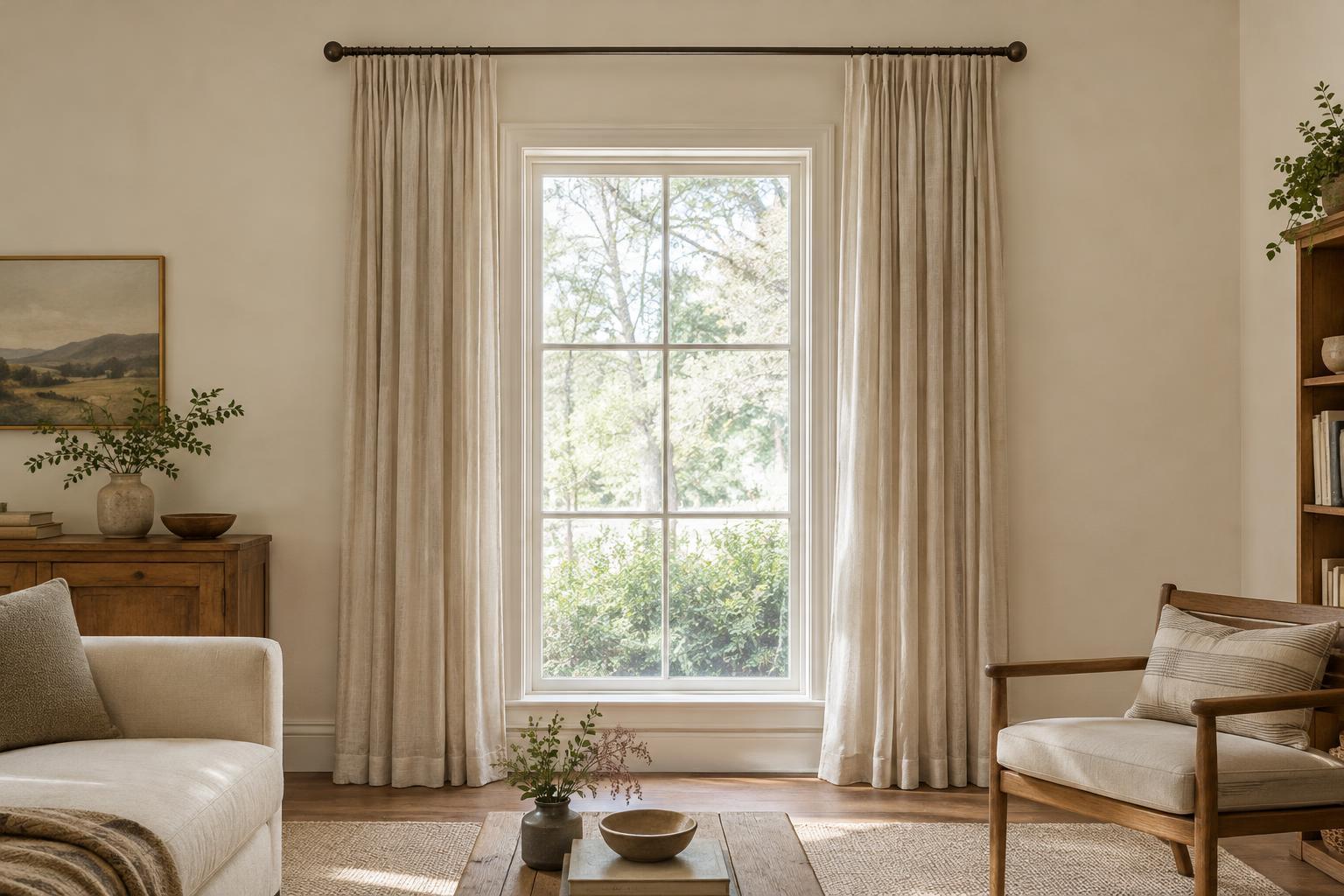
A curtain rod does not have to follow the top edge of the window frame. Moving it above the frame can make the window feel taller, while extending it beyond the sides can reveal more glass when the curtains are open. The most balanced position depends on the space around the window, the curtain style and what the panels need to do.
Before marking the wall, look at the window from across the room. Note the distance between the top of the frame and the ceiling, the space on either side, and the position of nearby doors, furniture or other windows. If several windows share a wall, a consistent rod height often makes the room feel calmer, even when the windows themselves differ slightly. Treat these observations as a starting point rather than forcing every window into one rule.
Choose a height that looks intentional
Hanging a rod a little above the top trim draws the eye upward without making the curtains look disconnected from the window. Where there is generous wall space above the frame, you can try a higher position. Where the ceiling is low or the gap is narrow, leaving a visible margin between the rod and ceiling usually looks more deliberate than squeezing the hardware into the tightest possible spot.
Curtain length matters as much as rod height. Decide whether you want the panels to end just above the floor, lightly touch it or gather on it before choosing the rod position. A floor-length panel that stops well short of the floor may look accidental, while fabric resting on the floor can be less convenient to clean around. Measure from the point where your chosen heading will hang on the rod or rings, not simply from the rod’s top edge. Different headings place the fabric at different heights.
Give open curtains somewhere to go
A rod that ends close to the window frame leaves the open panels covering part of the glass. Extending the rod beyond each side gives the fabric room to gather and can make the window seem wider. The amount of extra space needed depends on panel fullness and fabric weight: thick, lined curtains generally take up more space when open than light, unlined ones.
Check what is beside the window before widening the rod. A light switch, shelf, corner or adjacent window may limit how far the panels can stack. If side space is scarce, aim for an arrangement that opens smoothly rather than an exaggerated width. For a pair of windows close together, consider how the curtains will look both open and closed; generous extensions that work on an isolated window may feel crowded between two frames.
Account for hardware and everyday use
Rod placement needs to work in three dimensions. Projection brackets hold the curtain away from the wall so it can clear trim, a window handle or a radiator cover. Make sure the panels can travel past the brackets as intended and that rings or grommets have enough room above the rod. Finials also need space at each end, especially near a corner.
Think about how you will use the curtains. If they are opened daily, test whether the proposed position is easy to reach and whether the fabric will catch on furniture. If the curtains are mainly decorative, you may have more freedom to prioritize their shape when open. For privacy or light control, check that the closed panels overlap the window opening adequately; raising and widening the rod changes where light may slip around the edges.
Test the position before drilling
Use removable tape to mark a proposed rod line and its endpoints. Step back to judge the proportions, then measure the distance from that line to the intended curtain hem. If you already have panels, hold one in place with its rings, hooks or heading to see where the fabric will actually fall. Check both sides of the window rather than assuming the floor and trim are perfectly level.
Once the position feels right, confirm that the mounting surface can support the rod and curtains. Use fixings suited to the wall material and the load, following the hardware instructions. A level helps keep the rod straight, but the final visual check still matters: a well-placed rod should frame the window when the curtains are closed, leave useful daylight when they are open, and sit comfortably within the room as a whole.