What oxygen bleach does
Oxygen bleach is a name for laundry products that release an oxygen-based cleaning agent in water. Powdered versions commonly contain sodium percarbonate; liquid versions may contain hydrogen peroxide. They can help break down certain stains and reduce the dingy appearance that builds up on washable fabrics. Unlike chlorine bleach, they are often suitable for some colored items—but “color-safe” is not a promise that every dye or finish will withstand them.
For home textiles, oxygen bleach is most useful as an occasional addition to ordinary laundering, not a substitute for detergent or thorough rinsing. It may help with stains on sturdy cotton towels, washable sheets and some table linens. Results depend on the fabric, the stain and the product directions. An old, set-in stain may improve without disappearing, while fading caused by sunlight or wear cannot be washed away.
Good candidates: washable, sturdy fabrics
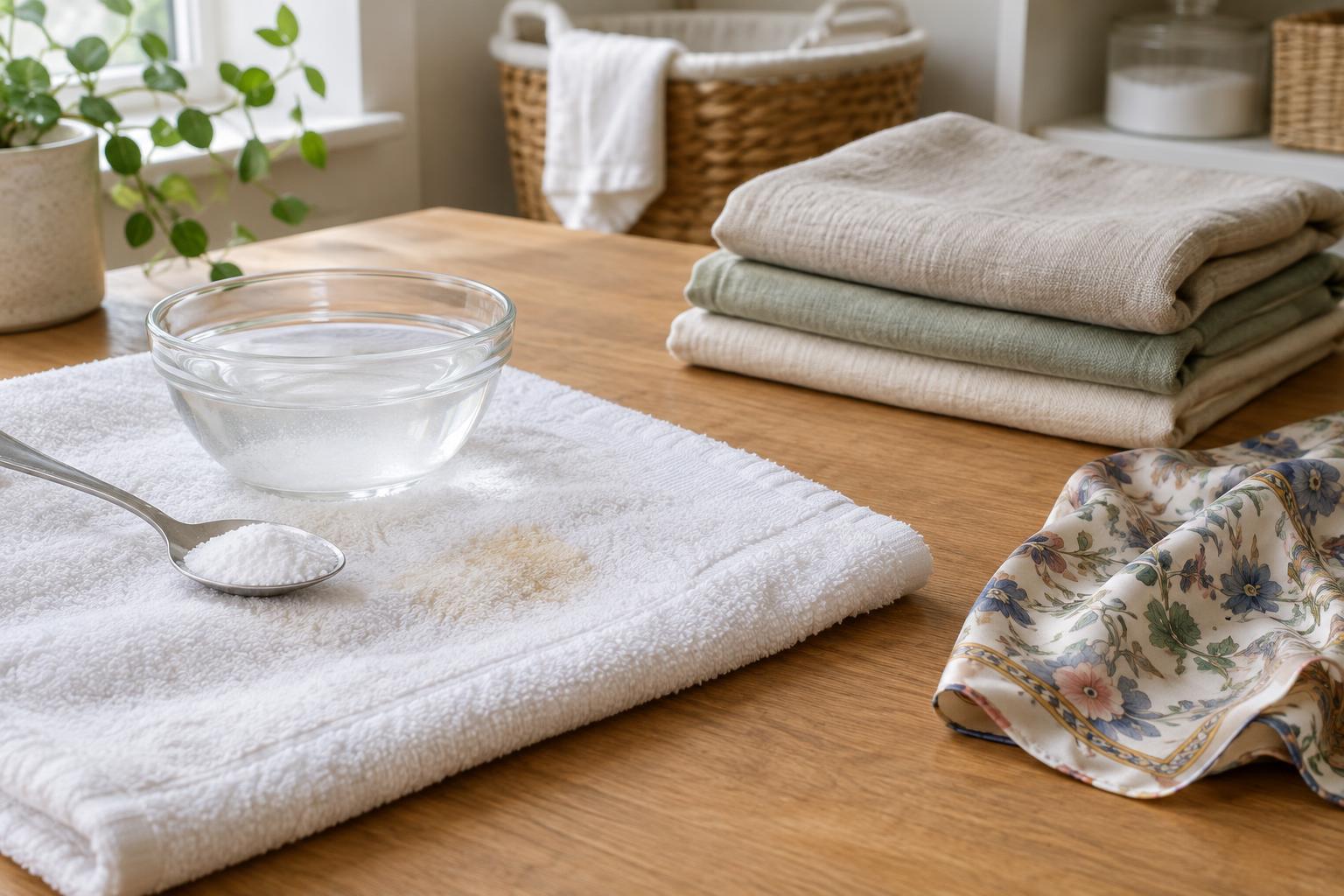
Start with the care label. A machine-washable cotton or linen item that permits non-chlorine bleach is a more reasonable candidate than a textile marked for delicate washing or professional cleaning. White towels and sheets are common examples, especially when detergent alone leaves them looking dull. Some colorfast cotton covers or tablecloths may also be suitable if the product label allows use on colors.
Before treating a stain, remove loose residue and choose a method that fits the whole item. Washing a removable cushion cover, for example, may be safer than applying a concentrated solution to one visible patch, which could leave a lighter area or a water mark. If you are unsure whether a dye is stable, test the prepared solution on a hidden seam or allowance, then rinse and let the test area dry before judging it. A damp test spot may not show the final effect.
When to leave it on the shelf
Avoid oxygen bleach when the textile’s care label rules out bleach or water washing. Be especially cautious with wool, silk, leather, suede and fabrics containing delicate trims, metallic threads or unknown finishes. These materials may react poorly to the cleaner, the soaking time or the water itself. Stretch fabrics and items with elastic components also deserve caution: repeated or unsuitable treatments may shorten their useful life.
Curtains and upholstery pose an additional problem. Even if the face fabric looks washable, linings, interlinings, backing, adhesives or dyes may not be. An upholstery cleaning code or a curtain label that calls for professional cleaning is a reason not to experiment with a wet oxygen-bleach treatment. Do not use it to spot-clean a fixed sofa or hanging curtain without clear care guidance; uneven wetting can leave rings or change the fabric’s appearance.
Oxygen bleach is also the wrong tool when the aim is to restore a fabric that has lost its original color, or when a stain’s source is unknown and the item is valuable. In those cases, a mild detergent test or advice from a textile-cleaning professional may be the less risky next step.
A cautious way to use it
Read both the textile care label and the cleaner’s instructions before beginning. Measure the product as directed rather than adding extra for a stubborn mark. Dissolve a powder as instructed, use an appropriate water temperature for the fabric, and observe the stated soaking time. Longer soaking is not automatically better: dyes and finishes have more time to react, and a stain may still remain.
Treat the item evenly, then wash and rinse it thoroughly according to its care label. Check the stain after washing and before tumble-drying or ironing, since heat can make some remaining marks harder to address. If the fabric shows color change, roughness or another unwanted effect, stop treatment. Never combine oxygen bleach with chlorine bleach or other cleaning chemicals; use one product at a time, following its label.
Choose the least aggressive useful method
Oxygen bleach is one option in a fabric-care routine, not the default answer to every mark. Prompt blotting, a suitable detergent and a normal wash may be enough for everyday spills. A targeted pretreatment may make more sense than soaking an entire item, provided the fabric and product labels allow it. For a treasured textile, preserving its color, texture and construction matters more than chasing a perfectly invisible stain.
A simple decision order helps: check whether the item can be washed, check whether non-chlorine bleach is permitted, test for color change, and follow the cleaner’s directions. If any step raises doubt—particularly with upholstery, lined curtains or delicate fibers—skip the oxygen bleach and choose a gentler, fabric-appropriate approach.