Why the frame matters
Fabric, padding and cushions are the parts you see and touch, but the frame gives an upholstered chair or sofa its shape. It connects the arms, back, legs and seat support. When those connections loosen or the structure bends, a fresh cover or new cushions may not make the piece feel comfortable again.
A good assessment starts with the whole piece rather than a single label on a product description. Material matters, but so do construction, proportions and how the furniture behaves when someone sits down. You do not need to dismantle upholstery to notice whether a chair stands evenly or a sofa twists under ordinary use.
Look beyond the name of the material
Solid wood is common in furniture frames. Dense, well-prepared wood can provide a sturdy base, but the words “solid wood” alone do not tell you whether the pieces are straight, sound or securely joined. Engineered wood can also work well, particularly where layers of plywood are properly selected and assembled. Thin panels or brittle board in a heavily loaded part of the frame may be less reassuring than substantial components with sound connections.
Metal frames are another option. Their performance depends on the design and the quality of their connections, not simply on the presence of metal. If a seller describes the frame material, ask which parts that description covers. A sofa might use one material in its main structure and another in less visible sections. Clear, specific answers are more useful than a broad promise that a piece is “heavy-duty.”
Pay attention to joints and stability
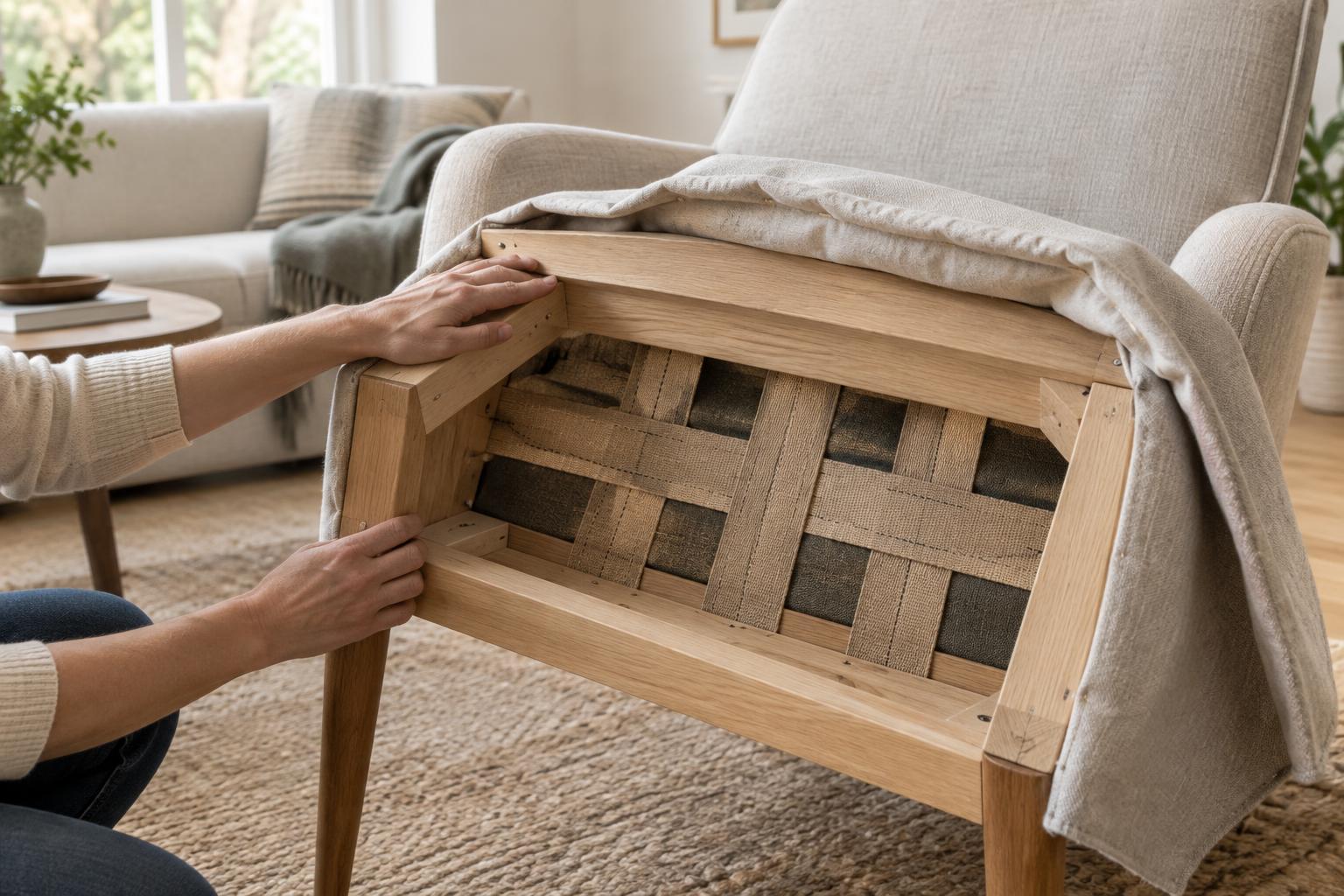
The frame is only as useful as the points that hold it together. Look for signs that corners and leg attachments are firmly constructed. Glued and mechanically secured joints, such as those using dowels or screws, can offer more reassurance than a connection that appears to rely only on a few fasteners. Corner blocks may add support where frame rails meet. Staples are often used in upholstery construction, so their presence is not a problem by itself; the question is what holds the structural parts together.
If you can try the furniture, sit in different positions and shift your weight normally. The piece should feel steady rather than rock, rack from side to side or make repeated cracking sounds. Check that legs meet the floor evenly on a level surface, and gently press the arms and back to see whether they move independently of the rest of the frame. A small sound may come from a loose fitting rather than a broken rail, but unexplained movement deserves a closer look. Avoid forceful testing that could damage a piece.
Check what supports the seat
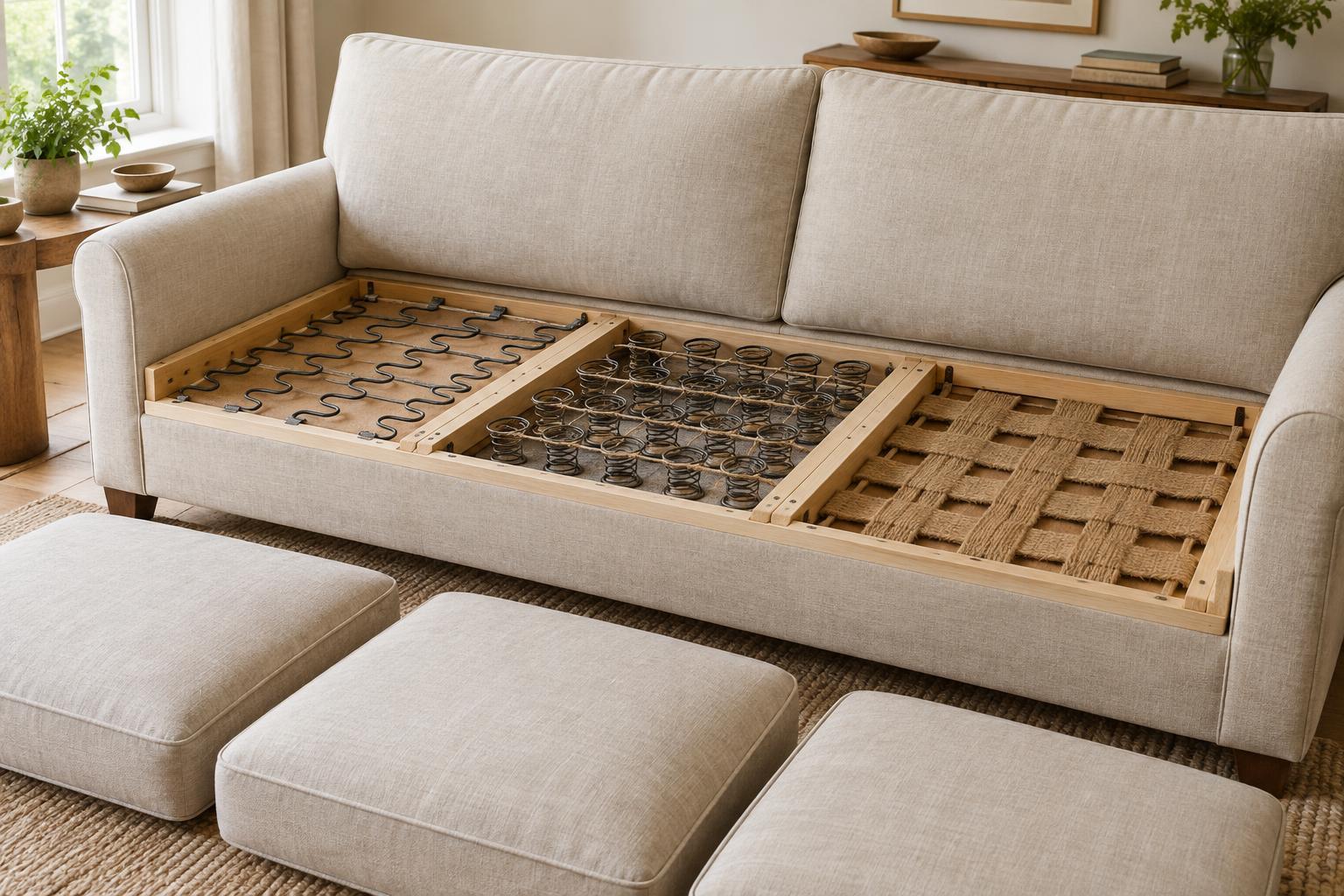
A frame and its seat support work together. Depending on the design, the seat may rest on springs, webbing or another support system attached to the frame. Even a rigid frame can feel uncomfortable if the support has stretched, detached or sagged. Sit near the middle and toward the ends: support should feel reasonably consistent, allowing for the furniture’s intended shape and cushion style.
Where access is permitted, look beneath the furniture with a light. A dust cover may conceal much of the construction, but you might still spot a loose support strap, a sagging underside or a frame member that looks split. Do not remove a cover or pull on components without the owner’s permission. If the underside is closed, describe what you can feel and ask how the seat support is built rather than assuming that cushion softness reveals the whole story.
Make a practical choice for the piece in front of you
For secondhand furniture, inspect for uneven gaps, legs that have been repeatedly tightened, visible repairs and areas where the upholstery seems to conceal a dip or hard edge. Some faults are repairable, but the effort can be substantial if the frame must be reached through layers of fabric and padding. A worn cover on a steady frame may be a more promising refresh project than beautiful fabric on a structure that shifts when used.
When buying new, ask about the main frame material, how the joints are secured and what supports the seat. If possible, compare several pieces by sitting on them and checking their movement in the same way. The best choice is not necessarily the heaviest or firmest one. It is a piece whose structure feels stable, whose construction is explained clearly and whose comfort suits how you plan to use it.