Start with how the seat will be used
A seat cushion does more than add softness. Its filling helps determine whether you sit on the surface or sink into it, how quickly the cushion recovers, and how much attention it needs to look tidy. The best choice for a frequently used sofa may differ from the best choice for an occasional chair.
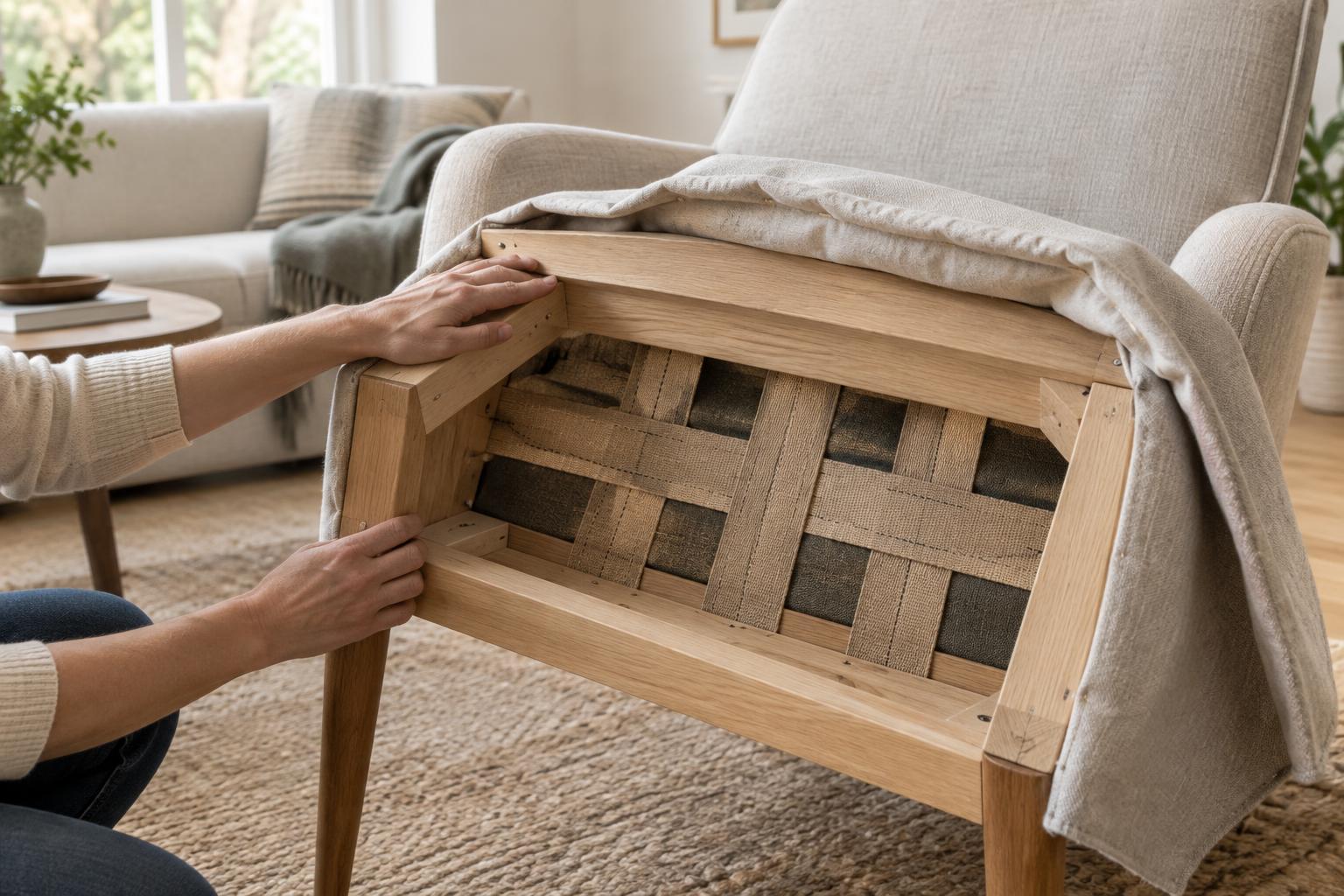
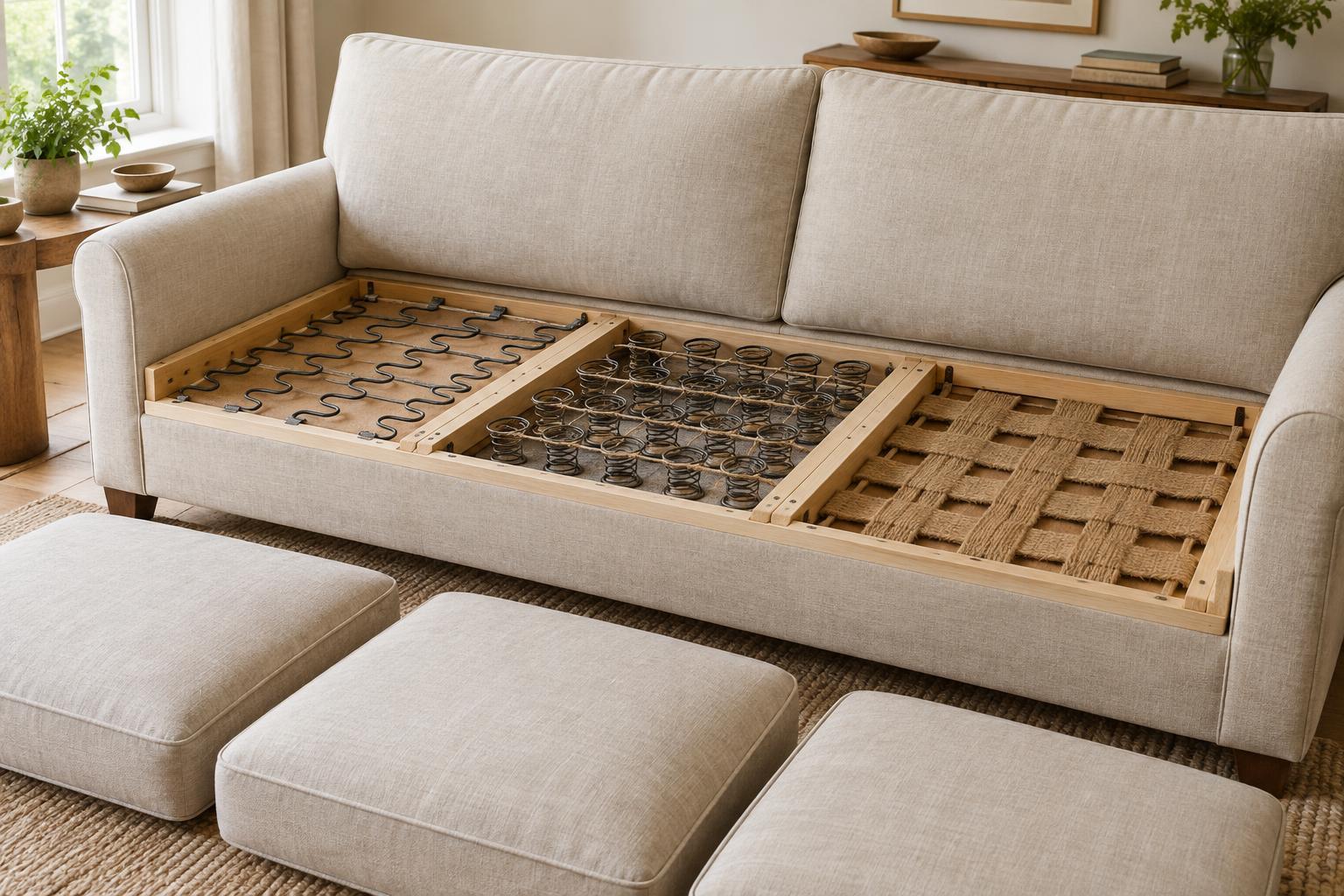
Before comparing materials, notice the cushion’s construction. A loose cushion can often be turned or rotated, while an attached seat may give you fewer ways to even out wear. The cover, inner casing and seat support beneath the cushion also affect comfort. A filling cannot fully compensate for a sagging support system or a cover that no longer fits.
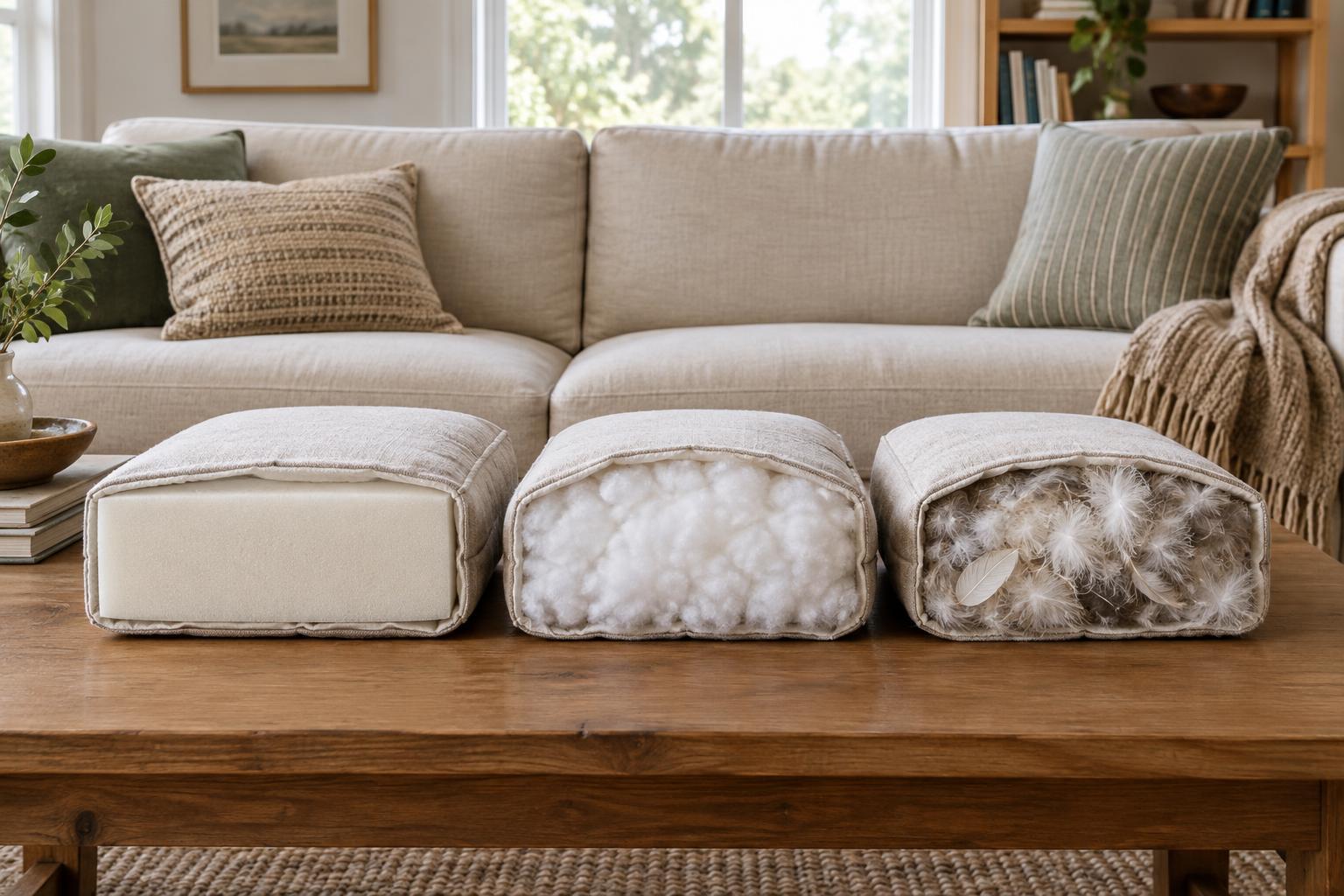
It helps to decide which matters most to you: a neat outline, a relaxed appearance, low-effort upkeep or a soft landing. Foam, fiber and down can each work well, but they deliver those qualities in different ways.
Foam: structured support and a defined shape
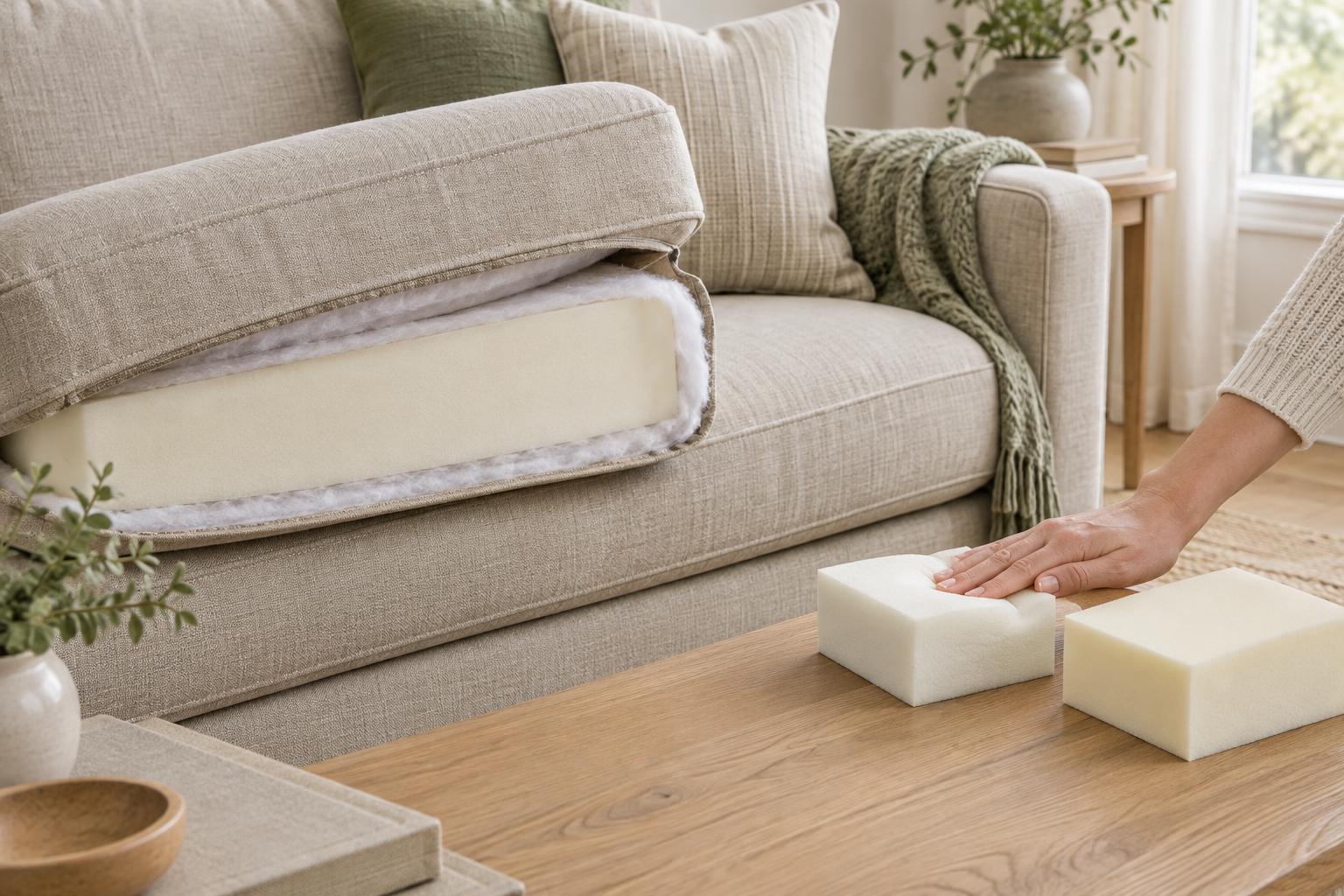
Foam is a common choice when you want a cushion with a fairly crisp edge and consistent support. A foam core usually springs back without the regular reshaping that loose fillings require. That makes it practical for a seat used every day, especially if you prefer not to fluff cushions after sitting.
Foam varies considerably. Firmness describes how the cushion feels under pressure; density describes how much material is packed into the foam. The two are not interchangeable, and neither tells the whole story about comfort or lifespan. Cushion thickness, the support underneath and any soft wrap around the core all change the sitting experience. If possible, sit on a sample for more than a moment rather than judging it by squeezing an edge.
Over time, foam may soften or develop a hollow in a favored sitting spot. Turning a reversible cushion can help distribute wear, but it will not restore a core that has lost its support. When replacing foam, measure the cushion and check the cover construction: a core that is too large or too firm can strain seams and make the seat feel unlike the original.
Fiber: soft loft with a more relaxed feel
Fiber cushions are often filled with loose or layered synthetic fibers, such as polyester. They can feel light and soft, with a gently rounded appearance. Because the filling moves under weight, fiber generally needs more hands-on care than a firm foam core. Shaking, plumping and rotating loose cushions can help spread the fill and reduce uneven spots.
Fiber can also be used as a wrap around foam. In that arrangement, the foam provides the main support while the fiber softens the surface and rounds the edges. This is useful if you like a supportive seat but find bare foam too rigid. The amount and placement of the wrap matter: a thin layer gives a subtler effect than a thick one.
A fiber-only seat may compress or shift noticeably in a busy household, depending on how it is made. If you like its initial softness, consider whether you will also enjoy its lived-in look and the routine of reshaping it.
Down and feathers: a sink-in seat that needs fluffing
Down and feathers create a soft, yielding cushion with a casual appearance. Down is the fine, fluffy material beneath a bird’s outer feathers; feathers have quills and generally provide more structure. Cushions may contain a blend, and some use down or feathers in an outer layer around a supportive core. The blend and construction affect both feel and how well the cushion keeps its shape.
Expect regular fluffing with a loose down-and-feather filling. It compresses where you sit and can look uneven until you lift and redistribute it. An inner casing helps contain the fill, but an occasional feather may still work its way out. If sensitivity to animal-derived fill is a concern in your household, check the cushion materials before buying rather than assuming every soft cushion contains the same filling.
For someone who enjoys a deep, relaxed seat, that upkeep may be a welcome trade-off. For someone who wants straight cushion lines with minimal effort, a foam core or a hybrid construction may be a better match.
Choose by feel, upkeep and the cushion you already have
For a tidy, supportive seat, start by looking at foam. For a lighter, softer feel, consider fiber. For a more enveloping seat and an informal look, try down or a down-and-feather blend. Hybrids offer a middle ground: a supportive core can hold the basic shape while a soft wrap changes how the surface feels.
If you are refreshing an existing cushion, open its cover only if it is designed to be removed. Check the inner casing for wear, note the current filling and measure the cushion before ordering a replacement. Reusing a sound cover is often simpler than changing the cushion’s dimensions or construction. Follow the cover’s care label for cleaning, and keep loose fillings contained while you work.
Finally, test the seat as a whole. Sit in your usual position, stand up, and see how the cushion recovers. A filling that feels luxurious for a minute might require more upkeep than you want, while a firmer option may become more comfortable when paired with the right wrap and seat support. The right cushion is the one whose comfort and daily care both fit your home.