Two measurements that answer different questions
When shopping for a sofa or replacing a tired seat cushion, it is easy to treat “dense” and “firm” as interchangeable. They describe different properties. Density is the amount of foam material in a given volume, usually expressed as weight per cubic foot or cubic meter. Firmness describes how strongly the foam resists compression when you sit on it.
Imagine two cushions cut to the same size. One may contain more foam material and therefore have a higher density, yet still feel relatively soft. The other may feel noticeably firm while having a lower density. Manufacturers can make foams with different combinations of these properties, so neither label tells you the whole story.
Density is useful when thinking about how well a foam might retain its shape under repeated use. Firmness is useful when deciding whether the seat feels comfortable and supportive to you. Neither number, on its own, guarantees how long a finished cushion will last.
Why a firm cushion may still wear quickly
A firm first impression can be misleading. A lower-density foam can resist pressure at first but lose its resilience with use, leaving a seat that feels flatter or offers less support. Higher-density foam generally offers more material to withstand repeated compression, although foam quality, construction and daily use also matter.
Firmness is sometimes listed as an indentation rating: the force needed to compress a foam sample by a specified amount. Such ratings can help compare foams tested in the same way, but they do not describe an entire sofa. Cushion thickness, the size of the seat, the cover and the layers beneath it all change how that rating feels in practice.
There is also a difference between a cushion that feels pleasantly supportive and one that feels hard. A very firm top layer may create pressure points even if the seat holds its shape. Conversely, a soft surface can feel comfortable while a more supportive layer underneath prevents you from sinking too far.
Look at the whole cushion, not just its core
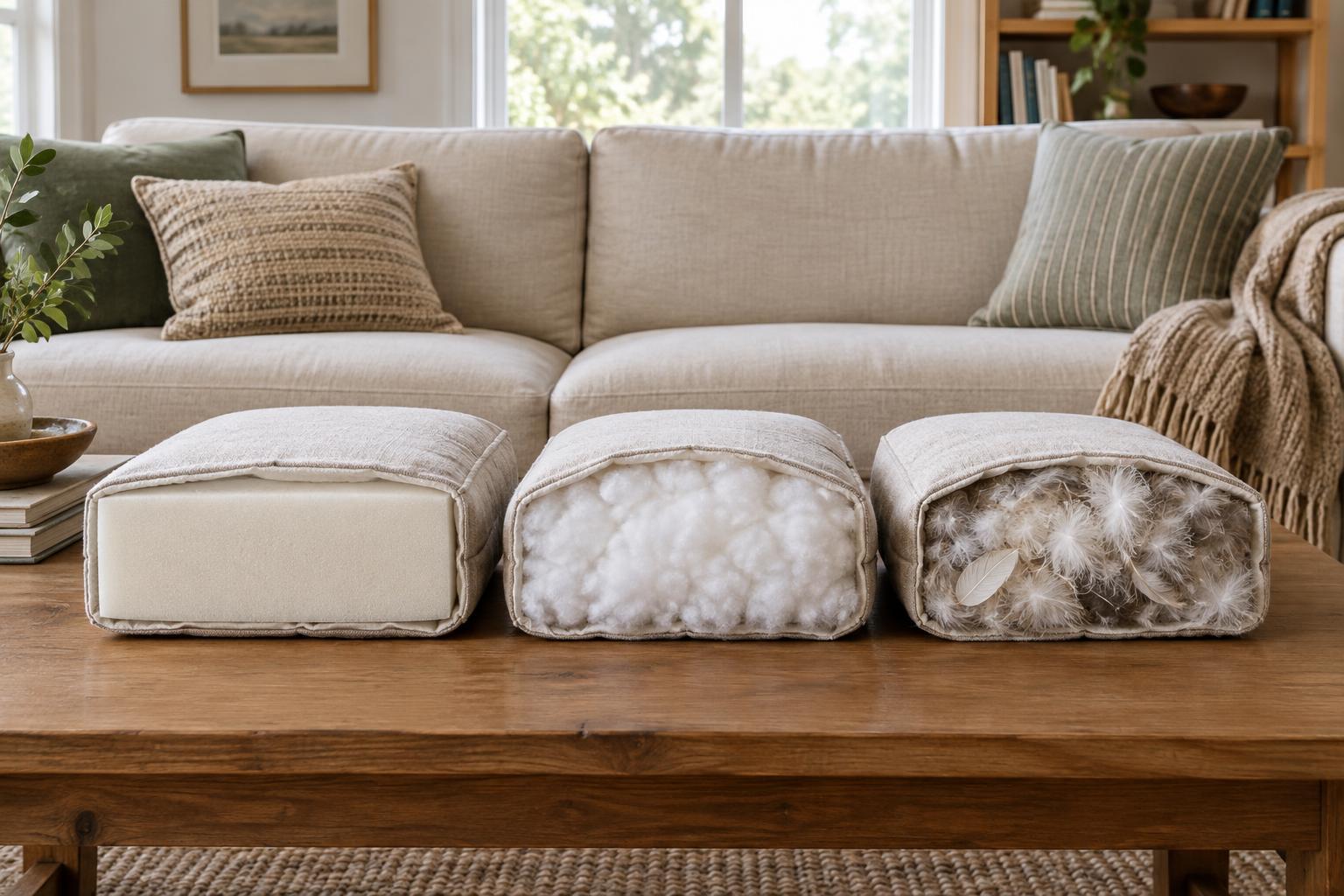
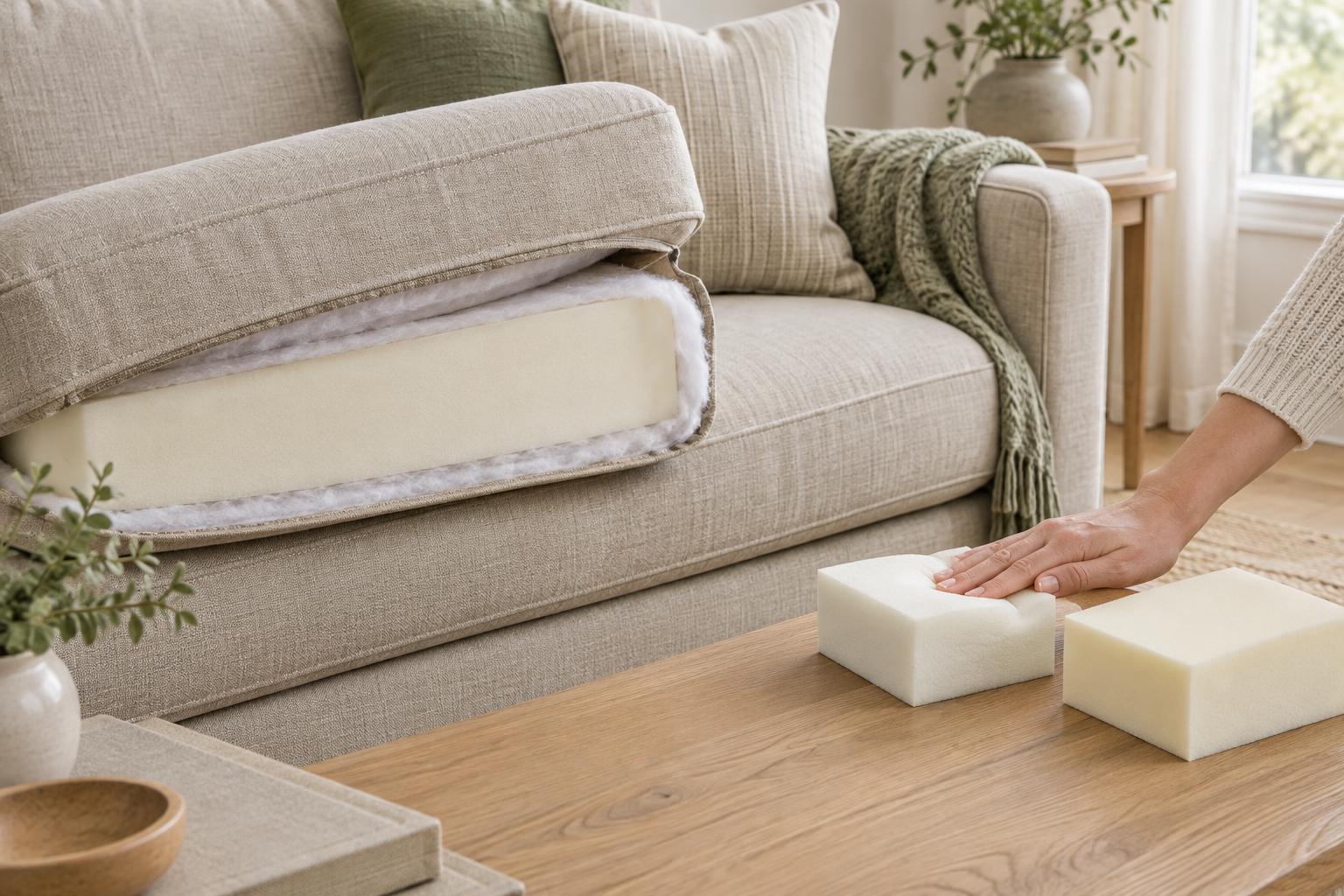
Seat cushions often contain more than one material. A foam core may be wrapped in polyester fiber, batting or another soft layer that rounds the edges and changes the initial feel. Some designs combine foam layers of different firmnesses. A plush wrap can make a firm core feel gentler, while a thin cover over the same core may feel more direct.
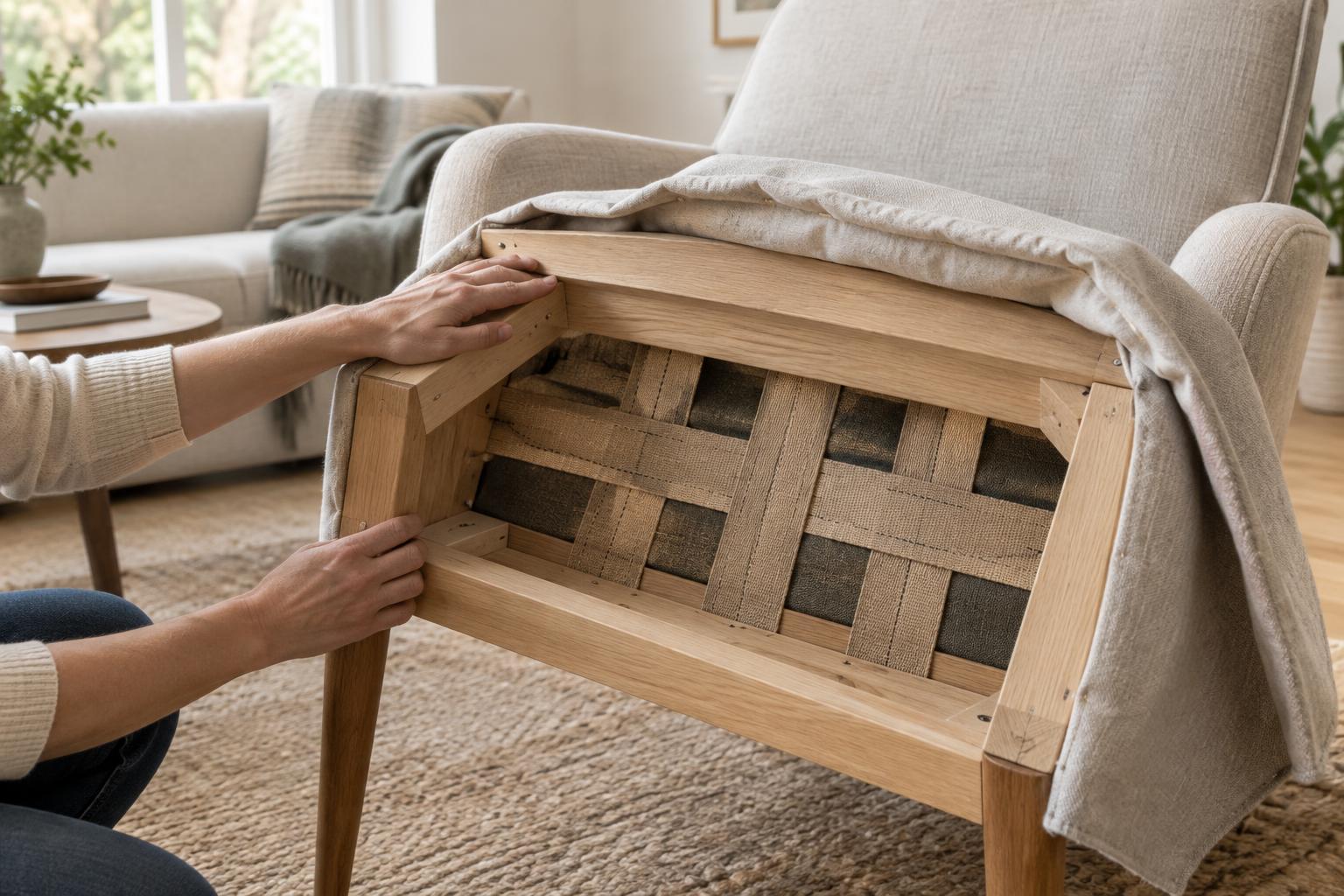
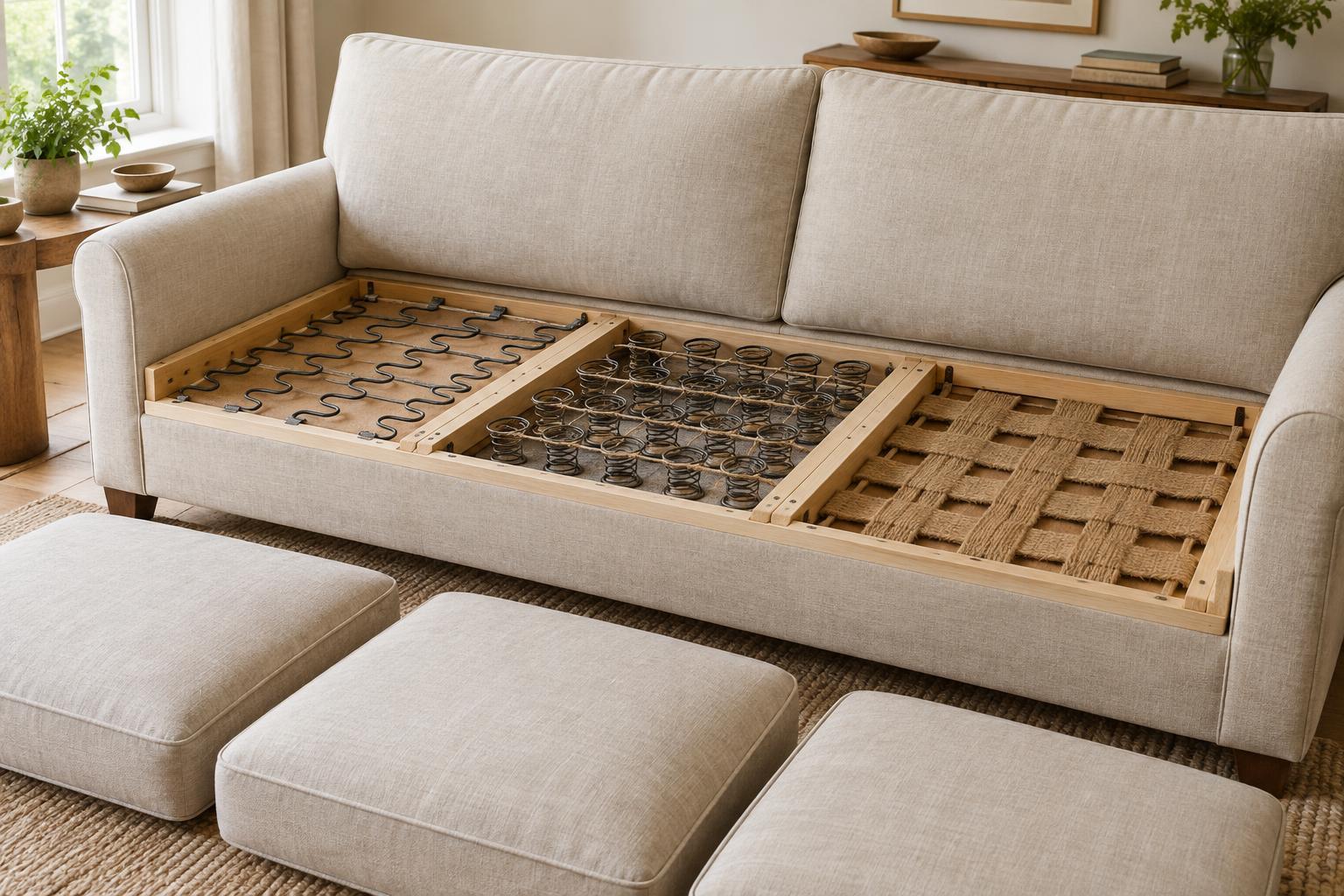
The sofa frame and suspension matter too. Webbing or springs beneath a cushion contribute to the sense of support. If a seat sags because the support below has loosened, replacing only the foam may not solve the problem. Likewise, a stretched cushion cover can look rumpled even when the foam inside remains serviceable.
Before choosing replacement foam, unzip the cover if it is designed to open and inspect what is inside. Note any wrap, separate layers or lining, and check whether the cushion itself has lost height or whether the seat dips underneath it. Handle older covers gently; a tight or fragile cover can be difficult to refit without damage.
Choosing a seat that suits your room and routine
Start with the feel you want rather than assuming the firmest option is best. A frequently used family sofa may call for a balance of shape retention and comfort, while an occasional chair can invite a different feel. If you can, sit on a cushion for more than a few moments. Notice whether you feel supported, whether you sink too far and whether getting up feels easy.
When comparing foam for a replacement, ask for both its density and firmness, along with any available guidance on its intended use as a seat cushion. Compare figures only when their units and testing methods are clear. If you cannot test the foam in person, a sample can be more informative than a descriptive word such as “medium.”
Measure the existing cushion and cover carefully, but do not assume a block cut to the cover’s outer dimensions will fit. Rounded edges, wraps and the original cushion’s shape can affect the finished size. Once the cushion is in use, follow the cover’s care instructions and rotate reversible cushions where the design allows. These habits can help wear develop more evenly, though they cannot restore foam that has permanently lost its resilience.