Start with what the window needs to do
A kitchen or bathroom window may need to provide privacy without shutting out useful daylight. Before choosing a fabric, stand where you normally use the room and consider what can be seen from outside during the day and after dark with the lights on. A light sheer may soften the view in daylight but offer little privacy at night. If privacy is essential, choose a denser curtain or pair a sheer with a separate blind.
Think about how often you open the window, too. Curtains that have to be moved every time you ventilate a steamy bathroom or clear cooking smells can become inconvenient. A simple panel that slides freely, or a short curtain that leaves the window handle accessible, may work better than a fuller decorative style.
Choose fabrics that suit moisture and frequent washing
These rooms can expose textiles to splashes, condensation and lingering humidity. Look for fabric that can be washed according to its care label and that dries reasonably quickly. Lightweight cotton or washable synthetic blends may be practical options, depending on the finish and construction. Heavy, absorbent fabrics are more likely to stay damp, particularly in a bathroom with limited ventilation.
Check the care instructions for the finished curtain, not just the fabric. Linings, trims and decorative stitching can affect how it should be cleaned. If you plan to sew curtains, prewash washable fabric before cutting so any initial shrinkage does not leave the finished panels shorter than intended. Whatever you choose, allow damp curtains to dry fully rather than leaving them bunched against the wall.
Keep the length clear of busy and wet areas
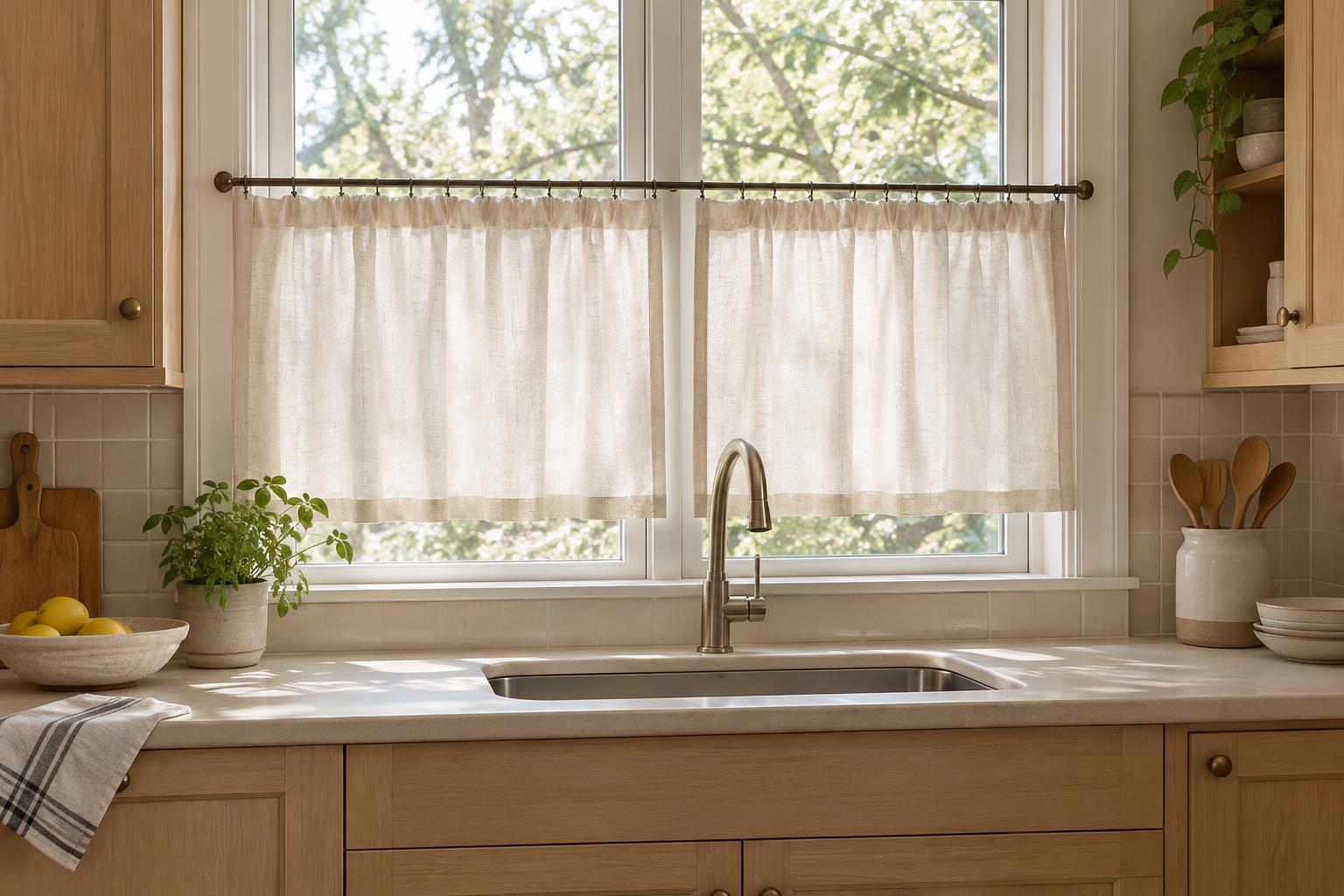
A short curtain can be a sensible choice above a kitchen sink or bathroom basin. It stays farther from standing water, soap and everyday work surfaces, while still covering the part of the window where privacy is needed. Measure the window and decide where you want the lower edge to fall before buying or sewing; a small change in length can affect both coverage and access to the sill.
Placement matters as much as fabric. Keep curtains away from hobs, open flames and other heat sources. In a kitchen, check that panels cannot blow toward a cooking area when a window is open. In a bathroom, avoid letting fabric hang into a shower or bath unless it is specifically designed for that use. If a window is very close to water or heat, a curtain may not be the most practical treatment.
Match the hanging style to everyday use
Simple fittings are often easier to live with in rooms that need regular cleaning. A rod-mounted curtain is straightforward to remove for washing, while a track may help panels move smoothly across a wider window. Choose hardware suited to the room’s conditions, and check it periodically for loose fittings or signs of corrosion. If you use a tension rod, make sure it is secure before relying on it to hold a heavier panel.
Fullness changes how a curtain performs. Generous gathers create softness but also add fabric to wash and dry. A flatter panel can look tidy in a small room and may sit more neatly beside taps, shelves or window handles. Test the proposed arrangement by opening the window and using the nearby fixtures; the curtain should not get in the way of routine tasks.
Plan for light, privacy and upkeep together
Colour and pattern can make a practical curtain feel considered. Pale fabrics can keep a compact room feeling bright, while a small pattern may make minor marks less noticeable between washes. If the window receives strong sun, remember that some fabrics and colours may fade over time. A sample held against the window can help you judge its appearance in daylight and its level of privacy after dark.
Finally, make upkeep part of the decision rather than an afterthought. Choose a style you can take down without difficulty, follow its care label and clean it when cooking residue or bathroom dampness calls for it. Good ventilation and prompt drying help protect any soft furnishing, but they do not make an unsuitable fabric moisture-proof. The best choice is one that gives you the coverage you want and remains easy to care for in that particular room.