What the number measures
Thread count usually refers to the number of threads woven across and along one square inch of fabric. It describes part of a sheet’s construction, not its overall quality. If two sheets use similar yarns and the same weave, thread count may help explain why one feels denser than the other. Across different fibers, yarns or weaves, the comparison becomes much less useful.
The number also depends on how threads are counted. A yarn can be made from one strand or from multiple finer strands twisted together, sometimes called plies. Counting those plies separately can produce a much larger figure without necessarily creating a better sheet. Because labels do not always make the counting method clear, it is wise to treat a strikingly high thread count as a prompt for more questions, not as proof of luxury.
Why higher is not always better
Thread count can affect how tightly a fabric is woven, but more threads are not automatically more comfortable. A denser sheet may feel substantial and smooth to one person while feeling heavy or less airy to another. Packing in more threads can also require finer yarns, which may not suit every fabric or intended feel. There is no single ideal number for every sleeper.
The feel you notice in a shop or when first opening a package may change after laundering. Finishes used during manufacturing can make a new sheet feel especially sleek or soft, while repeated washing reveals more of the fabric’s underlying character. A modest number on a well-made sheet can therefore be a better match than a larger number chosen for the label alone.
Look at fiber and yarn first
Fiber helps determine how a sheet handles moisture, wrinkles and everyday use. Cotton is familiar and versatile, but cotton sheets can vary considerably depending on the yarn and construction. Linen often has a textured, relaxed feel and tends to soften with use. Lyocell and other manufactured cellulosic fibers can feel smooth and fluid. These are broad tendencies, not guarantees: fabric quality and finishing matter within every fiber type.
Yarn matters, too. Finer, more even yarns can contribute to a smoother surface, while shorter or less even fibers may be more prone to a fuzzy feel over time. Descriptions such as long-staple cotton can be helpful clues, but they do not replace touching the fabric, checking its construction and considering how it will be cared for. If you cannot examine a sheet in person, look for a clear fiber-content label and a useful description of its texture rather than relying on thread count alone.
Let the weave guide the feel
Weave changes the experience of a sheet even when the fiber is the same. Cotton percale generally has a crisp, matte feel; cotton sateen usually feels smoother and drapes more readily. Neither is inherently superior. Someone who likes a light, freshly laundered feel may prefer percale, while someone who wants a silkier surface may gravitate toward sateen. Thread-count figures from these two weaves are not a simple side-by-side comfort test.
Think about your room and habits as well. Do you prefer bedding that feels cool and crisp when you get in, or soft and enveloping? Are visible creases part of the look you enjoy, or would they bother you? Do you use a dryer, line-dry, or have limited space for bulky loads? Answers to those questions will narrow the choices more effectively than chasing the highest number on a package.
A practical way to choose sheets
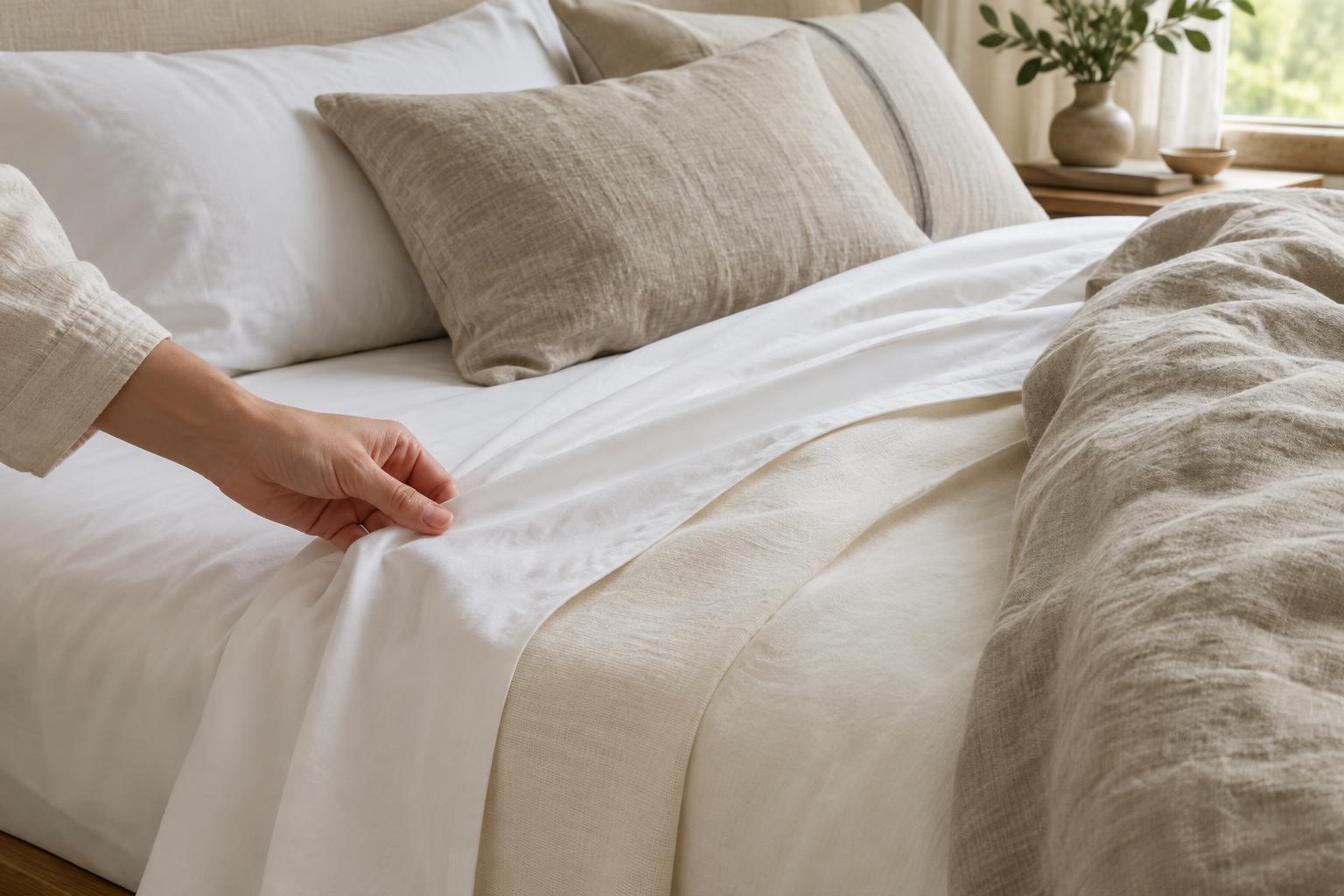
Start with the basics: confirm the fiber content, identify the weave if it is listed, and check that the fitted-sheet depth suits your mattress. Read the care label before buying, especially if you want bedding that fits easily into your usual laundry routine. When possible, handle a sample to judge its weight, texture and drape. If buying online, favor descriptions that explain those qualities plainly and check the return terms before removing packaging or washing.
Then treat thread count as one detail among several. It can tell you something about a woven sheet’s density, particularly when you are comparing otherwise similar products. It cannot promise softness, durability or the right sleeping temperature for you. The most useful choice is the sheet whose fiber, weave, feel and upkeep match the way you actually live.