Understand what is holding the fabric
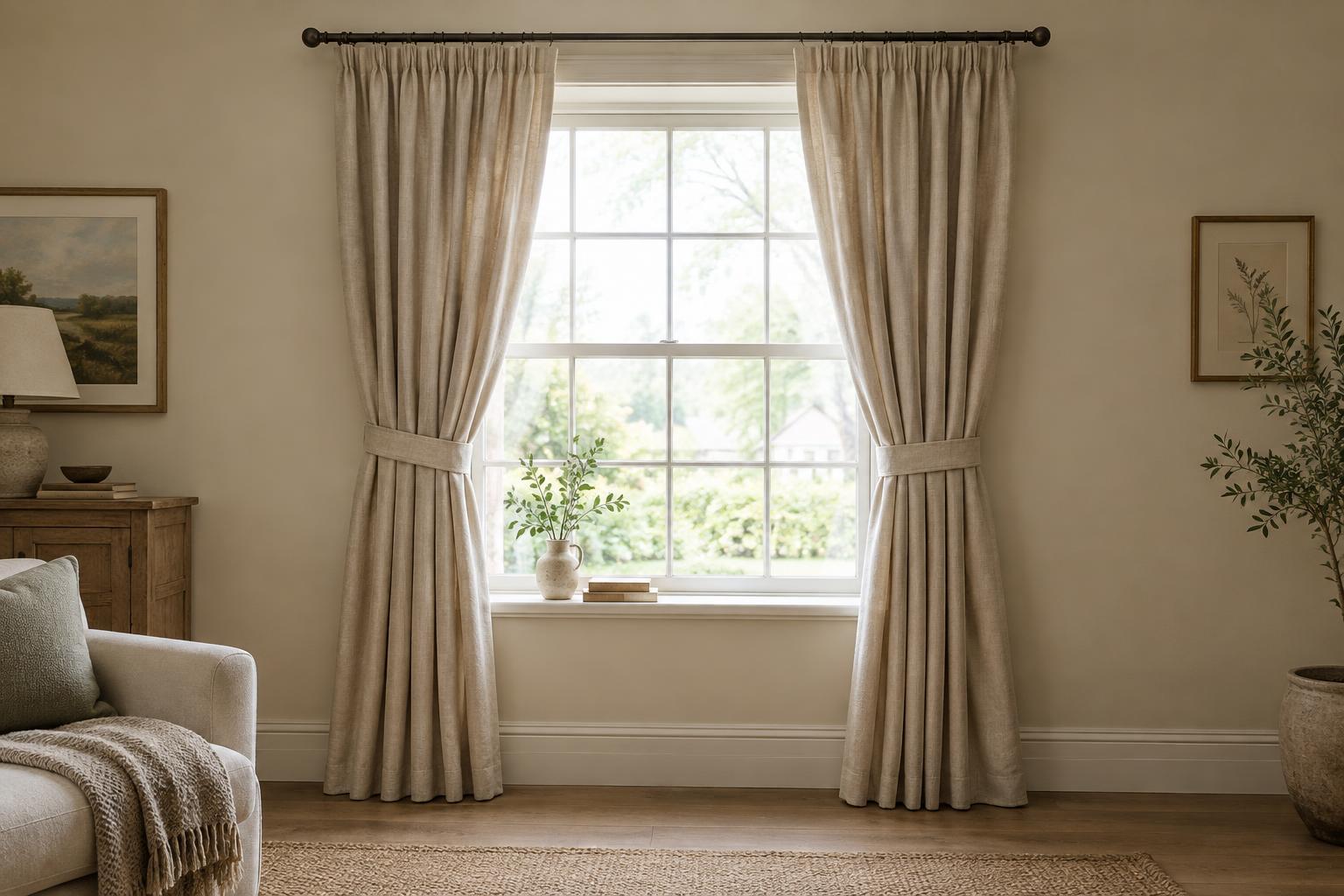
Tiebacks wrap around a curtain panel and fasten it to itself or to a wall hook. They may be made from matching fabric, a soft cord or another flexible material. Holdbacks are fixed to the wall or window surround; the curtain rests behind them without being tied. Both can keep fabric clear of the glass, but they place pressure on the panel in different ways.
A tight tieback compresses fabric at one point, while a narrow or sharply angled holdback can press into a few folds. Over time, either arrangement may leave a crease or make one edge hang differently from the other. The aim is to support a loose, natural sweep rather than force a wide panel into a small bundle.
Let the curtain show you where to gather it
Before installing hardware or sewing ties, open the curtain fully and use one hand to gather it loosely at several heights. Step back each time. Notice whether the upper pleats remain even, the hem stays level and the leading edge forms a gentle curve. The best gathering point depends on the panel’s length, fullness and fabric rather than a single rule for every window.
Take particular care with lined, interlined or heavy curtains. Their layers need room to settle together, and pulling only the face fabric can strain seams or make the lining peek out. If a panel resists the shape you want, try gathering it less tightly or moving the support point. A tieback cannot make an undersized curtain look full without pulling it out of shape.
Choose a tieback or holdback that supports the folds
A broad, flexible tieback generally spreads pressure more evenly than a thin, rigid band. It should be long enough to circle the gathered curtain without cinching it. Slip a hand between the tieback and the folds: the fabric should feel supported, not squeezed. Soft fabrics may need a little more slack to avoid a pronounced pinch mark; slippery fabrics may need a secure fastening so the tieback does not slide down.
For holdbacks, look for a smooth surface and enough depth to accommodate the gathered panel. A shallow hook can crush folds or let the curtain slip forward. Check that the proposed fixing point will support the curtain’s weight and that the holdback will not rub against a delicate edge. If the wall or surround is unsuitable for a secure fixing, a lightweight tieback may be a better choice.
Arrange both panels without pulling them sideways
Start with the curtains closed and straighten the folds from top to bottom. Open each panel, then gather it gently, keeping the fabric distributed through the tieback or across the holdback. Avoid grabbing only the front edge and dragging it outward; that can stretch the leading edge and twist the panel. Once gathered, smooth the folds above and below the support and check that the hem still falls freely.
For a pair of curtains, compare their overall shape from across the room rather than trying to make every fold identical. Small differences in fabric or window clearance can change how each side falls. If one panel looks strained, loosen its tieback or shift the gathered fabric before changing the hardware position. A relaxed, balanced outline usually looks neater than a tightly matched pair of bundles.
Prevent marks during everyday use
Even a well-positioned tieback can leave a temporary line if curtains remain gathered for long periods. Release the panels occasionally, shake out the folds gently and let them hang closed. If you notice a persistent crease, reduce the pressure or vary the gathering point slightly. Always check the fabric’s care label before using steam or pressing; some finishes and linings do not respond well to heat or moisture.
Inspect tiebacks and holdbacks as part of routine curtain care. Rough stitching, exposed fasteners or a loose wall fitting can snag fabric. Keep the contact surfaces clean so dust is not rubbed into the same spot each day. With enough room for the folds and only light restraint, tiebacks and holdbacks can frame a window while allowing the curtain panels to hang naturally when released.