Start with the fabric and the vacuum
Routine vacuuming removes loose dust, crumbs and grit before they work deeper into fabric or collect along seams. It is useful for sofas, loose cushions and rugs, but the same setting will not suit every surface. Look for a care label or maker’s guidance first, particularly on delicate upholstery, loosely woven fabric and specialty rugs. If the material is unfamiliar, begin on a small, inconspicuous area and check that the vacuum does not snag threads or lift the pile harshly.
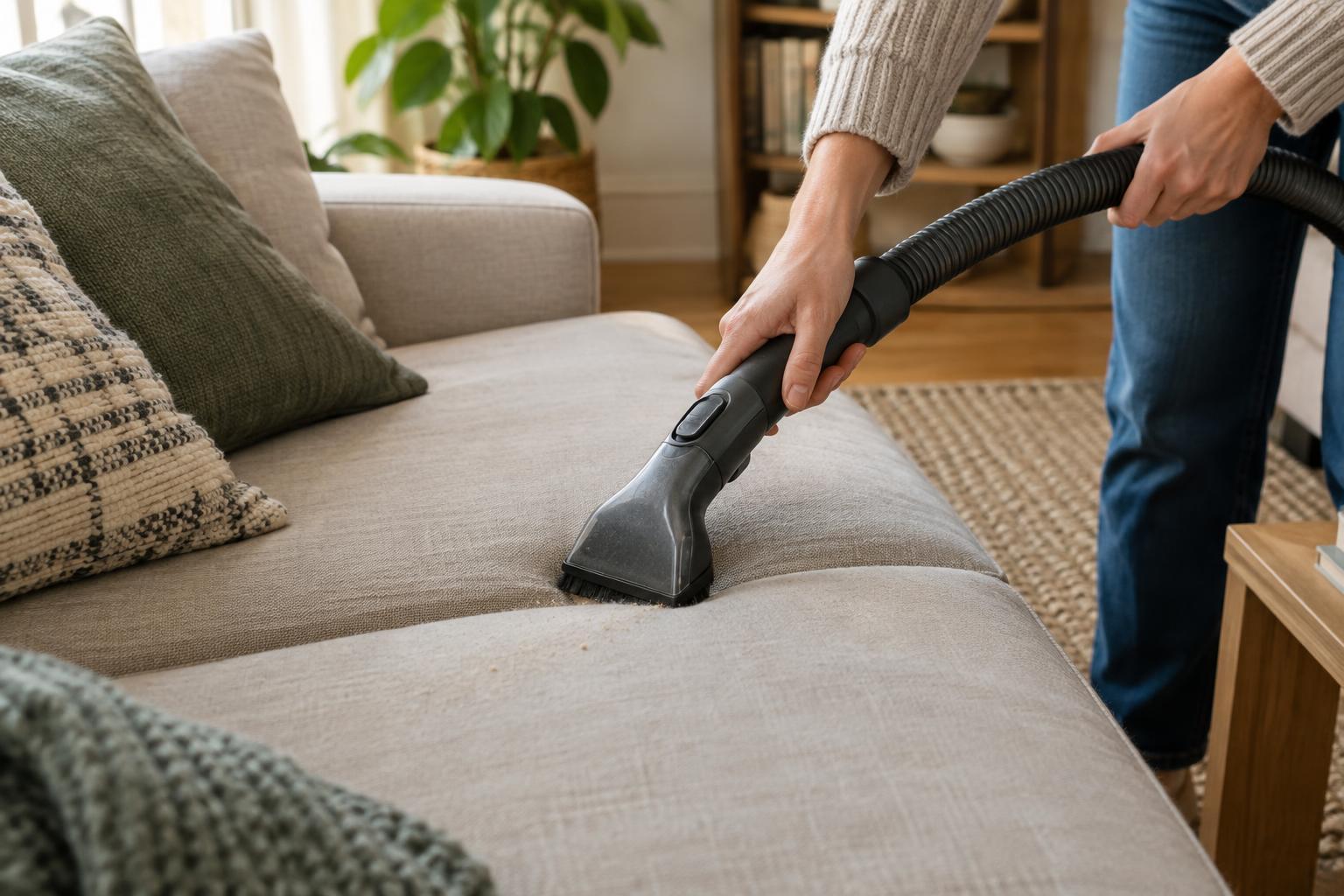
Choose an attachment that gives you control. An upholstery tool works well across sofa seats and backs, while a crevice tool reaches between cushions and along piping. Use enough suction to pick up debris without pulling the fabric tight against the nozzle. A rotating brush may help on some sturdy rugs, but it can catch fringe, loops or long pile. When in doubt, switch the brush off or use a plain suction attachment.
Give sofas a steady, thorough pass
Before vacuuming a sofa, remove throws and any loose cushions. Pick up larger objects by hand so they do not block the nozzle. Work in overlapping passes across the arms, back and seat, moving the tool slowly enough to collect debris rather than just pushing it around. Pay attention to places hands and heads often touch, as well as the front edge of each seat.
Next, vacuum the spaces under and behind removable cushions. Crumbs tend to settle at the base of the backrest and in the narrow gaps beside the arms. Use the crevice tool gently rather than forcing it against seams. If cushions can be flipped or rotated according to their construction, doing so after cleaning can help spread everyday wear. Replace them only when the frame and cushion surfaces are free of loose debris.
Clean cushions without stressing seams
Loose cushions are easier to vacuum when supported on a flat surface. Hold an edge steady and make short passes with an upholstery tool, then turn the cushion to reach the other side and its edges. Avoid dragging the nozzle across zippers, buttons, tassels or raised embroidery. A lower suction setting is especially helpful for lightweight covers that tend to pull into the attachment.
If a cushion has a removable cover, check its care instructions before taking it off; routine vacuuming usually does not require removal. For pet hair or lint that remains after vacuuming, a gentle upholstery brush may help gather it for another pass. Brush in the direction of the fabric’s nap when there is one, and stop if fibers begin to pull. Vacuuming deals with loose material, not stains: rubbing a mark repeatedly with a nozzle is unlikely to clean it and may roughen the surface.
Match your approach to the rug
For a sturdy, low-pile rug, vacuum the main surface in slow, overlapping rows. If the rug’s construction allows it, an occasional pass in a different direction can pick up grit missed the first time. Keep the vacuum moving rather than holding a powered brush in one spot. On high-pile, looped, handmade or otherwise delicate rugs, gentler suction without a rotating brush is often a safer starting point.
Treat edges and fringe separately. Run the nozzle toward a bound edge rather than repeatedly pulling it up, and avoid drawing fringe into a brush roll. A small attachment can collect dust near the perimeter with more control. If the rug is small enough to move safely, lift it now and then to clear debris from the floor beneath it. Check that the rug is lying flat when you put it back so an edge does not become a trip hazard.
Make the routine easy to repeat
How often to vacuum depends on use. A sofa used every day, a rug by an entrance or a home with shedding pets may need attention more often than a guest-room chair. Instead of relying on a rigid schedule, watch for visible crumbs, lint and dust in the seams. A quick pass over exposed surfaces between more thorough cleanings can keep the task manageable.
Keep the vacuum itself ready for fabric care: empty its bin or change its bag as directed, clear hair from attachments and maintain filters according to the appliance instructions. A blocked tool is less effective and may encourage you to press too hard. Regular, gentle passes are usually more useful than occasional aggressive cleaning. If a fabric snags, sheds unusually or shows a change in texture, stop and reassess the attachment and setting before continuing.