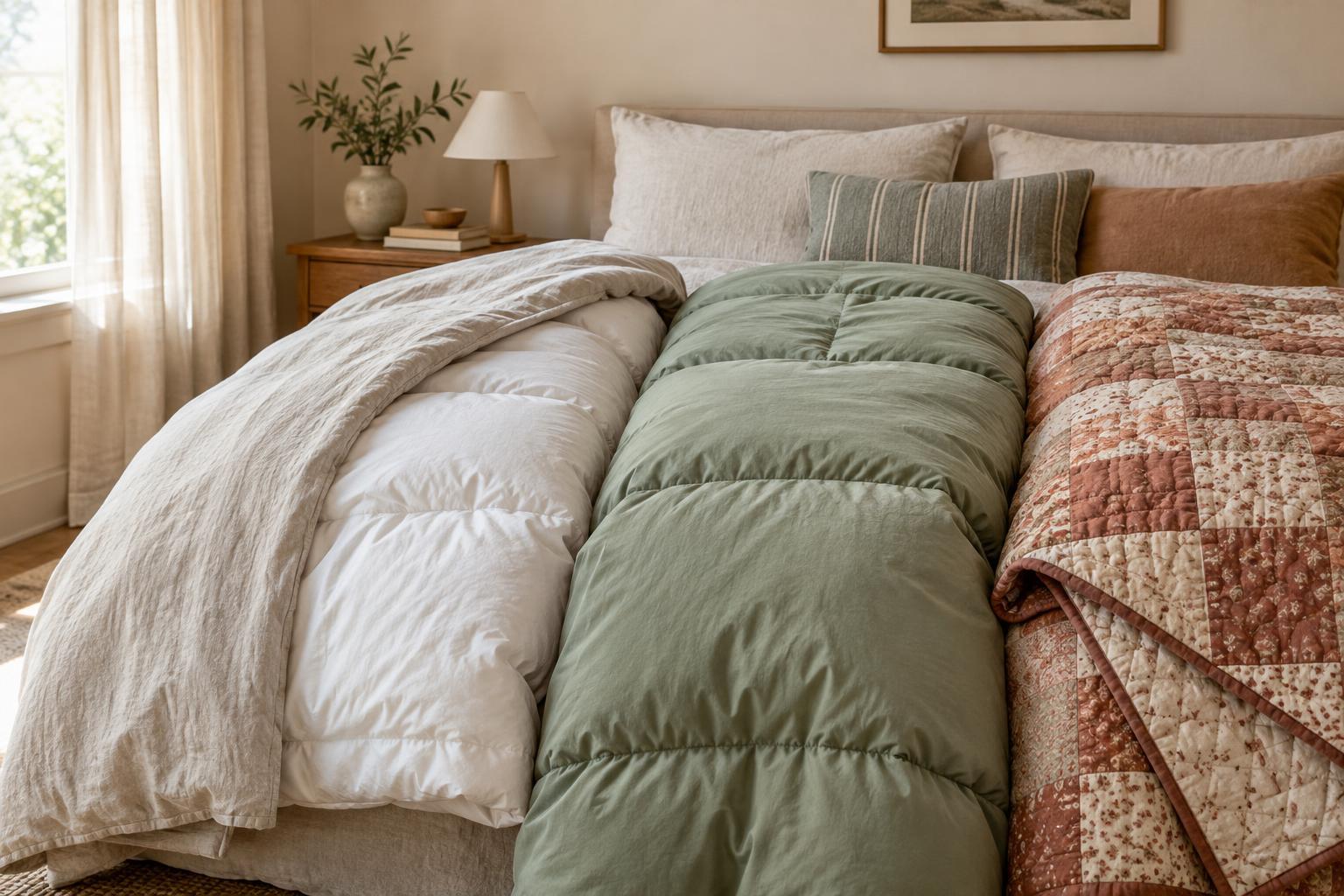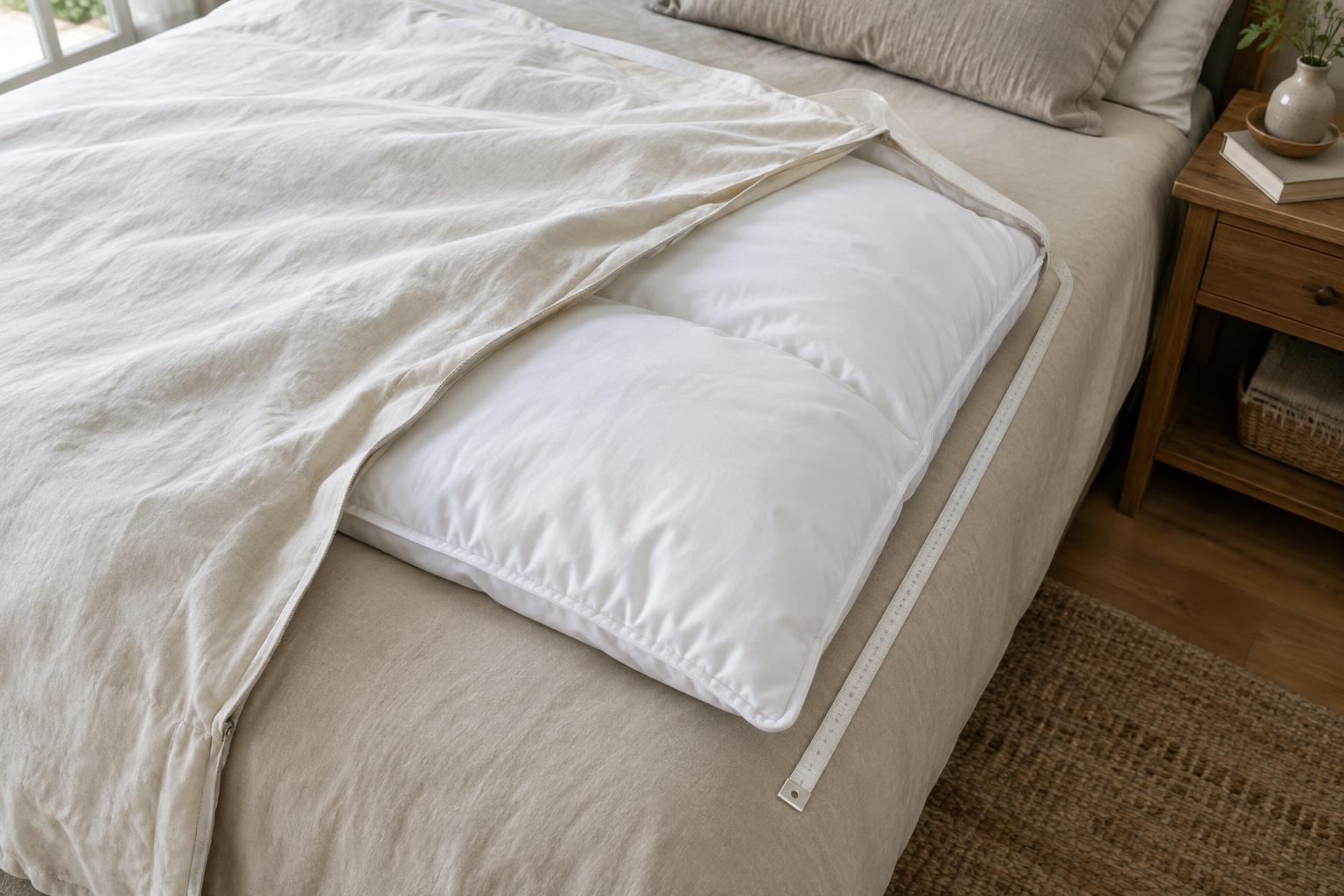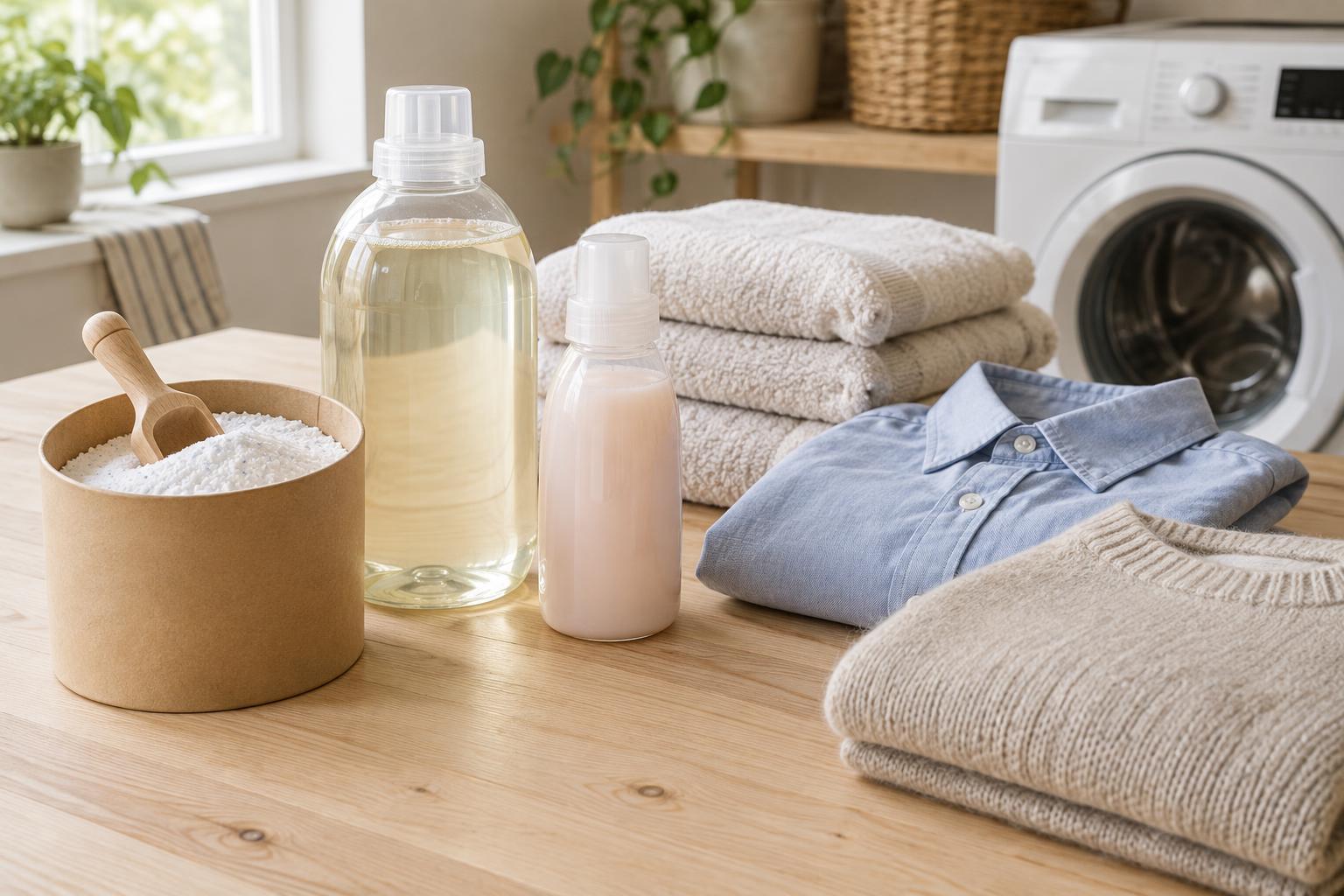
Start with the fabric, not the bottle
A detergent that works well on sturdy towels may be a poor choice for a wool throw or a lightly soiled cushion cover. Before choosing a product, read the textile’s care label and check whether it can be machine washed at all. The label’s temperature and cycle guidance matter as much as the detergent. Removable covers may also have separate instructions from the furniture they came with.
Next, consider what needs removing. General dust and body oils call for a different approach from mud or a greasy mark. Colour matters too: a formula intended for white laundry may contain brightening or bleaching ingredients that are unsuitable for dark or richly coloured fabric. The product label will tell you more than its powder or liquid form alone.
Choose powder for sturdy, washable loads
Powder detergent is a useful everyday option for machine-washable cotton and other durable fabrics, especially when a load has ordinary dirt or muddy marks. Some powders contain oxygen-based bleaching ingredients, which can help maintain whites; others are made for colours. Check the package rather than assuming every powder has the same ingredients.
Powder needs enough water and movement to dissolve and rinse away. In a short, cool cycle, granules may be more likely to linger in folds or around seams, particularly if the drum is crowded or too much detergent is used. If you notice a chalky feel or visible grains, check the dose and wash settings before adding more product. Follow the machine and detergent instructions for where to place the powder.
Use liquid for flexible everyday washing
Liquid detergent mixes readily with wash water and can be convenient for cool washes or short cycles. It is often a practical choice for coloured bedding, washable curtains and everyday clothing when the care labels allow machine washing. As with powder, choose a formula suited to the fabric and colour rather than relying on its format to do all the work.
For a washable item with an oily or food-based mark, you may be able to apply a small amount of liquid detergent before washing. First check the garment and product labels, test on an inconspicuous area if colourfastness is uncertain, and avoid rubbing delicate fibres. Do not let a pretreatment dry on the fabric unless the product directs you to. If a mark remains after washing, avoid tumble-drying until you have decided whether to treat it again; heat can make some stains harder to remove.
Reserve delicate-wash formulas for vulnerable fibres
Delicate-wash detergents are generally designed for items that need gentler handling, such as some wool, silk or fine washable fabrics. They can be a better match than a strong general-purpose formula, but the word “delicate” does not make an item safe to wash. Check both the textile label and the detergent label: a product suitable for one fibre may not be recommended for another.
Use the cycle, water temperature and drying method the textile permits. A mesh laundry bag can help protect small items from snagging, but it cannot prevent shrinkage caused by an unsuitable wash. For hand washing, measure detergent for the amount of water used, support the item when lifting it, and press out water gently rather than twisting it. If a fabric is marked dry-clean only, do not treat a delicate-wash bottle as permission to wash it at home.
Get the dose and rinse right
Whichever format you choose, more detergent is not automatically better. Excess product can be difficult to rinse from dense towels, quilted pieces and heavy curtains, leaving them stiff or attracting soil. Too little may not clean a heavily soiled load well. Use the package’s dosing guidance as a starting point, accounting for load size, soil level and any water-hardness guidance it provides.
Leave room for items to move, and wash similar fabrics together so a sturdy piece does not abrade a fragile one. If a freshly washed item feels slippery, stiff or strongly scented, review the dose, drum loading and rinse settings next time. Keeping a small selection of appropriate detergents—and checking labels before each unfamiliar item—is usually more useful than expecting one product to handle every textile in the home.