Start with the space the curtains will occupy
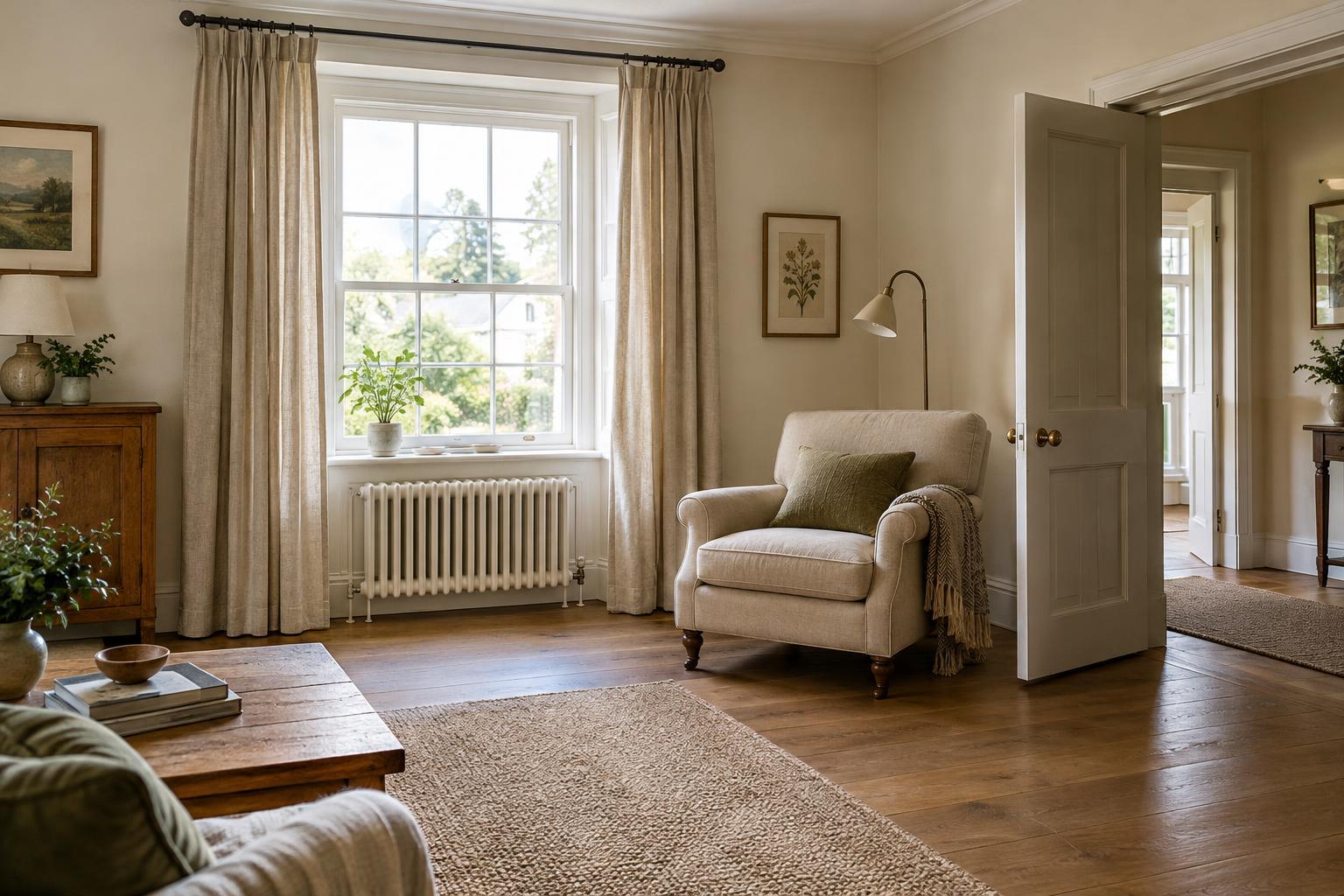
Before choosing a fabric or final length, look at the window when the curtains would be both open and closed. A panel needs room to hang, but it also needs somewhere to gather when you draw it back. A narrow strip of wall beside the window may leave the open curtain covering part of the glass. A deep sofa or bookcase may press against the fabric even if it does not touch the window itself.
Make a simple sketch showing the window, nearby furniture, doors, radiators and vents. Note which items you use every day and which can move. Then picture the path each panel will take as it opens. This is often more useful than judging the arrangement from a single view of the closed curtains. If the room is furnished, check the clearances with a tape measure rather than assuming a gap will be large enough.
Give furniture and doors room to move
Curtains that brush a stationary side table may be manageable, while panels caught behind a chair can quickly become awkward to use. Leave space for chair backs to shift and for sofa cushions to move without rubbing the fabric. If furniture must sit close to the window, consider a curtain length that ends above it, a different panel arrangement or a window covering that stays nearer the glass. Avoid solving the problem by forcing long panels to bunch behind furniture.
Doors need a moving clearance, not just an empty patch of floor. Open a nearby room door, cabinet door or balcony door fully and note where its edge and handle travel. A curtain that clears the closed door may catch when the door swings. At a frequently used doorway, check whether people can pass through without pushing a panel aside each time. Placing a proposed curtain outline with removable tape can help you test the arrangement before you install hardware.
Treat heaters and vents as fixed constraints
If a radiator, heater or vent sits below the window, do not assume floor-length curtains will work simply because they fit the wall. Fabric can block airflow, rest against warm equipment or make the heater harder to reach. Follow the equipment manufacturer’s clearance and safety guidance; requirements vary by type. Keep curtains away from portable heaters and other heat sources rather than relying on a particular fabric to make a close fit acceptable.
A shorter curtain may keep the lower part of the window accessible, though it will change the look of the room. Another option may be a covering that sits within the window recess, if the window and surrounding fittings allow it. Whatever you choose, check that vents remain unobstructed and that you can open the window and reach any controls. The aim is to make the covering practical around equipment that needs space to operate.
Test the arrangement before settling on a style
Once you have identified the obstacles, decide which matters most: maximum light when the curtains are open, privacy when they are closed, an uninterrupted fabric drop or easy movement through the room. These priorities can point to different solutions. For example, moving a chair might preserve long curtains, while keeping the chair in place might make a shorter covering the more comfortable choice. There is no need to make every window in a room identical if their surroundings differ.
Before buying or altering panels, hold a length of fabric near the proposed position and walk through a normal day’s movements. Pull a chair out, open the door and check the window latch. Notice where the fabric could be stepped on, caught or pushed out of shape. A small adjustment to furniture placement or curtain length is easier to make at this stage than after the panels are hung. The best arrangement is one you can use without repeatedly moving the curtains out of the way.