Why a lampshade needs a different approach
A fabric lampshade may look like an ordinary household textile, but it is often built around a rigid frame with an inner lining, trim and glued seams. Water that would be harmless on a washable cushion cover can leave a ring on a shade, loosen an edge or change its shape. For that reason, start with the least intrusive cleaning method and treat wet cleaning as a limited option rather than a routine step.
Before cleaning, switch off and unplug the lamp, and let the bulb and shade cool completely. If the shade lifts off easily, set it on a clean, stable surface. Hold it by the frame where possible instead of squeezing the fabric. Take a moment to look at its construction: a smooth, firmly attached fabric is usually easier to maintain than a pleated shade with fragile trim or a paper-like lining.
Remove loose dust first
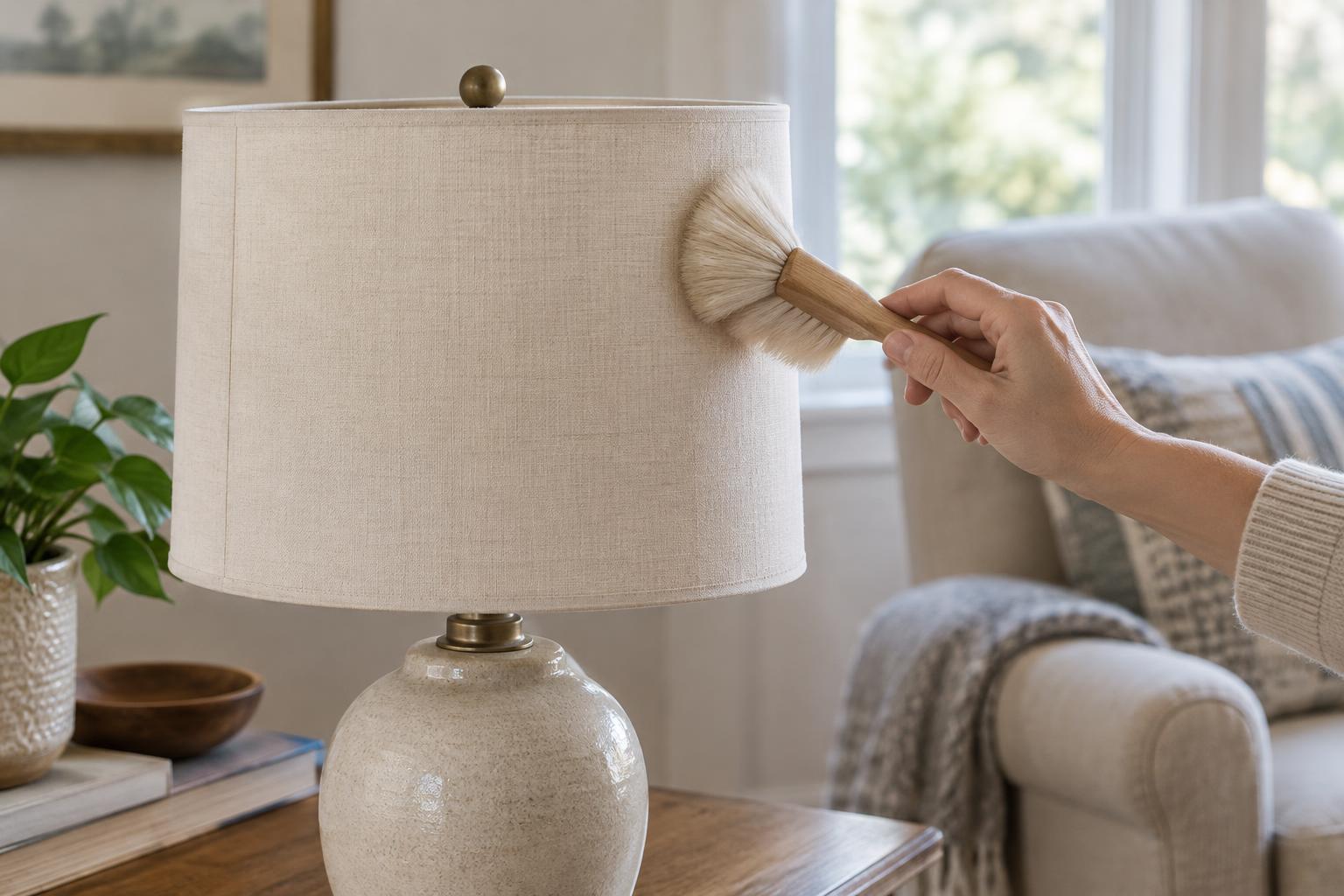
For regular upkeep, use a clean, soft brush to lift dust with light strokes, working from the top of the shade downward. A vacuum with an upholstery brush can help if it has gentle suction. Keep the tool moving, and avoid pressing it into the fabric. On loose weaves or delicate pleats, a brush alone may give you more control. Dust the inside too, but do not rub a brittle lining.
A lint roller may lift surface dust from sturdy, smooth fabric, but its adhesive can tug at loose threads or trim. Test it lightly in an inconspicuous area before using it across the shade. If you see fibers lifting, stop. Frequent gentle dusting is more useful than waiting for a thick layer to build up: it limits the amount of rubbing needed when you eventually notice a mark.
Decide whether a mark should be spot-cleaned
After dusting, inspect the mark in good light. Some apparent stains are shadows cast by the frame, variations in the weave or discoloration that has developed over time. If the shade is silk, heavily pleated, vintage, visibly faded or backed with paper, it may be safer to leave the mark alone than to introduce moisture. The same caution applies when trim or seams already feel loose.
If the fabric appears sturdy and a small fresh mark remains, test a barely damp white cloth on a hidden area first. Let the test area dry fully before judging the result; a wet patch can look fine until a ring appears. If the test changes the color, texture or shape, do not continue. Avoid treating an unknown mark with a strong cleaner in the hope that it will work faster.
Keep spot treatment small and controlled
For a shade that passes the test, lightly dab the mark with a clean white cloth dampened with water. Do not pour water onto the shade or scrub across the fabric. Work with as little moisture as possible and keep it away from glued edges, trim and the inner lining. Blot with a dry cloth afterward, then allow the shade to air-dry completely before putting it back on the lamp.
If plain water does not help, a tiny amount of mild detergent diluted in water may be worth testing separately on a sturdy shade. Use a fresh, barely damp cloth to lift any residue rather than soaking the area to rinse it. Stop if the mark spreads or a water ring begins to form. A stubborn stain is not a reason to wet the whole shade; uneven drying can make the result more noticeable than the original spot.
Protect the shade between cleanings
Once the shade is dry, check that it sits securely and that no dampness remains near the bulb or fittings. Dust it periodically when you clean nearby surfaces, using the same light touch each time. Keep the lamp away from splashes and, where practical, from spots where hands frequently brush against the fabric. These small habits help prevent marks that are difficult to remove safely.
Not every lampshade can be restored by cleaning. If its lining is brittle, its fabric is separating from the frame or a stain persists after a careful test, further treatment may cause more damage. At that point, consider whether replacing the shade or having a valued shade assessed for repair makes more sense. The goal is a clean, usable lamp—not a perfect surface at the expense of its structure.