Start with the threads, not the fabric name
Woven fabric is made from lengthwise warp threads and crosswise weft threads. The pattern in which they pass over and under each other is the weave. That pattern influences the surface you touch, the way fabric hangs and how it responds to everyday friction. Plain weave, twill and satin weave are three common structures worth recognizing when choosing home textiles.
Weave is only part of the picture. Fiber, yarn thickness, thread density, finishing treatments and fabric weight also matter. A loosely woven cotton and a tightly woven cotton can behave quite differently, even if both use the same structure. When comparing fabrics, use the weave as a clue rather than a promise of performance.
Plain weave: balanced and versatile
In a plain weave, each weft thread passes over one warp thread and under the next, alternating from row to row. The frequent intersections create a fairly stable structure with a surface that usually looks similar on both sides. Plain-woven fabrics range from light, airy cloth to firm canvas, so the name alone does not tell you whether a fabric will feel crisp or soft.
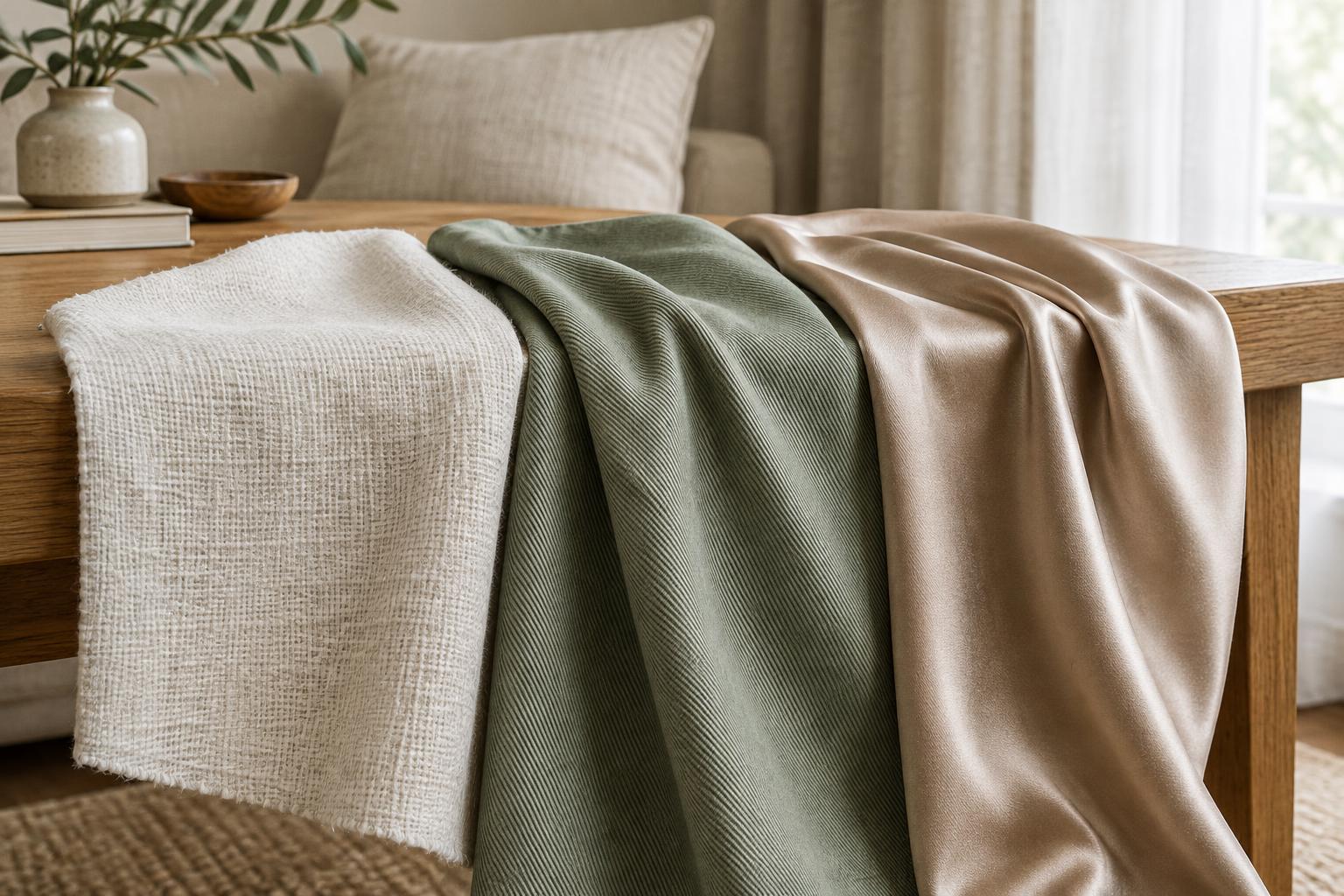
For the home, plain weave is a useful starting point for table linens, simple curtains and removable cushion covers. Its relatively even surface can make small repairs and seams less conspicuous than they would be on a strongly patterned weave. A dense plain weave may resist snagging because fewer long threads lie exposed on the surface. A very open one, however, can shift at the seams or catch on rough objects.
To judge a plain weave, hold a sample up to the light and gently move it between your fingers. Notice how readily the threads separate and whether the cloth returns to shape after being handled. Those observations tell you more about a particular fabric than its weave label does.
Twill: diagonal texture and flexible drape
Twill is recognizable by diagonal lines, or ribs. They form when threads pass over and under in a sequence that shifts across successive rows. Compared with a similar plain weave, twill often feels more pliable because its threads have fewer intersections. The diagonal texture may also make minor creases and everyday marks less noticeable.
A sturdy twill can suit frequently handled cushion covers, slipcovers or curtains that benefit from a softer fall. Yet twill is not automatically tougher: a light, loosely constructed twill may wear faster than a dense plain weave. Check the weight, firmness and intended use of the specific cloth, especially for upholstery. Its diagonal lines can also make cutting and aligning pieces more important when sewing visible panels.
Satin weave: a smooth face with different trade-offs
Satin weave places longer stretches of yarn on the fabric surface, with fewer visible intersections. This creates a smooth face that can reflect light and feel fluid in the hand. “Satin” describes a weave, not a fiber: satin-weave cloth can be made from different materials, and its sheen and care needs will vary accordingly.
That smoothness can be appealing for decorative pillows or curtains where a gentle drape and subtle shine are welcome. The longer exposed threads may be more vulnerable to snags from pet claws, rough trim or sharp fasteners. Friction can also change the appearance of some satin-weave surfaces over time. For a busy seating area, examine a sample closely and consider whether its finish will suit the level of contact it will receive.
Choose for the room, then care for the cloth
Think first about what the textile must do. For a washable cover used often, look for a fabric that feels firm at the seams and tolerates the care routine you can maintain. For curtains, test how a sample hangs and how much light passes through it; lining and fabric weight may affect the result as much as weave. For decorative pieces that see little handling, surface feel or sheen may take priority over resistance to abrasion.
Whatever the weave, read the fabric’s care label before washing or treating stains. Remove loose dust gently, blot spills rather than rubbing them across the yarns, and test any cleaning method in an inconspicuous spot when appropriate. Keep sharp hardware and rough surfaces away from textiles prone to snagging. A good choice is not simply the strongest-looking weave; it is a fabric whose structure, fiber and care requirements fit the way your room is used.