Start with the weave, not the label
Percale and sateen are weave styles. Percale uses a simple over-one, under-one pattern that produces a balanced fabric with a relatively matte surface. Sateen uses a weave with longer yarn floats on the face of the fabric, giving it a smoother surface and a gentle sheen. Either weave can be made well or poorly, so the name alone cannot tell you how a sheet will hold up.
To make a useful comparison, look at sheets made from the same fiber, such as cotton. Fiber type, yarn quality, fabric weight and finishing also affect softness and durability. A cotton sateen sheet may feel quite different from a sateen sheet made with another fiber, even though they share a weave.
How they feel against the skin
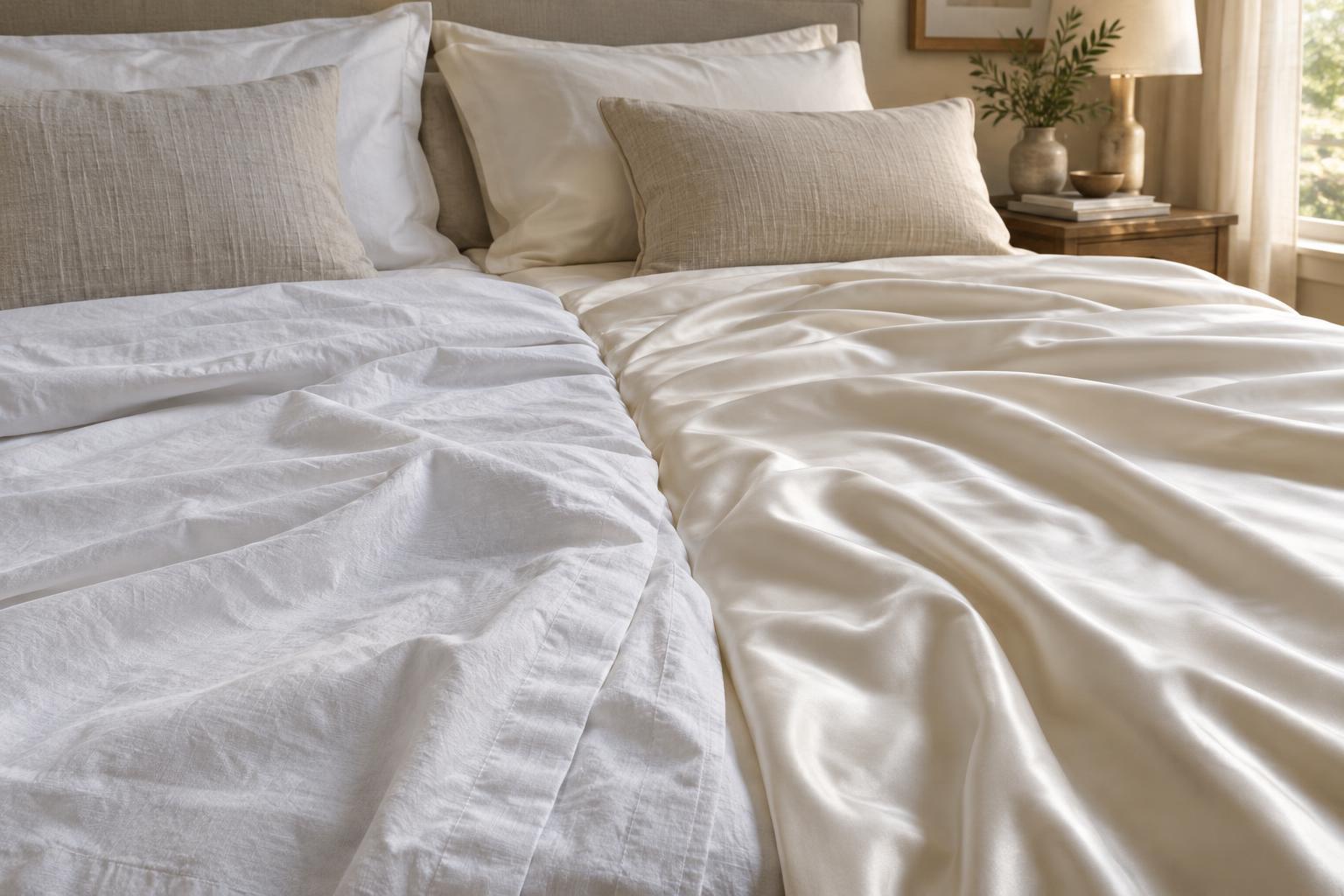
Percale usually feels crisp and light, more like a freshly laundered shirt than a silky fabric. It tends to have some structure and may make a soft rustling sound as you move. People who like bedding that feels airy and less clingy often prefer it. Percale can soften with washing while keeping much of its characteristic crispness.
Sateen generally feels smoother and more fluid. It drapes closely over the bed and has less of percale’s crisp texture. Some people find that cozy; others prefer the looser feel of percale, especially when they sleep warm. Neither weave can guarantee a particular sleeping temperature. The fiber, weight of the sheet, other bedding and conditions in the room all matter.
Appearance and everyday wear
Percale’s matte finish suits a relaxed, understated bed. Its structure can also make creases more visible after washing, particularly if the sheets sit in the dryer or laundry basket. Sateen looks softer and slightly lustrous, and its drape may make wrinkles less noticeable. If you prefer a smooth-looking bed without ironing, that difference may be worth considering.
The longer yarn floats that create sateen’s smooth face can be more vulnerable to snags from rough surfaces or sharp edges. Percale’s simpler structure is often a practical choice for a bed that sees frequent laundering, though individual fabrics vary. Pilling, thinning and fading depend on more than weave: fiber quality, friction and care habits all play a part. Check the fabric in person if you can, paying attention to how it feels and whether the seams are neatly finished.
What to look for when shopping
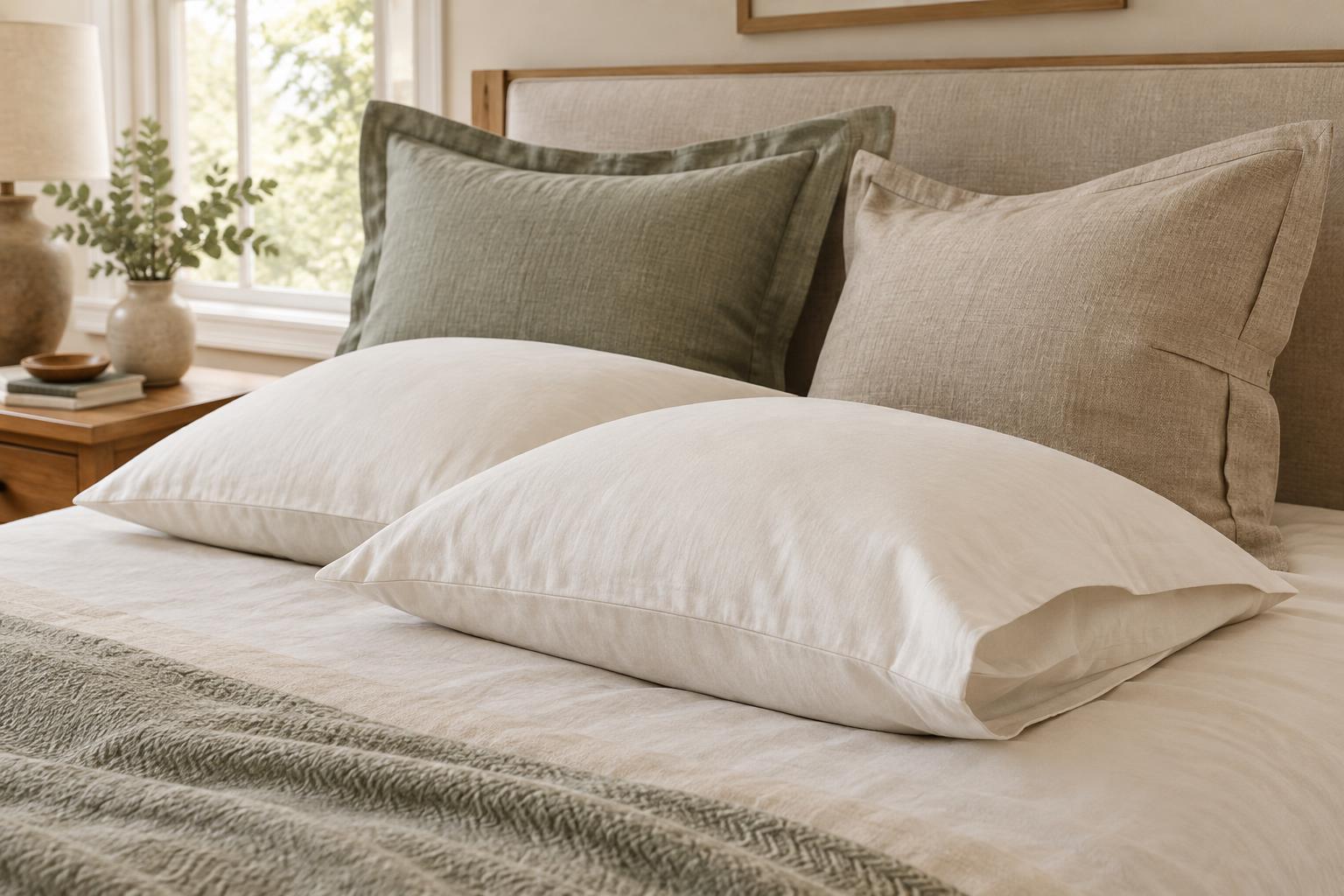
Consider your preferences before focusing on specifications. If you want a crisp, matte sheet with a lighter-feeling drape, start with percale. If you want a smooth, softly shiny sheet that falls closely around pillows and the mattress, try sateen. A pillowcase can be a useful low-commitment way to test a weave against your skin before buying a full set.
Treat thread count as one detail rather than a verdict on quality. A high number does not necessarily mean a softer or longer-lasting sheet, and it does not replace information about fiber and construction. Read the fiber label, feel the fabric when possible and check the return policy if you are buying without touching it. Also confirm pocket depth and sheet dimensions: even a fabric you love will be frustrating if the fitted sheet slips off the mattress.
Care that helps either weave last
Follow the care label first, particularly for blends or special finishes. In general, washing sheets separately from garments with zippers or hooks reduces the chance of snags. Avoid overloading the machine so water and detergent can move through the fabric, and use only as much detergent as needed. Residue can leave either weave feeling less pleasant.
Remove sheets promptly when the wash finishes, then dry according to the label. Excessive heat can be hard on many fabrics, while leaving sheets crumpled in a dryer can set creases. Smooth them as you fold or put them back on the bed. With sensible care, the better choice is the one whose everyday feel you enjoy—not the weave with the more impressive-sounding name.