Start with the fiber, then look at the fabric
A fiber is the raw material used to make a textile. Fibers are spun into yarns, which can then be woven, knitted or made into other kinds of fabric. Natural fibers come from plants or animals; common examples in the home are cotton, linen, wool and silk. Synthetic fibers, such as polyester, nylon and acrylic, are manufactured materials. You will also find blends that combine two or more fibers.
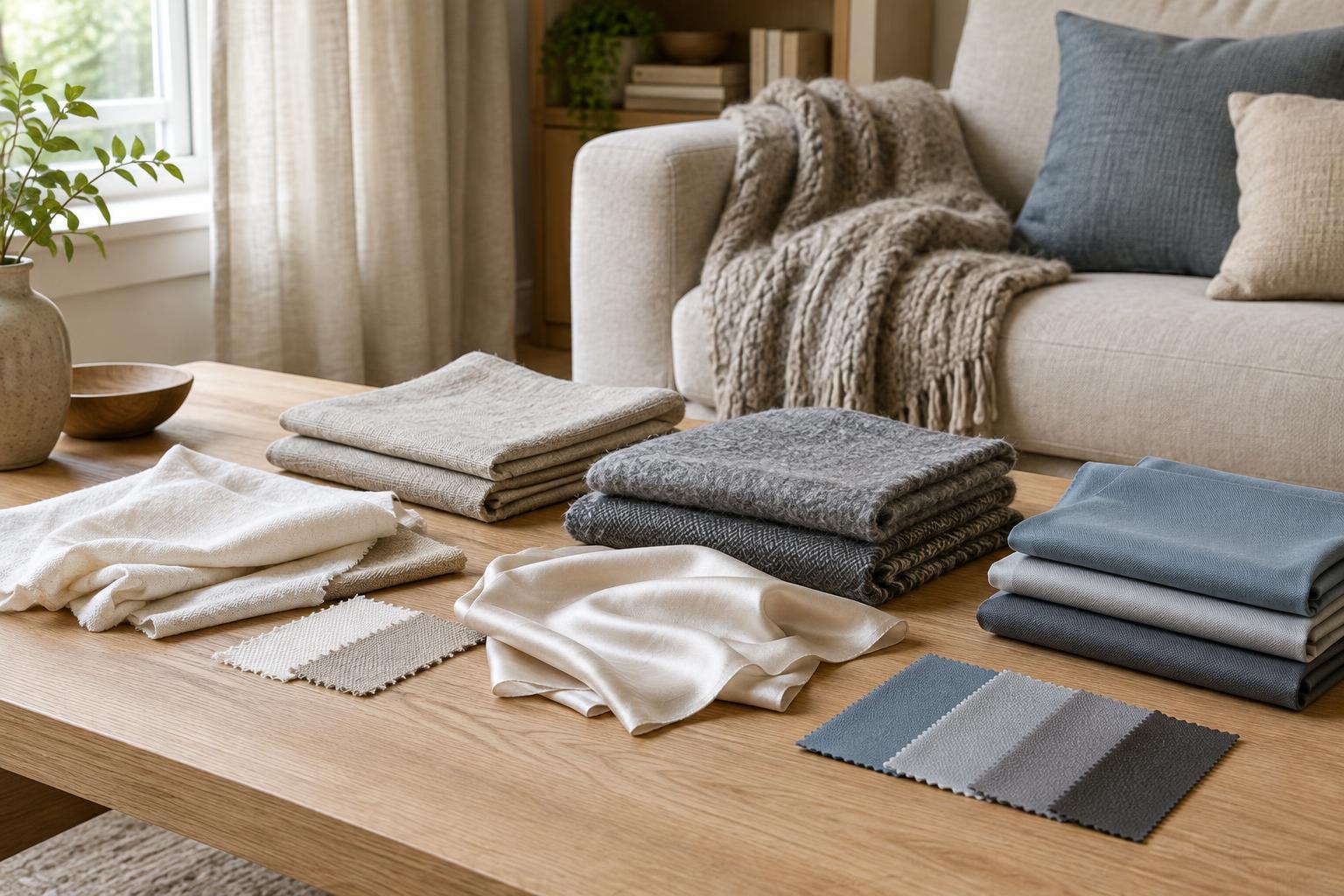
Fiber content is a useful starting point, not a complete prediction of how a fabric will behave. A tightly woven cotton canvas can feel sturdy, while a loosely woven cotton gauze feels light and airy. Yarn thickness, weave, backing, dye and surface treatments all affect texture and performance. When comparing textiles, handle a sample if possible and read both the fiber label and the care instructions.
What natural fibers bring to a room
Cotton is familiar and versatile. It can be woven into smooth sheeting, substantial cushion covers or soft throws. Many cotton items can be washed, but that does not mean every cotton furnishing is machine washable: linings, dyes and construction may call for gentler care. Cotton can wrinkle and may shrink if washed or dried in ways the maker does not recommend.
Linen, made from flax, often has a textured look and a relaxed drape that suits curtains and table linens. It creases readily, which can be part of its appeal or a drawback if you prefer a crisp finish. Wool offers warmth and resilience in items such as blankets and some upholstery fabrics, though its care needs vary. Silk has a distinctive sheen and drape but can be sensitive to moisture, abrasion and prolonged light exposure. For each of these fibers, consider where the item will sit and how often it will need cleaning.
Why synthetic fibers are common in furnishings
Polyester appears in everything from sheer curtains to upholstery. It often holds its shape well and tends to resist wrinkling, though its feel varies widely by fabric construction. Nylon is valued in some textiles for its strength, while acrylic is often used where a wool-like look or feel is wanted. These are broad tendencies rather than guarantees: a delicate synthetic sheer and a dense synthetic upholstery fabric have very different uses.
Synthetics can be practical in busy rooms, but they are not automatically stain-proof or maintenance-free. Oily marks can be stubborn on some polyester fabrics, and heat can damage certain synthetic fibers. Some fabrics may also pill with friction. A removable cover, a durable weave and care instructions you can realistically follow may matter more than the word “synthetic” on its own.
Choose for the job, not just the label
For curtains, think about drape, light and location. A light linen or cotton fabric may give a relaxed appearance, while a synthetic or blended fabric may offer a different balance of structure and crease resistance. In a sunny window, fading and fiber damage are considerations for any curtain. A lining can help protect the face fabric and change how the curtain hangs, but it also changes the finished item’s care requirements.
For upholstery, consider how much use the piece gets and whether the cover can be removed. Fiber content matters, but so do the fabric’s weave, seams and finish. A loose, snag-prone texture may be less convenient on a sofa shared with pets, regardless of whether its fibers are natural or synthetic. For cushions and throws, comfort and ease of cleaning may take priority. If choosing fabric for a project, bring a sample into the room to check its color and texture in the light where it will be used.
Care habits that help most textiles last
Follow the finished item’s care label rather than relying on general rules for its fiber. A cotton curtain with a delicate lining, for example, may need different treatment from an unlined cotton cover. Dust curtains and upholstery regularly with an appropriate vacuum attachment, and deal with spills promptly by blotting rather than rubbing. Before using a cleaner, test it in an inconspicuous place and avoid soaking fabrics or padding that cannot dry easily.
Keep textiles out of harsh light when practical, rotate cushions to spread wear, and allow washed items to dry as directed. Blends deserve the same label-checking as single-fiber fabrics: combining fibers can change how a textile feels and performs, but it does not erase the needs of its most delicate components. The best choice is one whose appearance, feel and upkeep fit the room and your routine.