Start with the job you need done
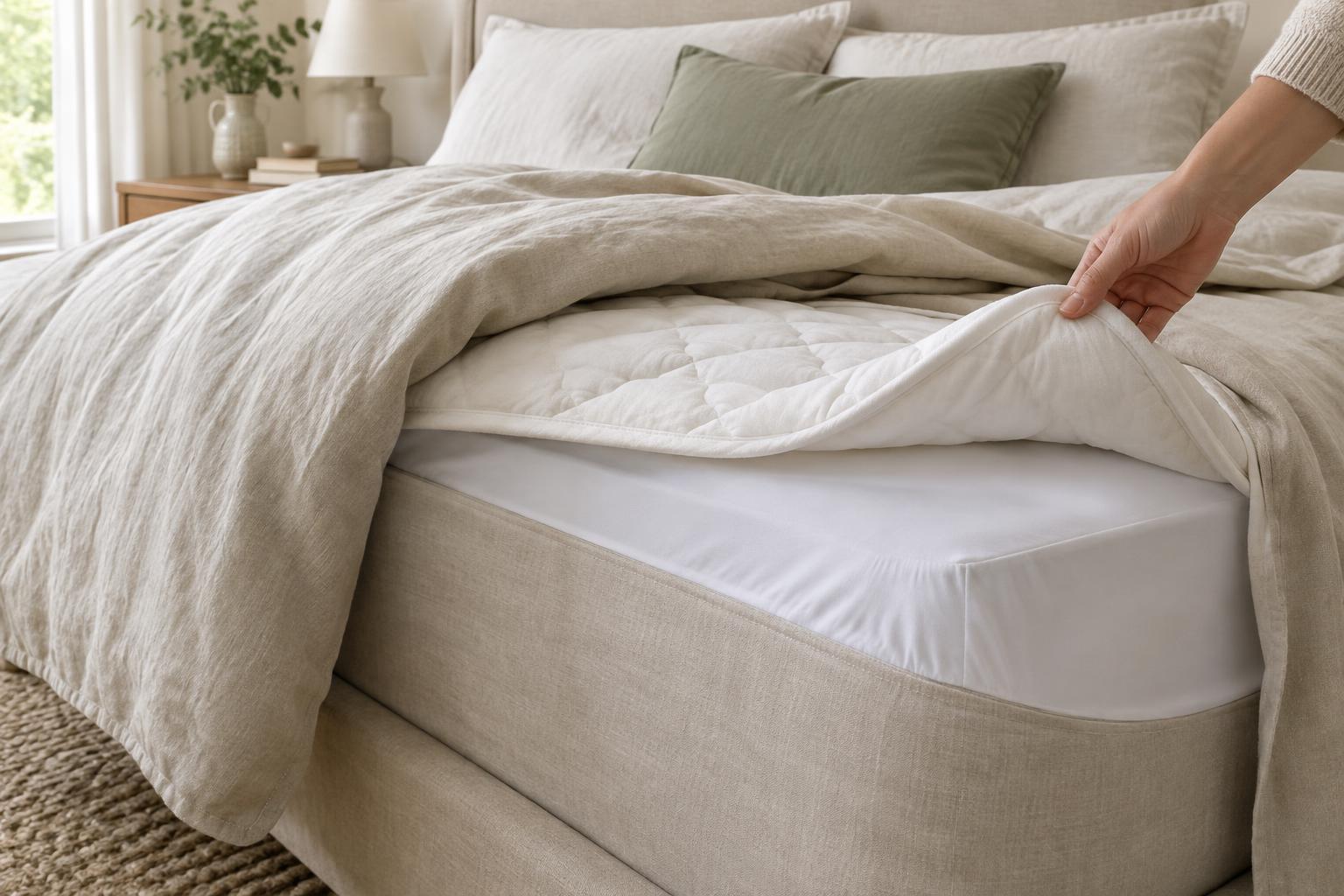
A mattress protector is primarily a barrier between the mattress and everyday use. It helps keep moisture, skin oils and spills from reaching a surface that is difficult to wash. Some protectors cover the top and sides like a fitted sheet; others zip around the entire mattress. A mattress pad is primarily a comfort layer. It usually has a fabric cover and a thin filling that adds a little softness beneath the fitted sheet.
The names are not used consistently on packaging. A quilted pad might include a water-resistant backing, while a protector might have enough padding to slightly change the bed’s feel. Rather than relying on the name, decide which matters most: guarding the mattress, softening the sleep surface or doing a bit of both. Then check the product description for its actual construction and care instructions.
Choose protection by coverage and feel
For routine upkeep, a fitted-style protector is often the simplest option to remove and wash. If spills are a concern, look for a stated waterproof barrier rather than assuming that thick fabric will stop liquid. Water-resistant fabric may slow a spill without preventing it from reaching the mattress. An encasement covers all sides and closes with a zipper, offering more complete coverage, though it can take more effort to put on and remove.
Protection comes with practical trade-offs. A membrane-backed layer may feel or sound different from plain fabric, depending on its construction and the bedding above it. If you dislike a crinkly feel, read the materials description and consider how the layer will sit under your sheet. Check that the skirt or enclosure accommodates the mattress depth: a tight fitted protector can pull at the corners, while a loose one may bunch up overnight.
Use a pad for a modest comfort change
A mattress pad can soften the first impression of a firm surface and add a slightly cushioned, quilted feel. Fill and stitching affect the result. A lightly filled cotton or polyester pad tends to make a subtler change than a thick, lofty one. If you want a substantial change in pressure or support, a pad may not be enough; a thicker mattress topper is a different product and needs its own fit and care considerations.
Think about warmth as well as softness. An extra filled layer can make a bed feel warmer, while a thin pad may be less noticeable. Fabric labels can help you narrow the choice, but they do not guarantee how cool or comfortable a layer will feel to you. A pad without a protective backing also should not be treated as a reliable spill barrier, even if its filling absorbs some moisture.
Check fit before you stack layers
You can use a protector and pad together. A straightforward order is mattress, protector, pad and fitted sheet. This puts the barrier close to the mattress while leaving the comfort layer above it. If either product has specific placement directions, follow those instead. Using both is useful when you like the feel of a washable pad but want more dependable protection underneath.
Measure the mattress depth, including any topper that will stay on the bed, and compare it with the stated pocket depth of each fitted layer. Remember that the fitted sheet must stretch over the whole stack. Deep pockets are not automatically better: the elastic still needs to hold the fabric neatly in place. If the bed becomes hard to make or its corners slip free, simplify the stack or revisit the sizes.
Make washing part of the decision
The most useful layer is one you can clean without much difficulty. Read the care label before buying, especially for waterproof products: high heat or harsh treatment may damage some backing materials. Check whether a pad will fit comfortably in your washing machine and whether it can be dried thoroughly. A bulky layer that is difficult to launder may be less practical than a thinner one you can wash as needed.
For a simple setup, choose a protector when keeping the mattress clean is the priority, or a pad when you mainly want a small comfort adjustment. Choose both if each solves a separate problem and the combined layers still fit securely. Whichever arrangement you use, let the mattress and bedding dry fully after cleaning or a spill before remaking the bed.