Start with the room, not the mat
A soft bath mat can make stepping out of the shower more pleasant, but softness is only one part of the choice. Think about where water lands, how quickly the room dries and how much clear floor space you have. A mat that stays damp in a small bathroom may be less convenient than a thinner one that is easy to hang up. In a busy household, frequent washing may matter more than a deep, plush pile.
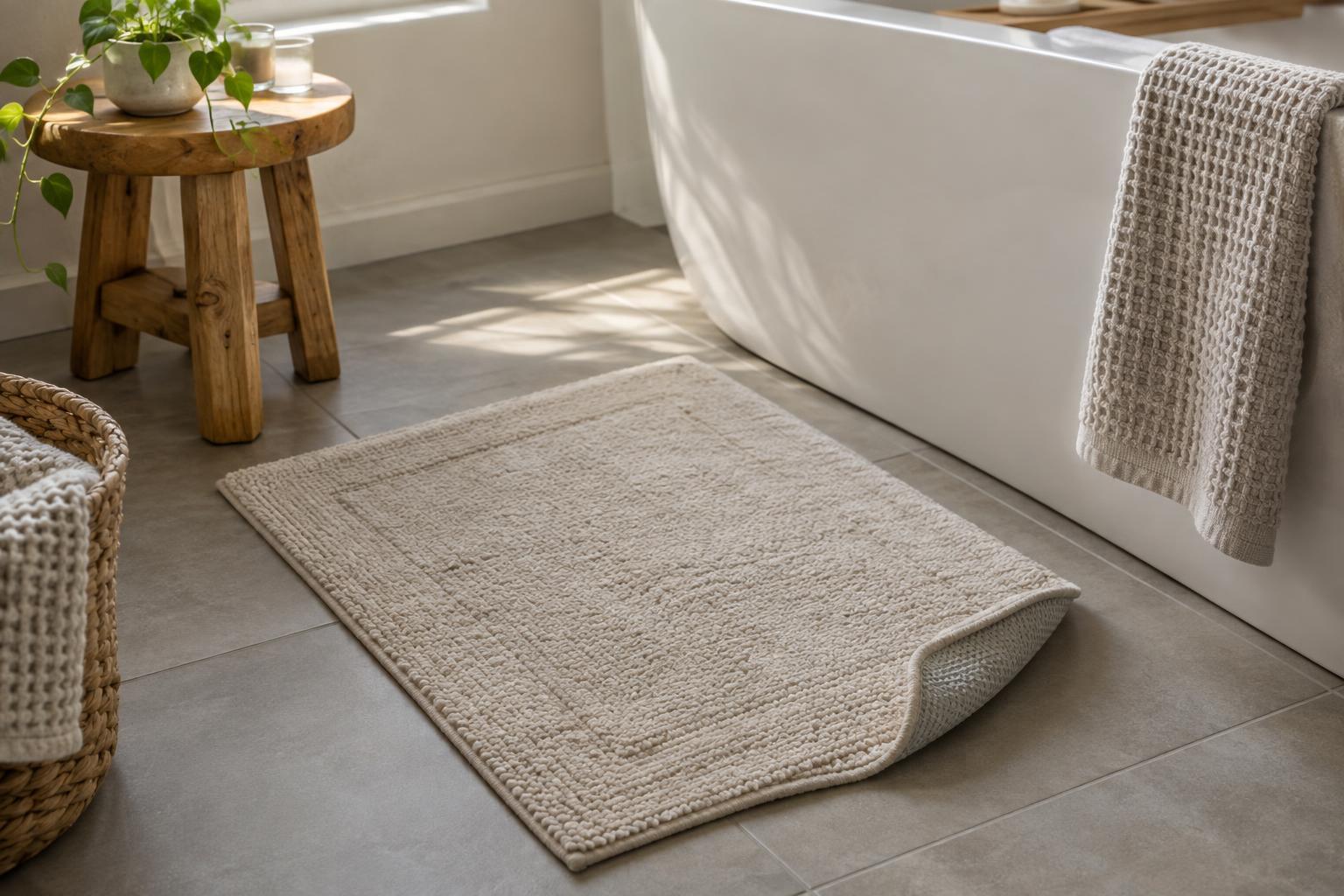
Measure the intended spot with the bathroom door open. The mat should lie flat without catching on the door or crowding a toilet base. If water reaches several areas, one well-placed, absorbent mat may be easier to manage than several that overlap. Keep the route through the bathroom clear; a mat should not become an obstacle.
Match the material to your priorities
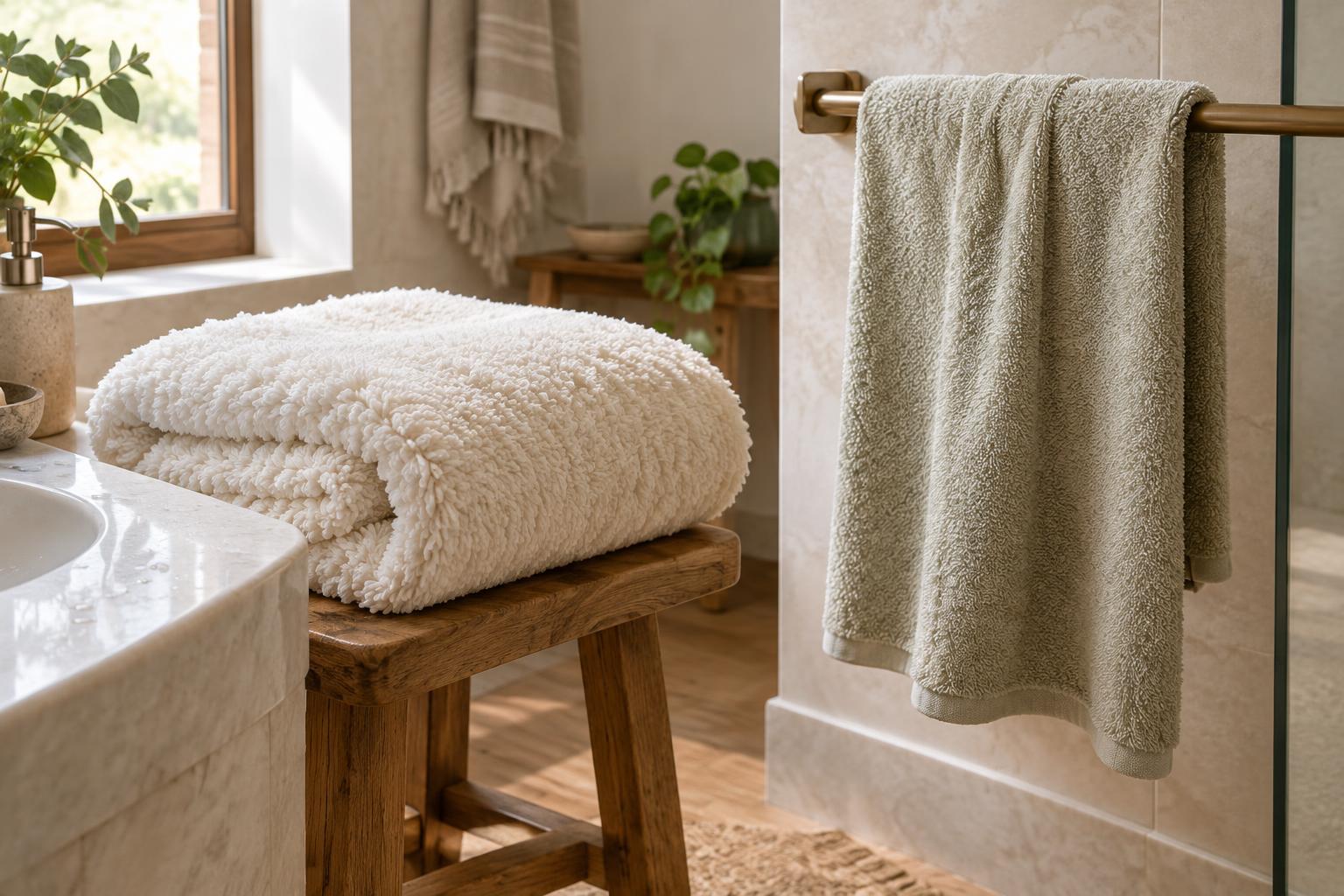
Cotton bath mats offer a familiar towel-like feel and are often straightforward to launder. Their thickness varies: a dense cotton mat may feel cushioned but can take longer to dry, while a lighter weave may be easier to wash regularly. Check the care label before buying, especially if you want to use a tumble dryer.
Microfiber and polyester mats can feel soft and may dry relatively quickly, depending on their construction. Deep chenille or shag-style piles offer more texture underfoot, but they can hold lint or hair and may need extra attention when washing. If you prefer a smooth surface, a low-pile mat is often simpler to shake out and keep looking tidy.
Firm alternatives, such as wooden slat or mineral-style mats, offer a different feel and care routine. They do not behave like absorbent fabric mats: water may remain around or beneath them, and some need space to dry fully. Follow the maker’s instructions for cleaning and placement rather than assuming they can be treated like a towel.
Check grip on your actual floor
A bath mat needs to stay in place when someone steps onto it, but a label saying “non-slip” is not a guarantee on every surface. Backing that grips smooth, clean tile may behave differently on textured tile, stone, grout lines or a floor with cleaning residue. Before relying on a new mat, place it on a clean, dry floor and test whether its edges shift under gentle foot pressure. Recheck it after laundering and as the backing ages.
Backing materials also deserve a compatibility check. Some rubber or latex-backed mats may mark or discolor certain floors, including some vinyl and sealed surfaces, particularly when left in place for long periods. Look at both the mat’s label and the flooring maker’s guidance. If either is unclear, choose an option approved for that floor or test it in an inconspicuous spot. A separate grip pad should be suitable for bathroom use and the floor beneath it; adding one does not fix a mat that bunches up.
Plan for drying and cleaning
A mat that feels dry on top may still hold moisture underneath. Lift it after use so both the mat and floor can dry, particularly in a bathroom with limited airflow. This also gives you a chance to notice trapped water before it leaves the floor slippery or affects a finish. Avoid placing a wet mat back on a damp surface.
Choose a size that fits your washing machine and a material whose care instructions suit your routine. Shake out loose hair and debris before washing, use the recommended settings, and let the mat dry fully before returning it to the floor. Check the backing for cracks, peeling or a loss of grip over time. If the mat no longer lies flat or stays put, replacing it is usually more sensible than trying to make it work.
Make the final choice practical
For a bathroom used several times a day, a washable, moderate-weight mat that dries readily may be the easiest choice. For a roomy bathroom with good airflow, a thicker mat might provide the comfort you want without being difficult to maintain. Whichever style you prefer, confirm that it clears the door, suits the flooring and feels stable underfoot.
Color and texture can tie a bath mat into the room, but everyday use is the better test. The right mat is one you can place securely, clean as directed and lift to dry without turning a small task into a chore.