Start with the care label
The safer drying method is the one that suits the particular item, not necessarily the one that seems gentler in general. Check the care label before washing or drying, especially on curtains, cushion covers and other pieces that must keep a precise shape. A label may permit tumble drying only at a low temperature, call for line drying, or rule out machine drying entirely. If an item has no label, treat unfamiliar fabrics and trims cautiously.
Consider the whole item rather than its main fabric alone. A cotton cover might have a lining, zipper, decorative tape or backing that reacts differently to heat. Structured pieces can also lose their shape when they tumble. If you are unsure whether a removable upholstery cover can be washed and dried, do not assume that its fabric content tells the full story.
What the dryer does well—and where it poses a risk
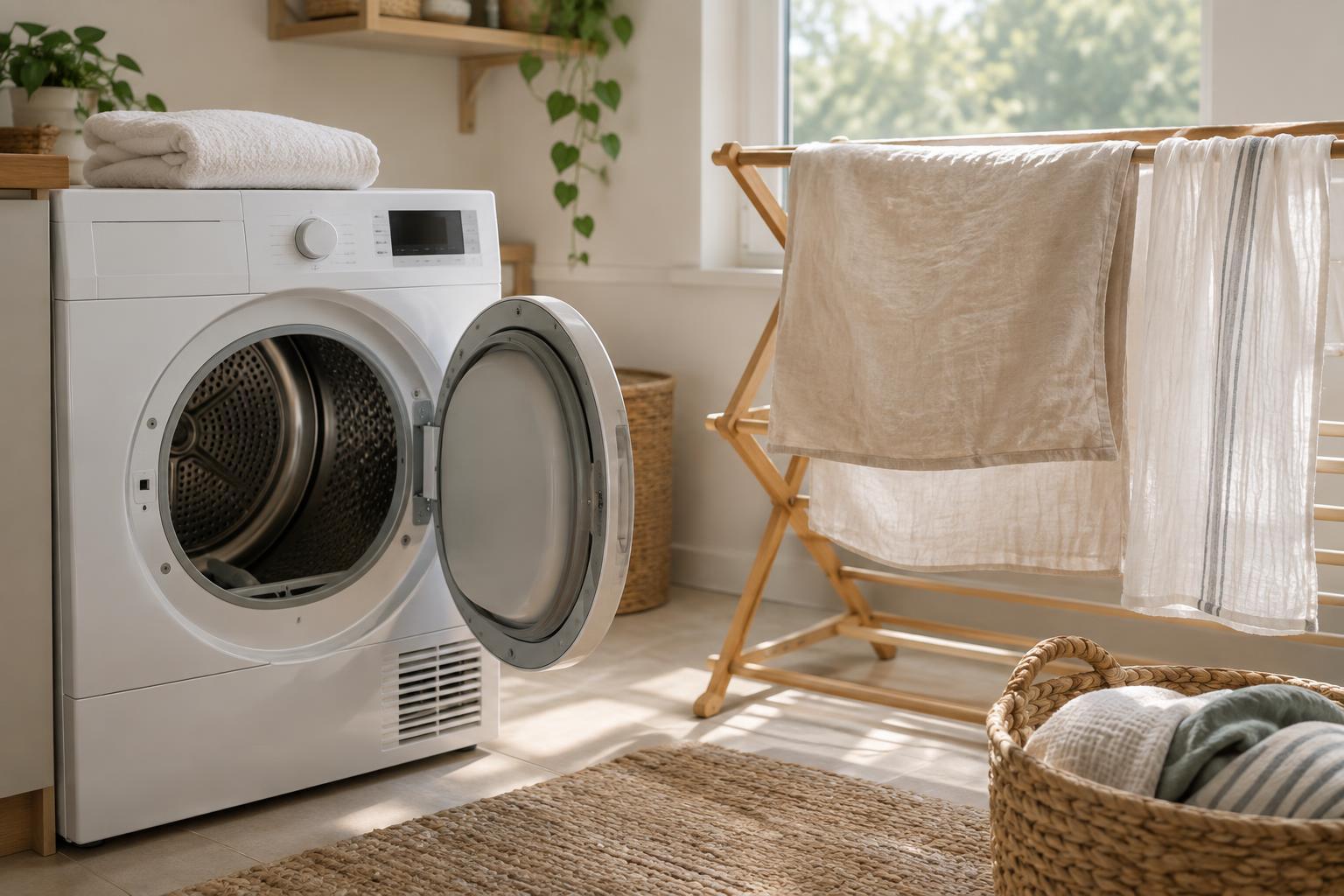
Machine drying is useful when you need to dry sturdy, washable items thoroughly. Towels and some everyday bedding often tolerate tumbling when their labels allow it. Movement can help towels feel softer than they do after line drying, and a dryer can be practical when there is little space to hang a large load.
Heat and tumbling can also change textiles. Some fabrics shrink, while repeated friction may encourage pilling or wear at seams and edges. Elastic, coatings, adhesives and certain trims can be particularly sensitive to heat. Even when tumble drying is allowed, the hottest setting is not automatically the best choice. Use the label’s temperature guidance, avoid crowding the drum, and check items before they become excessively dry. Remove pieces promptly so they spend less time sitting in creases.
When air-drying is the better choice
Air-drying avoids dryer heat and tumbling, making it a sensible choice for many delicate, embellished or shape-sensitive textiles. It also gives you more control over how an item rests while it dries. A knit throw, for example, may be better laid flat so its wet weight does not pull it out of shape. A lightweight curtain may benefit from being smoothed and hung evenly, provided its label permits that approach.
Air-drying still needs care. Hanging a heavy, saturated piece from a narrow edge can stretch it, and strong direct sunlight may fade some colors over time. Indoors, leave space between items and provide ventilation rather than packing damp fabrics tightly together. Thick items can feel dry on the surface while remaining damp inside, so check folds, seams and corners before storing them. A musty smell or cool, damp patch is a reason to allow more drying time.
Match the method to the item
For towels, follow the label and choose the method that lets them dry completely. If you air-dry them, spread them out and turn them as needed. For sheets and duvet covers, either method may be suitable when permitted; give large pieces room so they do not stay bunched and damp. If a cover tangles around smaller items in the dryer, stop the cycle safely, separate the load and continue according to the care instructions.
Curtains and decorative cushion covers deserve a closer look. Linings, pleats, piping and fitted dimensions can make shrinkage or distortion more noticeable. Air-drying may reduce exposure to heat, but the wrong hanging position can still stretch a long panel. Lay out or support an item in a way that preserves its shape, and avoid putting a cover back on an insert or cushion until every layer is fully dry. For upholstery covers, check any instructions for both the cover and the upholstered piece before attempting home laundering.
Use a simple decision routine
After checking the label, ask three questions: Can the item tolerate heat and tumbling? Will its weight or shape make hanging risky? Can your chosen setup dry it completely in a reasonable time? These questions help distinguish a sturdy bath towel from a lined curtain, even if both are washable.
When both methods are allowed, you can choose based on the fabric and your drying space. Some items can be partly machine-dried on an approved setting and then finished in the air, but only if the care instructions allow tumbling in the first place. Whichever method you use, avoid overloading, support the fabric appropriately and confirm it is fully dry before folding or storing it. A little attention at this stage can help a textile keep its fit, feel and usefulness.