Start with how you use the seat
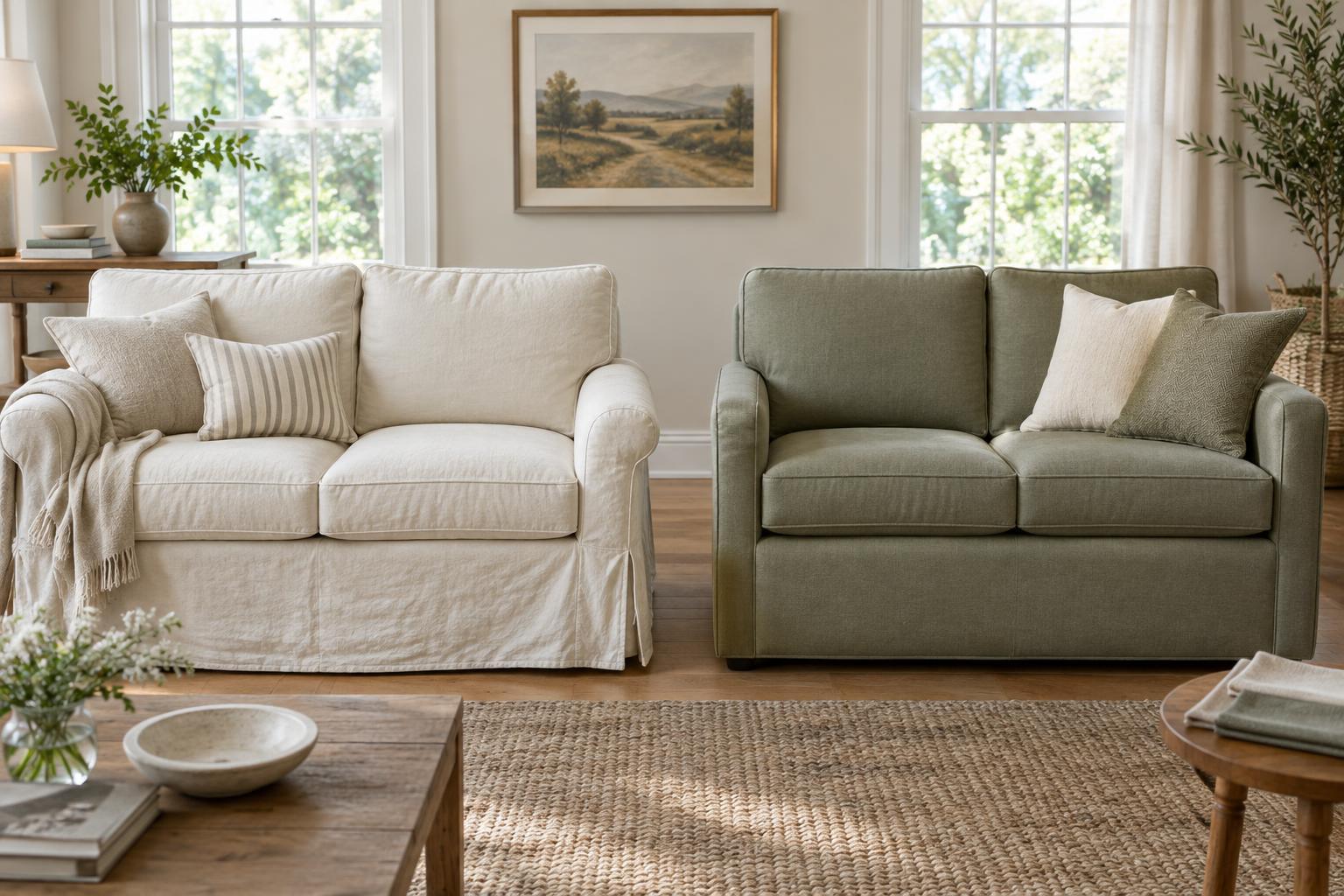
The best upholstery choice is not simply the one that looks newest in a showroom. Think about who uses the seat, how often they use it and where it will stand. A reading chair in a quiet corner faces different demands from a family sofa used for meals, naps and play. Your tolerance for visible marks matters too: some people enjoy the character of worn leather, while others would rather choose a fabric that softens the appearance of everyday scuffs.
Construction matters as much as the covering. Cushion filling, seat support and the shape of the furniture affect comfort and longevity. If you can, sit on a piece for more than a moment and notice how it supports you when you shift position. Ask for the upholstery's care information before buying; a material that fits your cleaning routine may prove more satisfying than one chosen for appearance alone.
Comfort: temperature, texture and feel
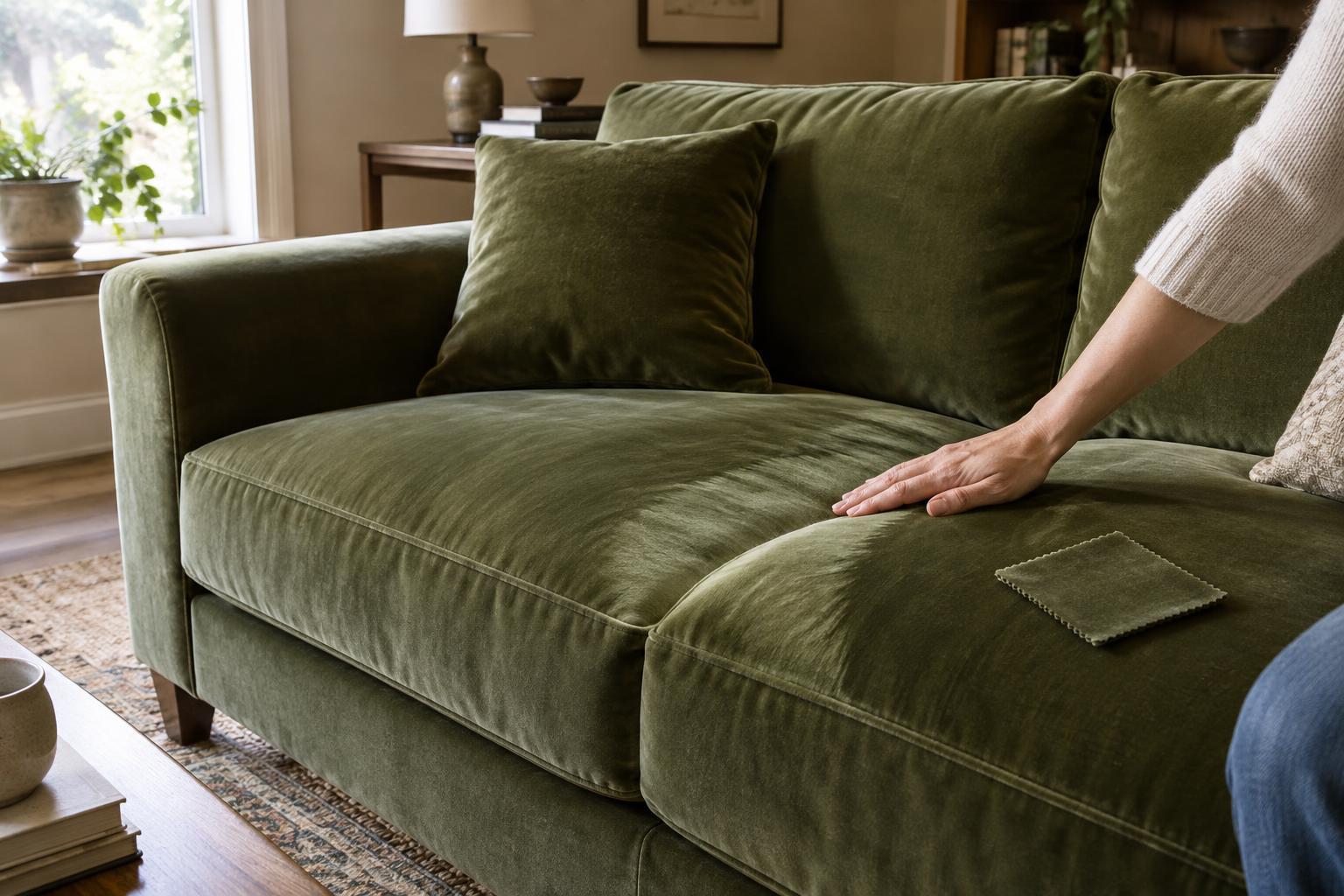
Fabric often feels welcoming on first contact. Its texture can add softness and warmth, and the range of weaves makes it easier to find a surface you enjoy touching. A smooth, tightly woven cloth feels quite different from a deep pile or a nubby weave. Texture also changes how a seat looks: patterned or varied fabrics can make small creases and crumbs less noticeable, though textured surfaces may hold onto debris.
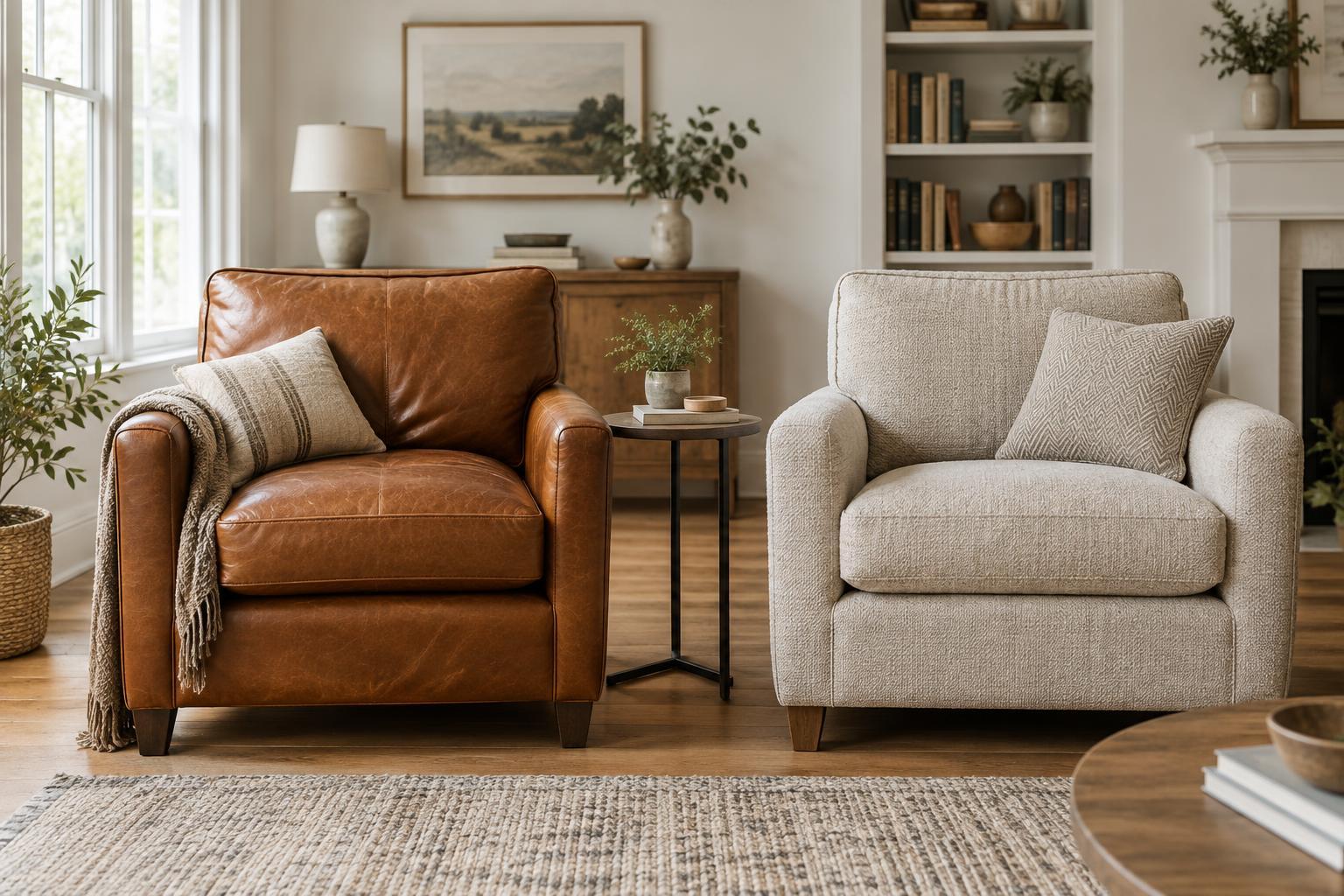
Leather tends to feel smoother and may feel cool when you first sit down. Its feel varies with its finish, thickness and the room temperature. Some leather becomes more supple with use; firmer or heavily finished leather can feel less yielding. Neither covering guarantees a cool or warm seat in every home. If comfort is your priority, try the actual material where possible rather than judging it from a photograph.
How leather and fabric show wear
Leather is a broad category, not a single performance standard. More natural-looking finishes may show scratches, color variation and marks readily, while more protective finishes can resist some everyday contact but have a different feel. Repeated friction can wear a finish, and direct sun or nearby heat may contribute to fading or drying. Before choosing leather, decide whether changing color and a lived-in surface would appeal to you.
Fabric wear depends on fiber, weave, finish and use. A dense, stable weave may hold its shape better than a loose weave in a busy household, but no fabric is immune to abrasion, fading or snagging. Pile fabrics can develop changes in shading where people sit. Claws may catch on open textures, while dark solid colors can make pale lint or pet hair particularly visible. A removable cushion cover can be convenient, but do not assume it is machine washable: check its care label first.
For either material, inspect the furniture as a whole. Seams, cushions and areas where arms rub against clothing often show wear before broad seat panels do. Rotating cushions when the design allows and changing the usual sitting spot can help spread use more evenly.
Spills and routine upkeep
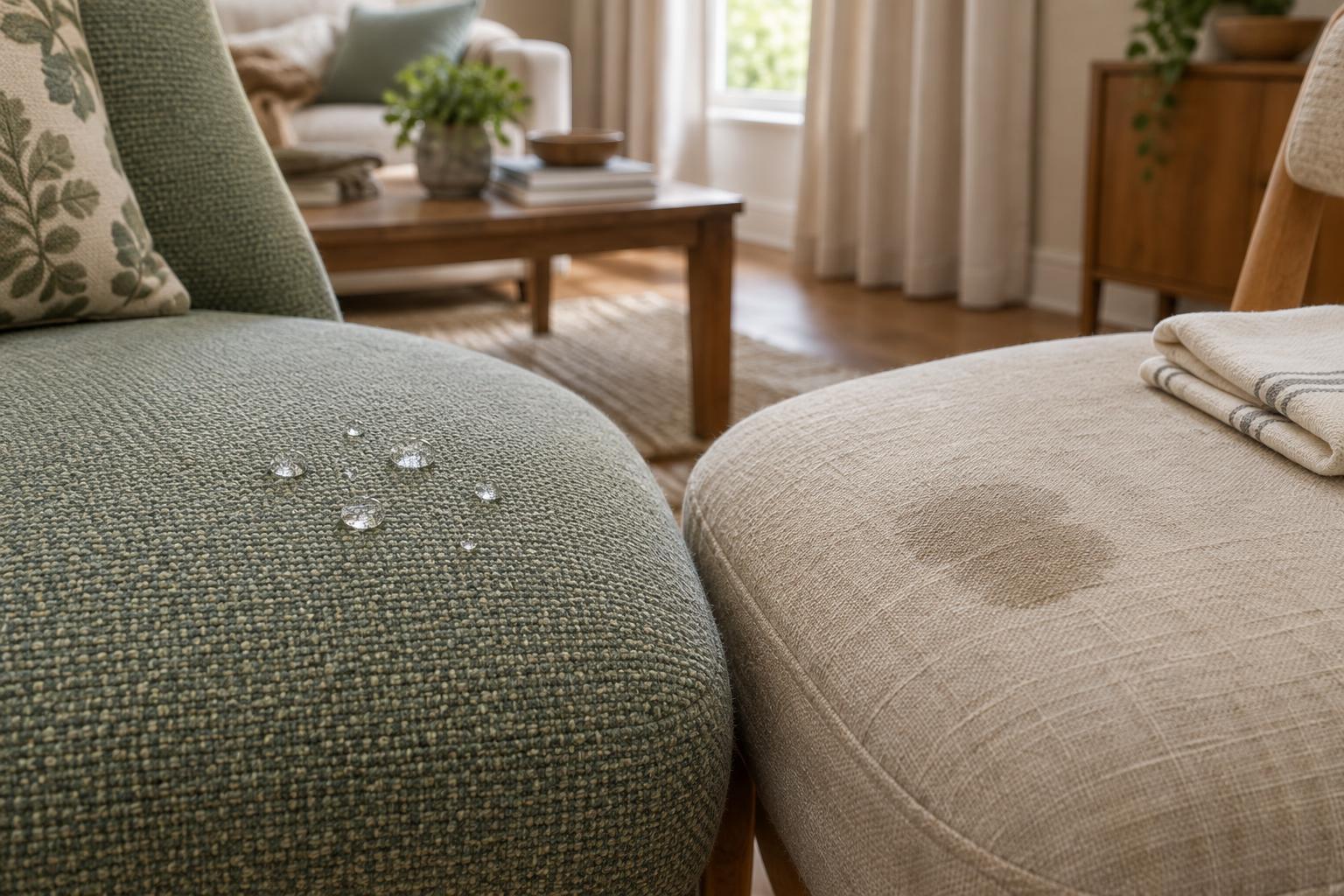
Both materials benefit from prompt, gentle attention. Lift loose dirt with a soft brush or an appropriate vacuum attachment, paying attention to seams and crevices without scraping the surface. For a fresh spill, blot with a clean absorbent cloth rather than rubbing it outward. Avoid soaking cushions: moisture can travel beneath the upholstery and take longer to dry than the surface suggests.
Fabric cleaning rules vary considerably. A removable cover may require washing, dry cleaning or another method, and cleaning one small patch of a fixed cover can leave a noticeable ring. Follow the manufacturer's instructions and test any permitted cleaner in an inconspicuous place. Leather also needs care suited to its particular finish. Harsh detergents, excessive water and untested oils or conditioners can alter its appearance. When the finish is unknown or a stain persists, pause before trying stronger products and seek guidance from the furniture maker or a qualified cleaner.
Make the choice fit your room
Choose fabric if you value a broad range of colors and textures, a softer initial feel or the option of a patterned surface. Choose leather if you prefer a smooth surface and are comfortable with the way its finish may develop marks over time. These are starting points, not rules: a sturdy fabric and a delicate leather can behave very differently from the examples you might have in mind.
Bring samples into the room if available. Look at them in daylight and lamplight, touch them, and consider how they sit beside rugs, curtains and other textiles. Then ask yourself a practical question: which surface would you be willing to maintain on an ordinary week? The covering you can care for consistently is often the more comfortable choice in the long run.