What fabric nap means
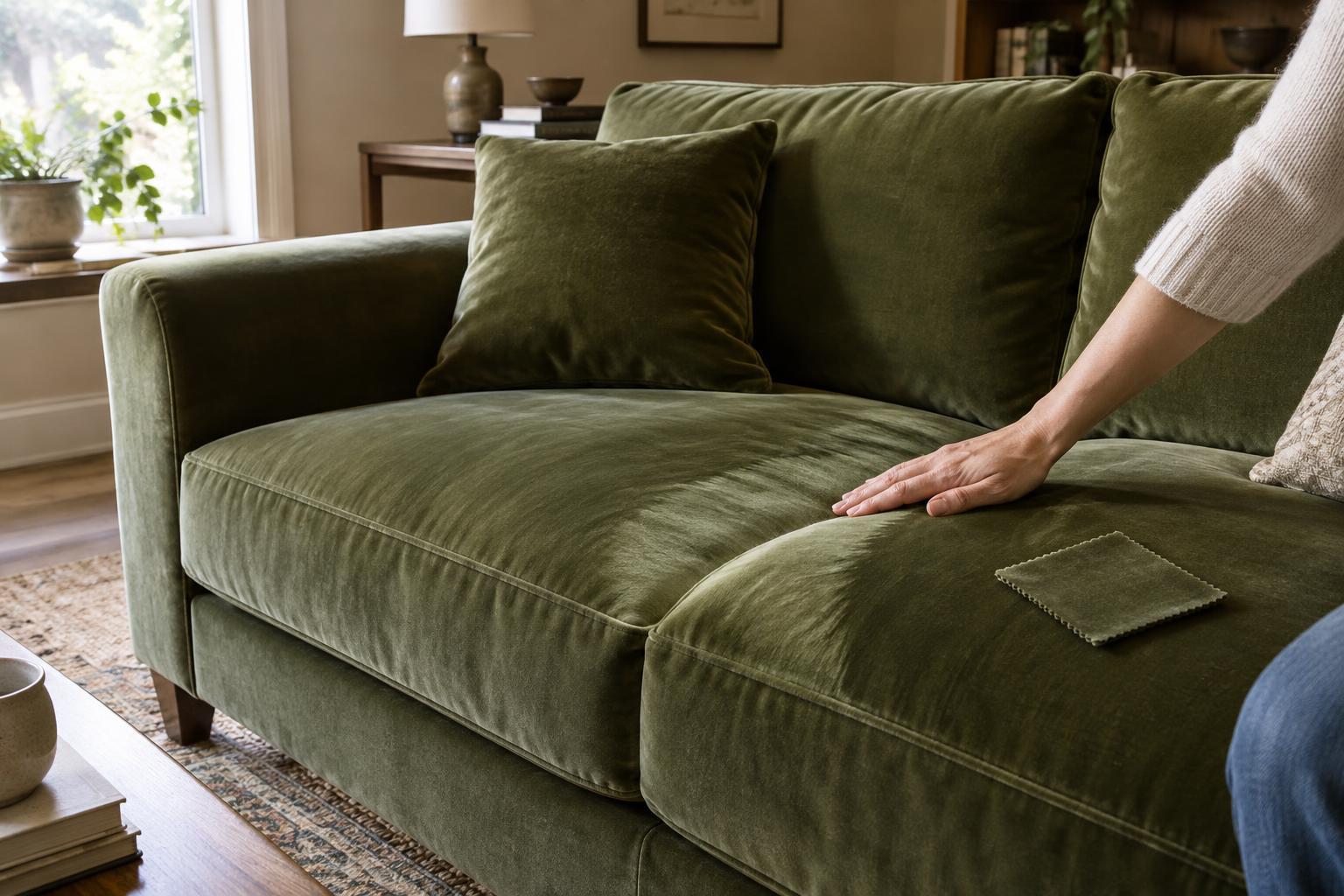
Fabric nap is the direction in which a fabric’s raised fibers or surface texture lies. Run your hand across a napped fabric one way and it may feel smooth; move it the other way and you may feel more resistance. Velvet is a familiar example, but some chenilles and suede-like upholstery fabrics also show a noticeable direction. Not every upholstery fabric has a visible nap. A flat, tightly woven cloth may look much the same whichever way you turn it.
Nap matters because the surface catches and reflects light differently as its direction changes. Two pieces cut from the same fabric can appear to be different shades when one is turned around. The effect may be subtle in a textured neutral and striking in a fabric with a dense pile. It is an optical difference, not necessarily a difference in the dye.
Why a sofa can look uneven in one light
An upholstered piece has surfaces facing many directions: a vertical back, a horizontal seat, curved arms and loose cushions. Light reaches each at a different angle, so even carefully aligned fabric may not look identical across the whole piece. Daylight from a window can emphasize one panel in the morning, while a nearby lamp changes the effect in the evening.
Touch adds another variable. Sitting, brushing the surface with a hand or turning a cushion can shift the fibers and leave a temporary light or dark mark. On some fabrics this movement is part of their character; on others it may be more noticeable than you want in a frequently used room. A change in shade alone does not tell you whether the fabric is dirty or worn.
How to judge a sample before choosing
Look at a generous fabric sample in the room where the piece will sit, if possible. Hold it vertically to imagine a chair back, then lay it flat to approximate a seat. Rotate it halfway around without changing the lighting. If the shade shifts, notice which orientation you prefer and whether you would be comfortable seeing that variation across a whole sofa.
View the sample from the places you normally enter or sit in the room, not just from directly above. Compare it in daylight and under the lamps you use at night. Gently stroke the surface in opposite directions and check how readily it shows handprints or pressure marks. A small swatch cannot reproduce every curve and seam of a finished piece, but it can reveal whether directional shading is an appealing feature or a likely distraction.
Planning the direction on an upholstered piece
When fabric is cut for upholstery, keeping the nap direction consistent across related panels helps prevent an avoidable patchwork effect. This is especially worth considering on large seat cushions, backs and arms that sit side by side. If you are recovering a piece yourself, mark the chosen direction on the back of each pattern piece before cutting. Check loose cushions too: turning one end for end may make it look different from its neighbors.
There is no single direction that looks best for every fabric or room. One orientation may appear deeper in color, while the reverse looks brighter. The useful goal is to choose deliberately and maintain that choice where consistency matters. Directional cutting may also require more fabric than a layout in which pieces can be freely rotated, so account for nap when planning a project or discussing fabric needs with an upholsterer.
Living with and caring for napped upholstery
The way nap changes under touch is part of everyday life with a napped fabric. To keep loose dirt from settling into the surface, follow the fabric or furniture maker’s care guidance and vacuum gently with a suitable upholstery attachment when recommended. Avoid assuming that a darker patch needs scrubbing: first check whether the fibers have simply been brushed in another direction.
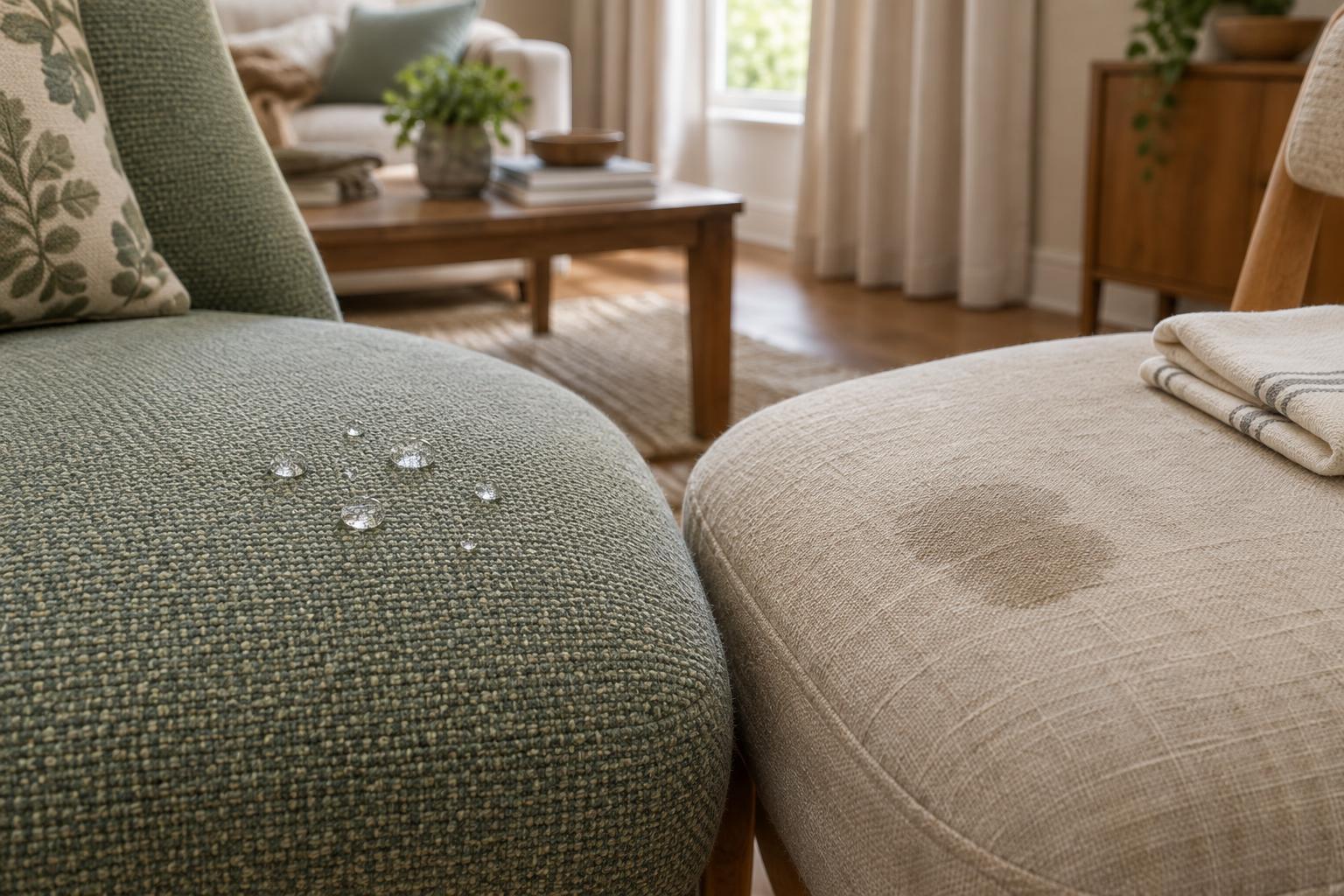
If a spill occurs, consult the care label before using a cleaner. Blot rather than rub, and test any permitted product in an inconspicuous place; rubbing or excess moisture can change the surface as well as spread a mark. For persistent flattening or staining, aggressive home treatment may make the contrast more obvious. Choosing a nap you enjoy in both light and shade is often the simplest way to feel at ease with how the piece looks over time.