What pile does in a towel
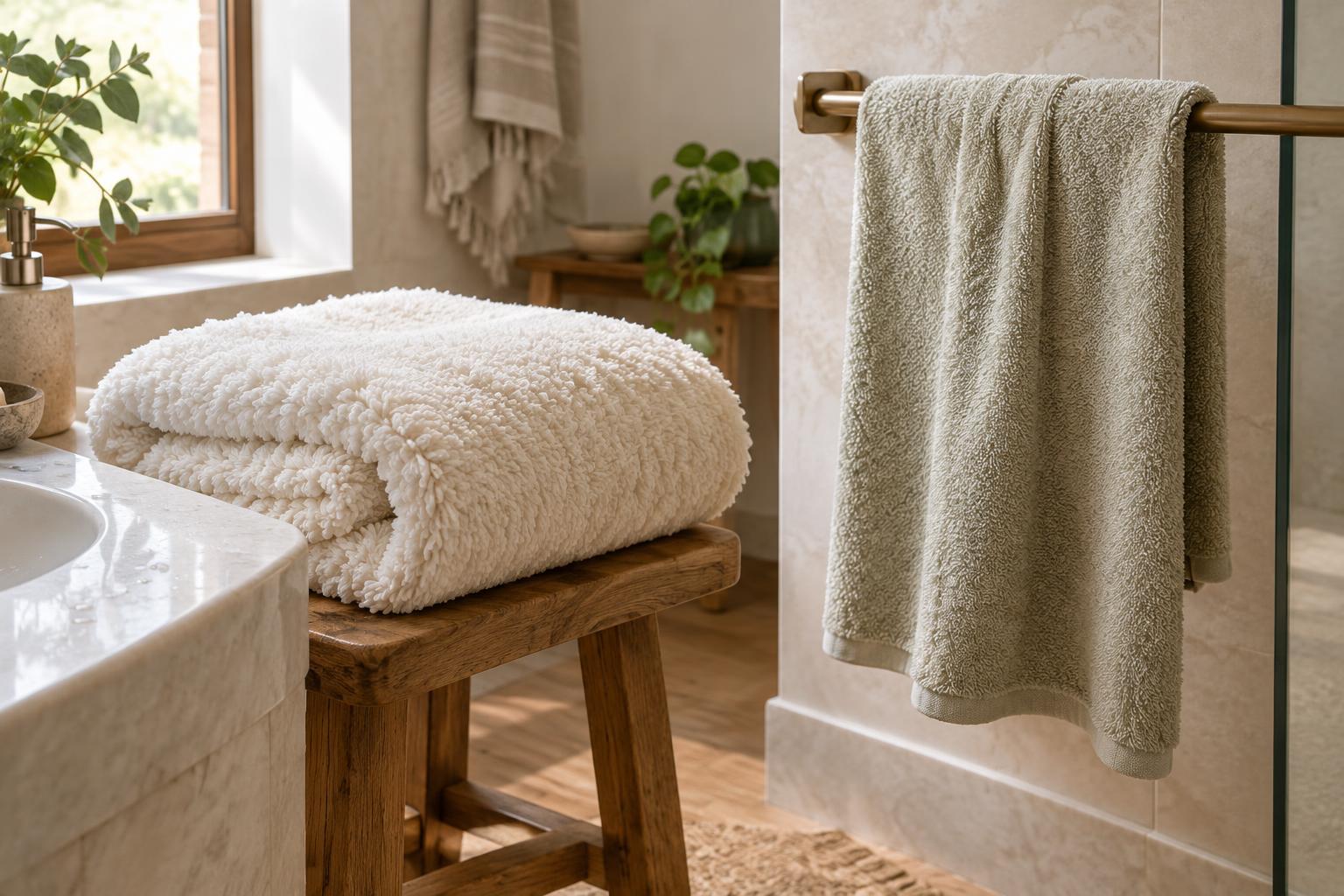
Pile is the raised surface that gives many towels their soft, textured feel. On a typical terry towel, it consists of loops of yarn extending from a woven base. Those loops create surface area and spaces that help draw water away from skin. A towel with a generous, open pile can feel absorbent because many loops make contact as you dry off.
Pile height alone does not tell the whole story. Tall loops can hold more water, but they may also snag more easily and stay damp longer. Shorter, closely woven loops can make a towel feel firmer while still absorbing well. Some towels have cut pile, often called velour, on one side. This gives a smooth finish, though the uncut looped side is generally the more useful side for drying.
What towel weight tells you—and what it does not
Towel weight is often described in grams per square metre, or GSM. It measures how much a given area of fabric weighs, not simply how thick the loops are. Yarn size, loop density and the woven base all contribute. As a broad guide, a heavier towel has more material available to take up water, while a lighter towel has less material to dry after use.
That trade-off is why a plush bath towel can be pleasant after a shower yet inconvenient in a bathroom with little ventilation. A light towel may not feel as substantial, but it is often easier to wash, carry and dry. Weight is best treated as one clue rather than a quality score: two towels with similar GSM can feel and perform differently because of their yarn and construction.
Why absorbency and drying time are not opposites
An absorbent towel needs to take water from your skin, then release that moisture during drying. These are related but separate jobs. Cotton is a common towel fibre because it takes up moisture readily. Construction matters too: densely packed yarn can make a towel substantial, but it may leave less room for air to move through the fabric as it hangs.
Drying time also depends on how wet the towel becomes, its size and where it is hung. A fully spread towel on an open rail has more surface exposed to air than one folded over a narrow hook. Room humidity and airflow can make as much practical difference as the towel itself. If towels regularly feel damp by their next use, changing how they are hung may help more than buying a different weight.
Choosing for your bathroom and routine
Start with where the towel will be used. In a well-ventilated bathroom, you may enjoy a heavier, deeper-pile bath towel. In a shared bathroom where several towels must dry close together, a lighter or medium-weight option may be easier to live with. Hand towels used repeatedly through the day also benefit from being able to dry between uses.
Feel the fabric rather than relying only on a label. Check whether the loops look reasonably even and whether the towel feels comfortable against your skin. Think about size alongside weight: a large, light towel may still take up considerable space on a rail. If you are unsure which texture you prefer, trying one towel before buying a full set lets you see how it behaves after washing and regular use.
Keep towels absorbent and give them room to dry
New towels may need laundering before they feel their most absorbent. Follow the care label, avoid overloading the washing machine and rinse thoroughly so detergent does not build up in the fibres. Heavy use of fabric softener can leave a coating that makes some towels feel less effective at taking up water. Dry towels fully before putting them away, and avoid storing them while they still feel cool or damp.
After each use, spread a towel out rather than leaving it in a heap. If space is limited, choose a size and weight that your available rail can accommodate without crowding. The best towel is not necessarily the thickest one: it is one that feels good, absorbs comfortably and has a realistic chance to dry in the room where you use it.