Sort textiles by when you use them
Start by gathering the textiles you plan to store: spare bedding, throws, cushion covers, table linens and seasonal pieces. Separate items used weekly from those brought out only occasionally. Keeping everyday backups within easy reach prevents a rarely used holiday tablecloth from burying the spare pillowcases. It also shows you how much space each group needs before you choose containers.
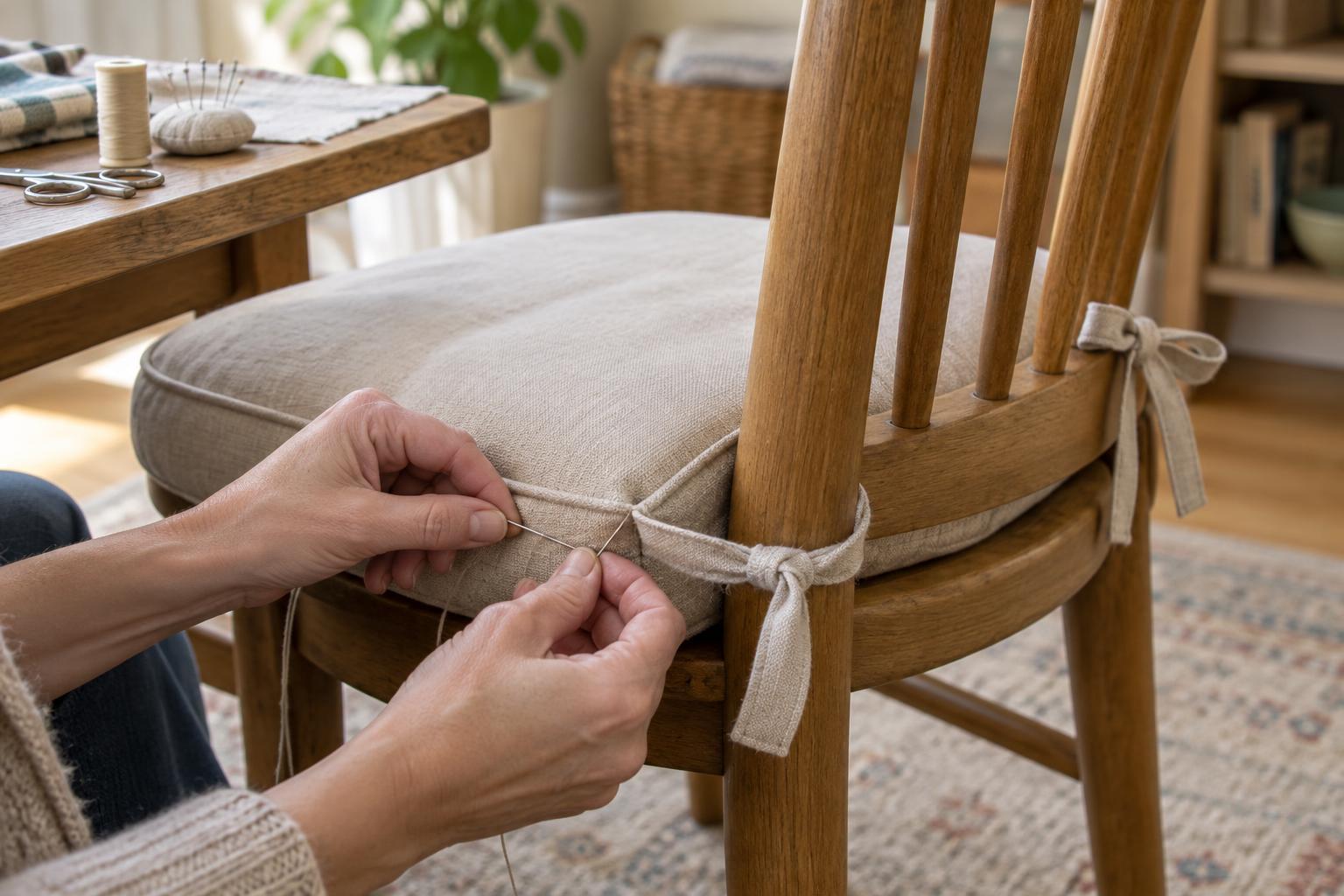
Check each piece as you sort. Set aside anything with a loose seam, missing fastening or stain that needs attention, and make a note of repairs you cannot do immediately. Decide whether worn-out items still have a useful role, such as cleaning cloths, rather than returning them to a cupboard by default. Storing only pieces you intend to use makes the space easier to maintain.
Clean and dry before packing
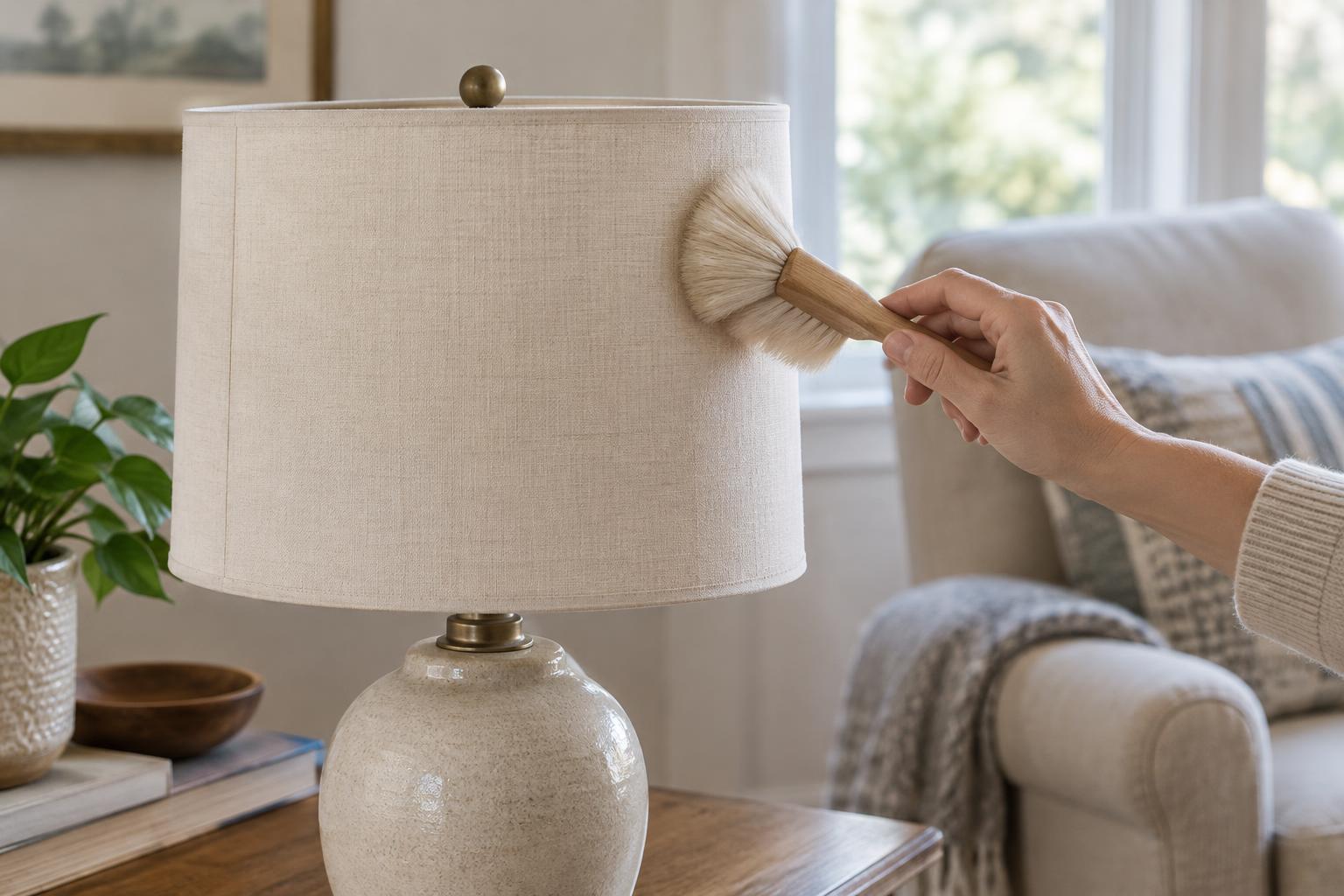
Follow each item’s care label before putting it away, particularly for lined, embellished or delicate fabrics. Food crumbs, body oils and spills are easier to deal with before a long period in storage. If an item cannot be washed at home, do not assume a general laundry method will suit it. For a piece that needs only light attention, brushing away loose debris and allowing it to air may be more appropriate than unnecessary washing.
Make sure washed textiles are fully dry before packing them. Pay attention to thick hems, quilted layers and the corners of folded blankets, where moisture can be less obvious. A pleasant scent is not a substitute for dryness, and strongly scented products may leave a smell you do not want on bedding or table linens. If a storage area tends to feel damp, address that condition or find another spot rather than relying on a container to solve it.
Choose containers and a suitable spot
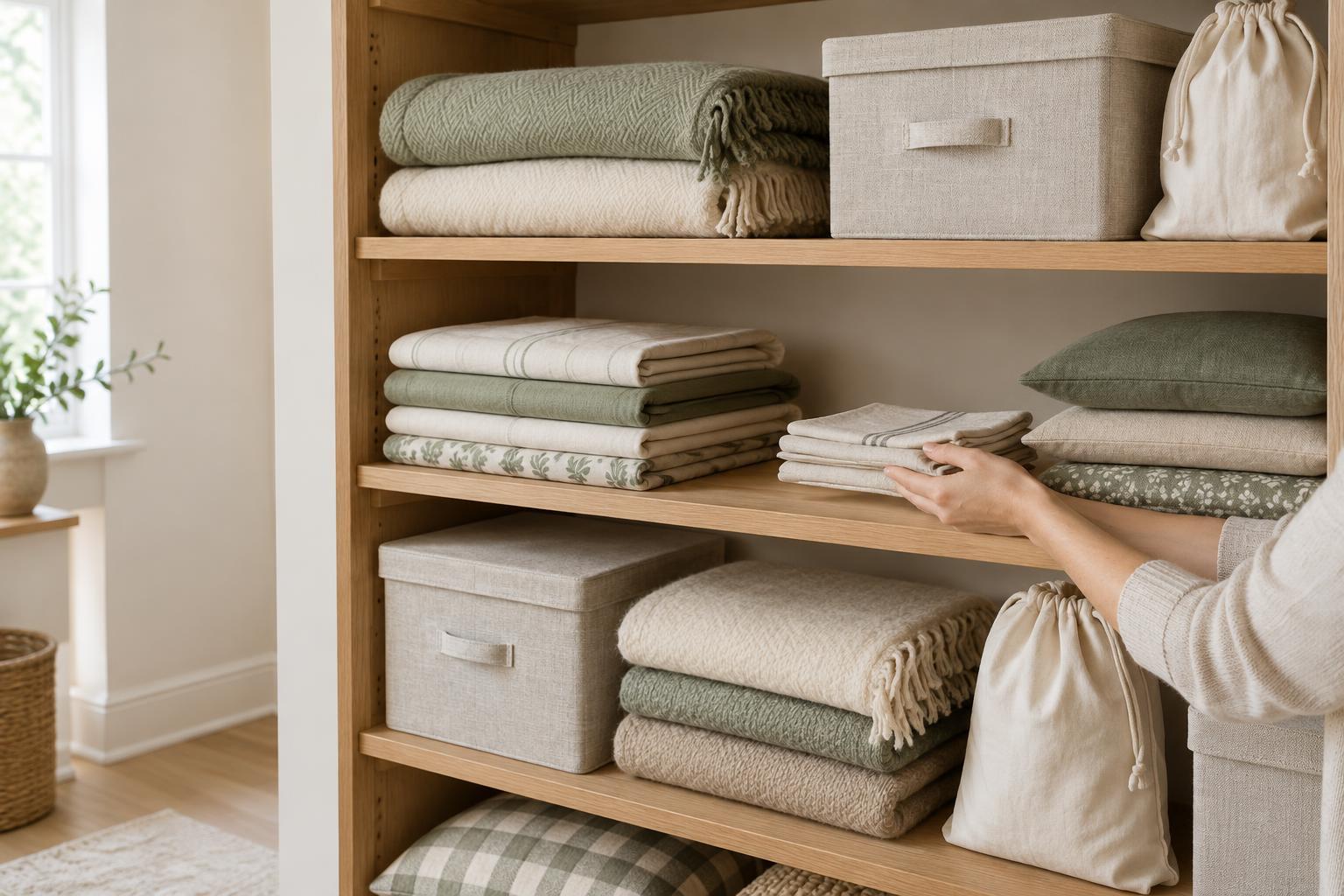
Choose storage based on the fabric and the space available. A clean, breathable cotton bag or a drawer can work well for many linens kept in a dry room. A lidded box may help keep dust off items stored on an open shelf, but it should hold only thoroughly dry textiles. Avoid cramming pieces into any container: pressure can create stubborn creases and make it harder to retrieve one item without disturbing the rest.
Look for a location away from leaks, direct sunlight and sources of heat. An interior cupboard or a clean under-bed space may be more useful than an exposed attic or basement, depending on conditions in your home. Keep containers off a floor that might get wet, and avoid placing heavy boxes on top of delicate fabrics. For larger pieces, measure both the storage space and the container before committing to a stack.
Fold, label and revisit
Fold textiles to fit their container without forcing sharp creases into bulky layers. Place heavier blankets at the bottom and lighter pieces above them; keep matching cushion covers or napkins together so a set does not scatter. If a piece has a detail that might catch, such as a zip or decorative trim, tuck it inward or separate it from more delicate fabric. A simple label naming the contents is usually more helpful than a broad label such as “linens.”
When you take items out, give them time to air and check whether they need laundering or a gentle press before use. Return them to storage only after they are clean and dry again. An occasional check also gives you a chance to spot a leak, damaged container or forgotten repair before it affects more pieces. If you enjoy changing a room with the seasons, browse Seasonal Decorating · Fromadia Home for more decorating ideas; for broader home inspiration, explore Fromadia Home. A storage system works best when it makes those changes easy rather than turning them into a search.