Start with the fabric, not the stain
A spot test is a small trial of a cleaning method in a place that is normally out of sight. It cannot guarantee that every part of a textile will respond the same way, but it can warn you about fading, dye transfer, water rings or changes in texture. That warning matters on curtains, upholstered furniture and decorative cushions, where a damaged patch may be harder to hide than the original mark.
Before opening a cleaner, check the textile’s care label and the product directions. A label may restrict washing, water-based cleaning or solvent use. If you cannot identify the fabric or its cleaning requirements, use extra caution: a blend, a coated surface and a fabric with a decorative finish can react differently from a plain washable cloth. Do not treat a successful test as permission to ignore either label.
Choose a place that gives you a useful answer
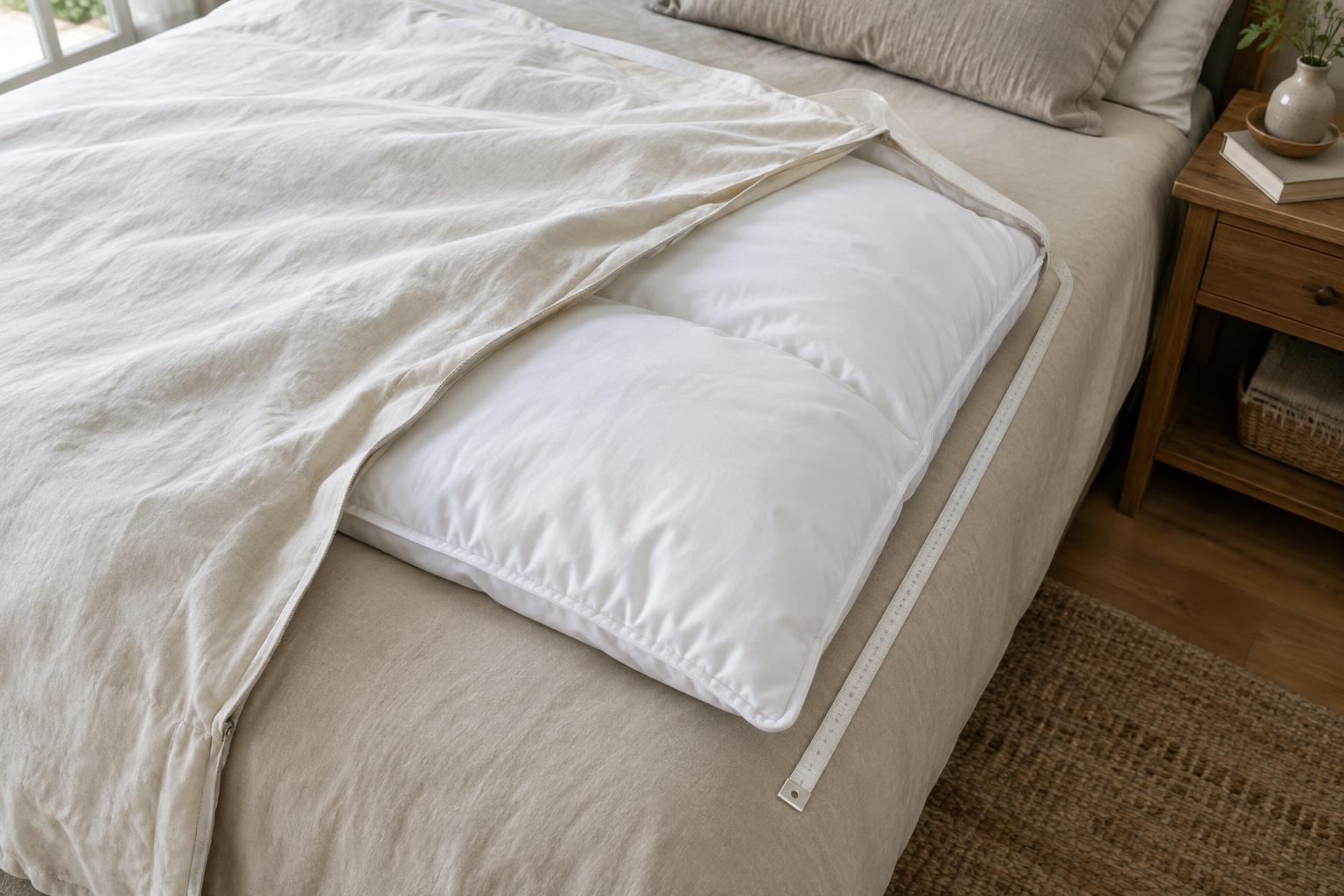
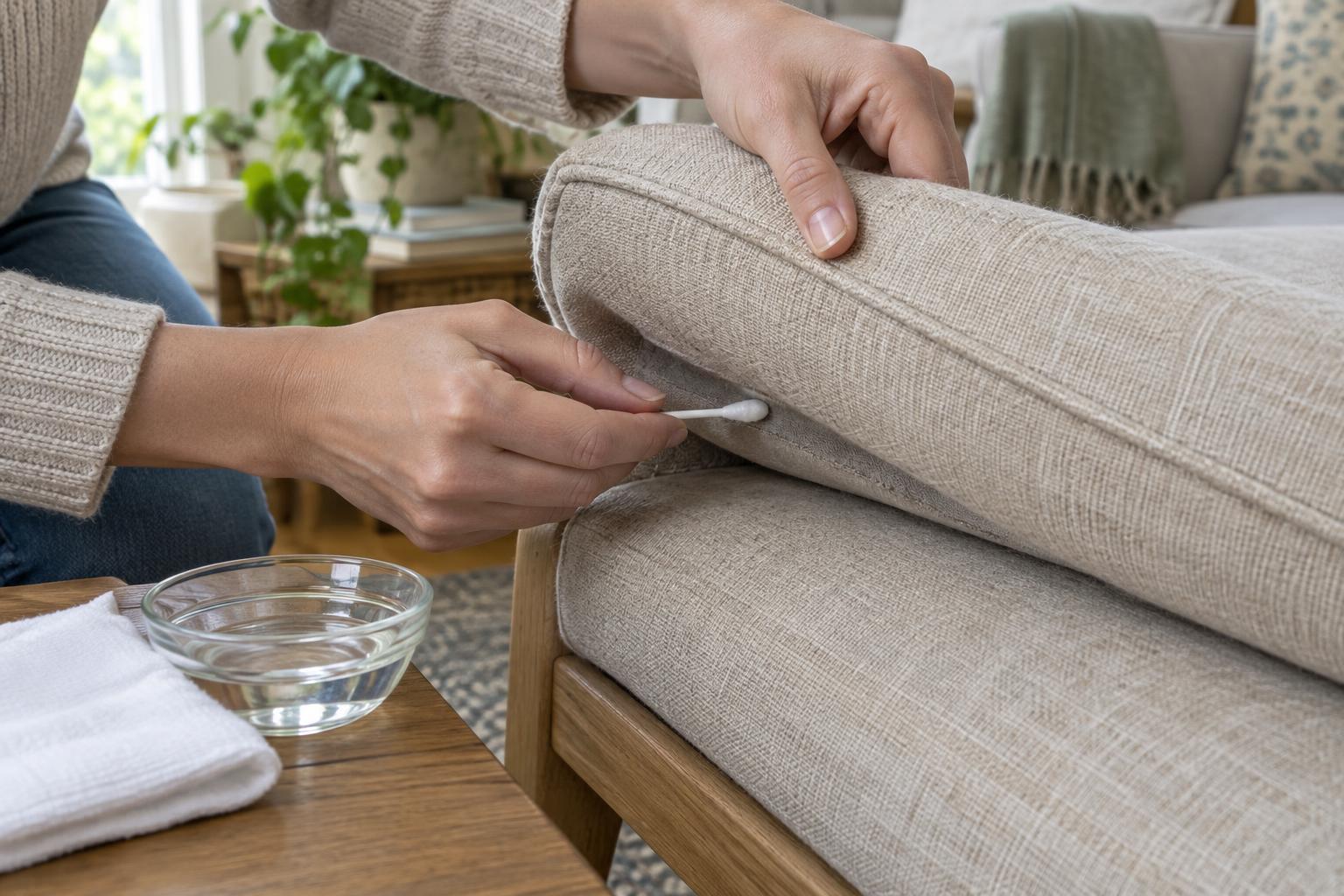
Pick a concealed area made from the same fabric as the part you want to clean. On curtains, an inside hem may work; on a removable cushion, try fabric near an inner seam. For fixed upholstery, look for an inconspicuous area low on the back or beneath a cushion. Avoid testing only on a separate trim, lining or underside material if it differs from the visible face.
The test patch should be small, but large enough to inspect once dry. If the fabric has a print, consider testing both a colored part and a pale part; different dyes may respond differently. Protect nearby wood, flooring and other fabrics from drips. If the surface is dusty, gently remove loose debris first so you can judge the cleaner’s effect rather than a smear of dust.
Apply less cleaner than you think you need
Prepare the product exactly as directed, including any dilution. Do not mix cleaning products. Put a small amount on a clean white cloth rather than pouring it onto the fabric, unless the product instructions specify another method. A white cloth makes transferred dye easier to see. Lightly dab the hidden patch; do not scrub, saturate the padding beneath upholstery or spread the test into a large wet area.
If the intended cleaning method calls for rinsing or blotting, include that step in your test. Use a fresh section of cloth and as little moisture as practical. Testing only the initial application can miss problems caused by residue or by a rinse. Follow product safety directions, including ventilation requirements, and keep cleaners away from children and pets while you work.
Judge the patch after it is fully dry
Check the cloth for color transfer as you dab, then leave the test area alone until it has dried completely. A damp patch often looks darker even when no damage has occurred, while a pale ring or stiff feel may become apparent only later. Give thick upholstery and layered curtains enough time to dry through, not just at the surface.
Inspect the patch in good light from more than one angle. Compare its color, sheen and feel with the surrounding fabric. Look for bleeding between colors, a fuzzy or flattened pile, puckering, a tide mark or a sticky residue. If the cleaner leaves a change you would notice in a visible area, stop. Trying a stronger dose or scrubbing harder is more likely to increase the damage than solve it.
Use the result to decide what comes next
If the patch looks unchanged, you can proceed cautiously, following the care label and product directions. Work in small areas and use the lightest effective touch. A passed spot test does not mean a large section can safely be soaked: more liquid may travel into backing, seams or padding and leave a ring as it dries.
If the test fails, pause rather than cycling through several products on the same patch. Residue from one cleaner may affect the next. For delicate, valuable or hard-to-identify textiles, or for a stain that persists despite a careful test, a textile cleaning specialist may be the safer next step. Sometimes leaving a faint mark is preferable to creating permanent color or texture damage.