Start with the care label and the item itself
Sorting begins before anything goes into the machine. Check the care label for washing temperature, cycle and drying restrictions. A label that calls for hand washing, dry cleaning or no tumble drying is a reason to set the item aside from an ordinary load. If the label is missing, take a cautious approach, especially with lined curtains, decorative trims, loose weaves or fabrics that might shrink.
Look over each item as you sort. Fasten zippers, check for loose seams and note stains that may need attention before washing. Large pieces such as duvet covers can trap smaller items, while heavily textured fabrics may catch on delicate ones. Setting these apart now is easier than trying to fix damage after a wash.
Sort by color and consider dye transfer
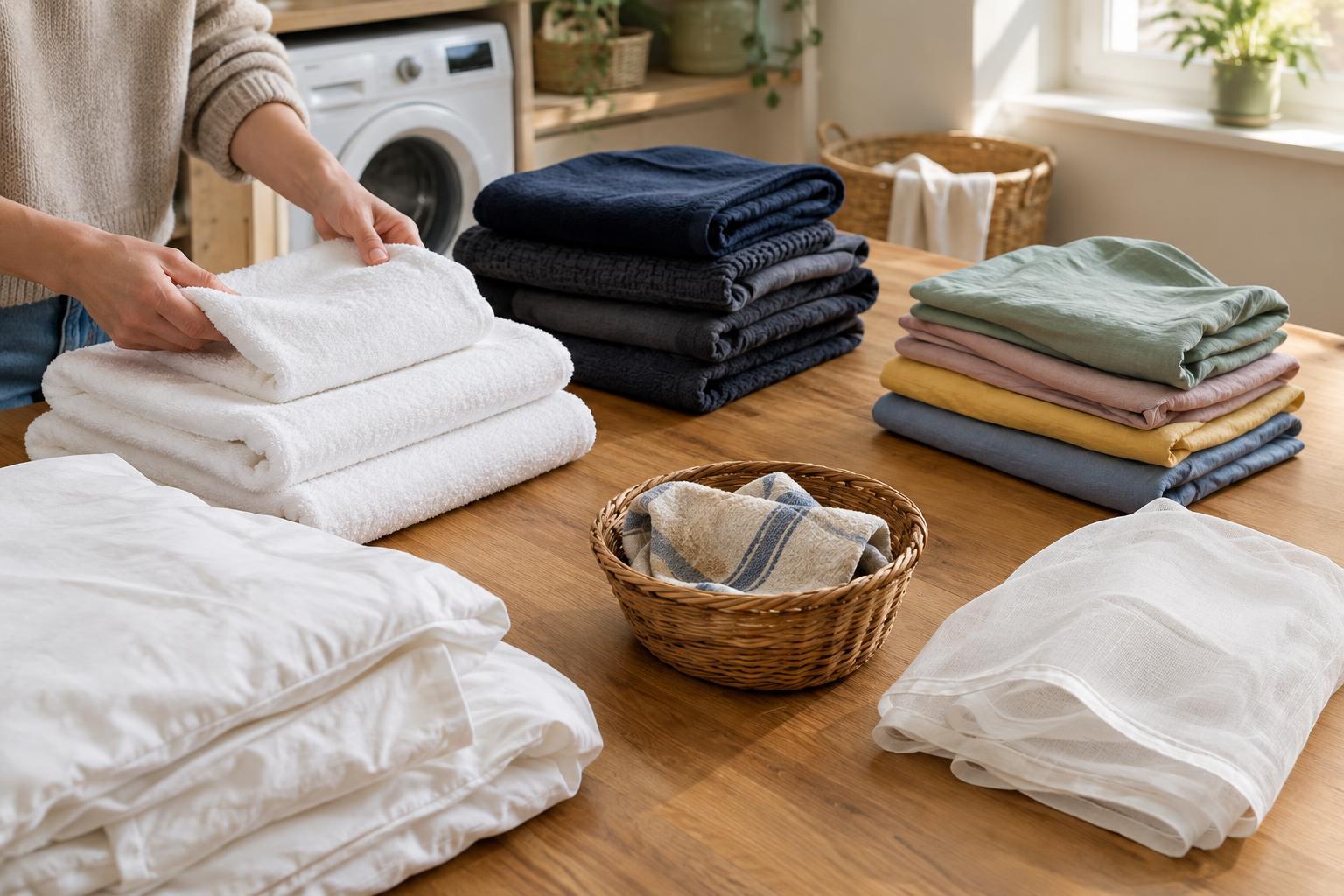
A simple color sort has three groups: whites, light colors and dark or vivid colors. White towels and sheets are best kept away from colored items if you want to preserve their appearance. Pale fabrics can usually share a load when their care instructions match. Dark navy, black, red and other strongly colored textiles are safer together, particularly when new.
Color alone does not guarantee that a load is safe. A newly purchased cushion cover or throw may release dye even if it is washed with similar colors. When the label allows washing but colorfastness is uncertain, test an inconspicuous area according to the product’s care guidance, or wash the item separately the first time. Avoid placing a dark, lint-shedding towel with a smooth light-colored sheet: even without dye transfer, the lint may be difficult to remove.
Group fibers and constructions that need similar treatment
Cotton and linen household textiles often tolerate more agitation than delicate wool, silk or loosely woven pieces, but the label should decide the wash method. Polyester blends may be easy to launder, yet they can still have coatings, linings or trims that change their care needs. Sort by the gentlest requirement of the whole item, not just the main fabric named on the label.
Construction matters as much as fiber. Heavy bath towels can abrade fine pillowcases or lightweight curtain panels. Wash bulky items with enough space to move, and keep snag-prone lace, embroidery and fringes away from rougher fabrics. A mesh laundry bag can help protect a small, washable delicate item, but it cannot make an unsuitable machine-wash cycle safe.
Separate lightly used items from heavily soiled ones
Soil level is the third useful sorting question. A lightly used table runner may not need the same wash conditions as greasy kitchen cloths or muddy cleaning rags. Keeping heavily soiled items apart helps prevent loose dirt from circulating through a load of otherwise clean-looking bedding. It also lets you choose a suitable cycle and amount of detergent without over-washing less-soiled textiles.
Treat visible marks before loading, following both the textile label and the stain remover’s instructions. Blot rather than rub a fresh spill when appropriate, and test any treatment on a hidden area first. Avoid heat-drying an item while a stain remains, since heat can make some marks harder to remove. If a textile has an unusual finish or a stain you cannot identify, a gentle approach is less risky than escalating through stronger products.
Build loads that can wash and dry together
Once you have sorted by label, color, fiber and soil level, make loads from items with compatible needs. For example, everyday cotton towels of similar colors and soil levels may form one load, while lightweight washable curtains may need their own gentler load. Do not pack the machine tightly; textiles need room to move and rinse. Very small loads can also become unbalanced in some machines, so consult the appliance guidance when washing bulky pieces.
Plan drying at the same time. Items that require air drying should be easy to remove before the rest of a load goes into the dryer, and heavy towels may take longer to dry than thin linens. A few clear sorting baskets or labeled piles can make this routine manageable. The goal is not to create a separate load for every item, but to avoid combinations that ask one textile to withstand a cycle intended for another.