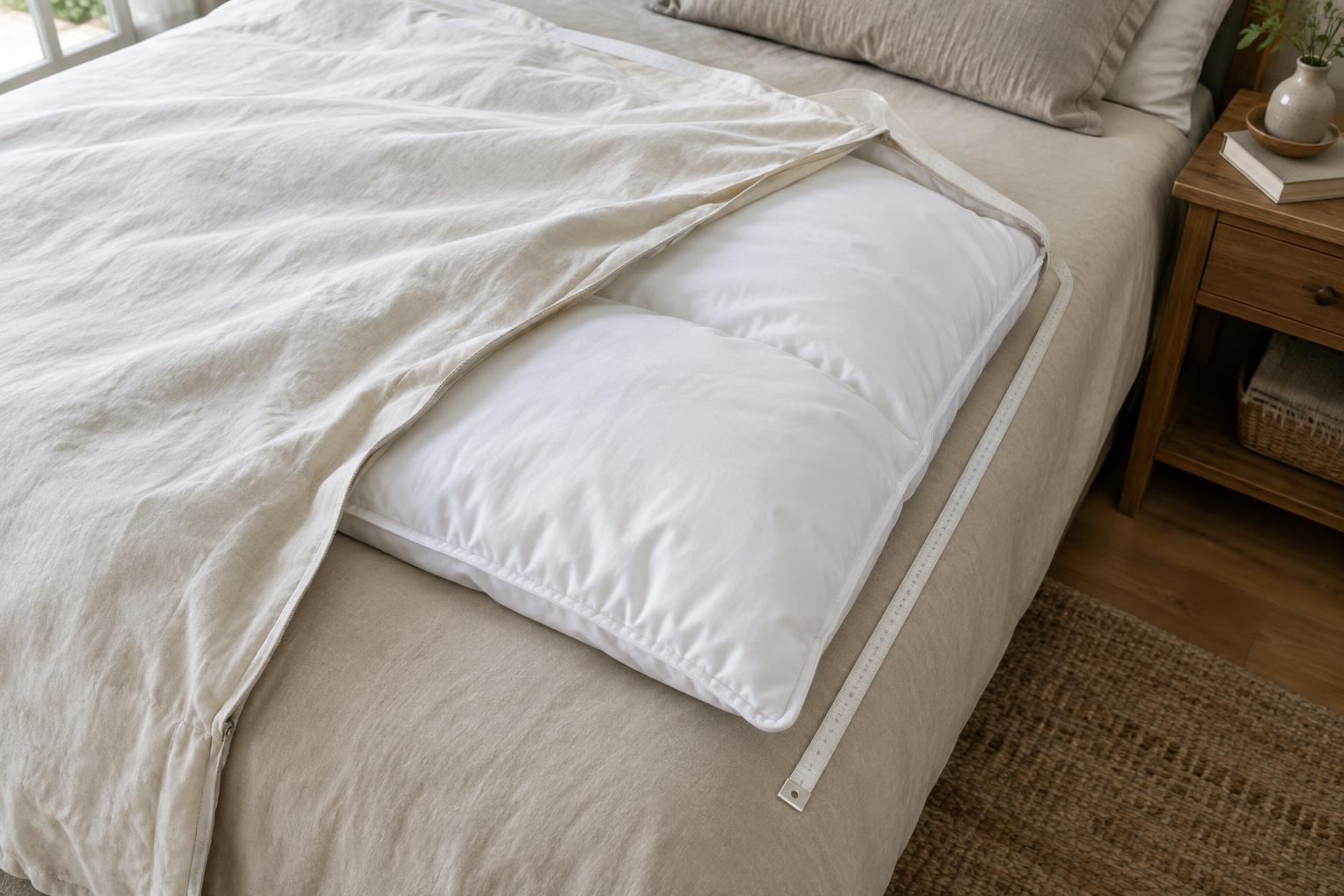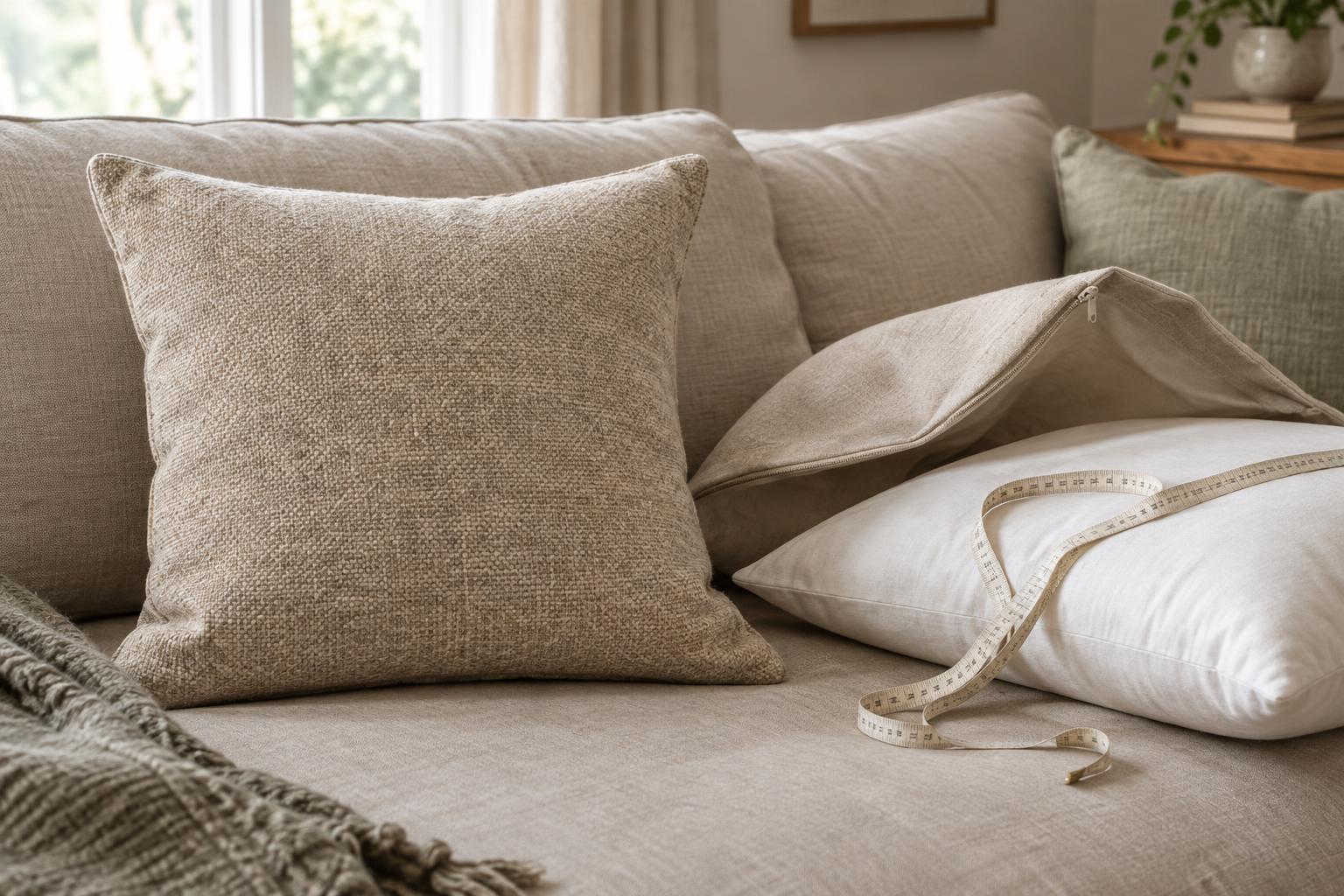
Start with the insert, not the label
The insert is the best starting point for choosing a cushion cover. If you already own one, lay it flat on a table and measure across its widest points from seam to seam. Measure both width and height, even if it appears square. Fluff it first, then let it settle naturally rather than pulling the corners outward to reach a particular number. A tape measure held loosely across the surface can give a different reading from one laid straight across the table, so be consistent.
If you are replacing a cover but keeping the insert, check its shape as well as its measurements. A soft insert can compress into a slightly smaller cover, while a dense or firm insert may resist compression. A sagging insert may not fill a new cover well, whatever size you choose; adding fresh fill or replacing the insert may help more than making the cover smaller.
Choose how full you want the cushion to feel
For a soft, compressible square insert, a finished cover roughly 1 to 2 inches (about 2.5 to 5 cm) smaller in both width and height is a useful starting point for a plump look. For example, a 20-inch insert often fills an 18- or 19-inch cover nicely. This is a guide, not a rule: the amount of fill, its firmness and the fabric all affect the result.
Choose the gentler end of that range if you want a cushion that gives easily when you lean against it. A closer fit may also suit firm foam, dense synthetic fill, thick upholstery fabric or a cover with little stretch. If the corners strain, the seams bow noticeably or the cushion feels hard rather than supportive, the cover is probably too small for that insert. A cover that is too large, on the other hand, may show loose fabric at the corners even after the insert is fluffed.
Account for shape and construction
Square cushions are straightforward to compare, but rectangular cushions need separate width and height decisions. Do not assume that reducing both measurements by the same amount will preserve the look you want. On a narrow lumbar cushion, a modest reduction may be enough. For round, boxed or gusseted cushions, match the insert’s shape and measure its depth as well as its face; a flat cover cannot always accommodate the bulk of a thick insert comfortably.
When shopping, look for the cover’s finished dimensions rather than the size of the fabric pieces used to make it. If you are sewing, seam allowances sit outside the finished measurement. For a simple cover intended to finish at 18 inches square, each panel must be cut larger than 18 inches by twice the chosen seam allowance. Check a pattern’s instructions before cutting, since hems, overlaps and zipper placement can change the required pieces.
Let the fabric and closure guide the final choice
Fabric affects fit as much as the numbers do. A flexible cotton or linen blend may ease around a generous insert, while tightly woven, coated or heavily embellished fabric may not. Patterned fabric can also make distortion more obvious: straight stripes may curve when a cover is overfilled. If you are making a washable cover, prepare the fabric according to its care instructions before measuring and cutting, because later shrinkage can make an already snug fit too tight.
Think about how the insert will get inside. An opening that is short or a zipper that cannot open widely may make a firm insert difficult to fit, even when the finished cover dimensions are right. Insert it gradually, compressing the fill rather than tugging on the closure. Work the fill into each corner before closing, then smooth the edges and check whether the seams lie comfortably.
Test the fit where the cushion will be used
A display cushion and a cushion used for back support do not need to feel the same. Put the covered cushion on its chair or sofa and sit with it for a few minutes. It should keep a pleasing shape but still yield enough to be comfortable. If it slips behind your back or bunches at the corners, adjust the fill or cover size rather than judging it only while it is lying flat.
For a new sewing project, a quick test can prevent wasted work. Pin or baste a sample cover to the proposed finished dimensions, try it on the insert and note any strain or slack. Small changes can make a visible difference. Keep the measurements that work for each insert so replacing a cover later is easier—and remember that the best fit is the one that looks good and feels comfortable in daily use.