Start with the furniture, not the room dimensions
An area rug can make a room feel settled by giving a group of furniture a shared boundary. That does not mean it has to cover most of the floor. The useful question is what the rug needs to connect: a seating arrangement, a bed and its bedside landing spots, or a table with chairs pulled out. Measure that arrangement first, then check how its proposed rug footprint fits within the room.
Sketch the room and mark the furniture, door swings, floor vents and usual walking routes. Use painter’s tape or sheets of paper to outline a possible rug size on the floor. Walk around it and move chairs as you normally would. This simple test is especially helpful when a standard rug size sounds right on paper but leaves an awkward strip of floor in practice.
Leave a visible border of flooring where the layout allows, but treat it as a visual preference rather than a strict rule. A rug centered on the furniture can look more intentional than one centered on the room, particularly in an open-plan space. Check the actual listed dimensions before ordering: nominal sizes and finished sizes may differ.
Living room: bring the seating together
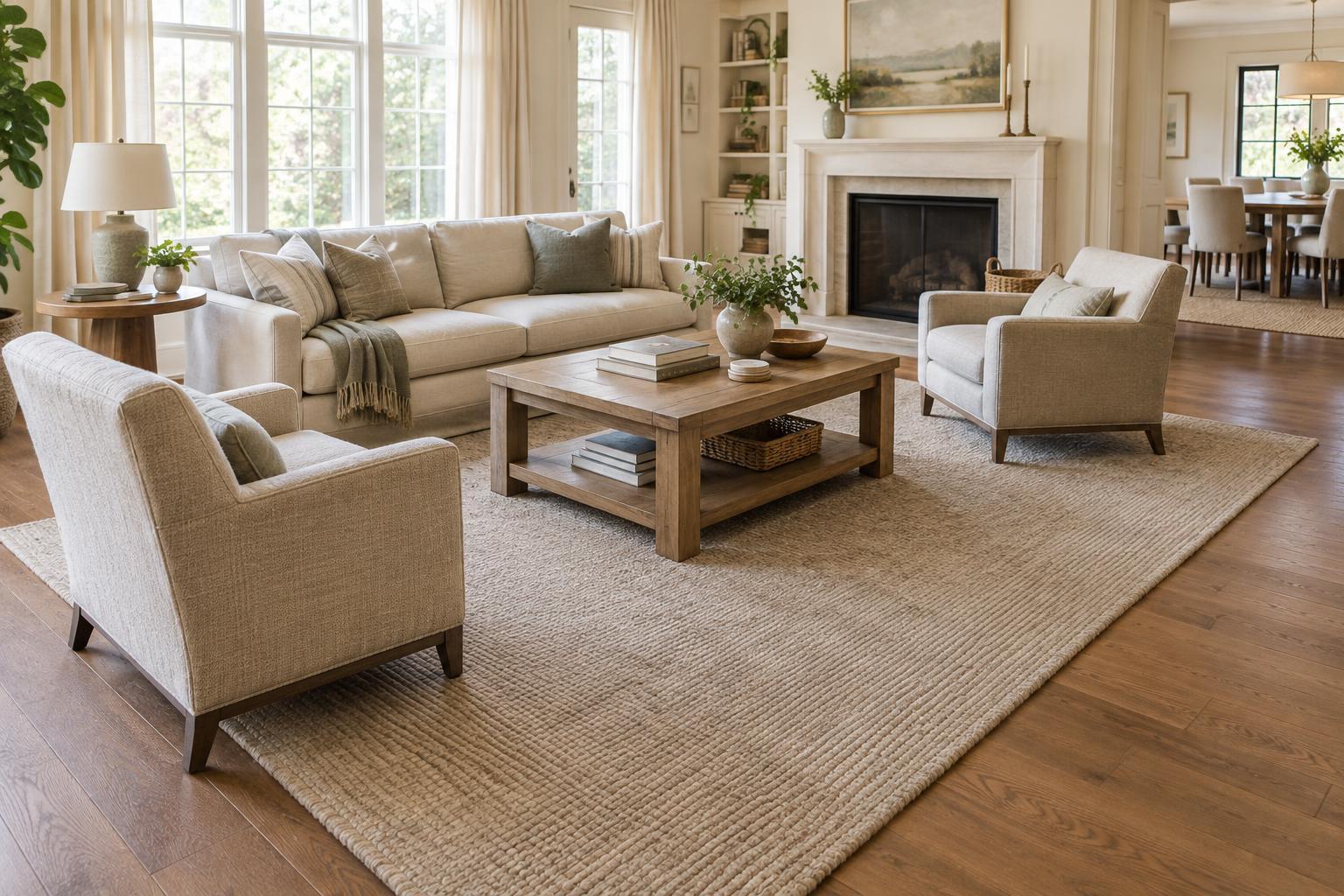
In a living room, aim for the rug to relate to the main sofa and chairs. One option is to place all the seating legs on it; this works when there is enough space to keep the furniture comfortably away from walls and walkways. A smaller rug can also work with the front legs of the sofa and chairs on it. Keeping that front-leg placement consistent helps the seating read as one group.
If the rug sits only beneath a coffee table, it may look disconnected from the seats around it. Before choosing that layout, test whether the rug still reaches visually toward the sofa and chairs. In a compact room, a rug that extends beyond the ends of the sofa often feels more balanced than one that stops short of them. For an L-shaped sofa, consider the full seating group rather than measuring only the longest section.
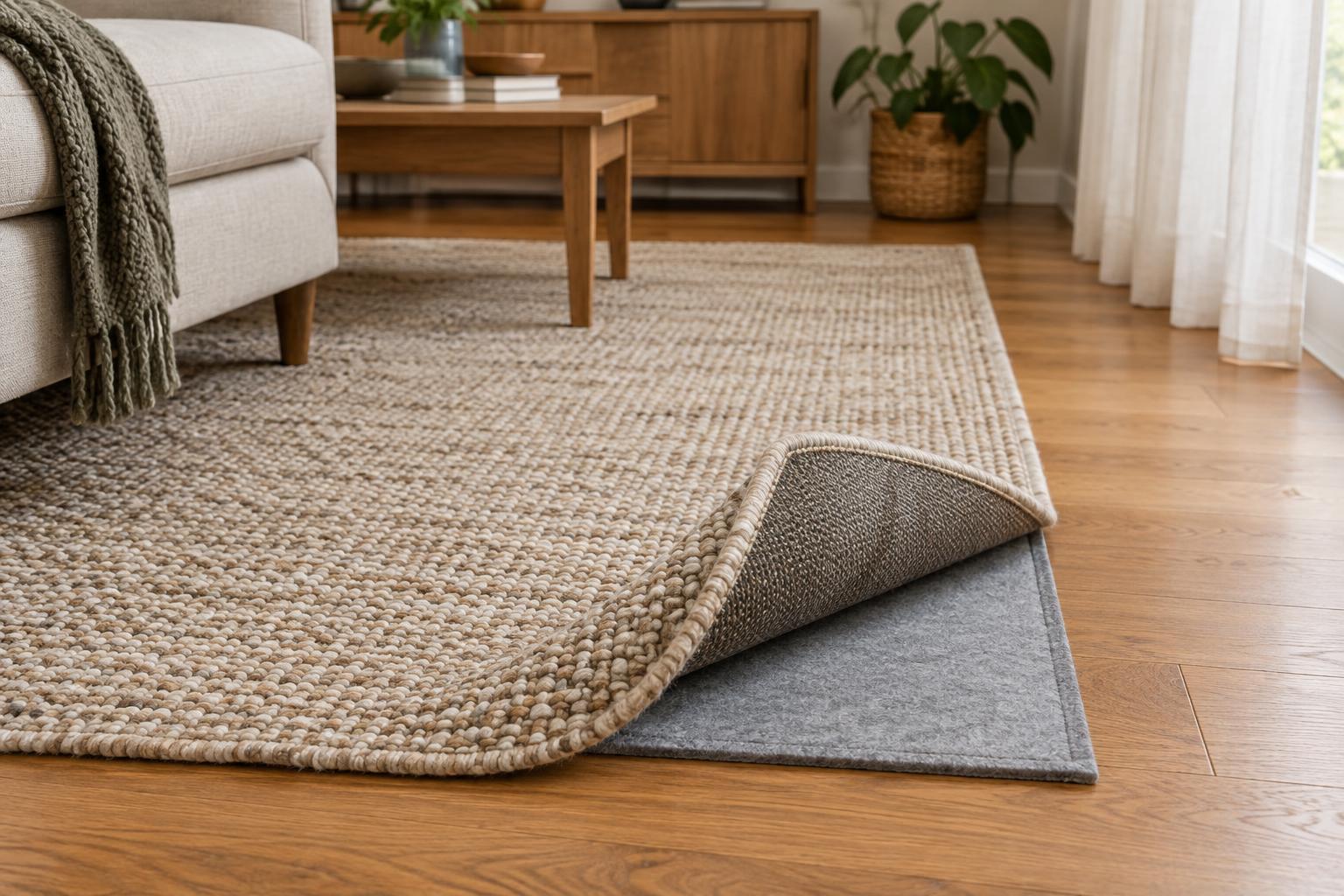
Check that rug edges do not land where people repeatedly pivot into a seat or enter the room. If a side chair sits partly on the rug, its feet should remain steady when someone sits down. A rug pad suited to the rug and floor can help reduce movement, but it cannot fix a footprint that interferes with the room’s traffic.
Bedroom: plan for where your feet land
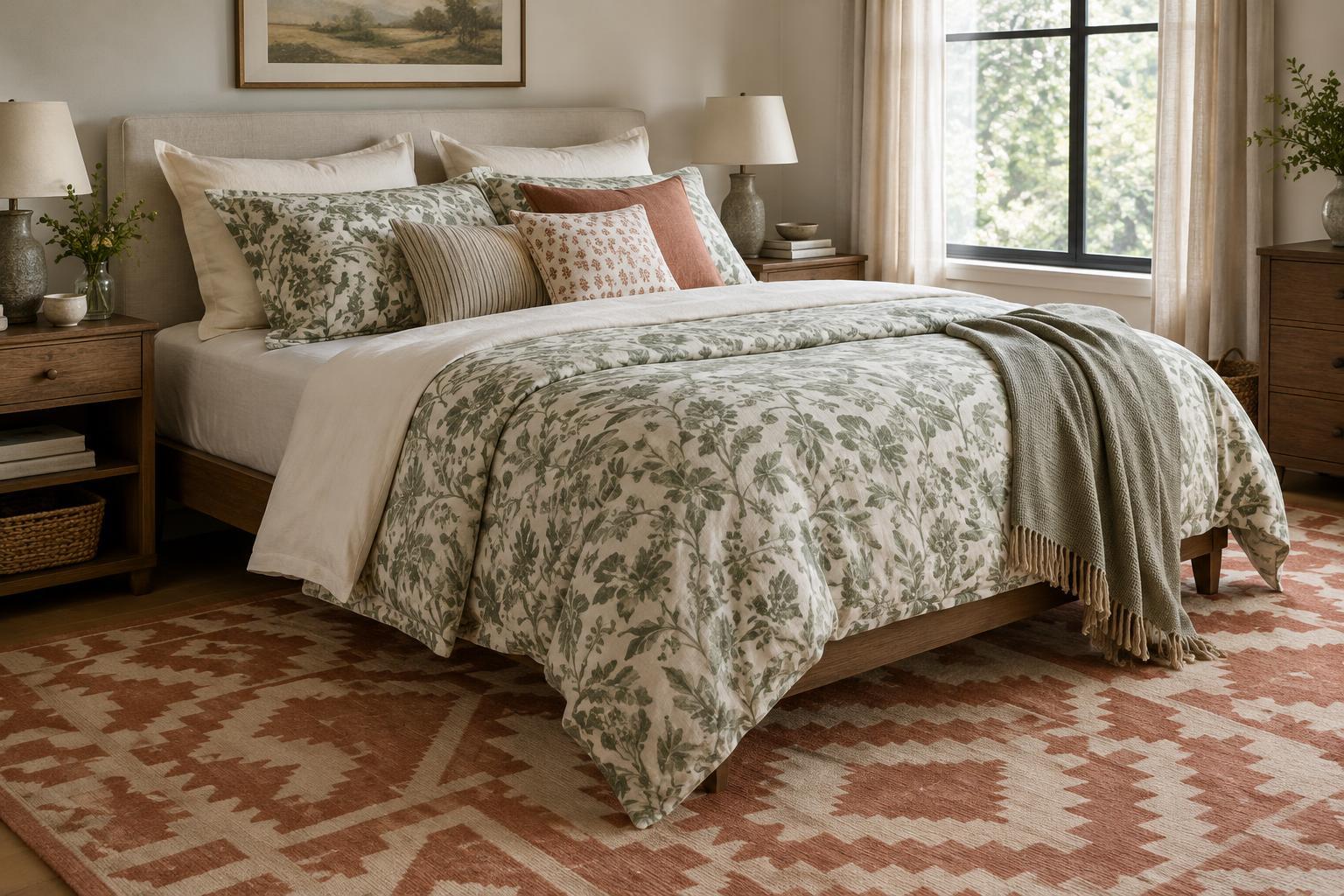
In a bedroom, the rug usually serves the bed rather than the entire room. A large rug can run beneath the bed and extend along both sides and past the foot, creating a soft landing when you get up. You do not necessarily need to place the whole bed, including its headboard end, on the rug. Sliding the rug under the lower portion of the bed can provide useful coverage without hiding most of it.
Measure the bed and decide how much rug you want visible at each side and at the foot. Then check whether bedside tables will sit fully on the rug, fully off it, or outside its edge. Avoid a placement that leaves a table uneven or puts a rug edge exactly where you step out of bed. If the room cannot accommodate one generous rug, two bedside runners can provide comfort while keeping more floor visible. Make sure they stay secure underfoot.
Dining room: allow space for chairs to move
A dining rug needs to accommodate the table and the chairs in use, not just chairs tucked neatly under the tabletop. Pull a chair back as far as someone normally would to sit down, and measure the space it occupies. Repeat at the ends of the table, where an extra place setting or a different chair shape may change the footprint. The aim is for chair legs to stay on the rug during ordinary movement, rather than catching on its edge.
A practical starting point is to allow roughly 24 inches beyond each side of the table, then test that allowance against your chairs and room. This is a guide, not a guarantee: deep chairs or a tight walkway may call for a different choice. For an extendable table, measure it in the configuration you use most often and consider how a larger setting will work. A low-profile, easily maintained rug is often simpler beneath dining chairs than a thick pile that makes them harder to move.
Make the final size work day to day
Before buying, check door clearance, nearby cabinets and the width of paths around the rug. Think about cleaning access too: a rug tucked tightly against heavy furniture or a wall can be harder to vacuum. If you are choosing between two sizes, tape out both. The larger one may better anchor the furniture, while the smaller one may preserve a needed walkway; seeing each outline in place makes that trade-off easier to judge.
Finally, consider how the rug’s material and construction fit the room. A flatter surface may suit moving dining chairs, while a softer texture may be welcome beside a bed. Follow the rug maker’s care guidance, and choose a pad compatible with both the backing and the floor finish. The best size is the one that supports the way you use the room without creating an edge you have to work around.