Start with the room and the job
A fabric swatch is more useful when you know what you need it to do. Before comparing colors, write down where the finished textile will go and how it will be used. Curtains that mostly frame a window have different demands from a sofa seat that sees daily wear. A cushion cover may need to be easy to remove and clean, while a decorative throw may be chosen mainly for its feel.
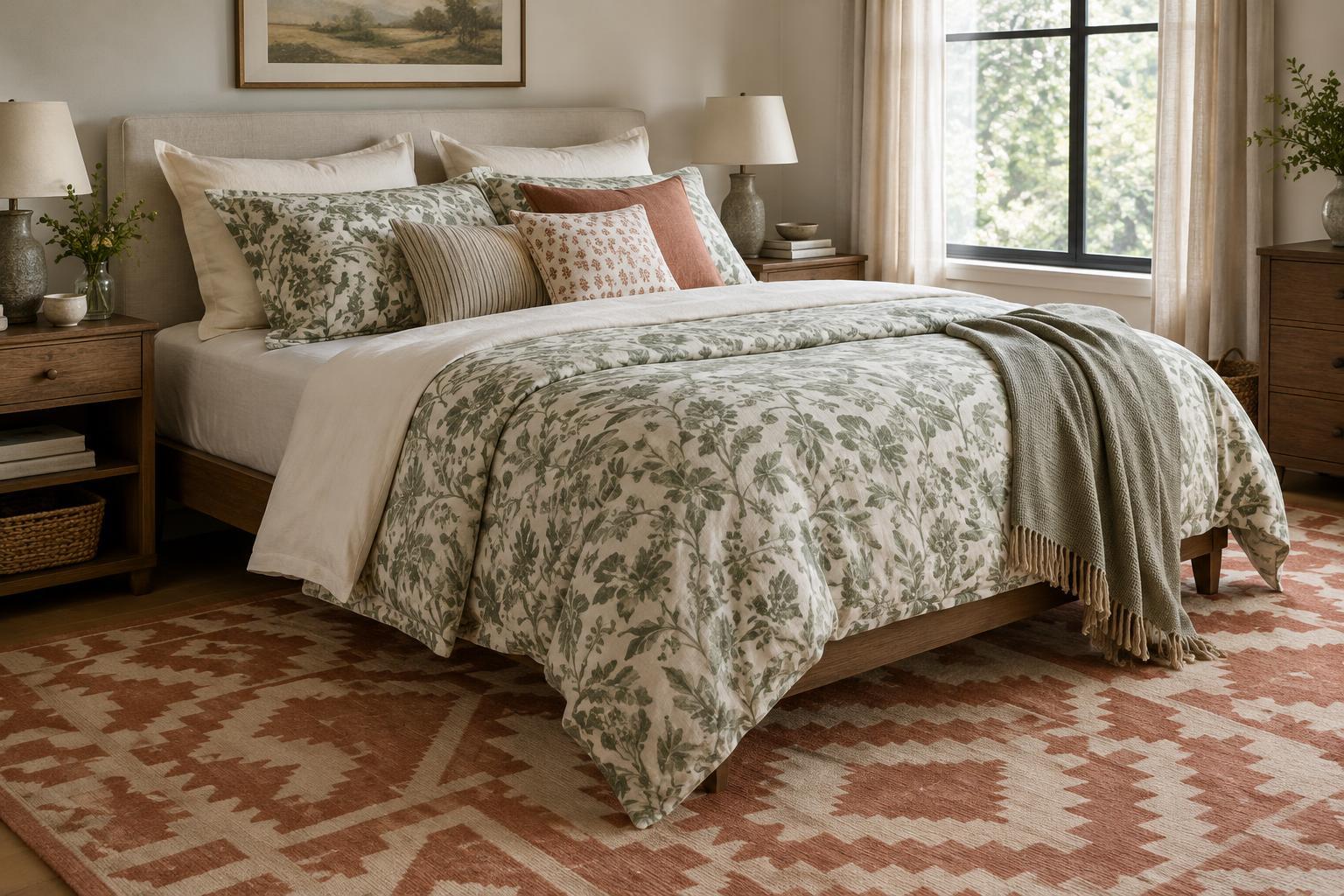
Place each swatch beside the room’s existing surfaces: flooring, walls, woodwork and nearby textiles. Look at it from across the room as well as close up. A print that seems subtle in your hand may feel busy next to patterned wallpaper; a plain weave that looks unremarkable on a table may provide welcome calm on a large chair. If possible, borrow the largest swatch available so you can better judge the scale of a pattern.
Watch the color change throughout the day
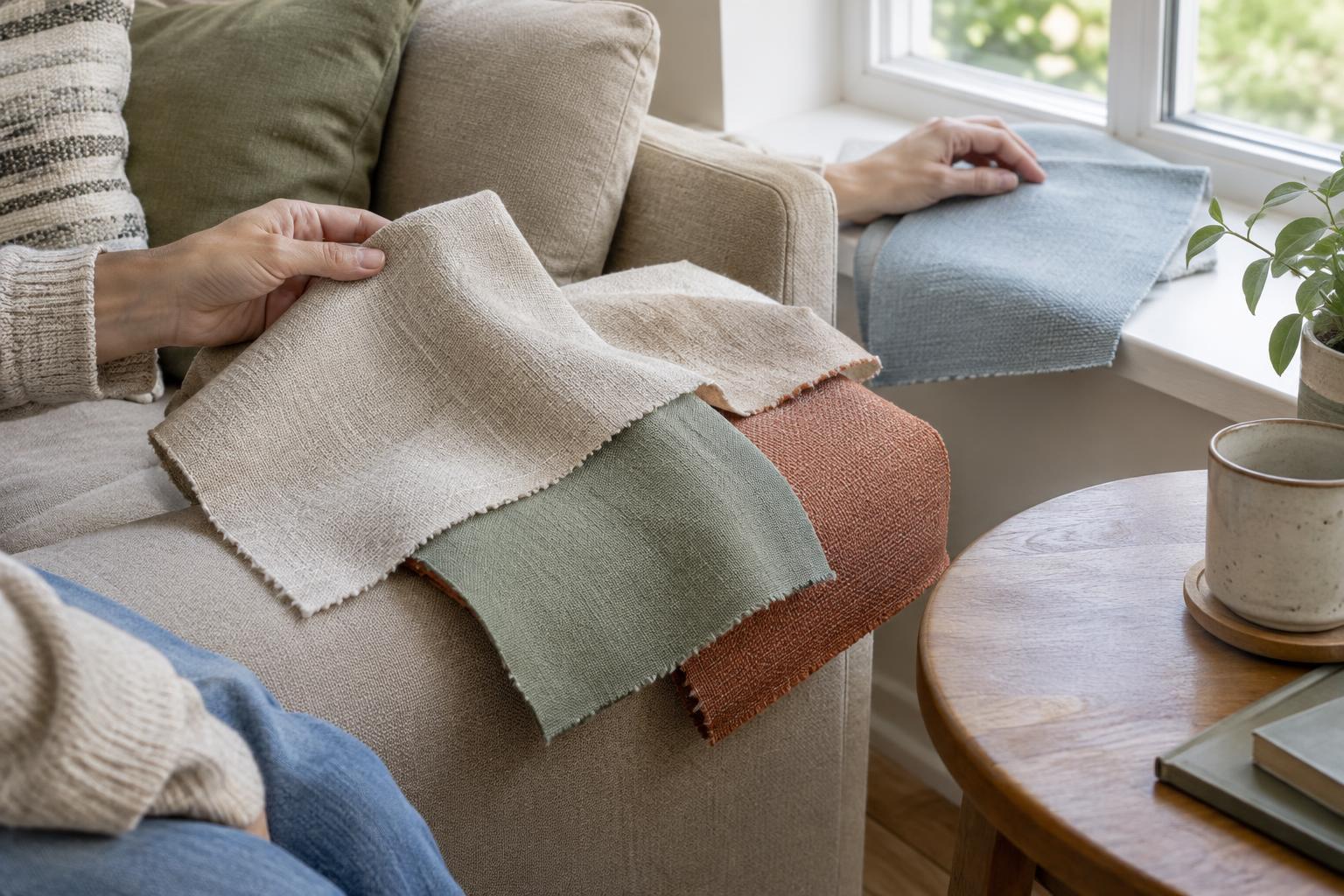
Color can shift noticeably between daylight and lamplight. Move the swatches to the spot where the finished item will sit, then check them at several times of day. Hold a curtain swatch upright near the window. Lay an upholstery swatch over the chair or sofa rather than judging it under a shop light or against a white screen. Compare the samples side by side, then look at each one alone; neighboring colors can influence your impression.
Pay attention to more than whether you like a shade. Ask whether it feels right when the room is brightest and when you usually occupy it. Also notice sheen: a smooth or lustrous surface may catch light and appear lighter in one direction and darker in another. A small sample cannot perfectly predict how a whole window or sofa will look, but viewing it in the intended position helps reveal surprises before you buy.
Handle the fabric as it will be handled
Touch each swatch with clean, dry hands. Does it feel pleasant against skin, or is it scratchier than you expected? Gently fold it to see whether it forms soft curves or holds a crisp shape. For curtains, that difference affects the look of the folds. For cushions and upholstery, notice whether the surface seems comfortable to sit against and whether it shows every change in direction when brushed with your hand.
Examine both sides and the cut edge. A loosely constructed fabric may fray easily at a raw edge, although finished seams will behave differently. If you are choosing a patterned fabric, check whether the design has a clear direction or a large repeat. Either can affect how pieces are cut and how much material a project needs. For a substantial purchase, ask the seller or maker to help confirm the quantity rather than calculating from a tiny sample alone.
Check the practical details before testing
Keep the swatch’s label or product details with it. Fiber content, care instructions, width and any stated suitability for upholstery or window use can help narrow your choices. A fabric that looks ideal may be awkward if its recommended care does not fit your household routine. If sunlight reaches the intended spot for long periods, ask about the fabric’s suitability for that exposure; a home swatch check cannot establish how it will age over years.
If you have spare material and the supplier permits it, you can try a gentle care test on one sample, following its instructions and allowing it to dry completely. Compare it with an untouched piece for changes in feel, shape or appearance. Avoid treating a small test as a guarantee: seams, linings and larger finished items may respond differently. Do not wet, rub or stain-test a sample you need to return.
Make a decision you can explain
Once you have narrowed the options, give each swatch a simple note: where you viewed it, how it looked by day and at night, how it felt, and any care concerns. A quick photo in the room may help you remember the combinations, though the screen may not reproduce the color accurately. If you live with others, let them see the finalists in place rather than asking them to choose from a pile of samples.
Choose the fabric that best balances appearance with the demands of the project, not necessarily the one that looks most striking on its own. Before ordering, verify the exact fabric name or code, color, width and required quantity. Keep the chosen swatch until the material arrives so you have a reference. Taking these small steps makes a fabric purchase less of a guess and gives you a clearer idea of how the finished textile will belong in your room.