Start with scale, not matching
Pattern scale is the apparent size of a design when you see it in the room. Broad stripes, oversized florals and widely spaced shapes read as large-scale patterns. Smaller checks, narrow stripes and closely repeated motifs read as small-scale patterns. Mixing them usually feels more settled than choosing several prints whose shapes are all about the same size.
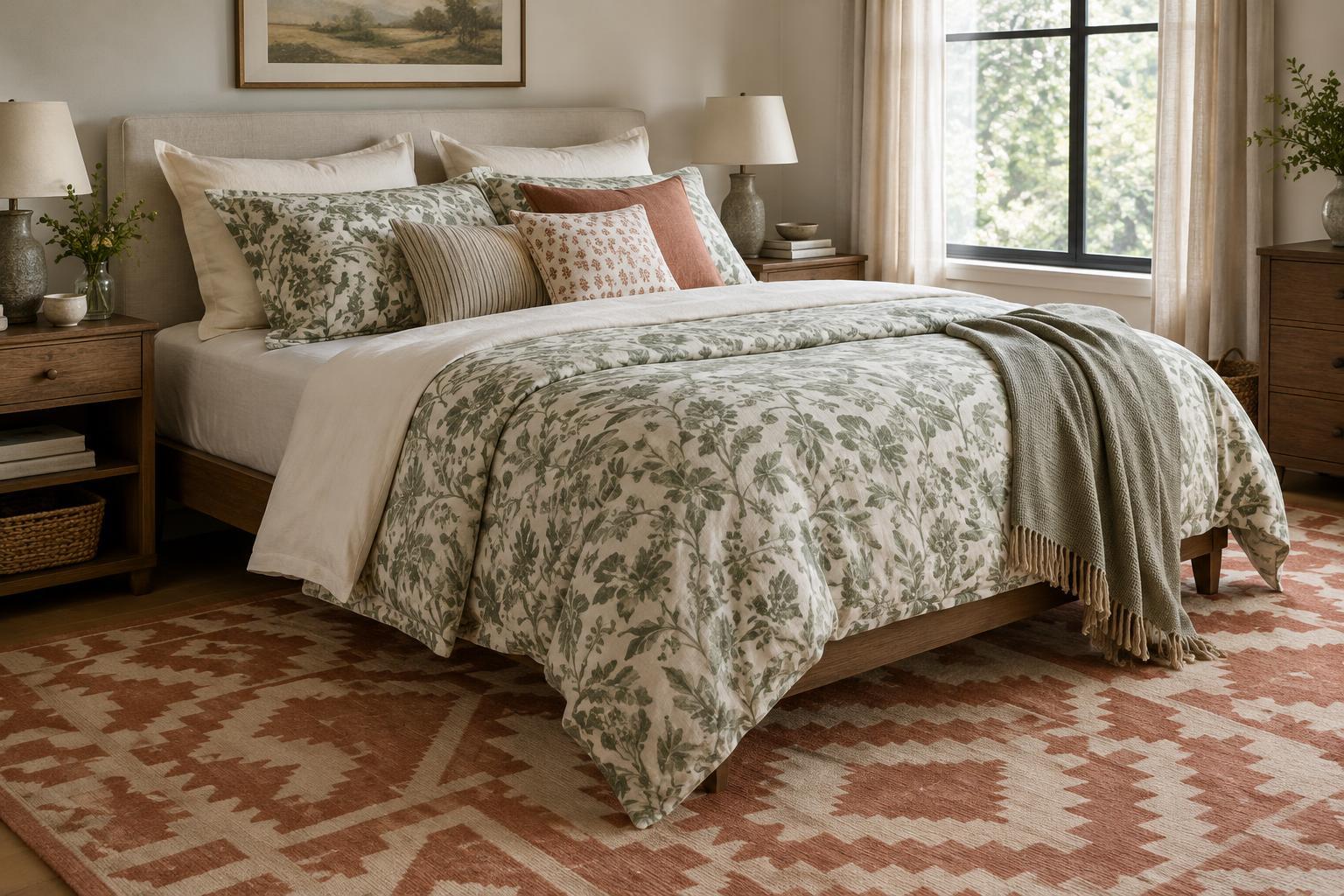
Before selecting another textile, look at the room from the doorway. Notice which surface has the most visual weight: perhaps a patterned rug beneath the furniture, or a duvet that fills much of the view. Let that piece set the pace. It does not have to be the boldest item, but giving it a clear role makes the remaining choices easier. Aim for variation rather than a rigid formula: one prominent pattern, a quieter pattern at a different scale and some calm space between them.
Give the rug a grounding role
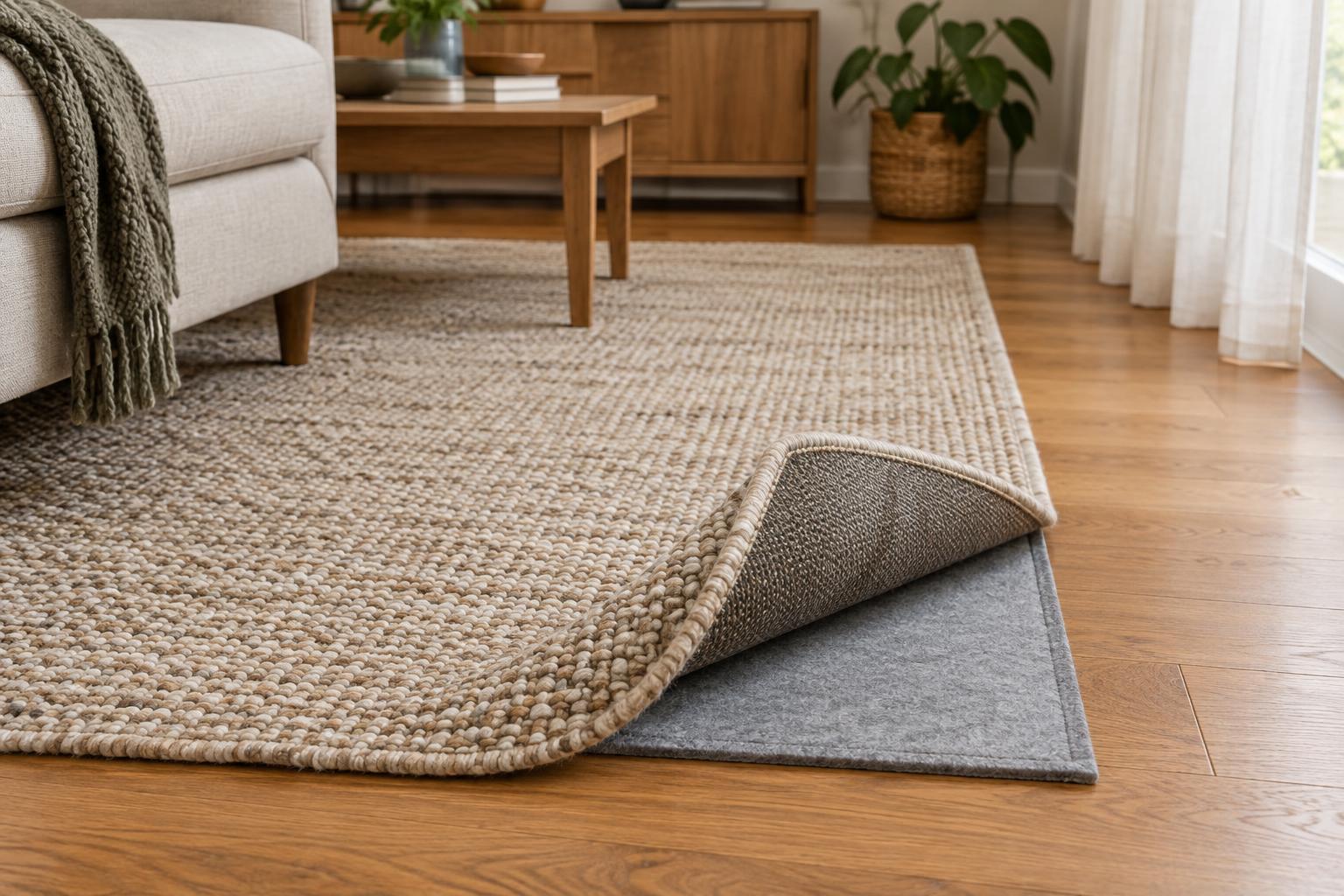
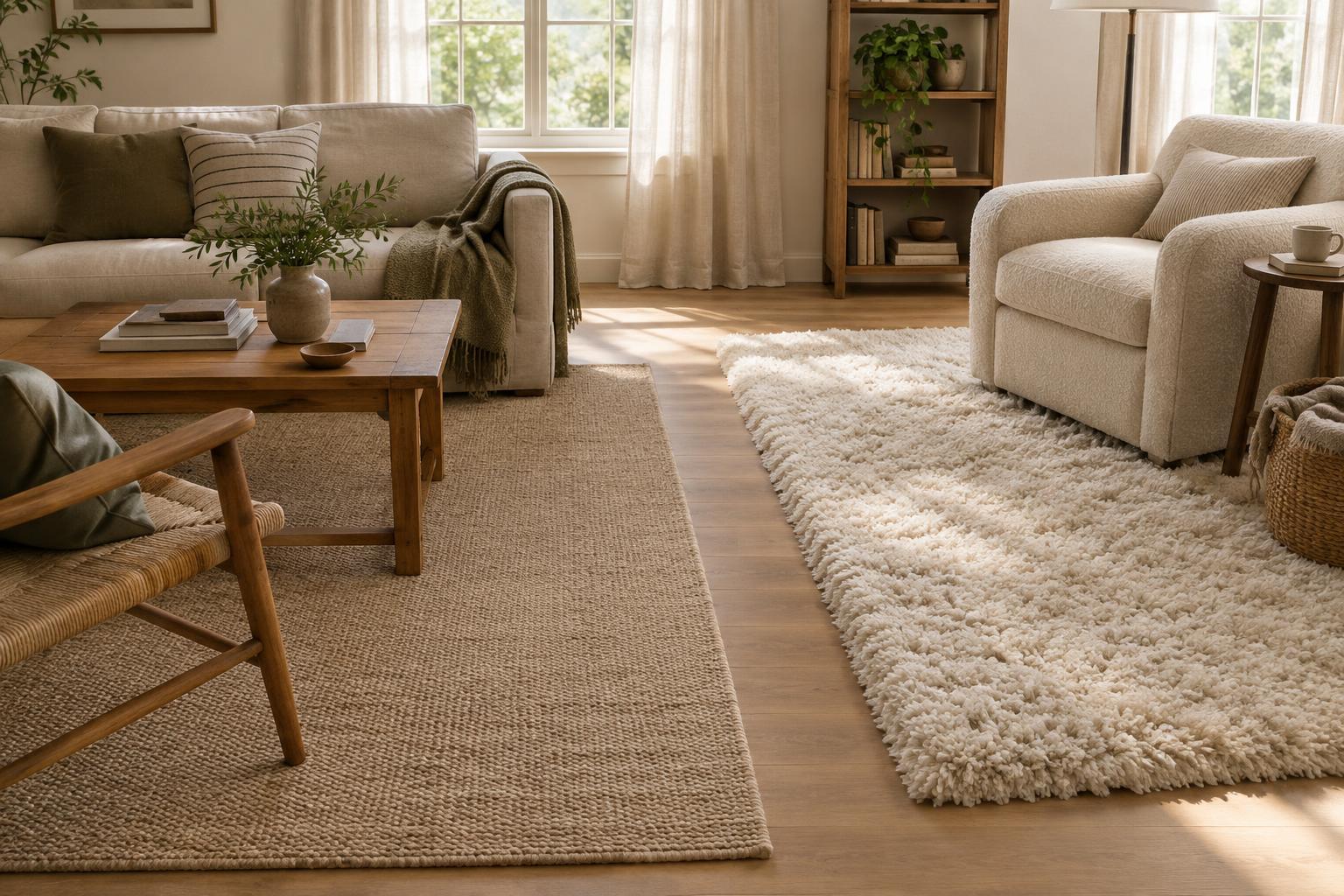
A rug covers a broad area, so even a modest motif can have a strong effect. If yours has large shapes or a high-contrast border, try simpler bedding and reserve a finer pattern for a cushion or throw. If the rug has a subtle, closely repeated design, it may act almost like texture, leaving room for a more expressive duvet cover. View the full rug when possible; a small sample may not show how its repeats look across the floor.
Consider what interrupts the rug: a bed, sofa or table may hide much of its center. A visible border can have more impact than a concealed central motif. Instead of trying to match every color in the rug, choose one or two to echo elsewhere. That connection helps the textiles belong together without making the room look like a coordinated set.
Use bedding to adjust the room’s energy
Bedding is easy to change and sits near eye level, making it a useful place to control how lively the mix feels. Against a bold rug, a plain duvet in a color drawn from the rug offers a pause. Sheets with a fine stripe or small print can add detail that appears mainly when the bed is turned down. Against a quieter rug, a large-scale print on the duvet can become the room’s main pattern.
Think about how the bed looks both made and in use. A printed duvet, patterned pillowcases and a patterned throw can merge into one busy block if their motifs are similarly sized. Separating them with solid pillowcases, a plain folded blanket or a generously visible area of unprinted fabric helps each design register. Texture can provide interest without adding another motif: a softly woven cover or a quilted finish can make a simple color feel considered.
Let cushions bridge the scales
Cushions occupy less space, so they are a forgiving way to introduce a third pattern. If the rug has broad shapes and the bedding has a medium repeat, a cushion with a tiny check or narrow stripe can complete the mix. You can also reverse the order: a fine-patterned rug, a mostly plain bed and one cushion with an oversized motif. Contrast in scale matters more than assigning a particular size to a particular object.
To make different prints feel connected, repeat a background color or a softer accent rather than searching for identical shades. Pattern type can vary too. A stripe beside a floral may feel clearer than two florals of nearly the same size, because their shapes are easy to distinguish. Keep at least one cushion plain if the surrounding textiles are active; its uninterrupted surface gives the eye a place to rest.
Edit the mix in the room
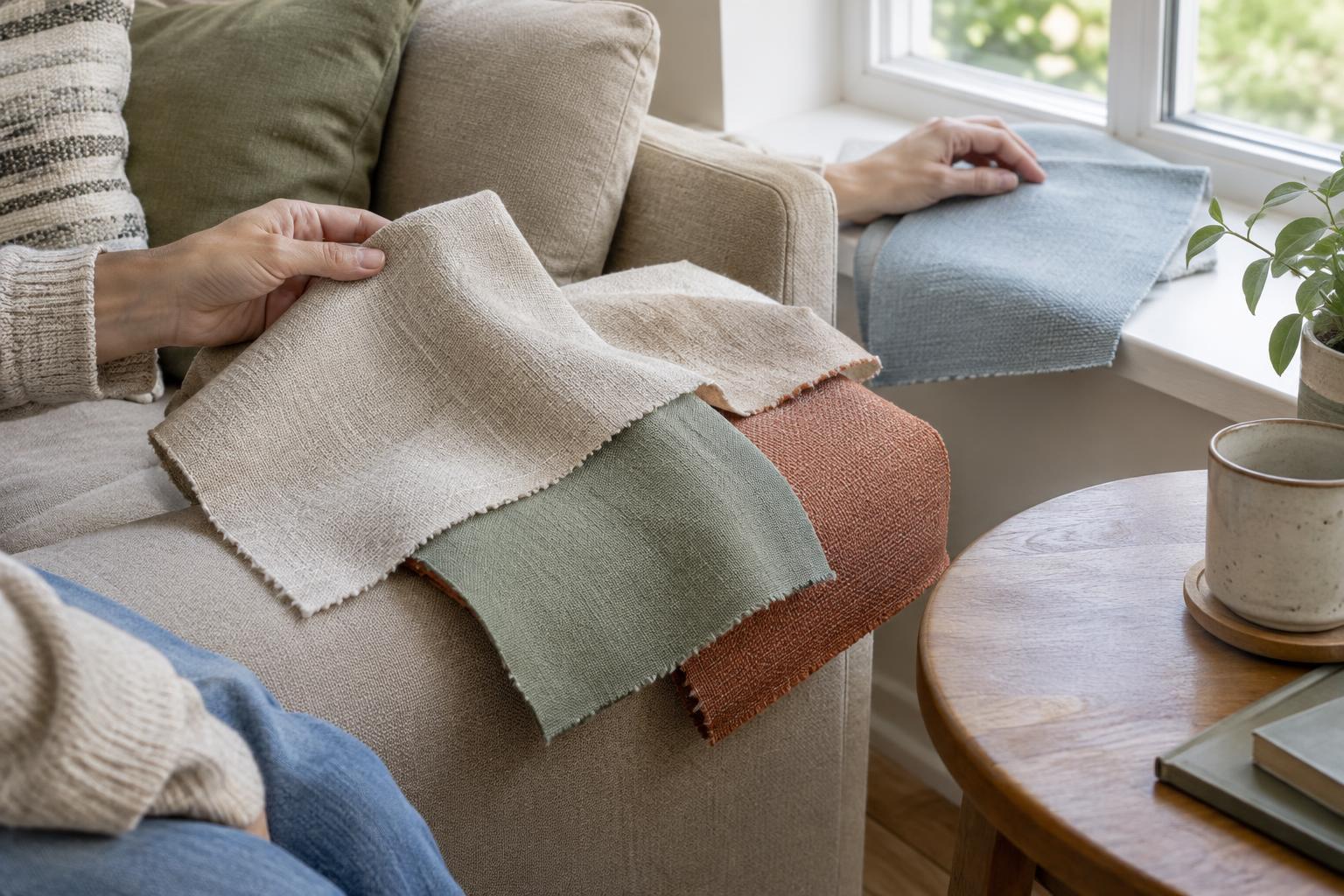
Lay the textiles together before deciding. Daylight, lamplight and the colors of walls and furniture can change how strongly a print appears. Step back to see the whole room, then move closer to check whether the smaller patterns remain pleasant at the distance where you use them. If the result feels crowded, remove one patterned item before replacing everything. A plain cover or cushion may be all that is needed.
If the room feels flat instead, try changing scale before adding more color: a larger motif can create a focal point, while a fine repeat can add quiet detail. You can also spread patterns across the room rather than clustering them on the bed or sofa. The goal is not to use a fixed number of prints. It is to let the rug, bedding and cushions each contribute something distinct while leaving enough unpatterned space for the room to feel comfortable.