Start with the rug, the floor and the room
A rug pad sits out of sight, but it can change how a rug behaves every day. It may help prevent shifting, add softness underfoot and create a buffer between the rug backing and the floor. No single pad does all of these jobs equally well. Start by deciding which problem matters most: a runner that slides, a thin rug that feels hard, or a rug whose backing may rub against a finished floor.
Consider where the rug will go. A busy entryway or hallway often calls for reliable grip without much extra height. A living-room rug may benefit more from cushioning, particularly if people sit or play on the floor. Also check whether the rug is flatwoven, thick-piled or backed with a material that already grips. The floor underneath matters just as much: a pad suited to tile may not be appropriate for a coated wood floor.
Match the pad construction to its main job
Thin, grippy pads are intended chiefly to limit movement on smooth floors. Their low profile can work well beneath runners and rugs near doors, where added thickness might cause a clearance problem. Materials vary, though, and a label that simply says “non-slip” does not establish that a pad is suitable for every finish. Check the pad maker’s guidance for your flooring and, where available, your floor manufacturer’s care instructions.
Felt pads generally emphasize cushioning rather than grip. They can make a large rug feel fuller and help soften contact between the rug and floor, but felt alone may allow a rug to creep on a slick surface. Combination pads pair a cushioned layer with a gripping side and can be a useful compromise. For a rug laid over wall-to-wall carpet, look for a pad specifically designed for that arrangement; a pad meant to grip hard flooring may not hold a rug steady on carpet.
Check floor-finish compatibility before buying
Floor protection is not just a question of putting something between two surfaces. Some pad materials or coatings may interact with certain finishes, particularly when heat, moisture or pressure are involved. If you have sealed wood, vinyl, laminate or another manufactured floor, read its care guidance before choosing a pad. Do not assume that a material described as natural or breathable is automatically safe for your particular finish.
When product information is unclear, ask the pad seller which floors it is intended for and whether any finishes are excluded. A small, inconspicuous test may help reveal immediate marking or sticking, but it cannot predict every long-term effect. Lift the rug and pad periodically to check for discoloration, trapped grit or residue. If you notice a change, remove the pad and follow the floor maker’s cleaning recommendations rather than trying a strong cleaner without checking compatibility.
Choose a thickness that keeps the rug practical
More cushioning is not always better. A thick pad under a thin rug can create a raised edge that is easy to catch with a shoe or furniture leg. It may also make a door drag. Before selecting a lofty pad, look at nearby thresholds, door swings and the way chairs move across the rug. A lower-profile option can be more comfortable in daily use if it lets the room function smoothly.
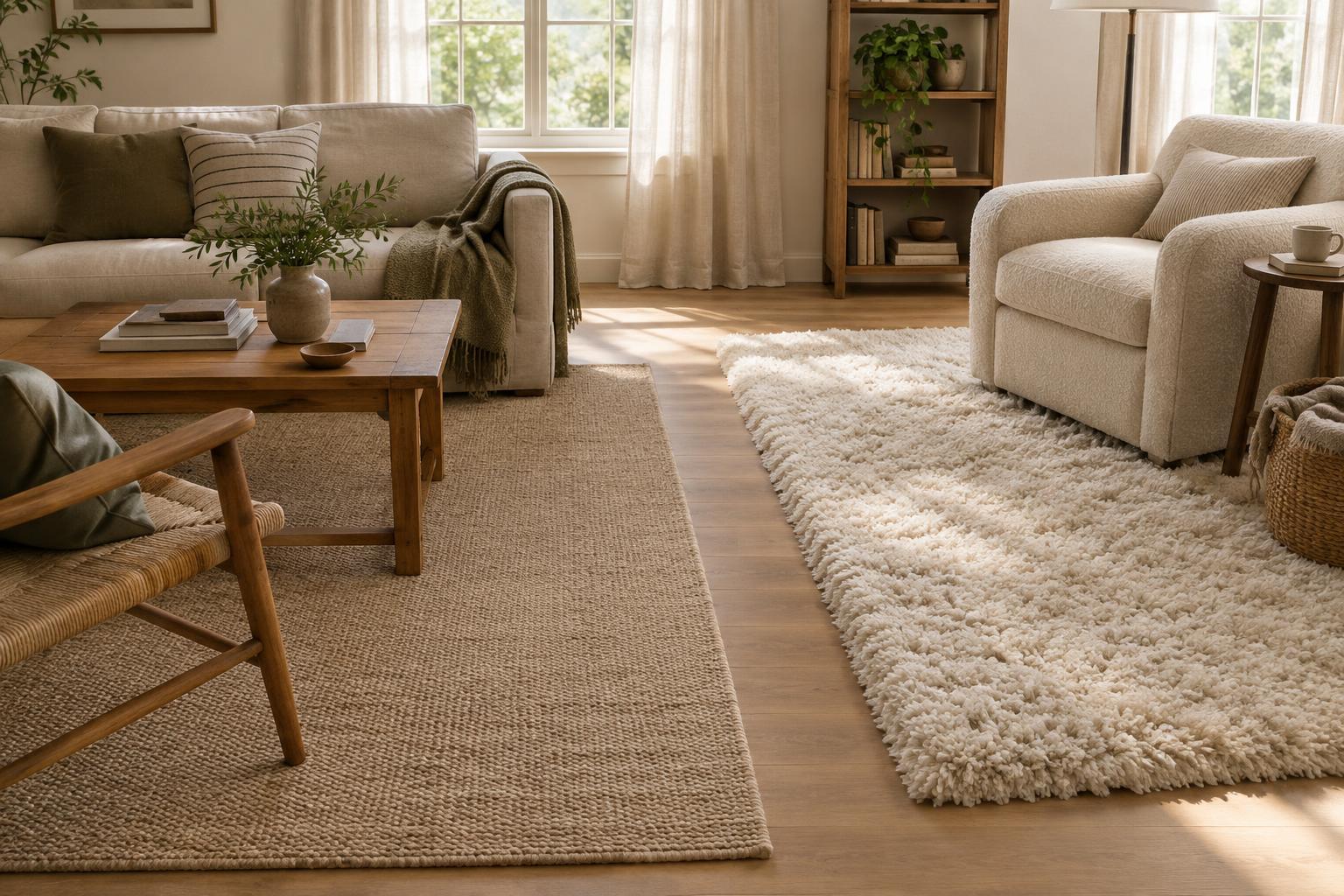
The rug’s own structure should guide the choice. A dense, plush rug may need little additional softness, while a thin weave may benefit from modest cushioning. If a rug has a delicate backing or an unusual construction, consult its care label for any pad restrictions. The aim is to support the rug without stretching it, making it buckle or changing how its edges lie.
Fit and maintain the pad
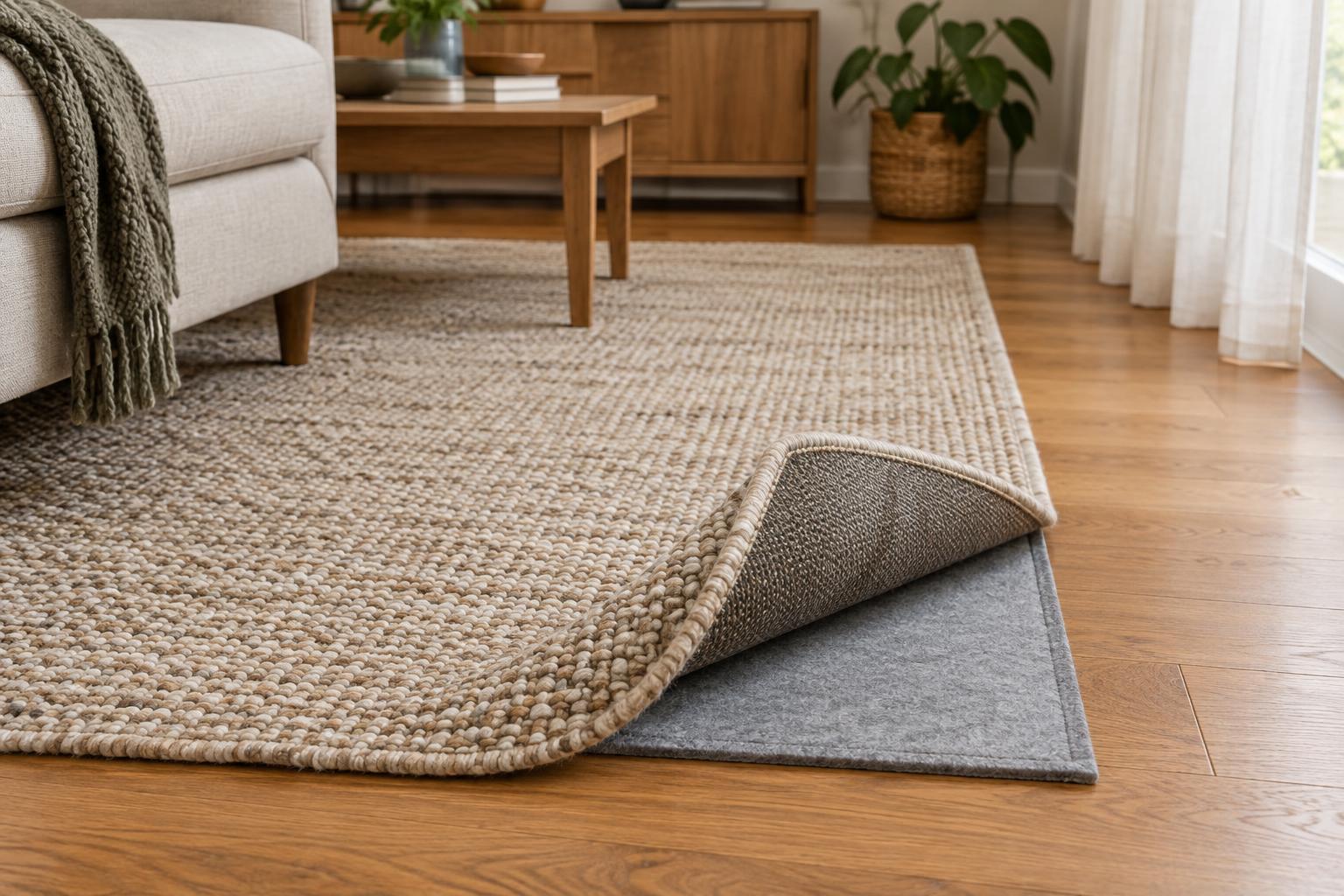
A pad should sit beneath the rug rather than project beyond it. Leaving a small border of rug around the pad helps the edges rest against the floor instead of forming a visible ledge. Measure the rug, then choose a pad that fits inside its edges or can be trimmed according to the maker’s instructions. Keep cuts straight and avoid making the pad so small that the rug’s corners are left unsupported.
Before laying the pad, clean and dry the floor and remove grit from the rug backing. Place the pad flat, position the rug over it and smooth out any ripples. Recheck the setup after the rug has been walked on: shifting, curled corners or a pad that bunches up are signs that it is not doing its job. Regularly lifting the rug to clean underneath also gives you a chance to inspect both surfaces and adjust or replace the pad when needed.