Start with the fabric, not the tool
Pet hair can sit on the surface of a smooth weave or cling to a textured one. Before cleaning, check the care label and look closely at the fabric. A tightly woven sofa may tolerate gentle brushing, while velvet, loose weaves, fringes and delicate trims need a lighter touch. Test any new tool on an inconspicuous area. If it pulls threads, flattens the pile or leaves a mark, stop and choose a gentler method.
Gather hair while the furnishing is dry unless its care instructions allow another approach. Moisture can make loose hair harder to collect and may leave marks on fabrics that are sensitive to water. Move cushions and lift throws so you can reach seams, edges and the spaces beneath them. Removing fur before washing or spot-cleaning also keeps it from spreading across a larger area.
Lift loose hair before working on stubborn patches
Start with a vacuum cleaner fitted with an upholstery attachment. Use moderate suction and short, overlapping passes, following the direction of any visible pile. Hold loose fabric steady rather than drawing it into the nozzle. A crevice attachment can help along seams and between cushions, where hair often gathers. Empty the vacuum container or check the bag as needed so collected fur does not hinder airflow.
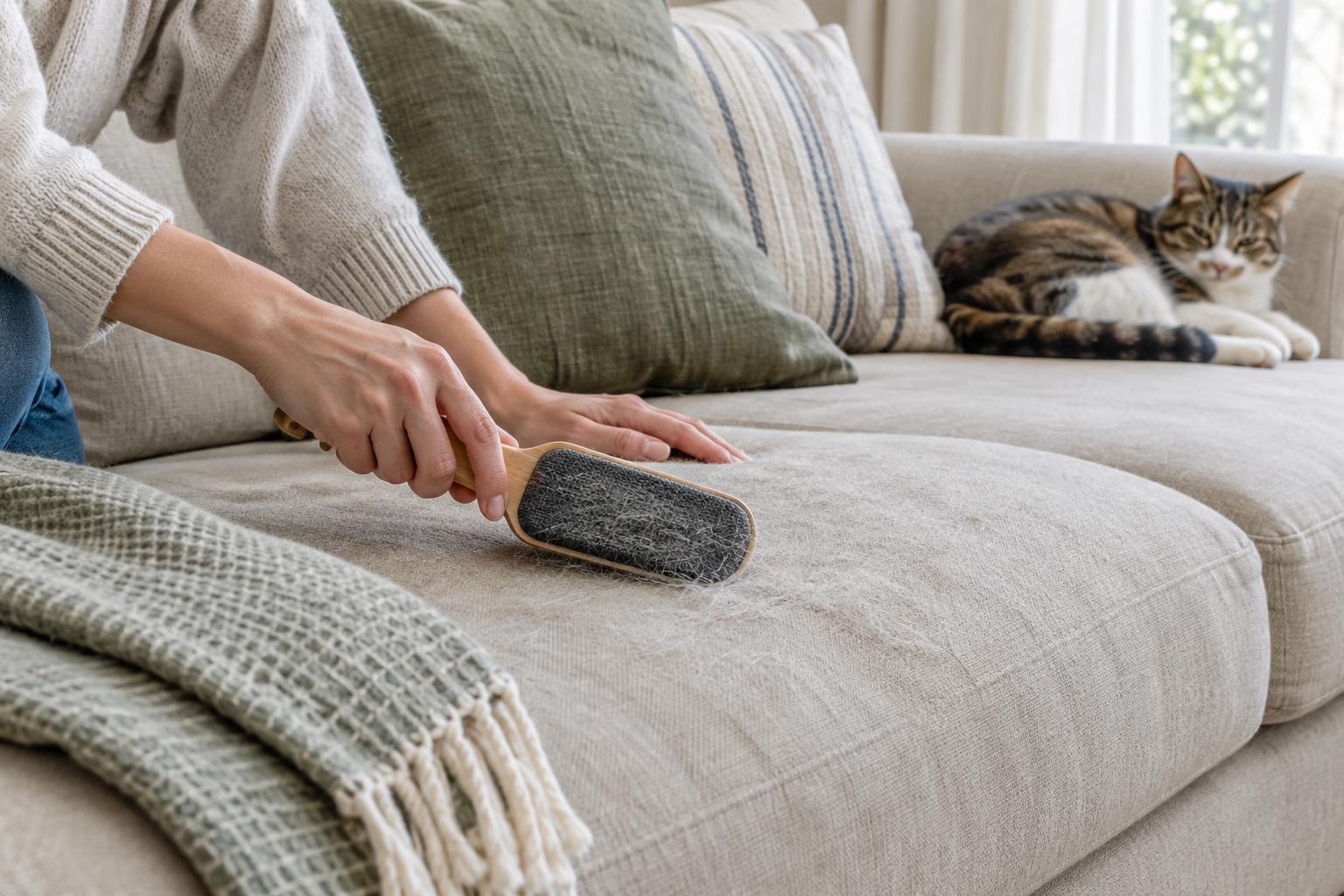
For hair that remains on a sturdy fabric, try a reusable lint brush or upholstery-safe rubber tool. Work gently in one direction to gather fur into small clumps, then pick it up by hand or with the vacuum. A lint roller can help with small areas, though it may be impractical for a whole sofa. Avoid stiff scraping tools: they can snag woven yarns or roughen a soft finish.
Handle covers, throws and curtains separately
If a cushion cover or throw is removable and washable, shake or vacuum it first. Follow its care label for water temperature, cycle and drying method; a cover that shrinks may no longer fit its insert. Do not assume every removable upholstery cover can go in a machine. Some require specialist cleaning, and mixing methods across matching pieces can leave them looking uneven.
Curtains and larger soft furnishings need a slightly different approach. While they hang, use a suitable vacuum attachment with low suction, supporting the fabric as you work downward. Pay attention to hems and folds without tugging on the heading or hardware. If the curtains are washable, follow their label and make sure they are dry before rehanging. For non-washable or delicate pieces, regular gentle dust and hair removal may be the safer routine.
Use water and cleaning products with restraint
A barely damp cloth may collect fine hair from some durable, water-safe fabrics, but it is not a universal shortcut. Test a hidden area first, use very little moisture and allow the spot to dry completely before judging the result. Keep water away from fillings when possible. If a fabric is marked for dry cleaning or shows water rings easily, stick to dry hair-removal methods.
Pet hair and pet stains are separate cleaning jobs. Remove loose hair before addressing a spill, and follow the furnishing’s care instructions when choosing a cleaner. Avoid heavily scented products or improvised mixtures simply to mask an odor; residue may attract dirt or bother people and pets who use the room. If a stain persists or a valuable fabric seems fragile, professional cleaning may be more appropriate than repeated scrubbing.
Make upkeep easier between deeper cleans
A quick pass over a pet’s favorite seat is often less work than waiting for fur to build up across the room. Keep a fabric-appropriate brush or roller nearby, and vacuum seams and cushion gaps during your usual cleaning routine. Washable throws can protect the places pets use most, provided they are comfortable, secure and easy to launder according to their labels.
Clean tools matter too: remove trapped hair from brush heads and vacuum attachments after use. When choosing future furnishings, consider whether the fabric is easy to vacuum, whether covers can be removed and whether you can maintain them as directed. No upholstery is entirely hair-proof, but a gentle, repeatable routine can keep sofas and soft furnishings comfortable without wearing them out through aggressive cleaning.