Start with the whole item, not just the fabric
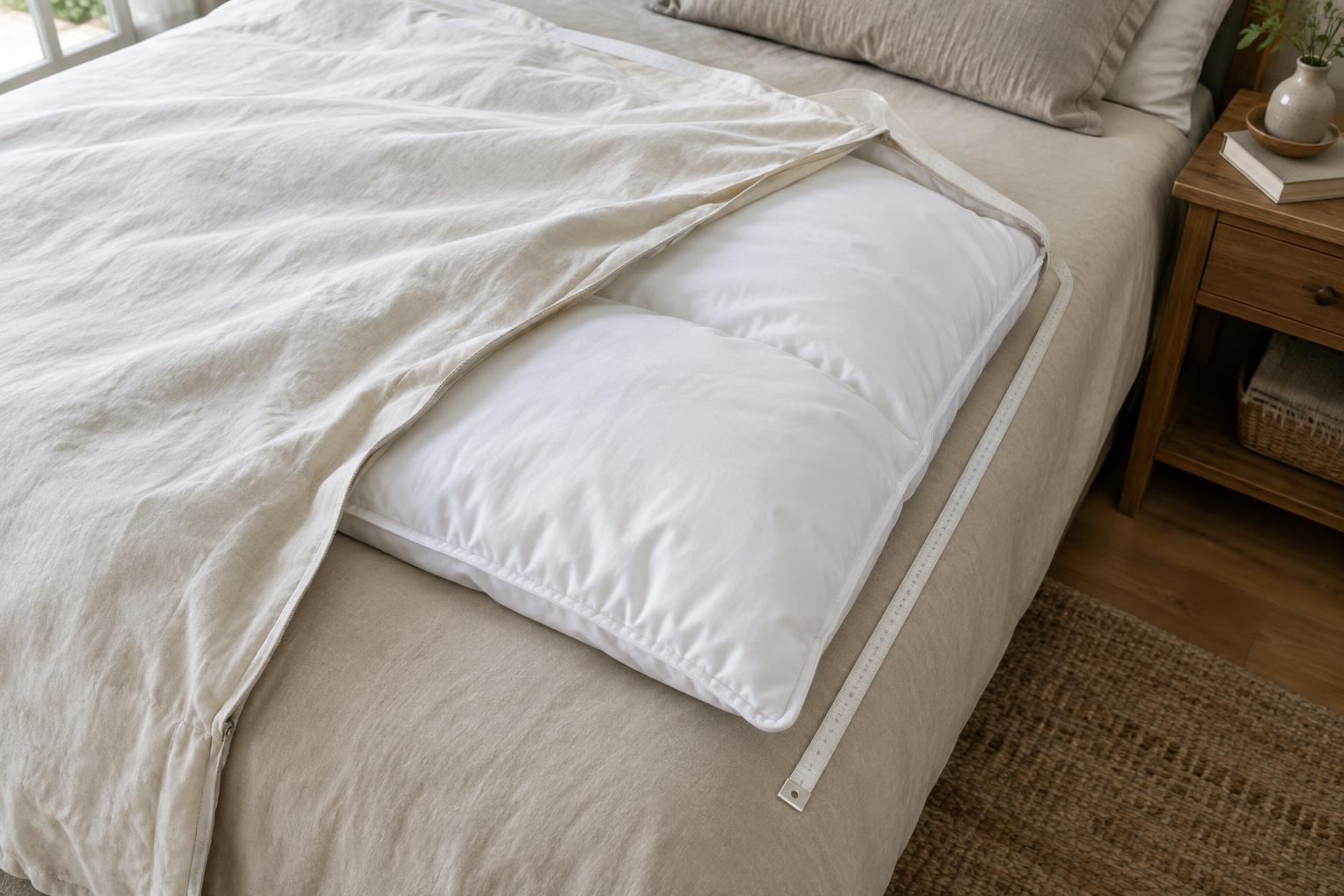
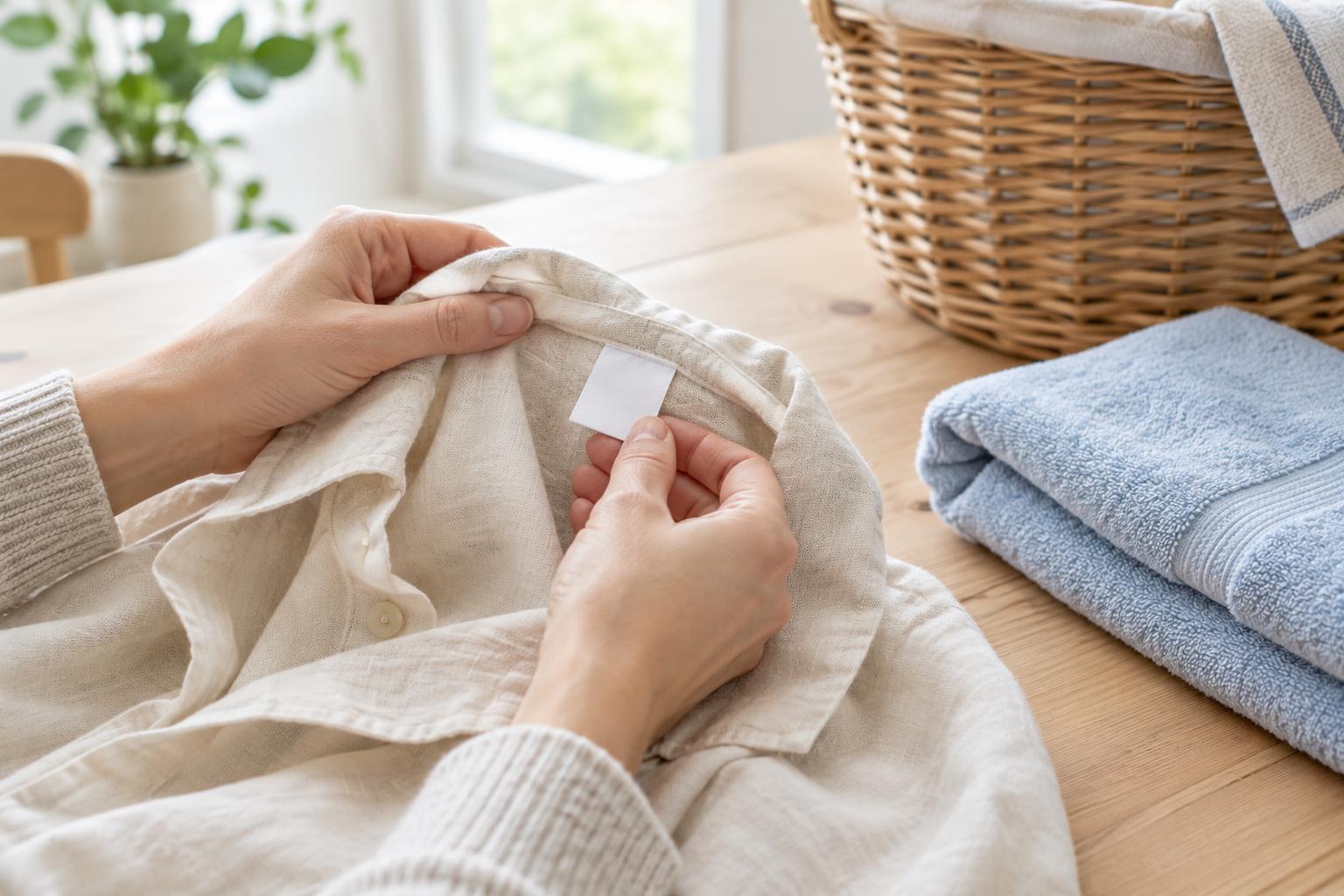
Before putting a textile in the wash, find its care label and read every instruction. Labels are often sewn into a side seam or tucked near an opening. On a removable cushion cover, check the cover’s label rather than assuming its instructions apply to the inner pad. For curtains, look for a label along a side or lower edge, and check whether a separate lining has its own instructions.
A label describes the finished item, which may include thread, trim, backing, dye, elastic or a lining. Those parts can affect how it should be cleaned even when the main fabric seems familiar. Read any words alongside the symbols: they may specify a temperature, a gentle cycle, or a restriction such as washing separately. If the label says the item must not be washed, do not treat a small test patch as permission to wash the whole piece.
Decode the wash tub
The wash-tub symbol tells you whether and how to wash an item. A number inside the tub indicates the maximum wash temperature, not a target you must reach. A lower temperature may be suitable for ordinary soil if the product you use works at that setting. Some labels use dots to indicate temperature instead; if you are unsure what they mean, consult the guidance for your washing machine or choose a more cautious method permitted by the label.
A hand in the tub means hand washing. A line beneath the tub calls for a gentler machine cycle, while two lines indicate an especially gentle cycle. These marks matter for fabrics that may stretch, snag or crease under vigorous agitation. A crossed-out tub means do not wash. When a washable item has delicate trim or an uncertain fit, use a laundry bag if appropriate, leave room in the machine, and avoid twisting it hard to remove water.
Check bleach and drying directions separately
The triangle covers bleaching. An open triangle generally permits bleach, a triangle with diagonal lines indicates non-chlorine bleach only, and a crossed-out triangle means do not bleach. Check both the fabric label and the bleach product before use. Even when bleaching is allowed, it may not be the best first step for a mark; prompt, gentle cleaning often gives you more control.
The square covers drying. A circle inside the square refers to tumble drying; dots indicate heat level, and a cross means do not tumble dry. Lines inside a square give directions for drying without a machine, such as hanging or laying flat. These distinctions are especially useful for knit covers, lined curtains and items that could change shape while wet. If flat drying is specified, support the whole item rather than hanging it by one edge.
Read finishing and professional-cleaning symbols
The iron symbol shows whether ironing is allowed. Dots indicate the permitted heat level, and a crossed-out iron means do not iron. Keep in mind that an iron setting suitable for the main fabric may still damage a printed design, coating or decorative trim. If the label allows ironing, work carefully around such details and consider pressing the reverse side.
A circle refers to professional textile cleaning, not tumble drying. Letters and lines inside or beneath it give the cleaner more specific handling information; you do not need to choose a cleaning solvent yourself. If a label calls for professional cleaning, take the item and its label to a cleaner and mention any known stains or previous attempts to remove them. The cleaner can then assess what treatment may be suitable.
Make a plan when the label is missing or unclear
If there is no readable label, pause before washing a large or valued item. Look at its construction: a removable cover may contain a backing, zipper or piping that behaves differently from its face fabric. A small, hidden-area test with water can reveal whether a dye transfers or a finish changes, but it cannot guarantee that an entire item will wash without shrinking or losing shape.
For an item you decide is safe to wash, sort it by color and likely care needs, then follow the most restrictive applicable instruction. Check the label again before drying; a fabric may be machine-washable but unsuitable for a tumble dryer. Keeping a brief note of how a household textile was cleaned can make the next care decision easier, particularly when a label is hard to find.