Start with the fabric and its care label
Shrinkage, stretching and fading have different causes, so one laundry setting cannot prevent them all. Heat and agitation can cause some fibers or fabric constructions to contract. Heavy handling while wet can pull others out of shape. Color can fade through repeated washing, harsh products and exposure to strong light. The care label is the best starting point: check the recommended temperature, wash method and drying instructions before choosing a cycle.
If the label is missing, take a cautious approach, especially with a new garment or household textile. Wash cool, use a mild detergent and avoid a hot dryer until you know how the item behaves. Wool, silk, loosely knitted pieces and structured items may need care beyond a standard machine wash. When an item is marked dry-clean only, or its construction makes washing risky, follow that instruction rather than treating a cool cycle as a guarantee of safety.
Sort loads to protect both color and shape
Sorting by color helps limit dye transfer, but sorting by fabric weight matters too. Heavy towels or jeans can rub against lighter shirts, curtains and delicate fabrics. Separate darks, lights and strongly colored new items when practical, then group pieces with similar care needs. Turn dark or printed items inside out to reduce friction on their visible surfaces, and fasten zips or hooks that might snag neighboring fabric.
New, richly colored textiles sometimes release excess dye. If you are unsure whether a piece is colorfast, test an inconspicuous area with a damp white cloth before washing it with other items. A test cannot predict every result, but visible color transfer is a good reason to wash the item separately. Leave enough room in the machine for the load to move freely; overfilling can increase rubbing and make rinsing less effective.
Choose a controlled wash, not the strongest one
For everyday soil, a cool or lukewarm wash and an appropriate gentle cycle are often a sensible first choice when the care label allows them. Higher temperatures can be useful for particular items, but they also increase the risk of shrinkage or color loss in others. Match the cycle to the fabric rather than using a vigorous setting by default. A mesh laundry bag can reduce snagging and pulling on small or delicate pieces.
Measure detergent according to the product directions and load size. More detergent does not necessarily mean a better wash; residue may leave fabric feeling stiff and require extra rinsing. Treat stains promptly when possible, but test any stain remover on a hidden area first and avoid hard scrubbing. Bleach and other strong treatments can alter color or weaken some fibers, so use them only where the label and product instructions permit.
Handle wet textiles without pulling them out of shape
Fabric is easier to distort when it is wet, particularly if it is stretchy, loosely woven or knitted. Lift larger pieces with both hands instead of tugging one corner from the drum. Do not wring delicate garments or twist a curtain panel to remove water. If an item needs gentler handling, press out excess moisture with a clean towel, then ease it back toward its original shape before drying.
A high spin speed can reduce drying time, but it may leave delicate pieces tightly creased or stressed. Use a lower spin where the care instructions call for gentle treatment. Remove laundry soon after the cycle ends so damp items do not sit compressed together. Smooth seams, hems and edges while they are still damp; small adjustments at this stage can help prevent a misshapen finish.
Dry with the same care you used to wash
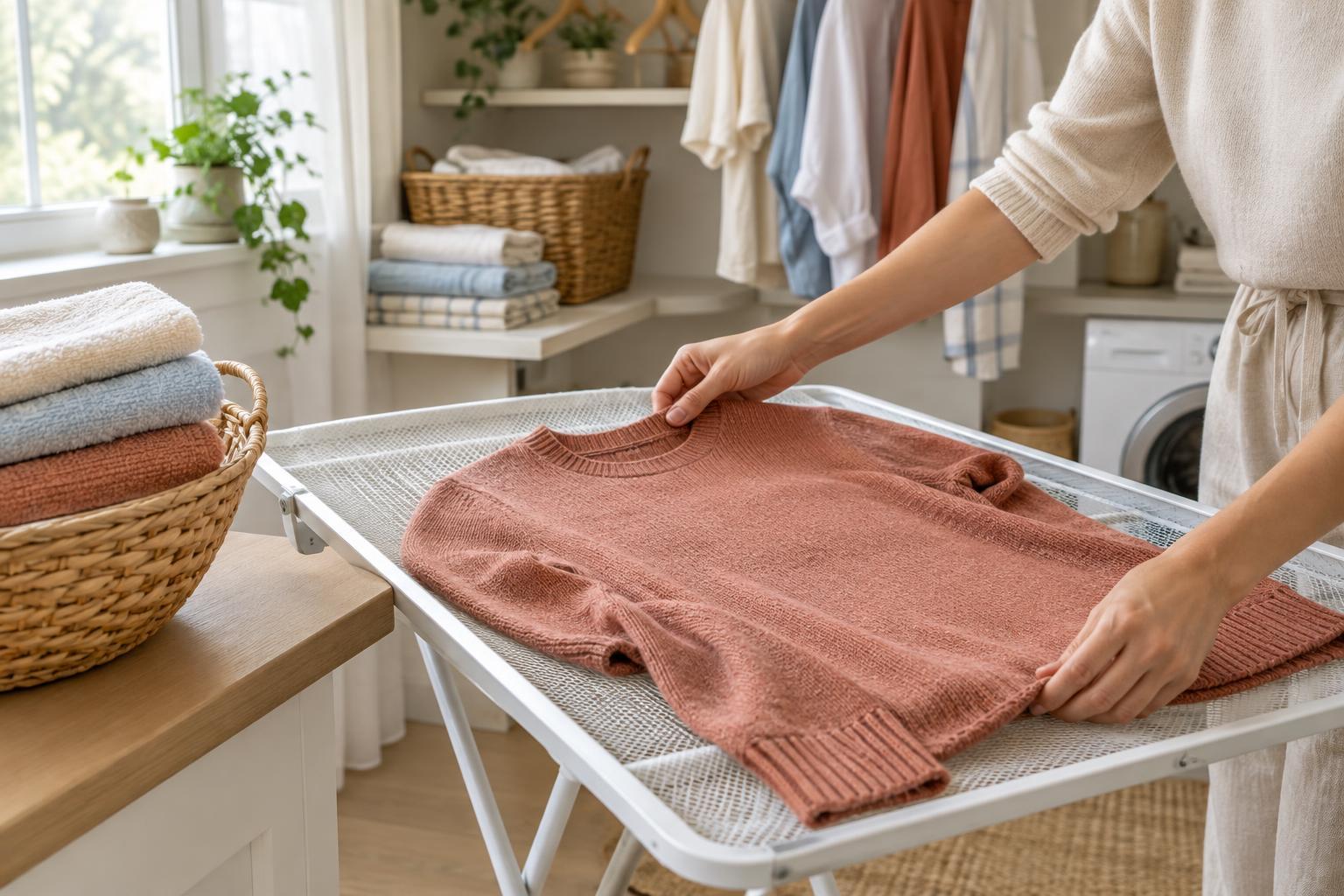
Drying is often where avoidable shrinkage occurs. If tumble drying is allowed, choose the heat level on the label, check the load before it becomes overdry and remove items promptly. Air drying avoids dryer heat, but it is not automatically risk-free. Hanging a heavy, wet knit can stretch it at the shoulders or hem; lay it flat on a clean surface that allows air to circulate. Hang woven pieces evenly so their weight is supported.
Strong sunlight can fade color over time, especially on darker or more vivid fabrics. Dry susceptible pieces indoors or in a shaded, ventilated spot, and turn them inside out if appropriate. Before storing anything, make sure it is fully dry. A reliable routine is simple: read the label, sort thoughtfully, wash no more aggressively than needed and choose a drying method that supports the fabric’s weight and shape.