Decide where the curtains will hang
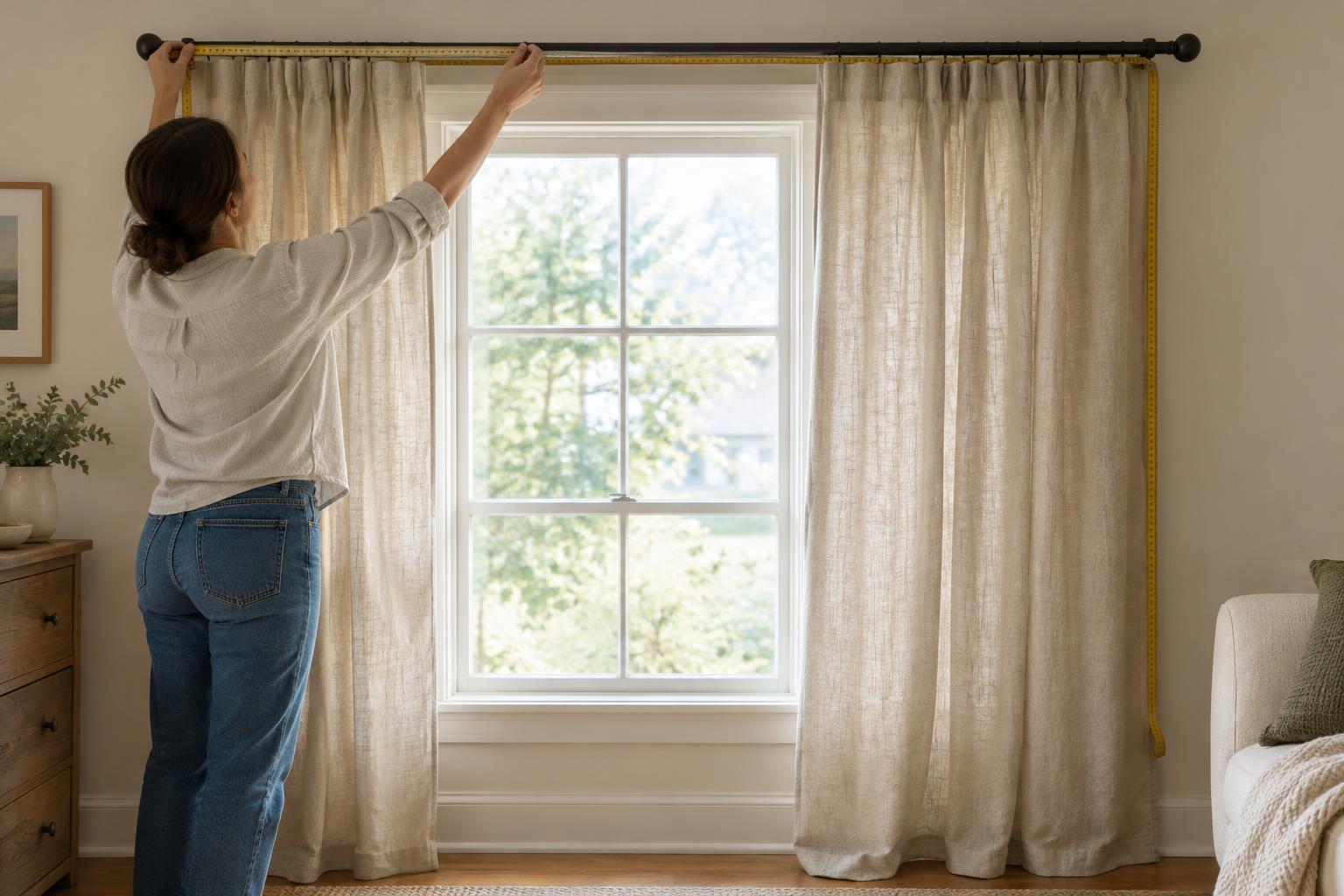
Before measuring fabric, decide where the rod or track will sit. Curtains usually look and work better when the hardware extends beyond the window opening, giving the panels somewhere to rest when open. Check the wall space on both sides, nearby furniture, handles and any vents that might affect placement. If the hardware is already installed, measure that rather than planning around the glass alone.
Choose the mounting height at the same time. A rod above the frame can make the window appear taller, but it needs enough clearance for the heading—the part of the curtain that attaches to the rod—and for any brackets. Mark the proposed position lightly and look at it from across the room. For a pair of windows, check whether a consistent rod height will work for both, even if their frames differ slightly.
Measure the width the curtains must cover
Use a rigid tape measure if possible, and record the usable width of the rod or track: the distance the curtains will travel and cover when closed. On a decorative rod, this is generally the span between the end brackets or finials, not the full length including the decorative ends. On a track, include the span the carriers can reach. Measure an uninstalled window opening as a starting point, then add the planned extension on each side to establish your hardware width.
A curtain’s flat fabric width is usually greater than the width it covers because folds use up material. This extra width is called fullness. As a general planning range, total flat panel width of about 1.5 to 2 times the usable rod or track width gives many curtains a gathered appearance. The best amount depends on the heading style, fabric thickness and how full you want the curtains to look. Heavy fabric can become bulky with too much fullness, while a sheer fabric may look sparse with too little.
For example, if the usable span is 180 cm and you choose 1.5 times fullness, look for approximately 270 cm of total flat curtain width. For two equal panels, that is about 135 cm per panel. Check how a seller defines panel width: it may describe one panel, a pair, or fabric width before sewing. If privacy or light control matters, confirm that the finished panels will meet comfortably at the center and cover the edges when closed.
Choose a finished length
First choose the bottom position. Curtains can end near the sill, below the sill, or close to the floor. A near-floor finish is versatile, but leave a small gap if you want to make vacuuming easier and keep hems away from damp floors. Fabric that rests on the floor creates a softer effect but needs more upkeep and is less forgiving in busy rooms.
Measure from the point where the curtain will actually hang, not automatically from the top of the rod. That starting point varies with the heading: rings, hooks, eyelets and rod pockets position the fabric differently. If you are buying ready-made curtains, check the product’s stated measurement method and compare it with your hardware. If you are sewing, decide on the heading and hardware before calculating the cut length, then add the allowances needed for the top finish and hem.
For floor-length curtains, measure from the hanging point to the floor at the left, center and right of the span. Floors and rods are not always perfectly level. Note the measurements rather than assuming one reading applies everywhere. If they vary, decide which point will control the finished length and whether a small clearance will disguise the difference.
Check the measurements before you commit
Keep a short measurement note for each window: hardware position, usable span, desired fullness, number of panels, hanging-point-to-bottom distance and chosen heading. Label every number so you do not confuse window width with total panel width. Measure twice, especially if you are ordering made-to-measure curtains or cutting fabric.
Finally, think about how the curtains will move. A radiator, deep sill or projecting door handle can hold fabric away from the wall, changing how the length appears. Curtains intended to close across a wide span also need enough space to stack when open. Checking these practical details alongside the numbers helps you choose curtains that both fit the window and suit the way the room is used.