What pocket depth tells you
Pocket depth describes the height of the fitted sheet’s corner, from the sleeping surface down toward the elastic edge. It is meant to accommodate the thickness of the mattress and anything you leave on it beneath the sheet. A sheet may match your bed’s width and length but still ride up at the corners if its pockets are too shallow.
A deeper pocket is not automatically a better fit. If there is far more fabric than the mattress needs, the sheet may look loose or bunch at the sides. Pocket depth is one part of the fit, alongside the sheet’s width, length, fabric and elastic. Check all three listed dimensions rather than relying on a description such as “deep pocket.”
Measure the bed as you actually use it
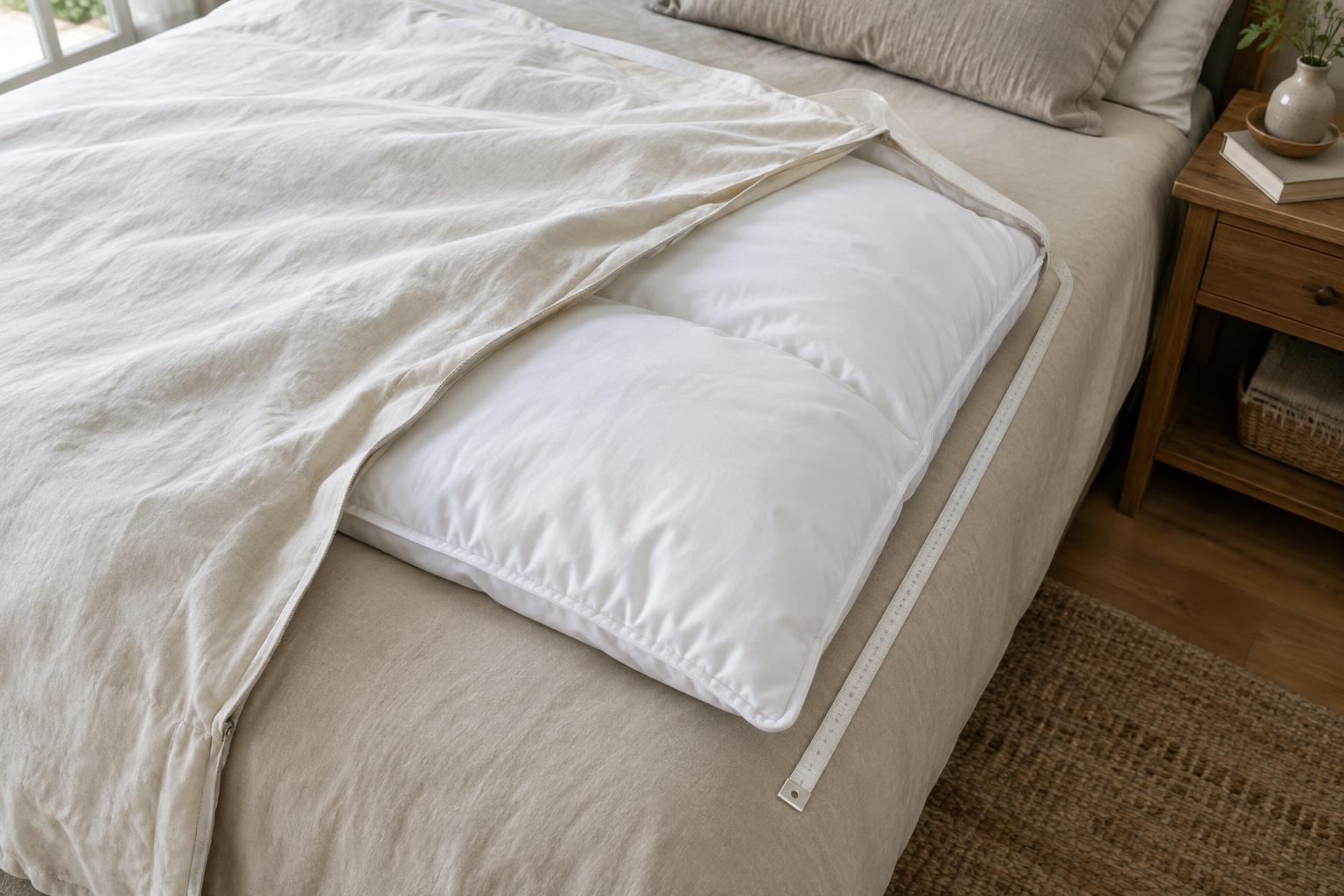
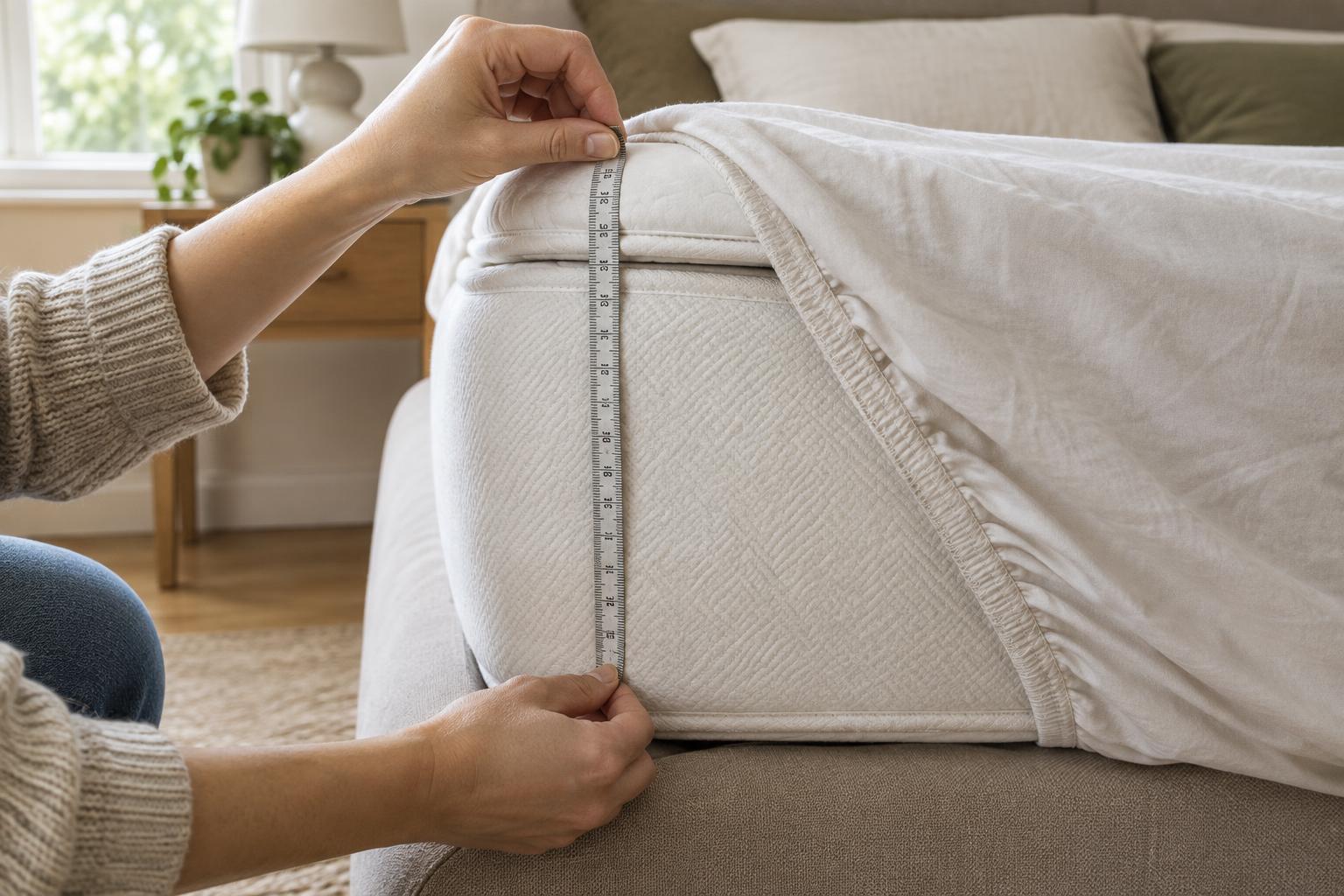
Before shopping, put the mattress protector and any topper you normally use in place. Measure vertically from the top of that setup to the bottom edge of the mattress where you want the sheet’s elastic to sit. Do not include the bed base or foundation. A rigid ruler or tape measure held straight against the side will give you a more useful reading than a tape pulled around a rounded corner.
Take readings at a few points, especially if a topper has a raised edge or the mattress sides are rounded. Use the largest practical measurement when comparing sheets. If a soft topper compresses under your hand, measure it without pressing it down heavily; the sheet must fit over it when the bed is unoccupied, too.
Write down the mattress width and length while you are there. These can help you choose between sizes or check a product listing that gives actual measurements instead of a familiar bed-size name.
Read the label as a fit range, not a promise
Product descriptions use pocket-depth terms differently. One label may state the corner seam measurement; another may say the sheet “fits mattresses up to” a certain thickness. Look for a stated fit range or maximum mattress height, and compare it with your measurement. If the listing gives only a pocket depth, bear in mind that some fabric must extend under the mattress for the elastic to grip.
Avoid choosing a sheet whose stated maximum is exactly the same as your measured height if your topper shifts or you prefer to tuck the edge well underneath. A little room can make bed-making easier, but there is no universal allowance: the stretch of the fabric, the strength and placement of the elastic, and the shape of the mattress all affect the result. When a listing is unclear, consult its sizing details or ask the seller what mattress height the sheet is designed to fit.
Consider fabric and elastic before deciding
Two sheets with the same labeled pocket depth can feel different on the bed. A stretchy knit may pull over a thick corner more readily than a crisp woven fabric, while a firmly woven sheet may give a smoother finish when sized correctly. Elastic running all the way around the edge can help hold the sheet in place; elastic only at the corners may be less forgiving on some mattress shapes.
Also check the care label and any sizing notes for what to expect after washing. Fabric behavior varies, so follow the stated washing and drying instructions rather than assuming every sheet will keep exactly the same dimensions. If your mattress is near the top of a sheet’s fit range, the product’s care and sizing information is especially worth reading.
Make a final fit check
When the sheet arrives, put it on over your usual protector and topper before washing it, if the return terms allow a fitting check. Each corner should reach beneath the mattress without excessive pulling, and the sides should sit comfortably below the upper edge. Smooth the sleeping surface and gently tug at a corner to see whether the elastic stays underneath.
If the sheet pops off, confirm that its width and length are correct before blaming pocket depth. A sheet that is too short across the bed can pull its corners upward even when the pocket sounds deep enough. If the corners fit but fabric gathers around the sides, the pockets may be roomier than you need. Keeping your bed’s three measurements on hand makes the next purchase much easier to assess.